
Table of Contents
Isle of Skye Travel Guide
Introduction
The Isle of Skye doesn’t ease you in. One minute you’re crossing the bridge from the mainland, the next you’re staring at jagged black mountains that look like they were torn out of the earth rather than formed by it. This is Scotland’s largest island in the Inner Hebrides, and it has built a reputation as one of the most dramatic landscapes in Europe.
I’ve spent time driving Skye’s single-track roads in every season, from July’s long, golden evenings to January’s sideways rain, and the island never quite looks the same twice. That’s part of the appeal. The weather changes the mood of the Cuillin ridge, the Quiraing, and the sea lochs almost hourly.
This guide covers what actually matters for planning a trip to the Isle of Skye: the best things to see and do, where to eat and stay, how to get there, a realistic two-day itinerary, and the practical details that guidebooks often skip, like parking, mobile signal, and midge season. Whether you’re planning a weekend trip or a full week exploring Skye, this guide will help you make the most of your time on the island.
Every year the Isle of Skye draws travellers from across the world, and it’s easy to see why once you’ve stood beneath the Old Man of Storr or watched the sun drop behind Neist Point. What sets an Isle of Skye trip apart from a typical Highland visit is the sheer concentration of scenery, castles, coastline, and mountain within such a compact area. You don’t need weeks to feel like you’ve properly experienced the Isle of Skye, though most visitors leave wishing they’d booked a few extra days.
This Isle of Skye travel guide draws on repeated visits across different seasons, so the advice here reflects what actually works on the ground rather than recycled listicle content. From the busiest honeypot attractions to the quieter corners locals still keep to themselves, this guide aims to give you a realistic, well-rounded picture of what an Isle of Skye holiday involves, and how to plan one that fits your pace, budget, and interests.
Why Visit Skye
Skye pulls in visitors for a simple reason: nowhere else in the UK packs this much dramatic scenery into such a small area. The Cuillin mountains dominate the southern skyline, the Trotternish Ridge folds itself into strange rock formations in the north, and sea lochs cut deep into the coastline almost everywhere you look.
Beyond the landscape, Skye has a strong sense of place. Gaelic is still spoken here, and you’ll see it on road signs alongside English. The island’s history runs through crofting communities, clan castles, and centuries of fishing traditions that still shape daily life in villages like Portree and Elgol.
For photographers, Skye is close to unbeatable. Locations like the Fairy Pools and Neist Point Lighthouse regularly appear on “best of Scotland” lists, and for good reason. For walkers, the variety is huge, from gentle coastal paths to serious mountain routes that demand real hillwalking experience. And for food lovers, Skye’s seafood, from langoustines to scallops, is often served within hours of being caught.
Skye’s history also gives the island depth beyond its scenery. The Cuillin range and the Trotternish landslips were shaped over millions of years, but much of what visitors see today, the stone crofts, the drystone dykes, the scattered ruins, dates from the 18th and 19th centuries, a period marked heavily by the Highland Clearances, when many families were displaced from the land to make way for large-scale sheep farming. That history is still part of local conversation, and small museums like the Skye Museum of Island Life near Kilmuir do a good job of explaining it without turning the island into a theme park.
There’s also a practical reason Skye works so well as a destination: distances are short. Unlike a mainland Highland road trip that can involve hours of driving between sights, most of Skye’s major attractions sit within a 60 to 90-minute drive of each other. That means visitors can build a varied, well-paced itinerary without spending most of the day behind the wheel.
Another reason the Isle of Skye consistently ranks among Scotland’s top destinations is how well it suits different travel styles. Adventure travellers come for the Cuillin’s scrambling routes and wild camping spots, while slower-paced visitors find plenty to enjoy simply driving the coast roads and stopping at viewpoints. Few destinations in the UK manage to satisfy both crowds so comfortably, and that flexibility is a big part of why an Isle of Skye trip appeals to first-timers and repeat visitors alike.
The island’s popularity has grown considerably over the past decade, partly thanks to social media exposure of spots like the Fairy Pools and the Quiraing. That growth has brought both benefits, better infrastructure, more dining options, and challenges, particularly overcrowding at a handful of sites during peak summer weeks. Understanding this before you arrive on the Isle of Skye helps you plan around the busiest pinch points rather than getting caught in them.
Best Things to See and Do
Skye rewards travellers who mix easy sightseeing with at least one proper walk. Here’s what fills most itineraries.
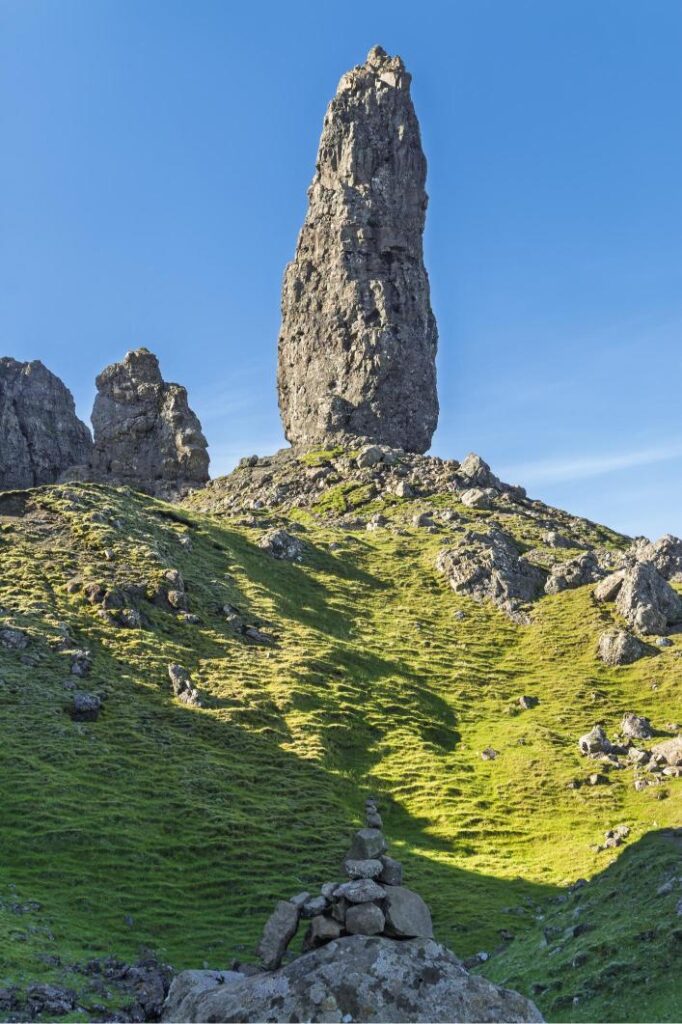
The Old Man of Storr is usually the first stop for visitors heading north from Portree. The circular walk to the base of this rock pinnacle takes roughly 1.5 to 2 hours round trip, with a steady uphill climb on a well-maintained path. Arrive early, ideally before 8am in summer, to avoid the tour bus crowds that fill the car park by mid-morning.
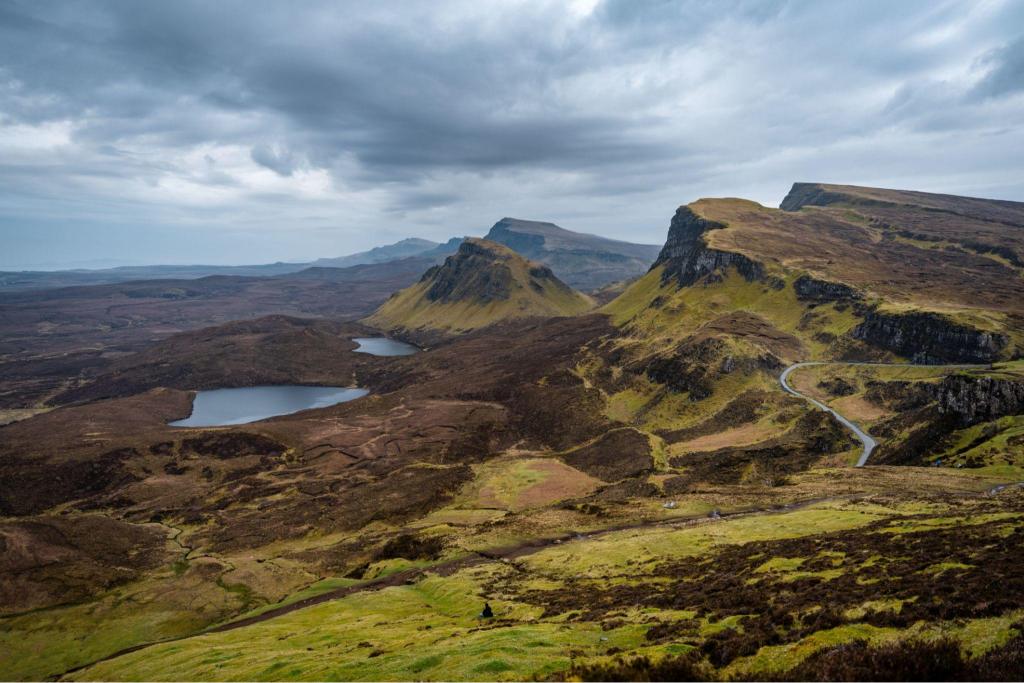
The Quiraing sits further north on the Trotternish Ridge and offers a full loop walk of about 3 hours. The landscape here, shaped by ancient landslips, includes flat-topped hills and dramatic drops. The road up to the Quiraing car park is narrow and often busy in peak season, so patience helps.
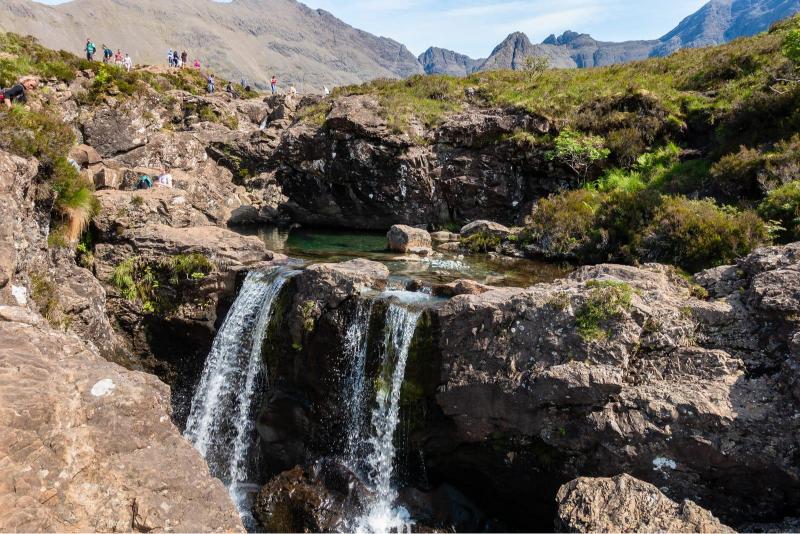
The Fairy Pools, near Glenbrittle, are a series of clear blue-green pools and small waterfalls beneath the Black Cuillin. The walk in takes about 20-30 minutes each way on a mostly flat path. Some visitors swim here in summer, though the water stays cold year-round.
Talisker Distillery, Skye’s oldest working distillery, sits on the shores of Loch Harport in Carbost. Tours run regularly and typically last 45-75 minutes, ending with a tasting. Standard tours cost around £15-£20 per person, with premium tastings running higher. Booking ahead online is recommended in summer, since walk-in slots fill fast.
Dunvegan Castle boat trips give a different perspective on the island. Small boats leave from the castle grounds and head out into Loch Dunvegan to see a resident colony of common seals hauled out on the rocks. Trips run 20-25 minutes and cost roughly £8-£10 for adults, on top of castle admission.
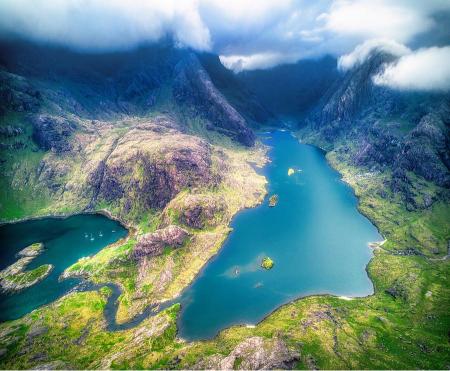
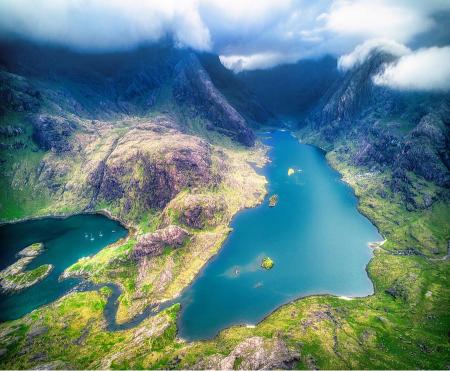
For a longer, more active day, a boat trip from Elgol into Loch Coruisk is one of the best ways to see the Cuillin without a full mountain hike. The loch sits landlocked within the mountains themselves, and the approach by water, past seal colonies and towering cliffs, is dramatic from start to finish. Trips typically run 2.5-3 hours round trip, including time ashore at the loch.
Solo travellers often gravitate toward the Quiraing or a Cuillin day walk for the sense of achievement, while couples tend to prioritise sunset spots like Neist Point or Elgol. Families with young children generally do best sticking to shorter, flatter routes like the Fairy Pools approach or the harbour walk in Portree.
Beyond the headline sights, an Isle of Skye itinerary benefits from a few slower-paced activities too. Kayaking trips out of Portree harbour let paddlers explore the coastline at sea level, offering a completely different view of the cliffs and sea stacks than you get from land. Guided wildlife tours, often combined with a boat trip, target sightings of otters, seals, and, if you’re lucky, white-tailed sea eagles, one of the largest birds of prey in the UK and a genuine conservation success story on Skye.
For visitors who prefer culture over cardio, the Aros Centre in Portree runs exhibitions on Skye’s natural and social history, along with a cinema that occasionally screens locally themed documentaries. It’s a useful rainy-day option, and Skye gets its fair share of rain, so having an indoor fallback built into your plans is a smart move rather than an afterthought.
Top Attractions
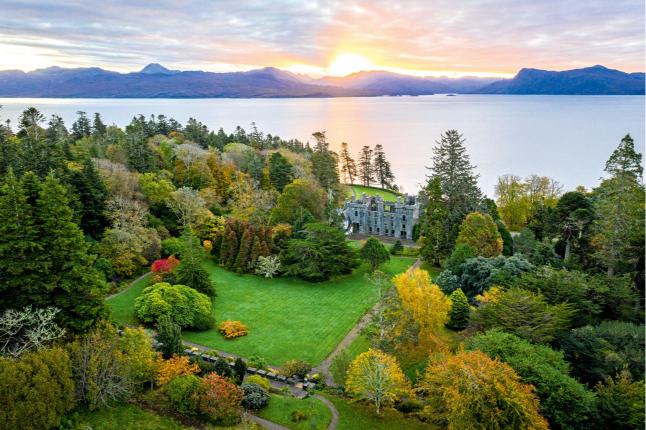
Dunvegan Castle has been the seat of Clan MacLeod for around 800 years, making it one of the oldest continuously inhabited castles in Scotland. The castle interior and surrounding gardens are open to visitors for most of the year, and boat trips from the castle grounds head out to see the resident seal colony.
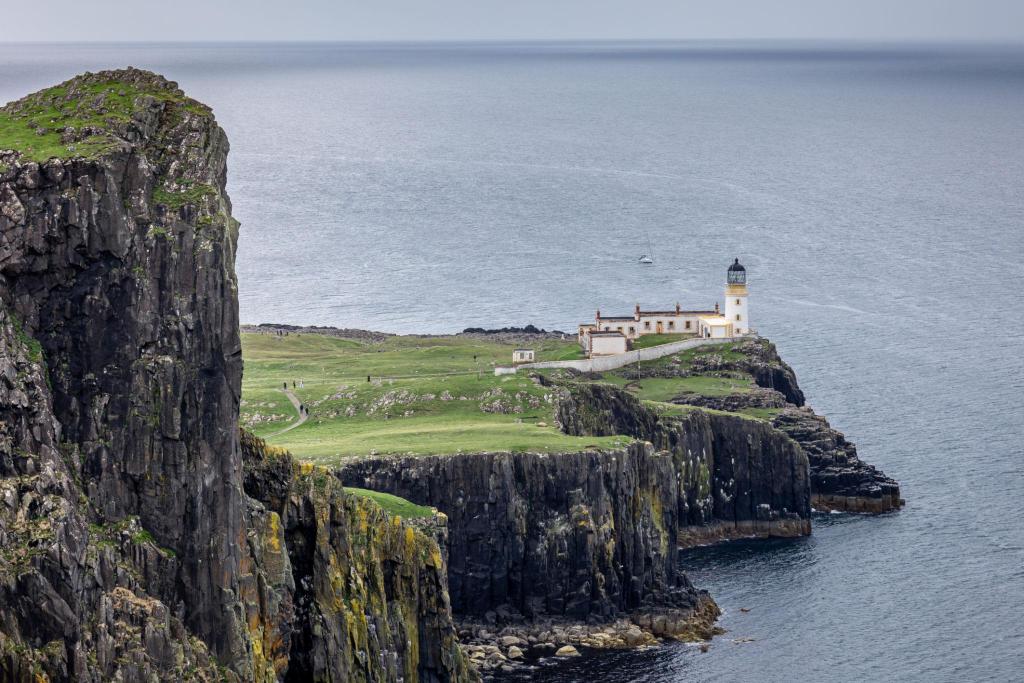
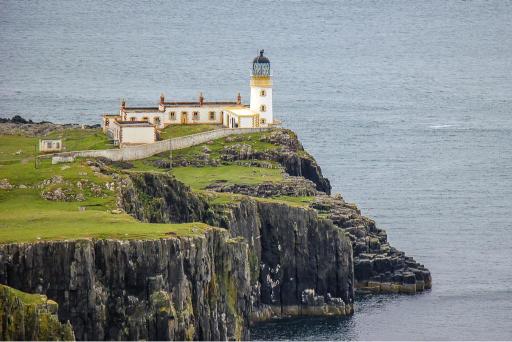
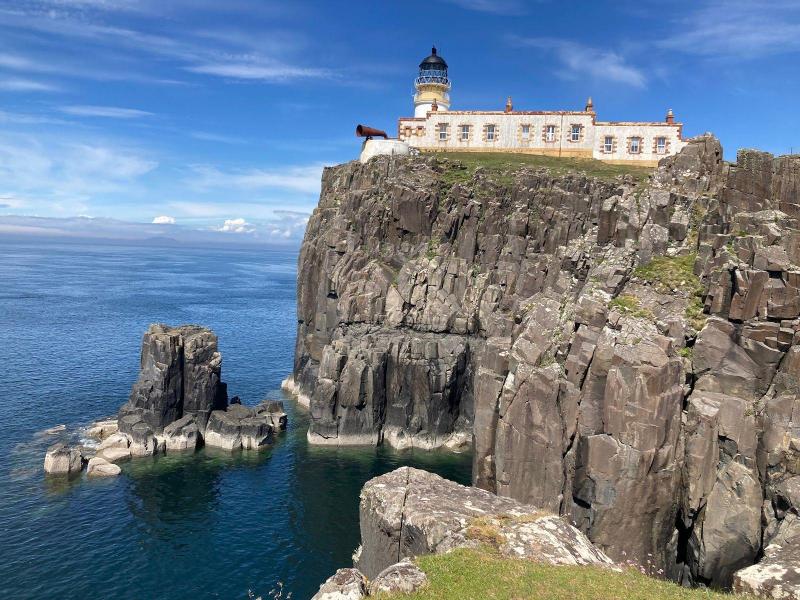
Neist Point Lighthouse, on the westernmost tip of Skye, offers one of the island’s best sunset views. The walk down to the lighthouse takes about 20 minutes but involves a steep return climb. This spot is popular enough that the car park fills quickly on clear evenings.
Portree, Skye’s main town, is worth an hour or two of wandering even if you’re not staying there. The harbour, lined with brightly painted buildings, is one of the most photographed spots on the island. Best photographed in early morning light before boat traffic picks up, the harbour also has a small selection of independent shops selling local crafts, wool, and artwork, useful for souvenir shopping without resorting to generic tourist tat.
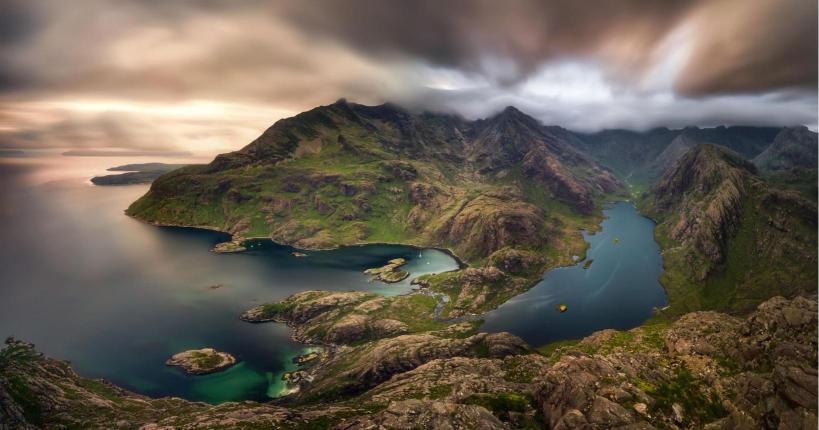
The Cuillin Ridge itself, while not a single attraction in the traditional sense, dominates almost every view on southern Skye. The Black Cuillin, a jagged, near-continuous rocky ridge, is one of the most technically demanding mountain ranges in the UK, with several peaks requiring scrambling or climbing experience. The Red Cuillin, rounder and more approachable, offers walking routes suitable for fit hikers without technical climbing skills. Even for non-climbers, viewpoints from Sligachan or Glenbrittle deliver some of the best mountain photography on the island.
Skye Museum of Island Life, near Kilmuir in the north, is a cluster of restored thatched cottages that gives a genuine sense of how crofting families lived on Skye in the 19th century. Entry costs a few pounds, and most visits take 30-45 minutes. It’s a useful stop for understanding the island’s social history before or after visiting the nearby Trotternish sights.
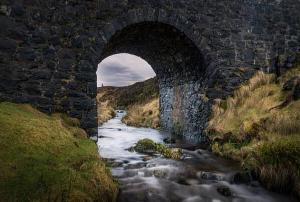
No list of Isle of Skye attractions is complete without mentioning Sligachan, a small settlement where the Red and Black Cuillin meet. The old stone bridge here, with the mountains rising directly behind it, is one of the most reproduced images of the Isle of Skye in tourism marketing, and for good reason, the reflection shots on a still day are hard to beat. The Sligachan Hotel next door has served walkers and climbers for well over a century and remains a solid stop for a hot meal after a day on the hills.
Further attractions worth folding into an Isle of Skye itinerary include the Clan Donald Centre near Armadale, which combines woodland gardens with exhibitions on the MacDonald clan’s history, and the small but well-regarded Skye Weavers, a working croft where visitors can watch traditional cloth production using local wool.
| Attraction | Time Needed | Best For |
|---|---|---|
| Old Man of Storr | 1.5–2 hours | Photographers, casual walkers |
| The Quiraing | 2.5–3 hours | Experienced walkers |
| Fairy Pools | 1–1.5 hours | Families, casual visitors |
| Dunvegan Castle | 2–3 hours | History lovers, families |
| Neist Point | 1–1.5 hours | Sunset views, couples |
Hestroy
Hestroy is a small croftland area on Skye’s Trotternish peninsula, often overlooked by visitors focused on the ridge itself. It offers quiet, low-traffic walking with sweeping views across to Raasay and the mainland mountains beyond. If you want a break from the busier honeypot sites, a short detour through this area gives a genuine sense of how crofting communities on the Isle of Skye still function today, with working sheep enclosures and traditional stone dwellings still visible along the route.
Visiting areas like Hestroy is a good reminder that the Isle of Skye isn’t just a collection of famous viewpoints, it’s still a working landscape shaped by generations of crofting families. Walking through these quieter parts of the island gives context to the more dramatic scenery further along the Trotternish peninsula, and it’s a worthwhile stop for travellers who want a slower, more grounded side of the Isle of Skye alongside the postcard shots.
Hidden Gems
Not every worthwhile spot on Skye makes the front page of a guidebook. Coral Beach, near Dunvegan, is made up of bleached coralline algae rather than actual coral, giving it an unusually pale, almost tropical look against the cold Atlantic water. The walk from the car park at Claigan takes about 25 minutes each way.
The Old Man of Storr’s quieter neighbour, the Lealt Falls, offers a short, easy walk to a waterfall that most tour buses skip entirely. Kilt Rock, a short drive north, combines a waterfall with dramatic basalt column cliffs that genuinely resemble pleats in a kilt.
For a slower pace, the fishing village of Elgol looks out over Loch Scavaig toward the Cuillin, and boat trips from here into Loch Coruisk skip the crowds almost entirely while delivering some of the best mountain views on the island.
The Fairy Glen, near Uig, is a small area of unusually shaped grassy hillocks that looks almost artificial, though it’s entirely natural. It’s compact enough to explore in 30-45 minutes and rarely gets crowded, even in July and August, making it a good option for travellers who want dramatic scenery without the queues at Storr or the Quiraing.
Dun Beag Broch, a well-preserved Iron Age tower near Struan, offers a quieter alternative to the island’s more famous castles. Entry is free, and the short walk up to the broch gives sweeping views over Loch Bracadale. Few tour groups stop here, which makes it a good pick for solo travellers or anyone wanting a moment of quiet.
For travellers willing to venture slightly further off the beaten path, Suisnish and Boreraig, two abandoned crofting settlements south of Elgol, tell one of the more sobering chapters of the Isle of Skye’s history. Cleared of residents in the 19th century, the ruined stone walls sit in a strikingly beautiful setting overlooking Loch Slapin, and the walk in, roughly 2-3 hours round trip on rough terrain, rewards visitors with both scenery and a tangible sense of the island’s past.
Another underrated corner of the Isle of Skye is Rubh’ an Dunain, a remote headland south of Glenbrittle reachable by a longer coastal walk. It combines Iron Age remains, a Neolithic chambered cairn, and views straight into the Cuillin, all without another visitor in sight on most days. These lesser-known spots are exactly what turn a good Isle of Skye trip into a memorable one.
Best Beaches and Coastal Walks
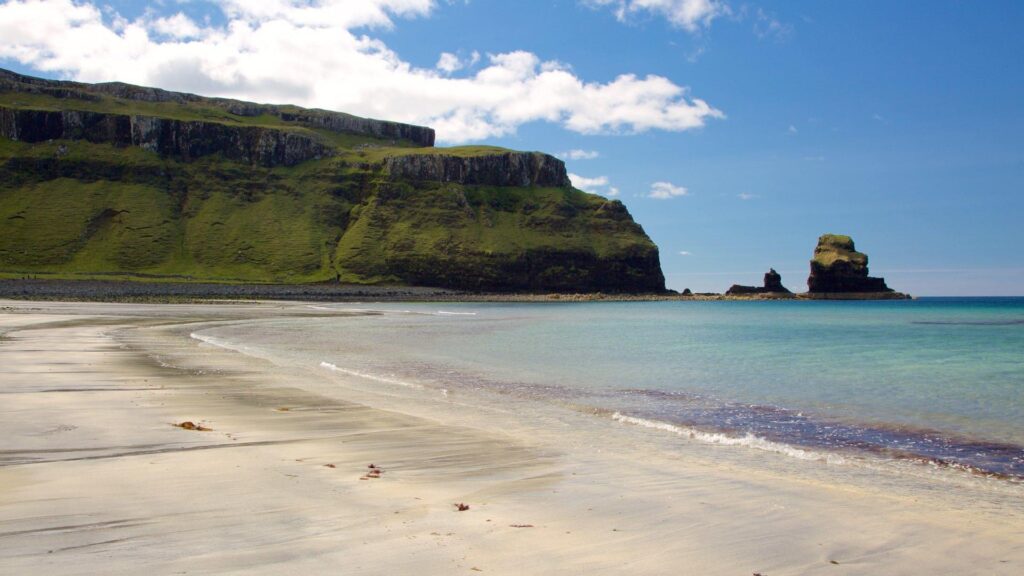
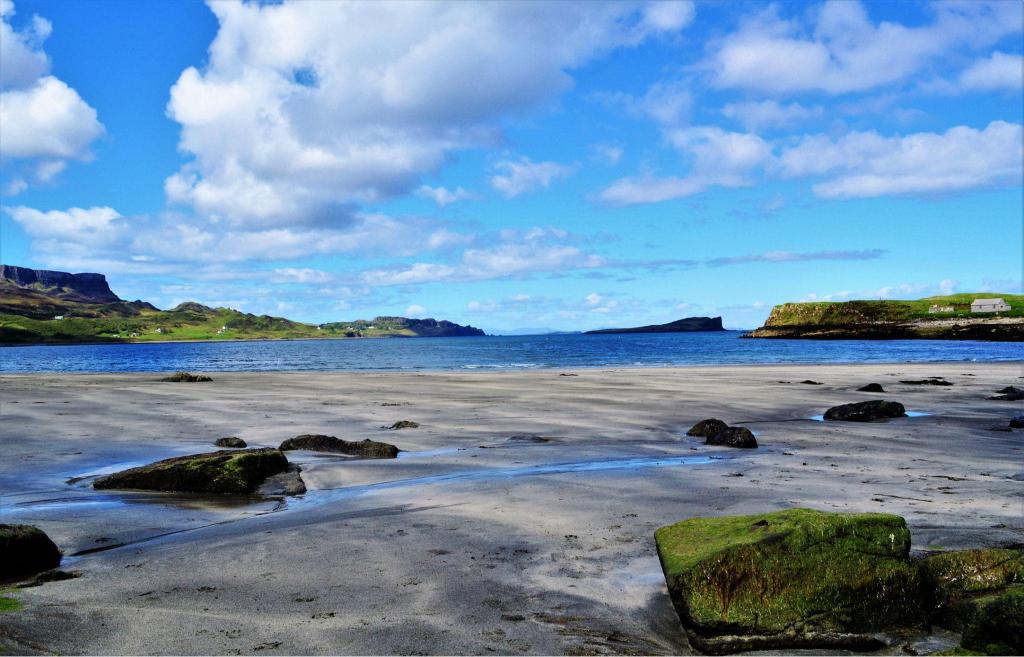
Skye isn’t known primarily for beaches, but a handful stand out. Coral Beach near Dunvegan and Camas Daraich near Elgol both offer sand and sea views without heavy foot traffic. Talisker Bay, reached via a 20-minute walk from a small car park, combines a black sand beach with a waterfall and a distant sea stack.
For coastal walking, the path from Rubha Hunish at Skye’s northern tip offers cliff-top views and a good chance of spotting minke whales or dolphins between May and September. The walk is roughly 6km round trip on mostly flat terrain, making it accessible for most fitness levels.
Staffin Beach, on the east coast, is worth visiting at low tide, when dinosaur footprints, genuine fossilised tracks dating back roughly 165 million years, become visible in the exposed rock. It’s a strange, low-key attraction that most visitors walk straight past without realising what they’re looking at, so checking tide times in advance makes a real difference.
For photography, coastal spots along Skye generally work best in the two hours after sunrise or before sunset, when the low light picks out texture in the cliffs and water. Bring a wide-angle lens if you have one, and check tide tables before heading to any beach walk, since several routes, including Coral Beach, become difficult to navigate at high tide.
The Isle of Skye’s coastline is far more varied than its reputation as a “mountain island” suggests. On the Sleat peninsula in the south, sheltered beaches like Camas Daraich near the Point of Sleat lighthouse feel almost Mediterranean on a calm summer day, with turquoise water over pale sand. This part of the Isle of Skye sees noticeably fewer visitors than the north, largely because it requires a longer detour off the main route, which makes it a good choice for anyone wanting a quieter coastal walk.
For a longer coastal challenge, sections of the Skye Trail, a roughly 128km unofficial long-distance route running the length of the island, follow dramatic clifftop paths that most day-trippers never see. Even sampling a short section near Staffin or Duntulm gives a strong sense of why coastal walking is one of the most rewarding, and least crowded, ways to experience the Isle of Skye.
Local Food and Famous Specialties
Skye’s food scene punches well above its size, largely thanks to the quality of local seafood. Langoustines, scallops, and Skye crab show up on menus across the island, often caught the same day. The Three Chimneys near Dunvegan has built an international reputation for seafood-focused fine dining, though booking well ahead is essential.
For something more casual, seafood shacks near Portree harbour and Carbost sell fresh-cooked shellfish for a fraction of restaurant prices. Talisker whisky, produced at the island’s distillery since 1830, remains the most recognisable Skye product outside Scotland, known for its peppery, smoky character.
Don’t skip the baking. Island bakeries serve Skye-made oatcakes, cranachan (a dessert of whipped cream, whisky, honey, and toasted oats), and locally produced cheeses from small-batch dairies.
Budget-wise, expect to pay roughly £15-£25 for a hearty pub meal, £30-£50 per person for a mid-range seafood dinner, and considerably more at fine-dining spots like the Three Chimneys, where tasting menus can run past £100 per person. Seafood shacks and takeaway vans offer the best value, often serving a full plate of fresh langoustines or scallops for under £15.
For self-catering visitors, most villages have a small Co-op or independent grocer, though selection narrows the further north or west you go, so stocking up in Portree or Broadford before heading to remote accommodation is a sensible move.
Food is one of the more underrated reasons to visit the Isle of Skye. Beyond the well-known seafood scene, small producers across the island have built a reputation for quality over the past two decades. Isle of Skye Sea Salt, hand-harvested from the waters around the island, appears on menus at some of Scotland’s top restaurants, while Skye Gin, distilled using botanicals foraged locally, has become a popular alternative to the whisky trail for visitors who prefer spirits with a lighter profile.
Farmers’ markets and small food fairs pop up seasonally in Portree and Broadford, offering a chance to buy direct from island producers, from honey and preserves to smoked fish and handmade chocolate. If your Isle of Skye trip coincides with one of these events, it’s well worth the detour, both for the food itself and for the chance to talk directly with the people producing it.
Best Time to Visit
Quick Facts:
- Peak season: June to August
- Best for fewer crowds: April, May, September
- Midge season: late May to September, worst in still, humid conditions
- Winter daylight: as little as 7 hours in December
Summer brings the longest daylight hours, often over 18 hours in June, but also the biggest crowds and the most persistent midges, Scotland’s notorious biting insects. Late spring (April–May) and early autumn (September) offer a good balance: reasonable weather, thinner crowds, and fewer midges.
Winter visits are quieter and can deliver dramatic stormy-sky photography, but many smaller attractions and cafes reduce their hours or close entirely, and some single-track roads can be affected by snow or heavy rain.
Rainfall is a near-constant factor on Skye, with the island seeing rain on more days than not throughout the year, so packing proper waterproofs matters more than picking a specific month. That said, the changeable weather is part of what makes the landscape so photogenic, with light shifting quickly between sun and storm, especially around the Cuillin and Trotternish ridges.
Wildlife-watching also has its own calendar. Minke whales and dolphins are most visible from boat trips between May and September, while golden eagles and white-tailed sea eagles can be spotted year-round, though sightings are more frequent in the quieter shoulder seasons when there’s less foot traffic to disturb them.
Timing your Isle of Skye trip also depends on what you want from the visit. Photographers chasing dramatic light often prefer the shoulder seasons or even winter, when storms roll through and clear skies afterward produce sharp, high-contrast scenery. Hikers heading into the Cuillin should note that snow can linger on higher routes into late spring, so early-season visitors attempting mountain walks need to check conditions carefully and carry appropriate gear.
Whichever season you choose, one rule holds for the entire Isle of Skye: pack layers and waterproofs regardless of the forecast. It’s genuinely common to experience sunshine, rain, and wind within the same afternoon, and travellers who arrive prepared for that get far more out of their time on the island than those who don’t.
Where to Stay
Portree works well as a base for most visitors, since it sits roughly central on the island and has the widest choice of restaurants, shops, and accommodation. For those focused on the northern Trotternish sights, staying in or near Staffin cuts down driving time to the Quiraing and Old Man of Storr.
Travellers heading to the Cuillin for hiking often base themselves in Carbost or Glenbrittle, both close to the mountains but with fewer amenities. Budget travellers have a good range of hostels and campsites island-wide, while couples and those wanting more comfort will find boutique guesthouses and a handful of upscale hotels, particularly around Portree and Dunvegan.
Booking accommodation well in advance is strongly advised for summer visits, as Skye’s popularity has outpaced its room capacity in peak months.
Quick comparison:
| Base | Best For | Trade-off |
|---|---|---|
| Portree | First-time visitors, widest amenities | Busier, further from Cuillin |
| Staffin | Trotternish sights (Storr, Quiraing) | Fewer restaurants |
| Carbost/Glenbrittle | Cuillin hiking, Talisker Distillery | Limited shops, longer drive north |
| Broadford | Budget travellers, southern access | Less scenic immediate surroundings |
Expect to pay roughly £25-£40 per night for hostel accommodation, £90-£150 for a mid-range guesthouse or B&B double room, and £180 and up for boutique hotels in peak season. Camping and campervan options are widely available, though wild camping etiquette (leaving no trace, avoiding fragile machair grassland) matters given the volume of visitors the island now receives each summer.
Choosing where to stay on the Isle of Skye shapes the entire rhythm of a trip. Splitting a longer stay between two bases, for example, two nights in Portree followed by two nights in Carbost or Glenbrittle, cuts down on daily driving and lets you explore each region more thoroughly rather than criss-crossing the island every day. This approach works particularly well for visitors spending five days or more on the Isle of Skye.
Self-catering cottages are another popular option, especially for families or groups, and tend to offer better value than hotels for longer stays. Many of these properties sit in small crofting townships rather than the main villages, which means quieter surroundings but also a greater reliance on your own car for reaching restaurants and attractions.
How to Get There
Skye connects to the Scottish mainland via the Skye Bridge at Kyleakin, which requires no toll and makes driving onto the island straightforward from Kyle of Lochalsh. Most visitors drive from Inverness (roughly 2.5 hours) or Fort William (around 1.5–2 hours).
A more scenic option is the Mallaig to Armadale ferry, run by CalMac, which crosses in about 30–45 minutes and connects to the famous Glenfinnan Viaduct route if you’re arriving by the West Highland train line.
There’s no airport on Skye itself, so the nearest options are Inverness Airport (about 2.5 hours by car) or Glasgow Airport for a longer onward drive. Public transport on the island is limited, with a small network of buses connecting main villages, so renting a car is the most practical way to explore Skye’s attractions independently.
For travellers without a car, Scottish Citylink buses run from Inverness and Glasgow to Portree and Broadford, though schedules are infrequent, typically a handful of services per day, and reaching more remote sights like Neist Point or the Fairy Pools without your own transport is genuinely difficult. Guided day tours from Inverness and Portree are a reasonable workaround, covering the main highlights in a single day for those without a rental car.
If you’re bringing a car onto Skye via the Armadale ferry, book vehicle spaces ahead in summer, since sailings can sell out. Fuel is more expensive on the island than on the mainland, so filling up before crossing the bridge or ferry is worth doing where possible.
Getting to the Isle of Skye is easier than many first-time visitors expect, largely thanks to the bridge connection, but the journey itself is worth building into your trip rather than treating as a formality. The drive from Fort William along the A87 passes through Glen Shiel, one of the most scenic mountain passes in the Highlands, and makes a strong case for driving rather than flying wherever your starting point allows it.
For visitors combining Skye with a wider Scotland itinerary, the West Highland Line train from Glasgow to Mallaig, followed by the ferry crossing to Armadale, is one of the most scenic rail journeys in the world and a memorable way to arrive on the Isle of Skye rather than just another logistics step. Booking train and ferry tickets together in advance, especially in summer, helps avoid last-minute availability issues.
Sample 2-Day Itinerary
Day 1: North Skye
Start early in Portree with breakfast before driving north. Walk the Old Man of Storr in the morning while the light is best and crowds are thinner. Continue to Kilt Rock and Lealt Falls for a quick stop, then head to the Quiraing for the afternoon’s main walk. Finish the day back in Staffin or Portree with a seafood dinner.
Day 2: West and South Skye
Head toward Dunvegan Castle for a mid-morning visit, then detour to Coral Beach if time allows. In the afternoon, drive south to Carbost for a Talisker Distillery tour, followed by the walk to the Fairy Pools. If energy allows, finish at Neist Point for sunset before heading back to your accommodation.
This pace assumes a rental car and reasonably fit walkers. Add a third day if you want to include Elgol, Loch Coruisk, or a proper Cuillin hike.
Day 3 (Optional): South Skye and the Cuillin
Drive to Elgol for a morning boat trip into Loch Coruisk, allowing roughly 3 hours including the water crossing. In the afternoon, choose between a Red Cuillin walk from Sligachan for fit hikers, or a gentler stop at Talisker Bay for a shorter, more relaxed finish. This extra day works especially well for hiking-focused visitors or anyone who wants to see the Cuillin up close rather than from a distance.
Whichever version you follow, build in flexibility. Skye’s weather can turn a planned hike into a low-visibility slog within an hour, so having a backup indoor option, like Dunvegan Castle or the Skye Museum of Island Life, is worth keeping in your back pocket.
This itinerary is deliberately built around the most efficient use of driving time, since that’s the biggest constraint on any Isle of Skye trip. If you have more than three days, consider slowing the pace further rather than adding more distant sights, an extra night in Staffin or Elgol lets you catch sunrise or sunset at nearby viewpoints without the early starts or late drives back that a tighter schedule demands.
Travel Tips
- Fuel up in advance. Petrol stations are limited outside Portree, Broadford, and a few other villages.
- Pack for four seasons. Skye’s weather changes quickly regardless of the forecast.
- Bring midge repellent for late spring through early autumn visits.
- Mobile signal is patchy in the north and west, so download offline maps beforehand.
- Single-track roads have passing places. Pull into them to let oncoming traffic through, and never park in one.
- Parking fills quickly at Storr, Quiraing, and Fairy Pools by mid-morning in summer; arrive early or late.
- Book restaurants ahead, especially in Portree during peak season.
For accessibility, note that most of Skye’s famous walks (Storr, Quiraing, Fairy Pools) involve uneven, unpaved terrain and aren’t wheelchair accessible, though Dunvegan Castle and Portree’s harbourfront are much easier to navigate. Families with young children generally find Coral Beach, Talisker Bay, and the shorter section of the Storr path manageable, while solo travellers and couples often gravitate toward the longer Quiraing loop or a Cuillin day hike for a bigger sense of achievement.
A few more practical points make a real difference to an Isle of Skye trip. Cash machines are limited outside the main villages, so carrying some cash alongside cards is sensible, particularly for smaller cafes and craft shops. Public toilets are also sparser than visitors expect, with facilities concentrated at the main car parks like Storr, Quiraing, and the Fairy Pools, so plan accordingly on longer driving days between stops.
Finally, respect the land. The Isle of Skye’s popularity has put real pressure on fragile verges and machair grassland from illegal parking and informal camping, so always use designated car parks and campsites, and follow the Scottish Outdoor Access Code if you’re wild camping or walking off the main paths.
Nearby Places to Visit
The Isle of Raasay, a short ferry ride from Sconser, offers quieter walking trails and views back toward the Cuillin. Eilean Donan Castle, on the mainland near Kyle of Lochalsh, is one of Scotland’s most photographed castles and makes a natural stop on the drive to or from Skye. Glenfinnan, home to the viaduct made famous by the Harry Potter films, sits within a scenic detour if you’re travelling via Mallaig.
Frequently Asked Questions
How many days do you need on the Isle of Skye?
Three to four days is a comfortable minimum to see the main sights without rushing. A week allows time for longer hikes, boat trips, and slower exploration of the island’s quieter corners.
Is the Isle of Skye worth visiting?
Yes. Skye offers some of the most dramatic scenery in the UK, combining mountains, sea cliffs, and coastline within a compact, drivable area, along with strong food and whisky traditions.
Do you need a car on Skye?
A car is strongly recommended. Public transport exists but runs infrequently, and many of Skye’s best sights sit well outside walking distance from towns.
What is the best month to visit Skye?
May and September offer a good mix of decent weather, longer daylight, and fewer crowds than peak summer, along with a lower risk of midges compared to July and August.
Are the Fairy Pools free to visit?
Yes, there is no entry fee, though parking at the car park usually requires a small fee.
Is the Isle of Skye good for beginners at hiking?
Many walks, like the Old Man of Storr and Fairy Pools, suit beginners on well-maintained paths. The Cuillin ridge, by contrast, requires serious hillwalking or scrambling experience.
How do you get from Edinburgh to Skye?
The drive takes roughly 5.5 to 6 hours. Alternatively, take a train to Inverness or Fort William and continue by bus or rental car.
Can you see the Northern Lights from Skye?
Occasionally, during strong solar activity between autumn and early spring, the Northern Lights are visible from Skye’s northern coastline, though sightings aren’t guaranteed.
What is Skye famous for?
Skye is best known for the Cuillin mountains, the Old Man of Storr, the Quiraing, Talisker whisky, and its dramatic, ever-changing coastal scenery.
Is Portree the best place to stay on Skye?
Portree is the most central and well-equipped base, with the widest choice of restaurants and accommodation, though travellers focused on specific regions may prefer staying closer to those sights.
How much does a trip to the Isle of Skye cost?
Budget travellers can manage on roughly £60-£80 per day covering hostel accommodation, self-catering, and free attractions. Mid-range travellers should budget £120-£180 per day including guesthouse stays, restaurant meals, and paid attractions like castle entry or distillery tours.
Is Skye busy with tourists?
Yes, particularly at honeypot sites like the Old Man of Storr, the Quiraing, and the Fairy Pools during July and August. Visiting early morning or in shoulder season months significantly reduces crowd levels at these popular spots.
Conclusion
The Isle of Skye rewards travellers who slow down enough to actually walk its landscapes rather than just photograph them from a car window. Between the Cuillin’s jagged peaks, the folded ridges of the Trotternish peninsula, and the quiet crofting villages tucked along the coast, there’s enough here to fill a long weekend or a full week without repeating yourself.
Plan around the weather, book accommodation early for summer visits, and leave room in your itinerary for at least one proper hike. Skye has a way of changing plans anyway, usually for the better.