
Table of Contents
Black Mountains Wales
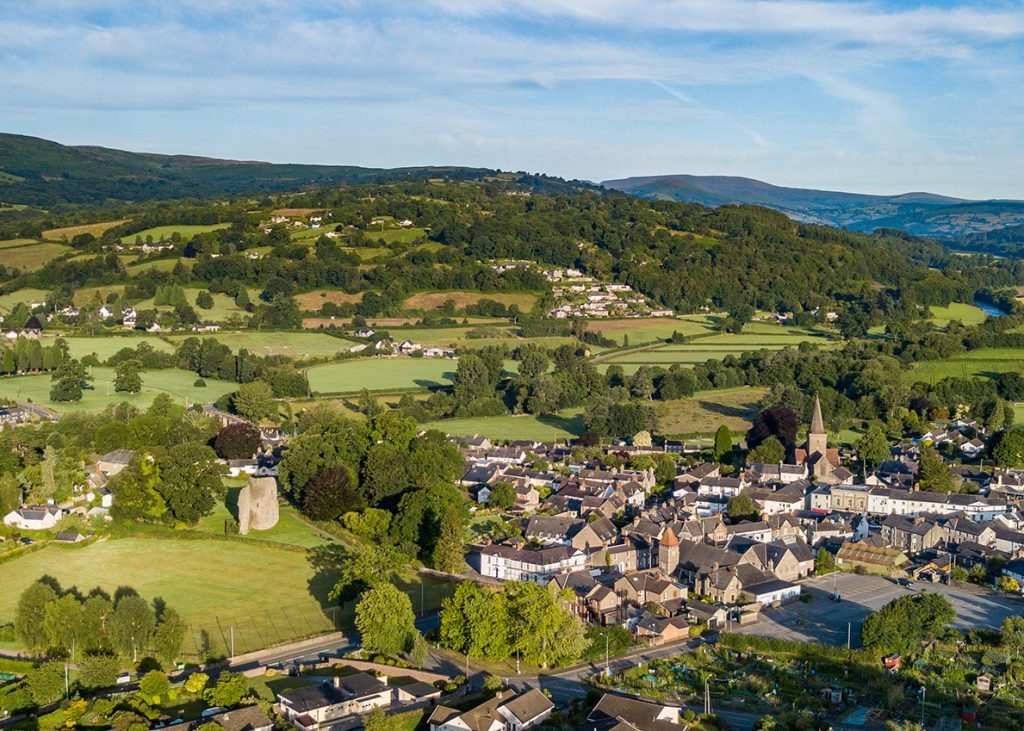
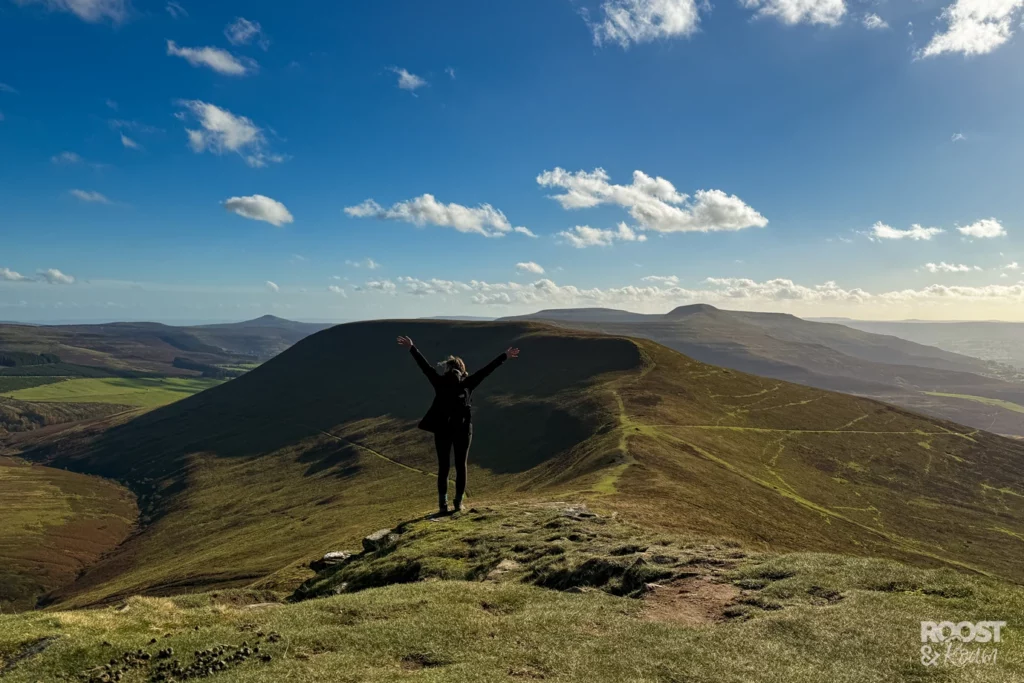
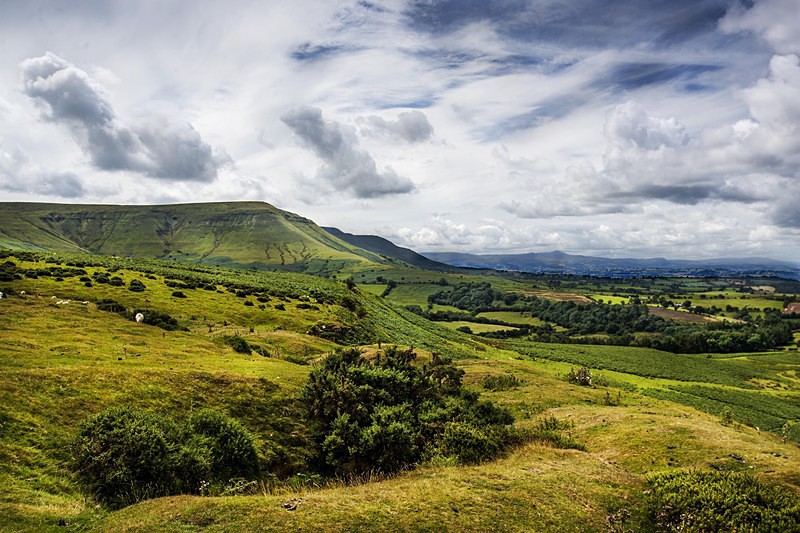
The Black Mountains Wales region sits quietly at the eastern edge of Bannau Brycheiniog National Park (formerly known as the Brecon Beacons), and for many visitors it’s the part of Wales that stays with them longest. This is a landscape of long grassy ridges, steep-sided valleys, and a scattering of villages that seem barely touched by the last century. Unlike the busier peaks further west, the Black Mountains rarely feel crowded, even on a clear summer weekend.
Geographically, the range spans the border counties of Powys and Monmouthshire, stretching from Hay-on-Wye in the north down to Abergavenny in the south, with the England-Wales boundary running along part of the eastern ridge. Four long parallel ridges cut through the area, separated by valleys that each have their own character: the wooded, quiet Vale of Ewyas, the open moorland of the Olchon Valley, and the gentler farmland around Talgarth and Crickhowell.
This guide is built for anyone planning a visit, whether that’s a single day trip from Abergavenny, a weekend of proper ridge walking, or a slower few days based in Hay-on-Wye with the odd short walk mixed in with bookshops and cafes. It covers the best things to do in the Black Mountains, the main hiking routes and their difficulty, how to get there and where to park, the best time of year to visit, and where to stay depending on your budget and style of trip.
What makes this area different from better-known parts of Wales is the sense of space. There are no cable cars, no crowded summit cafes, and often no phone signal once you’re up on the ridge. That’s part of the appeal, but it also means a bit more planning is needed than you’d expect for a UK day out. Weather changes quickly up here, some of the roads into the valleys are single track with few passing places, and public transport barely reaches some of the smaller villages.
Whether you’re after a serious day of ridge walking to Waun Fach, a gentle stroll around the ruins of Llanthony Priory, or simply a scenic drive over Gospel Pass, this guide covers what you need to know before you go. By the end, you should have a clear picture of which parts of the Black Mountains suit your trip, how much time to allow, and what to pack for a landscape that can shift from sunshine to low cloud within the hour.
Where Are the Black Mountains in Wales?
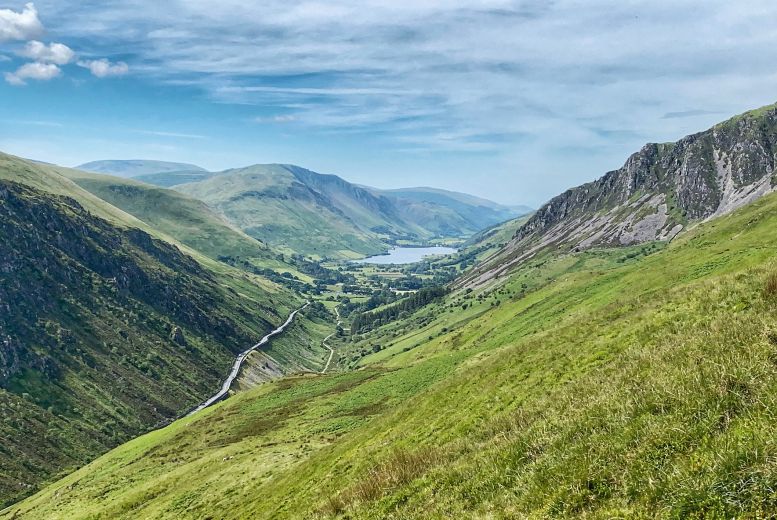
The Black Mountains lie in southeastern Wales, forming the easternmost range within Bannau Brycheiniog National Park. They’re often confused with the similarly named Black Mountain, a separate range of hills to the west near Llandeilo, so it’s worth being clear on which one you’re heading for. This guide covers the Black Mountains proper: the block of hills between Hay-on-Wye, Talgarth, Crickhowell, and Abergavenny.
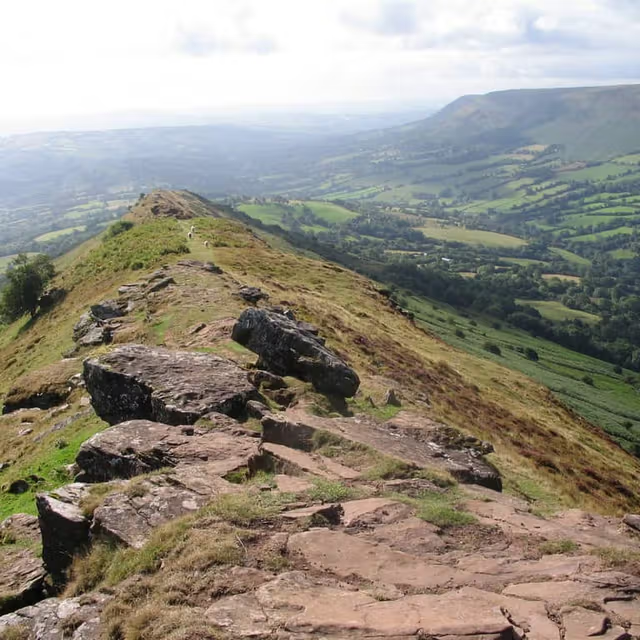
The range is defined by four main ridges running roughly north to south. Hatterrall Ridge forms the eastern boundary and marks the England-Wales border for much of its length, with the Olchon Valley on the English side and the Vale of Ewyas on the Welsh side. To the west, the ridges rise to Waun Fach, the highest point in the Black Mountains at 811 metres, along with Pen y Gadair Fawr and Y Grib.
Market towns ring the edges of the range. Hay-on-Wye sits at the northern tip, Talgarth and Crickhowell along the western side, and Abergavenny to the south. Each makes a reasonable base, though they offer quite different experiences: Hay leans towards books and cafes, Crickhowell has a strong food scene, and Abergavenny gives easier access to the southern ridges and the smaller hills of Skirrid and Sugar Loaf.
Within the range itself, settlements are sparse. Llanthony, Capel-y-ffin, and Cwmyoy are little more than hamlets, each with a pub or two and a handful of farms, tucked into the Vale of Ewyas. This is deliberate: much of the land is common grazing and open access moorland, protected from significant development, which is exactly why the walking here feels so uninterrupted.
Why Visit the Black Mountains?
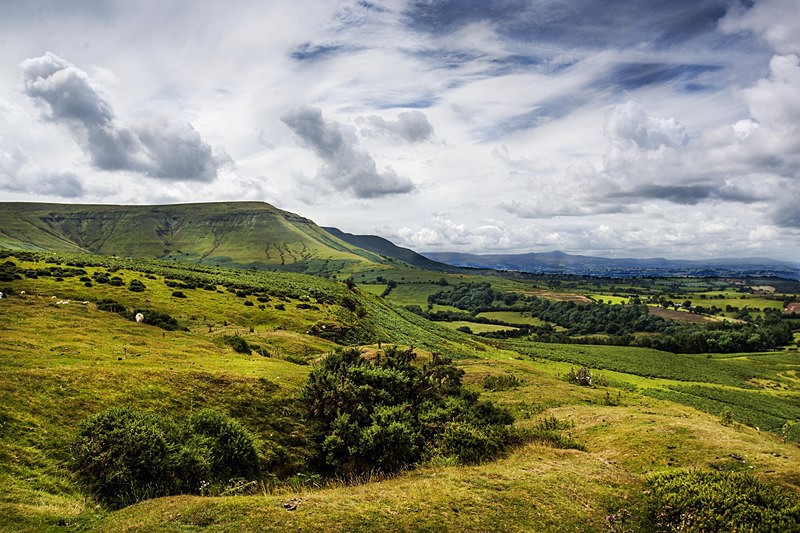
The main draw is space. Compared with the central Brecon Beacons around Pen y Fan, which can see thousands of visitors on a summer weekend, the Black Mountains stay comparatively quiet even on the more popular routes like Hay Bluff. You can walk for hours along a ridge and see only a handful of other people, which is increasingly rare in accessible parts of the UK.
The scenery rewards that effort. From the main ridgelines, views stretch across the Wye Valley and into Herefordshire on one side, and back across the rolling hills of the national park on the other. On a clear day it’s possible to pick out the Malvern Hills, the Skirrid, and even the distant shape of the Brecon Beacons’ central peaks.
History runs through the landscape too. Llanthony Priory, a roofless 12th-century Augustinian ruin set in the Vale of Ewyas, is one of the most atmospheric historic sites in Wales, and the Offa’s Dyke Path follows the eastern ridge for miles, tracing the line of an 8th-century earthwork built to mark the boundary between Wales and Mercia.
For hikers specifically, the Black Mountains offer genuine remoteness within a day’s drive of Cardiff, Bristol, or Birmingham. Routes like the ridge walk from Hay Bluff to Waun Fach demand proper navigation and weather awareness, appealing to walkers who want a step up from waymarked trails. At the same time, gentler options exist for families and less experienced walkers, particularly around Llanthony and the lower parts of the Vale of Ewyas.
Finally, the surrounding towns add real value to a visit. Hay-on-Wye’s bookshop culture and its annual literary festival give the area a cultural pull beyond hiking, while Crickhowell and Abergavenny have built strong reputations for independent food and drink. A trip here rarely feels like walking for its own sake; there’s always somewhere good to eat or browse afterwards.
Best Things to Do in the Black Mountains
There’s more to this region than ridge walking, though that remains the headline activity for most visitors. Here’s a rundown of the things worth building a trip around.
Walk the Hatterrall Ridge on Offa’s Dyke Path. This is the classic Black Mountains outing, following the England-Wales border along an open, grassy ridge with views into both the Olchon and Ewyas valleys.
Explore Llanthony Priory. The 900-year-old ruin is free to enter and sits beside a small hotel with a bar in the old crypt, making it an easy stop whether you’re walking or driving through.
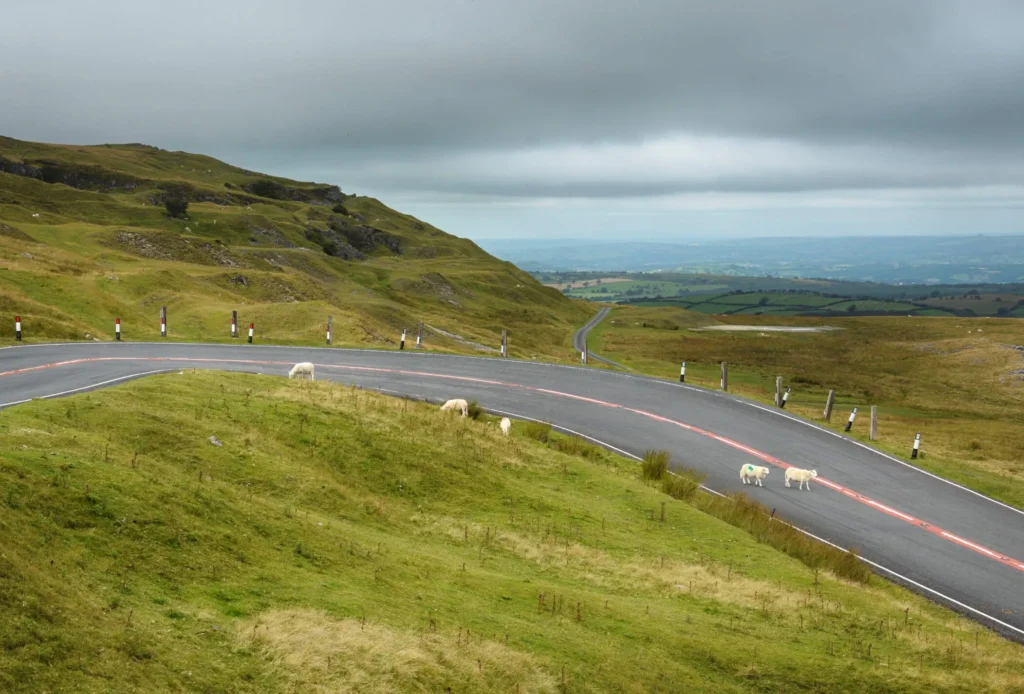
Drive or cycle over Gospel Pass. At around 550 metres, this is the highest road pass in Wales, connecting Hay-on-Wye with the Vale of Ewyas via Capel-y-ffin, with pull-in spots for photographs along the way.
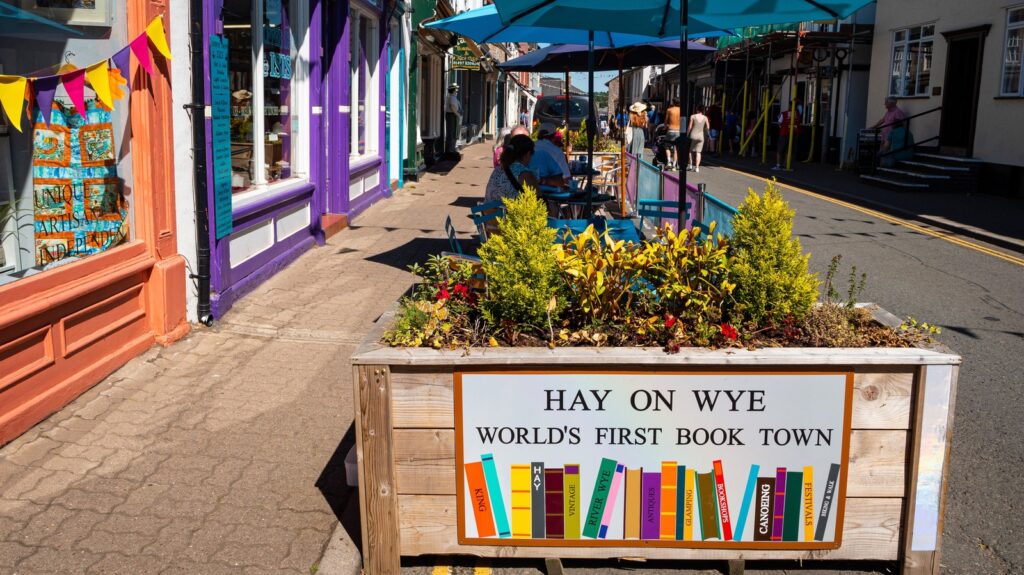
Browse the bookshops of Hay-on-Wye. Wales’s self-declared book town has dozens of independent and secondhand bookshops, plus a well-known literary festival held each spring.
Visit Capel-y-ffin. This tiny hamlet at the head of the Vale of Ewyas has a striking, isolated church and was once home to an experimental religious community; it’s a quiet, atmospheric stop on the road to Gospel Pass.
Climb Hay Bluff and Twmpa. These twin summits at the northern end of the range give some of the most accessible high-level views in the Black Mountains, reachable via a shorter, steeper route than the full ridge walks further south.
Cycle the Wye Valley. The relatively flat road south from Hay-on-Wye towards Glasbury suits cyclists who want valley scenery without tackling the mountain gradients.
Visit Tretower Court and Castle. A few miles from Crickhowell, this well-preserved medieval site combines a fortified tower with a later manor house, giving useful historical context to the region beyond the priory ruins.
Most visitors combine two or three of these into a single day, pairing a walk with a shorter cultural stop such as the priory or Hay-on-Wye’s bookshops.
Best Walks and Hiking Trails in the Black Mountains
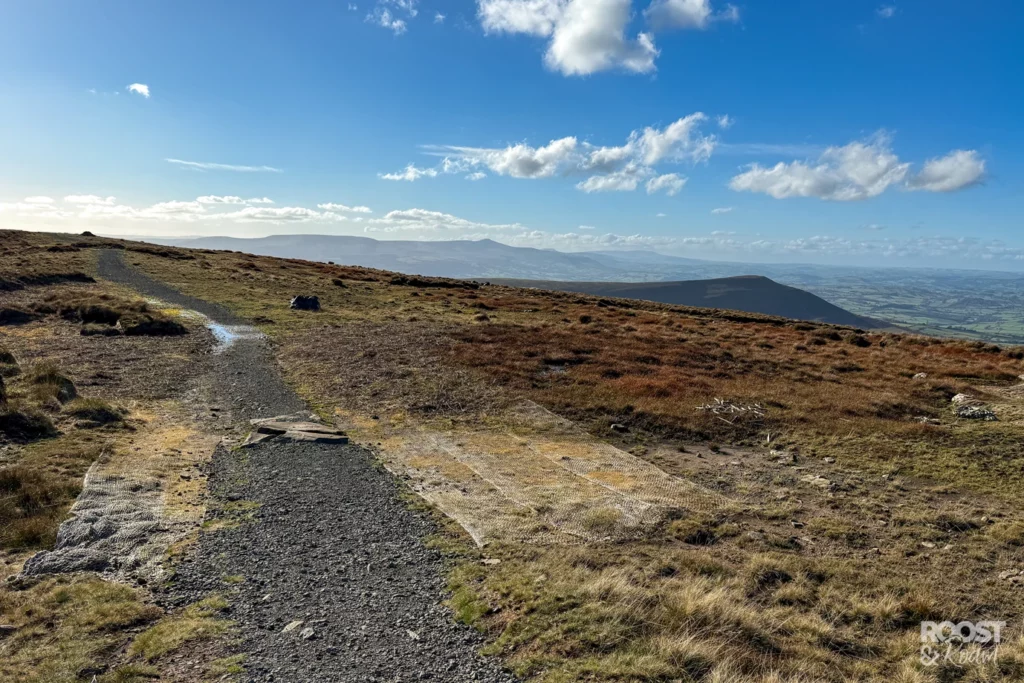
Walking is the main reason most people travel here, and the range offers routes across a genuine spread of difficulty. Below are the main options, roughly ordered from easier to more demanding.
Llanthony Priory Circular Walk
Starting and finishing at the priory, this roughly 8-mile circular route climbs onto the lower slopes above the Vale of Ewyas before dropping back down through farmland. It’s a good introduction to the area’s scenery without committing to a full ridge crossing, and the historic ruin at both the start and end makes for a satisfying bookend. Expect several stiles and some muddy sections after rain, so waterproof footwear is worth having even in summer.
Hay Bluff and Twmpa Circular
This is the most popular shorter walk in the northern Black Mountains, taking in two summits from a car park near Gospel Pass. The initial climb to Hay Bluff is the steepest part of the route, but once on the plateau the walking eases considerably. From the top, views open out across the Wye Valley towards Herefordshire and back over the moorland tops of the central Black Mountains. The route was used in the opening scenes of the film An American Werewolf in London, a detail many walkers enjoy pointing out at the summit trig point.
Hatterrall Ridge: Llanthony to Hay-on-Wye
For walkers wanting a longer, point-to-point day, this stretch of the Offa’s Dyke Path runs along the border ridge between Llanthony and Hay-on-Wye. It’s roughly 12 to 13 miles depending on the exact start and end points, with sustained ridge walking rather than sharp climbs, and reasonably straightforward navigation in good visibility since the path largely follows the ridgeline itself. Arranging transport back to your start point takes some planning, since this isn’t a circular route; many walkers use two cars or a local taxi.
Waun Fach via Pen y Gadair Fawr
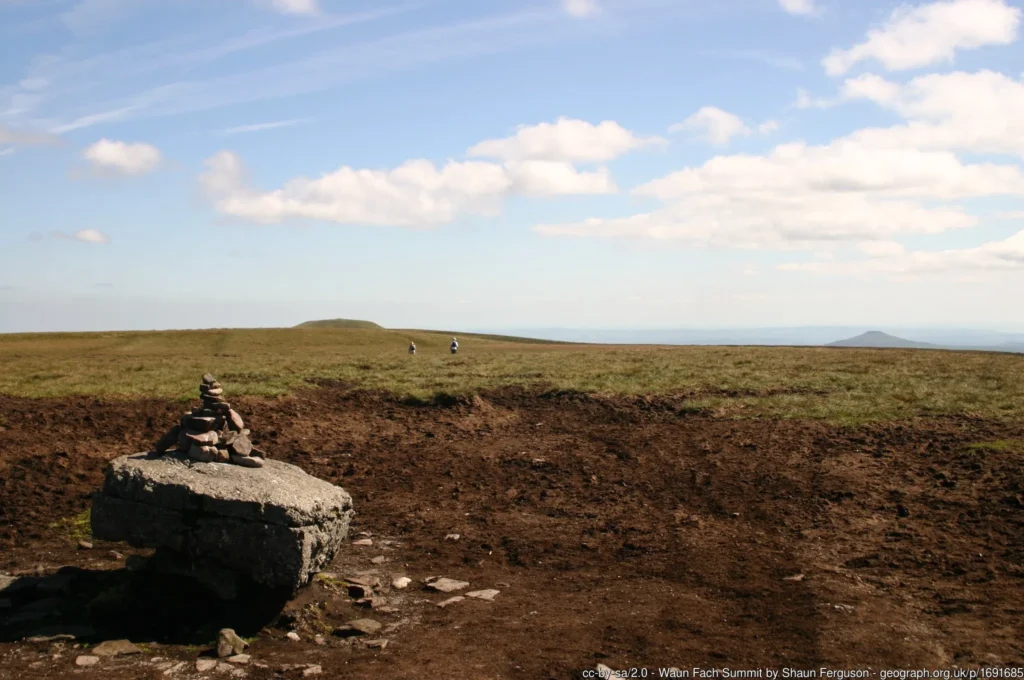
For those wanting to reach the highest point in the Black Mountains, the walk to Waun Fach at 811 metres typically starts from the Grwyne Fawr reservoir or from Crickhowell, climbing via Pen y Gadair Fawr along an open, often boggy plateau. This is a longer and more serious outing, generally 10 to 12 miles round trip with several hundred metres of ascent, and the flat, featureless summit plateau has caught out walkers in poor visibility in the past. A map, compass, and the confidence to use both are genuinely necessary here, not just recommended.
The Cat’s Back Circular
A shorter but rewarding route near Longtown on the English side of the border, the Cat’s Back is a narrow, exposed ridge that gives a strong sense of height and drama for relatively little distance covered. It connects into the wider Black Mountains network via Hatterrall Ridge for those wanting to extend the walk, but also works well as a standalone half-day trip.
Multi-Day Options: The Beacons Way
Long-distance walkers can tackle a section of the Beacons Way, a 100-mile linear route across the wider national park. The stretch from Llanthony Priory to Crickhowell crosses three of the four main Black Mountains ridges in a single day, passing above the Usk, Honddu, Grwyne Fawr, and Grwyne Fechan valleys. This is a serious undertaking best suited to fit, experienced hillwalkers, and typically requires overnight accommodation booked in advance given the limited options along the route.
How to Get to the Black Mountains
Driving is by far the easiest way to explore the Black Mountains, and for some of the more remote valleys it’s the only realistic option. The region sits close to the M4 and M50 corridors, making it accessible in under two hours from Cardiff, Bristol, and Birmingham, and around three hours from London.
For the southern approach, leave the A465 Heads of the Valleys road at Llanvihangel Crucorney and follow the signs for Llanthony to reach the Vale of Ewyas. This road narrows quickly into single-track lanes with high hedges and limited passing places, so it’s worth allowing extra time and driving cautiously, particularly in summer when the route sees more traffic from walkers and cyclists.
Hay-on-Wye is reachable via the A438 from Hereford or the A470 from Brecon, and makes a practical base with more parking and services than the villages further into the hills. From Hay, the B4423 climbs over Gospel Pass into the Vale of Ewyas, connecting the northern and southern parts of the range by road, though this route can close in heavy snow.
Public transport is limited once you’re off the main roads. The nearest train stations are at Abergavenny and Hereford, both served by regular services from Cardiff, Newport, and Birmingham. From either station, you’ll need a taxi or pre-arranged transport to reach most of the walking trailheads, since bus services into the Black Mountains villages are infrequent and in some cases seasonal only.
Cyclists sometimes approach the region as part of longer touring routes, with the climb over Gospel Pass considered one of the tougher road climbs in Wales. It’s a popular training route for cyclists preparing for mountain climbs elsewhere, so expect some company on the road during summer weekends.
For walkers tackling the Offa’s Dyke Path, the trail itself provides a car-free way to move through the region on foot, though logistics for point-to-point routes still need planning, whether that’s arranging a taxi back to the start or using two vehicles.
Best Time to Visit the Black Mountains
Late spring through early autumn, roughly May to September, offers the most reliable walking conditions, with longer daylight hours and a lower chance of the low cloud that regularly settles on the ridges outside summer. June and September in particular tend to combine decent weather with fewer visitors than the height of the school holidays in July and August.
Spring brings green hillsides and newborn lambs in the surrounding farmland, along with the Hay Festival in late May, which draws visitors specifically to Hay-on-Wye and can affect accommodation availability in the town itself. Wildflowers and bird activity pick up through May and June across the lower valleys.
Summer is the most popular season, particularly on weekends, though even then the Black Mountains rarely feel as busy as central areas of the national park. Long daylight hours make the longer ridge walks more manageable, and the roads over Gospel Pass and through the Vale of Ewyas are at their most accessible.
Autumn, especially October, brings strong colour to the wooded lower valleys around Llanthony and Cwmyoy, along with quieter trails as the summer crowds thin out. Days shorten quickly though, so start walks earlier and keep an eye on remaining daylight if you’re planning anything beyond a short circular route.
Winter is the most demanding season here. Snow and ice are common on the higher ridges, Gospel Pass can become impassable, and the featureless plateau around Waun Fach becomes genuinely hazardous in low visibility without proper winter hillwalking experience and equipment. That said, a clear winter’s day on the lower valley walks around Llanthony can be spectacular, with far fewer people and crisp long-distance views. Winter visits are best suited to those prepared to adjust or cancel plans based on conditions, rather than those committed to a specific route regardless of weather.
Whatever the season, weather on the open ridges can shift quickly, and it’s worth checking a mountain-specific forecast rather than the general town forecast before setting out on anything above the valley floor.
Where to Stay in the Black Mountains
Accommodation options range from small hotels and inns within the hills themselves to a wider choice of B&Bs, self-catering cottages, and hotels in the surrounding towns.
Within the range itself, options are limited but atmospheric. The Llanthony Priory Hotel occupies part of the old priory crypt, giving guests the unusual experience of staying inside a 12th-century ruin, complete with a bar in the vaulted undercroft. The Half Moon Hotel in Llanthony is a popular stop for walkers tackling the ridge routes, offering straightforward rooms and hearty breakfasts geared towards early starts.
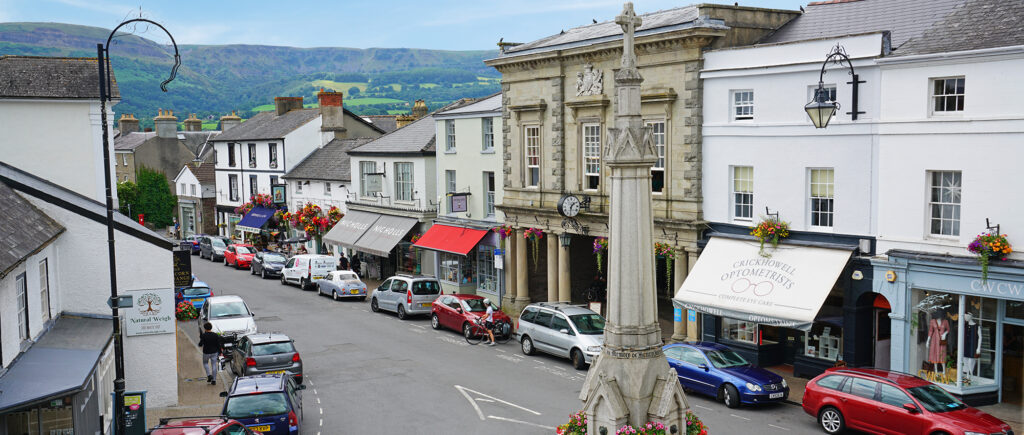
Hay-on-Wye offers the widest range of accommodation near the northern edge of the Black Mountains, from independent guesthouses to self-catering flats above the town’s bookshops. Staying here suits visitors who want to mix walking with the town’s cafes, bookshops, and easy access to Gospel Pass, though it does mean a drive of 15 to 20 minutes to reach trailheads further into the hills.
Crickhowell, on the southwestern edge of the range, has built a strong reputation for its food scene alongside a good spread of B&Bs and boutique hotels, making it a comfortable base for walkers tackling the Waun Fach and Pen y Gadair Fawr routes. Abergavenny offers similar convenience for the southern approaches, plus better rail connections for visitors arriving without a car.
For a closer-to-nature option, several campsites and glamping sites operate around Cwmdu and Llangorse, giving easy access to both the Black Mountains and the wider national park. These suit visitors planning multiple days of walking who don’t mind a simpler base, and several offer dog-friendly cottages alongside pitches for tents and camper vans.
Booking ahead is strongly recommended for anything within the hills themselves, particularly the Llanthony Priory Hotel and Half Moon Hotel, both of which have limited rooms and see steady demand from walkers throughout the main season.
Food and Drink in the Black Mountains
Options within the hills are limited but characterful. The Half Moon Hotel and the Llanthony Priory Hotel both serve straightforward pub food geared towards hungry walkers, with the priory’s undercroft bar offering a genuinely memorable setting for a post-walk pint. Beyond these, don’t expect cafes or shops in the smaller hamlets; Capel-y-ffin and Cwmyoy have no commercial facilities at all, so plan meals and snacks around Llanthony or the surrounding towns.
Hay-on-Wye has a wider range, from casual cafes tucked between bookshops to a handful of well-regarded restaurants, many leaning towards local Welsh produce and seasonal menus. It’s a good spot for a proper sit-down meal after a day on Hay Bluff or the northern ridge.
Crickhowell has developed a genuine reputation beyond its size, with several independent bakeries, delis, and restaurants that draw visitors specifically for the food. It’s worth allowing time here even if walking isn’t the main focus of your day. Abergavenny, slightly larger again, hosts a well-known food festival each September and has a solid base of independent restaurants and a produce-focused market.
For walkers heading into the hills for a full day, it’s worth stocking up on supplies in one of these towns beforehand, since there’s genuinely nowhere to buy food once you’re on the open ridges.
Family-Friendly and Easier Activities
Not every visit needs to involve a serious ridge walk. Llanthony Priory itself is an easy, flat stop suitable for all ages, with the ruins free to explore and a short, level walk around the site. Children tend to enjoy the atmosphere of the roofless nave and the old crypt bar next door, even if the history goes over their heads.
The drive over Gospel Pass works well as a scenic activity for families who’d rather stay in the car, with several safe pull-in points to stop, take photographs, and let children stretch their legs without committing to a full walk. Hay-on-Wye offers an easy day out in itself, with bookshops, cafes, and a gentle riverside walk along the Wye that suits pushchairs and younger children.
For families wanting a short taste of the hills without a demanding climb, the lower section of the Llanthony Priory circular walk can be shortened into a there-and-back route of a mile or two, giving a sense of the valley scenery without the full climb onto the ridge. Cycling the flatter road south of Hay-on-Wye towards Glasbury is another family-friendly option, following the river on largely quiet lanes.
Dog owners should note that several of the circular routes cross stiles, which can be awkward for larger dogs, and livestock grazes freely across much of the open access land, so dogs need to be kept under close control, particularly during lambing season in spring.
Safety, Weather and Practical Tips
The Black Mountains feel gentle compared with higher ranges in Snowdonia or Scotland, but the open, exposed ridgelines carry real risk in poor conditions, and it’s worth taking the same precautions you would on any UK upland walk.
Weather changes quickly here, and cloud can settle on the ridges even on days that start clear in the valleys. Carry waterproofs and a warm layer regardless of the season, and check a mountain-specific forecast rather than relying on the general town forecast before setting out.
Mobile phone signal is unreliable to nonexistent across much of the open moorland and in the deeper parts of the Vale of Ewyas, so it’s worth telling someone your planned route and expected return time before heading out, particularly for longer routes like the Waun Fach circuit.
Navigation matters more here than the gentle appearance of the hills might suggest. The plateau around Waun Fach in particular is flat and largely featureless, and walkers have become disoriented there in low visibility. A physical map and compass, along with the knowledge to use them, are worth carrying even if you normally rely on a phone app, since battery life and signal can’t be guaranteed.
Roads into the hills, particularly around Llanthony and over Gospel Pass, are narrow single-track lanes with limited passing places. Drive slowly, use passing points courteously, and be aware that Gospel Pass can become impassable in snow during winter months.
Facilities are sparse once you leave the main towns. There are no toilets or shops at most trailheads, and the summit of Hay Bluff and the Waun Fach plateau have no facilities at all, so plan accordingly before setting out, especially with children.
Nearby Places to Explore
A trip to the Black Mountains pairs naturally with a handful of nearby destinations, particularly for visitors staying more than a day or two.
Abergavenny sits just south of the range and gives easy access to three smaller, distinctive hills: Sugar Loaf, the Skirrid, and the Blorenge, each offering shorter walks with strong views back towards the Black Mountains proper. The town itself is also a good base for the wider Brecon Beacons.
Crickhowell and Tretower, a short drive west, add medieval history to the mix, with Tretower Court and Castle offering one of the best-preserved combinations of fortified tower and manor house in Wales. The Monmouthshire and Brecon Canal passes close by, giving an easy, flat walking or cycling option as a contrast to the mountain routes.
Hereford, just over the English border from Hay-on-Wye, makes a reasonable stop for its cathedral and the Mappa Mundi, particularly if you’re approaching the Black Mountains from the east. The Wye Valley more broadly, stretching down towards Tintern and Chepstow, offers a very different, wooded river landscape worth combining with a Black Mountains trip if time allows.
Further into the national park, the central Brecon Beacons around Pen y Fan give a taste of Wales’s most-visited mountain scenery, though expect considerably more visitors there than in the Black Mountains themselves.
The History of the Black Mountains, Wales
The Black Mountains sit on the eastern edge of the Brecon Beacons National Park (Bannau Brycheiniog) in Wales, straddling the border with Herefordshire in England. Unlike the single peak their name suggests, the Black Mountains are a range of rounded, heather-clad ridges separated by remote valleys, shaped over millions of years by glacial activity during the last Ice Age.
Human history in the Black Mountains stretches back to the Bronze Age, with burial cairns and standing stones still visible on the high ridgelines. The Romans later passed through the region, and by the medieval period, the Black Mountains became a strategic borderland between Wales and England, dotted with the ruins of castles such as Llanthony and Crickhowell built to control this contested frontier.
The most striking historical landmark is Llanthony Priory, an Augustinian monastery founded in the 12th century in the secluded Vale of Ewyas within the Black Mountains. Farming has shaped the Black Mountains for centuries, with hardy sheep breeds grazing the upland slopes much as they did generations ago.
Today, the Black Mountains draw hikers and history enthusiasts eager to explore ridgelines like Hatterrall Ridge and Waun Fach, the highest point in the range. Whether visitors come for the ancient priory ruins or the sweeping views, the Black Mountains remain one of Wales’s most historically rich and dramatically wild landscapes.
Frequently Asked Questions
Are the Black Mountains and the Black Mountain the same place?
No, and this is a common source of confusion. The Black Mountains, covered in this guide, sit in the eastern part of Bannau Brycheiniog National Park, spanning the counties of Powys and Monmouthshire near Hay-on-Wye and Abergavenny. The Black Mountain, singular, is a separate range further west near Llandeilo, forming the westernmost edge of the same national park. Both offer excellent walking, but they’re roughly an hour’s drive apart, so it’s worth confirming which one appears in a route description or booking before you travel.
How difficult is walking in the Black Mountains?
It varies considerably by route. Shorter walks around Llanthony Priory or the lower Vale of Ewyas are manageable for most fitness levels with minimal navigation required. Ridge routes like Hay Bluff and Twmpa involve a steep initial climb followed by easier plateau walking, suited to reasonably fit walkers. Longer routes such as the full Hatterrall Ridge crossing or the climb to Waun Fach demand a good level of fitness, proper navigation skills, and appropriate equipment, particularly given how exposed and featureless some of the higher ground becomes in poor visibility.
Do I need to book anything in advance to visit Llanthony Priory?
No, the priory ruins themselves are free to enter and open year-round with no booking required. If you plan to eat or stay at the adjoining Llanthony Priory Hotel, however, booking ahead is strongly recommended, particularly on summer weekends, since it has limited capacity and draws steady demand from walkers.
Is Gospel Pass suitable for all vehicles?
Gospel Pass is a public road, but it’s narrow, winding, and climbs to over 500 metres, making it unsuitable for very large vehicles or caravans. It can also become impassable in snow or ice during winter, so it’s worth checking conditions before driving over it outside the summer months. Cyclists and motorcyclists use the route regularly, so drive cautiously and expect to meet other road users on blind bends.
Can I visit the Black Mountains without a car?
It’s possible but limiting. The nearest train stations are at Abergavenny and Hereford, both with regular rail links to Cardiff and Birmingham, but onward transport into the hills relies on infrequent or seasonal bus services, plus taxis for the final stretch to most trailheads. Walkers tackling the Offa’s Dyke Path can move through the region entirely on foot, but for general sightseeing, a car remains by far the most practical option.
What’s the best walk for a first visit to the Black Mountains?
The Hay Bluff and Twmpa circular is generally considered the best introduction, combining accessible parking, a manageable distance, and some of the best views in the range for a relatively modest amount of climbing. For something lower-level, the Llanthony Priory circular offers a similar taste of the landscape with easier terrain and the added interest of the historic ruins at the start and finish.
Is the Black Mountains area dog-friendly?
Generally yes, with some caveats. Much of the open access land welcomes dogs, but livestock grazes freely across the hills, particularly sheep, so dogs need to be kept on a lead or under close control, especially during spring lambing season. Some circular routes, including sections around Llanthony, involve stiles that can be awkward for larger dogs, so it’s worth checking route descriptions in advance if you’re walking with a dog that struggles with these.
Final Thoughts
The Black Mountains reward visitors who come prepared for genuine, quiet wildness rather than a polished tourist trail. Whether that means a full day tackling the Hatterrall Ridge, a gentle afternoon at Llanthony Priory, or simply the drive over Gospel Pass with a stop for photographs at the top, this corner of Wales offers something increasingly hard to find: real space, with very few other people in it.
Getting the most from a visit comes down to matching the route to your experience and the day’s weather, rather than forcing a particular plan. The lower valley walks around Llanthony suit almost anyone, while the higher ridge routes toward Waun Fach ask for proper preparation, navigation skills, and a realistic read of the conditions before you set out. Pack for changeable weather regardless of season, stock up on food in one of the surrounding towns before heading into the hills, and allow more time than you’d expect for the narrow lanes that lead into the valleys.
Base yourself in Hay-on-Wye for books and easy access to the northern ridges, in Crickhowell or Abergavenny for the southern approaches and a stronger food scene, or, for something more immersive, spend a night within the hills themselves at Llanthony. However you approach it, the Black Mountains Wales offers one of the most rewarding and least crowded corners of the national park, and a trip here tends to leave a stronger impression than the bigger-name peaks further west.