
Table of Contents

Nelson Kennedy Ledges
Ohio does not have a reputation for dramatic scenery. Say “Ohio” to most people and they picture cornfields, football and a highway exit with a gas station on it. Then you arrive at Nelson Kennedy Ledges State Park, a patch of forest in Portage County where the ground suddenly turns into rock walls, narrow gaps and mossy cliffs. It feels like someone dropped a small chunk of the mountains into the middle of the Midwest and forgot to pick it back up.
This guide covers the main trails, the best viewpoints and the small practical things that make the visit easier. It also covers a few mistakes that visitors tend to make, including wearing the wrong shoes. Nobody needs to learn that one twice.
What Makes This Park So Special?
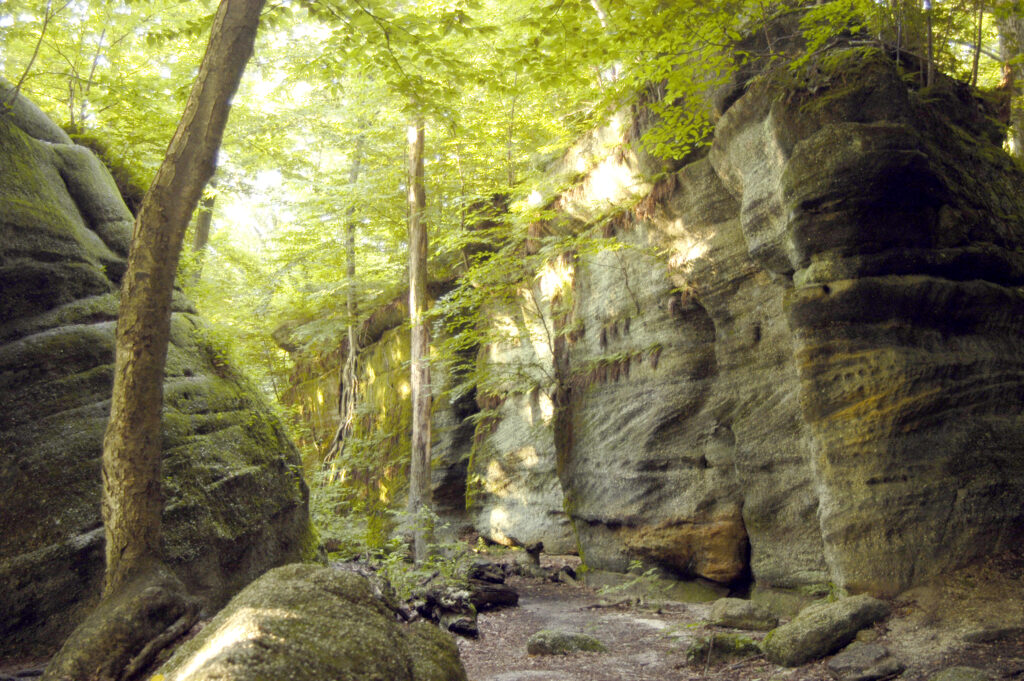
The main attraction here is the rock. The park sits on a long line of sandstone and conglomerate ledges, which are huge blocks of stone that have been cracking, weathering and tumbling around for a very long time. We are talking hundreds of millions of years of slow work. The result is a landscape of tall rock faces, deep crevices, small passages and overhangs where the cool air seems to hang around even on a warm day.
For a visitor, this is what separates Nelson Kennedy Ledges Ohio from a typical walk in the woods. A normal trail goes from point A to point B through trees. Here the trail often goes between two walls of stone, under a ledge, or around a boulder the size of a small house. You spend half the walk looking up and the other half looking down at your feet, which is a reasonable thing to do when the ground is uneven.
The park is not huge, and that is part of the charm. Visitors can see most of the highlights in a single relaxed visit without needing a full day, a backpack full of snacks or a rescue plan. Don’t take that as permission to be careless, though. Rock is rock, and it does not care how confident you feel.

Best Hikes: A Look at the Nelson Ledges Hiking Trails
Let’s be honest about what to expect. The Nelson Ledges hiking trails are not the kind of routes where you tick off twenty miles and collect a medal. They are short, rocky and full of things to look at. The pace is slow because you will keep stopping, either for photos or because you need a second to work out how to get past a gap in the rocks.
Here is how visitors can think about the walking:
- The main ledge walk. This is the classic route and where most people start. The path follows the base and edges of the rock formations, passing through crevices and beside the tallest walls. It is the best introduction to the park and the one most first-time visitors choose.
- The crevice and passage sections. Some parts of the trail squeeze between rock faces. These sections are the most fun, and they are also where a big backpack becomes a problem. Travel light.
- The quieter forest paths. Away from the busiest rocks, the trails settle into regular woodland. They are calmer, a bit more peaceful, and good for catching your breath after all that climbing around.
One thing worth knowing is that the Nelson Ledges hiking trails can feel longer than they look on paper. A short distance over rocks, roots and steps takes a lot more time than the same distance on a flat path. If you plan to be out for an hour, give yourself closer to two. You won’t regret the extra time, and nobody ever got into trouble from having too much time to take photos.
Trail conditions change, especially after rain or in winter, so it is smart to check the current information from the Ohio Department of Natural Resources before you set off. Signs and trail markings can also change over time, so don’t treat any single guide, this one included, as the final word.
Best Views and Photo Spots
The views at the park are not the wide, sweeping kind where you can see three counties from one hilltop. They are close-up views, and that makes them interesting in a different way. Think tall stone walls with ferns growing out of the cracks, green moss on every surface and sunlight dropping through the trees in streaks.
A few spots stand out for visitors with a camera or a phone:
- The tall rock faces. The big ledge walls are the most photographed parts of the park. Stand back a little and tilt your camera up so you can capture the full height.
- Old Maid’s Kitchen and the Devil’s Icebox. These are two of the better-known named features in the area. Their names alone make them worth hunting for. The Icebox in particular is known for its cold, shady feel, so it makes a good rest stop in summer.
- The crevices. A narrow gap between two rock walls makes a great frame for a photo, especially with a friend standing in the middle looking slightly worried.
- The forest floor after rain. Wet rock and fresh green moss look amazing in photos. The ground will also be slippery, so this is a case of beauty and danger arriving in the same package.
For better photos, go early or late in the day when the light is softer. Midday sun creates harsh shadows inside the crevices, and most phone cameras handle that badly. Your pictures will come out looking like a very serious rock-themed crime scene.
Insider Tips Before You Go
This is the part where we save you from learning things the hard way. None of it is complicated, but each point makes the day smoother.
1. Wear proper shoes. This is the number one tip, and it is also the one people ignore most. Flip-flops and fashion sneakers are a poor match for wet stone. Choose shoes with real grip. Your ankles will send a thank-you note.
2. Travel light. Squeezing through gaps with a giant bag is no fun for you or for the person behind you. Bring water, a small snack and your phone, and leave the rest in the car.
3. Watch your step, always. The ground is uneven and often damp. Moss looks soft and harmless but can be slicker than ice. If a rock looks wet, treat it as slippery, because it almost certainly is.
4. Go with the weather in mind. Rain makes the park beautiful and tricky at the same time. If it has rained recently, expect mud, slippery rock and some puddles in places you did not expect puddles.
5. Keep to the trails. The rock formations and the plants growing on them are delicate. Staying on the marked paths protects the park and keeps you away from the spots where people get hurt.
6. Check the rules before you climb. Some activities, such as climbing or rappelling, may be limited or restricted. Always read the posted signs and the current park rules instead of assuming anything.
7. Bring a friend. It is more fun, and it is safer too. Also, someone has to hold your jacket while you take the photo.
8. Plan for little or no signal. Download your map or directions before you arrive. Phones in wooded areas have a funny way of losing coverage right when you need it.
Best Time to Visit
You can visit Nelson Kennedy Ledges State Park in every season, and each one gives it a different personality.
Spring brings fresh green growth and plenty of water, so the park looks lush. It also means mud, so don’t wear your best shoes.
Summer is the easiest season for most people. The tree cover keeps a lot of the walk shaded, and the cool, shadowy crevices feel great on a hot day. The downside is that weekends can get busy, so arriving earlier helps.
Autumn is probably the favorite for photographers. The fall colors against the dark stone look fantastic, and the cooler weather makes the walking more comfortable. Fallen leaves can hide uneven ground, though, so keep your eyes on your feet.
Winter is the quiet season. If conditions are safe, the frosty rocks and bare trees give the park a very different, almost moody look. Ice, however, makes the stone dangerous, so winter visitors need extra care and better footwear.
If we had to choose, early on a weekday morning in autumn would be hard to beat. There are fewer people, softer light and a much better chance of getting a photo without a stranger walking through it.
Safety, Rules and Nearby Stops
A park full of cliffs and crevices deserves a little respect. Visitors can enjoy the place safely by following the basics: stay on the paths, keep a good distance from edges, watch children closely and turn back if the ground looks too slippery. If something feels risky, it probably is, and no photo is worth an injury.
It also helps to keep in mind that a trip to Nelson Kennedy Ledges Ohio is about slowing down. Nobody is timing you. Take breaks, drink water and let the group move at the speed of its slowest member, even if that member is you.
There are also other places in the surrounding area that visitors sometimes combine with the park, including small towns, local cafés and other outdoor spots in Portage County. Some nearby attractions are run privately and separately from the state park, with their own rules and fees, so check each place on its own before you plan around it.
Finally, take your litter home with you. The ledges have survived for hundreds of millions of years, and they don’t need your empty crisp packet as a souvenir.
Frequently Asked Questions
1. Where is Nelson Kennedy Ledges State Park located?
The park is in Portage County in northeast Ohio, in the countryside near the Garrettsville area. It is easy to find on any map app, but download your directions in advance in case the signal drops.
2. Is there an entrance fee for the park?
Ohio state parks are generally free to enter for day use, but rules and fees can change. Check the official Ohio Department of Natural Resources page before your visit to be sure.
3. How long does it take to explore Nelson Kennedy Ledges?
Most visitors spend about one to two hours on the main trails, depending on how often they stop for photos. If you like to wander slowly and sit on rocks to think about life, give yourself a bit more time.
4. Is the park suitable for beginners and families?
Yes, in general, because the trails are short. However, the ground is rocky and uneven, so it works best for children who can walk carefully and follow instructions. Keep a close eye on younger kids near ledges and drops.
5. What is the best time of year to visit?
Autumn is a popular choice because of the colors, and summer is great for the cool shade. Spring is lush but muddy, and winter can be beautiful but slippery.
6. What should I wear and bring?
Wear shoes with strong grip, dress in layers and bring water. A small bag is better than a large one, since some passages are narrow. A sense of humor is optional but recommended.
7. Can I camp at the park?
The state park is mainly a day-use area, so plan it as a day trip. Camping rules can change, so confirm the current details with the Ohio DNR or the park itself before you book a tent.
8. Are pets allowed?
Pet rules vary and can change, so check the posted signs and the official park information first. If dogs are allowed, keep them on a leash and be careful on the rocks, where paws can slip too.
9. Is rock climbing allowed at Nelson Kennedy Ledges?
Climbing and rappelling rules can be strict, and they may change over time. Always check the current regulations and the signs at the park. The rock formations are also fragile, so protecting them matters.
10. Is Nelson Kennedy Ledges worth visiting compared with other Ohio parks?
For anyone who likes rock formations, short adventurous trails and good photos, yes. It is small, but it offers something that most Ohio parks simply don’t have. Just don’t expect a giant mountain range, because the ledges are impressive without being that impressive.