
Table of Contents
Northumberland, England
If you have never been to Northumberland, England, here is the quick version: castles, empty beaches, rolling hills and, in some spots, more sheep than people. It sits in the far north-east, right next to the Scottish border, and it is usually much quieter than the Lake District or Cornwall. That is a big part of its charm.
This guide covers seven places worth your time. Along the way you will meet some of the best castles in Northumberland, England’s most northerly national park, and a small island that goes under the sea twice a day.
One warning first. Opening times, prices and tide times change, so check the official websites before you travel. Nobody wants to drive two hours and find a locked gate.
1. Bamburgh Castle: The One That Looks Like a Film Set
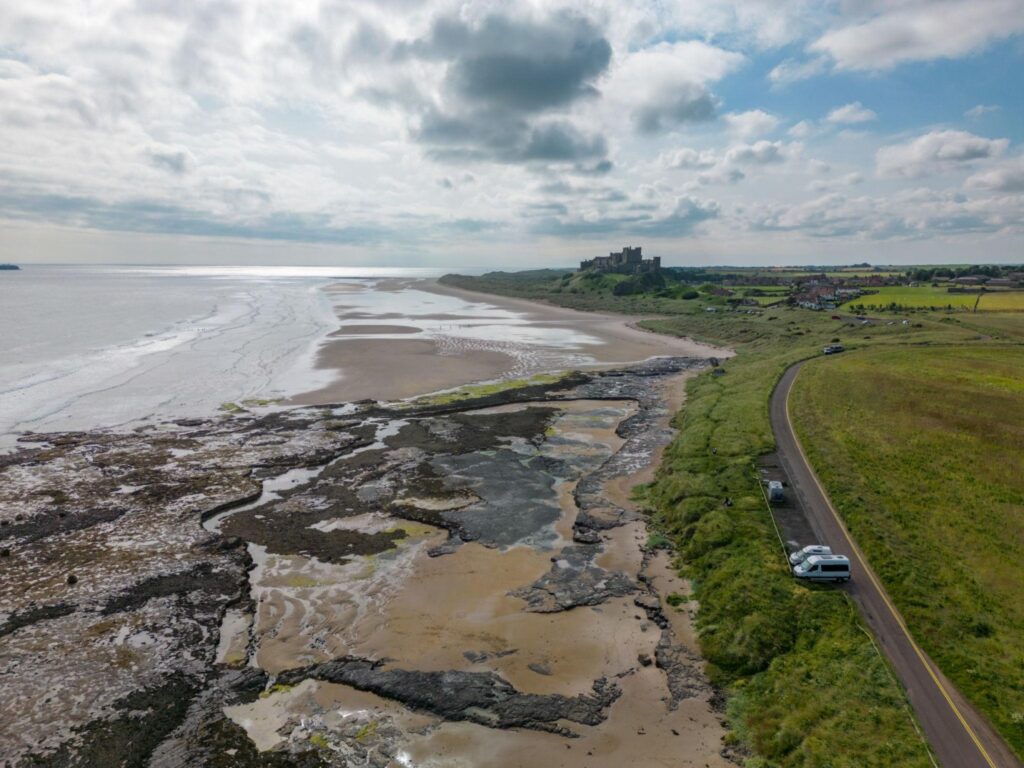
Bamburgh Castle stands on a rocky ridge above the sea, and you cannot miss it. It is huge. Your phone camera will struggle to fit it in and may quietly ask you to step back.
It is one of the most famous buildings in Northumberland, England, and parts of it are open to visitors. But don’t skip the beach below. Wide sand, dunes and a castle looming over everything make it one of the best short walks on the coast. Bring a jacket. The wind does not care that it is July.
The village of Bamburgh is small, with a few places to eat, so the castle and the beach fit neatly into one day. Parking can get tight in busy periods, so arrive early if you can.
2. Holy Island (Lindisfarne): The Island With a Tide Timetable
Holy Island is joined to the mainland by a causeway, and the sea covers it at high tide. So you can only cross at safe times, and those change every day. Check them before you go and never try to “just beat the water”. People do get caught out, and a stranded car is a very expensive way to learn about tides.
Once you are across, there is plenty to see. The ruins of Lindisfarne Priory are the main draw. The monastery was raided by Vikings in AD 793, an event often seen as the start of the Viking Age in Britain. There is also a small castle, plus a village with cafés and shops. Look out for Lindisfarne mead, a honey-based drink that is a popular souvenir.
Holy Island is one of the most unusual places in Northumberland, England, and having to leave on time makes it feel like a video game with a timer. Plan around the tides and you will be fine.
3. Alnwick Castle and Garden: Yes, That Hogwarts
Alnwick Castle is the family home of the Duke of Northumberland, and film fans know it as Hogwarts from the first two Harry Potter films. If you shout a spell in the courtyard, most people will politely ignore you. Do it anyway.
Beyond the film link, it is another of the best castles in Northumberland, with a long history and grand state rooms. Alnwick Garden is next door, with a huge treehouse and a Poison Garden. The Poison Garden teaches you which plants can kill you. It is a strange thing to enjoy, but here we are.
In the town, Barter Books is a giant second-hand bookshop inside an old railway station, and it easily eats an hour. Because Alnwick sits a little inland, it also makes a good rainy-day plan. Every trip to Northumberland, England needs a plan B, because the weather has opinions.
4. Dunstanburgh Castle and Craster: A Walk With a Reward
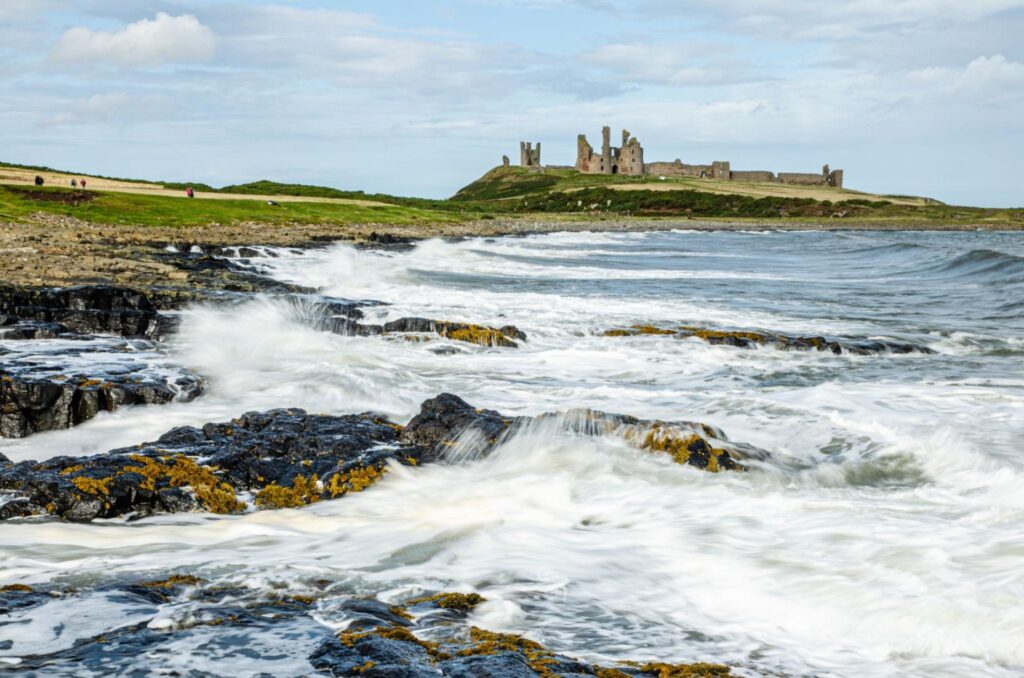
You cannot drive up to Dunstanburgh Castle. You walk to it along the coast from the village of Craster. The path is fairly easy, but it can be windy and muddy, so wear proper shoes and expect your hair to lose the argument.
The ruins sit alone on a headland above the sea. In grey weather it looks properly dramatic, as if the castle is still waiting for someone to come back. Of all the ruined castles in Northumberland, England, it may be the most atmospheric.
Then there is Craster, which is famous for kippers, a type of smoked herring. If you have never tried one, this is the place. If you tried one as a child and still hold a grudge, give the fish a second chance. It is not the kipper’s fault.
5. Hadrian’s Wall: A Very Old Fence
The Romans started building the wall around AD 122, and it runs for about 73 miles across the north of England. The Northumberland stretch is the part most people picture: a line of stone rolling along crags and ridges, with sheep grazing below. It is basically a very old fence with excellent views.
Housesteads Roman Fort is one of the best-known stops, and nearby Vindolanda is famous for the handwritten tablets found there. The tree at Sycamore Gap was cut down in 2023, but the dip in the hills is still a well-known spot on the walk.
Some sections are steep and exposed, so check the weather and carry water. History fans could spend days on this part of Northumberland, England, and still not see everything.
6. Northumberland National Park: Big Skies, Few People
Northumberland National Park is the most northerly national park in England, and one of the quietest. It stretches up to the Scottish border and takes in the Cheviot Hills, wide valleys and a lot of open moorland. Part of Hadrian’s Wall runs through it too, so you may be inside the park without knowing.
It is the place for walking, cycling and doing very little. Paths range from easy valley strolls to tough hill climbs, so choose based on your legs and the forecast. Phone signal can disappear, so download a map first.
After dark, the sky is the star. The park and nearby Kielder Water and Forest Park together form an International Dark Sky Park, so on a clear night the stars are brilliant. Check the forecast before you plan a late night. Wear warm layers too. Your neck will hurt from looking up, but it is a fair price.
For many visitors to Northumberland, England, this is the part that stays with them. If you only have one free day inland, Northumberland, England rewards you most here.
7. Farne Islands: Puffins in Formal Wear
Boat trips to the Farne Islands leave from the harbour at Seahouses. The islands are a nature reserve looked after by the National Trust, with grey seals and thousands of seabirds. Puffins are the stars, and they are usually seen in spring and early summer. They look like tiny waiters who dressed in a hurry.
Arctic terns nest here too, and they are known for diving at visitors’ heads. Wear a hat. Seriously.
Boat trips depend on weather and sea conditions, so book ahead where possible and keep a backup plan. Landing rules and dates change by season, so check before you go. Afterwards, Seahouses has fish and chips, which is a fair reward for surviving a tern attack.
The Farne Islands prove that Northumberland, England is about more than castles.
How to Plan Your Trip
Best time: Late spring to early autumn gives longer days and better odds of decent weather, and it is the best time for puffins. Winter is quiet and moody, but days are short and some places may open less.
Getting around: A car makes life much easier because the sights are spread out. Buses and trains do exist, but plan carefully. Getting around Northumberland, England without a car is possible, just slower.
How long: Two days covers the coast and a couple of castles. Give it three or four if you also want Hadrian’s Wall and the national park.
Where to base yourself: Alnwick or Seahouses works well for the coast and castles, while Hexham is handy for Hadrian’s Wall.
If you are planning a weekend in Northumberland, England, pick two or three places from this list, not all seven. You will enjoy it more, and the castles have been standing for centuries, so they can wait.
Final Thoughts
Northumberland, England has big castles, quiet beaches, empty hills and dark skies, all in one county. Bamburgh Castle is the showstopper, Holy Island is the adventure, Alnwick is the fun one, and the national park is where you go to breathe. Whatever you pick, check tide times, weather and opening hours before you set off, and pack a jacket. Even in summer. Especially in summer.
Book the trip to Northumberland, England and leave room for a kipper.
FAQs
1. Is Northumberland, England worth visiting?
Yes, especially if you like castles, quiet beaches and walking. Northumberland, England is usually much less crowded than better-known holiday areas, so you get big views without the queues.
2. What is the best castle to visit in Northumberland?
It depends on your mood. Bamburgh Castle is the most dramatic, Alnwick Castle suits families and film fans, and Dunstanburgh Castle is the pick if you like a coastal walk and a ruin.
3. How many days do you need in Northumberland, England?
Two days is enough for the coast and a couple of castles. Three or four days lets you add Hadrian’s Wall and the national park without rushing.
4. Can you visit Northumberland, England without a car?
Yes, but it is harder. Some towns have bus and rail links, while rural sights and coastal spots are spread out. Check timetables carefully, or consider joining a tour.
5. When is the best time to visit Northumberland, England?
Late spring to early autumn is the easiest, with longer days and better odds of dry weather. Puffins are usually seen in spring and early summer. Winter is quiet but short on daylight.
6. Is Bamburgh Castle worth visiting?
Yes. Even if you skip going inside, the castle and the beach below make a great outing. Check opening times and ticket details on the official website first.
7. Is Holy Island safe to visit?
Yes, if you respect the tide. The causeway floods at high tide, so check the official safe crossing times before you travel and never cross when the sea is coming in.
8. Is Northumberland National Park good for beginners?
Yes. There are easy valley walks as well as harder hill routes. Choose a route that matches your fitness, check the forecast and carry a map, water and waterproofs.
9. Can you see puffins in Northumberland?
Yes. Puffins are usually seen on the Farne Islands in spring and early summer, on boat trips from Seahouses. Trips depend on the weather, so book ahead and check dates.
10. Is Northumberland, England good for dogs?
Many outdoor spots welcome dogs, but rules vary by place and season. Some areas have restrictions for nesting birds or grazing livestock, so follow local signs and keep your dog on a lead when asked.