
Eryri National Park
Table of Contents
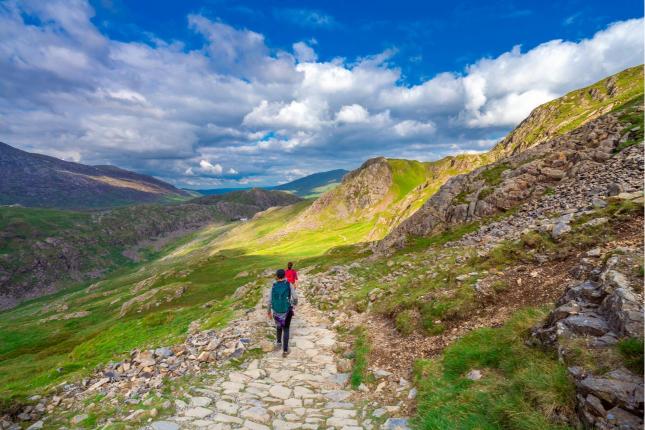
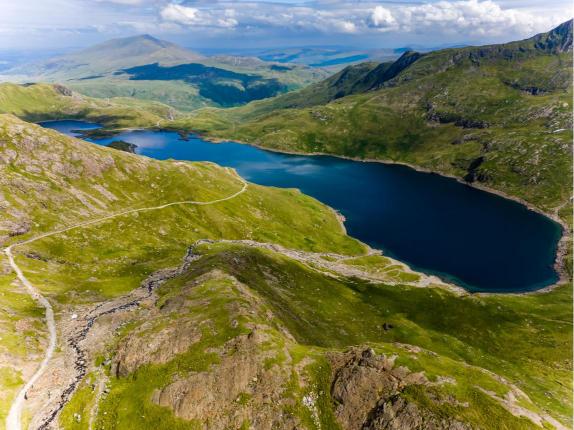
There’s a moment on the Pyg Track, somewhere past the lip of Cwm Dyli, where the path narrows and the whole of northwest Wales seems to fall away beneath your boots. That’s Eryri National Park doing what it does best — turning an ordinary Tuesday into something you’ll talk about for years.
Eryri National Park, known to generations of English-speaking visitors as Snowdonia, is the largest and oldest national park in Wales. It covers 823 square miles of northwest Wales, stretching from the high peaks around Yr Wyddfa (Snowdon) down through slate-grey valleys to a coastline of estuaries and sandy beaches. Nearly four million people visit every year, drawn by nine mountain ranges, fifteen summits above 3,000 feet, and a culture where Welsh is still the everyday language of the hills.
This guide covers everything you need to plan a trip to Eryri National Park in 2026: the best things to do, where to stay, how to get around a park that’s now tightening up on car parking, what to eat, and a sample two-day itinerary you can adapt to your own pace. Whether you’re planning a serious mountain trek or a gentle few days pottering between lakes and castles, you’ll find the practical detail here to make it happen.
What makes planning a trip here different from most UK national parks is the sheer scale of choice. You could spend a week here focused entirely on high-mountain walking and barely scratch the ridgelines of the Carneddau, or you could spend the same week without lacing up a single hiking boot, moving between castles, slate museums, and small harbour towns along the coast. Both trips count as “doing Eryri properly.” The detail below is built to help you figure out which version — or which mix of the two — suits you.
Why Visit Eryri National Park
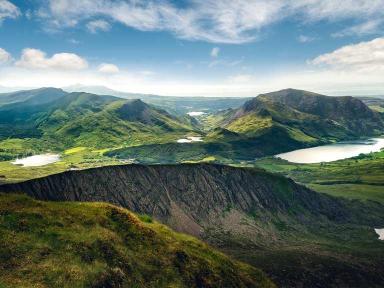
Eryri isn’t a single mountain and a gift shop. It’s nine separate mountain ranges — the Carneddau, Glyderau, Yr Wyddfa massif, Moelwynion, Rhinogydd, Dyfi Hills, Moel Hebog range, Cadair Idris range, and the Aran range — covering roughly half the park’s total area. Between them sit 23 miles of coastline, ancient oak woodlands, glacial lakes, and river gorges that were carved out at the end of the last ice age, around 11,500 years ago.
The name itself matters here. The park authority began phasing out “Snowdonia” in favour of “Eryri” in late 2022, prioritising the Welsh-language name for the area, and confirmed in November 2024 that the change was permanent after strong public support. Locals now also refer to Snowdon by its Welsh name, Yr Wyddfa. You’ll see both names used in signage and guidebooks for a while yet, but Eryri is now the official identity of the park.
Beyond the scenery, this is a living landscape. Over 26,000 people call Eryri home, and Welsh remains the first language for a majority of them. That’s part of the appeal — you’re not just walking through protected wilderness, you’re passing through working farms, slate villages, and communities with centuries of continuous history. Add International Dark Sky Reserve status (awarded in 2015) and a geology so old that fossilised shells have been found near the summit of Yr Wyddfa, and you start to understand why walkers keep coming back.
The park was designated in October 1951, making it the first of Wales’s three national parks and only the third in the UK, after the Peak District and the Lake District. That history runs deeper than the designation date, though. The slate industry that once shaped this region — quarrying stone that roofed much of Victorian Britain — has left its fingerprints everywhere, from the terraced quarry faces above Llanberis to the underground caverns near Blaenau Ffestiniog now recognised as a UNESCO World Heritage industrial landscape. Long before the quarries, this was also a training ground in a different sense: mountaineers preparing for the first ascent of Everest in the 1950s, including Sir Edmund Hillary’s team, used the crags and ridgelines around Cwm Idwal to rehearse technical climbing. Walk those same paths today and you’re following a fairly direct line between Welsh slate villages and the summit of the world’s highest mountain.
[Image suggestion: A shepherd or farmer with sheep on a hillside, traditional Welsh stone wall in foreground. ALT text: “Traditional hill farming landscape in Eryri National Park, Wales”]
Best Things to See and Do in Eryri National Park
Climb Yr Wyddfa (Snowdon)
Yr Wyddfa is the highest peak in Wales and England at 1,085 metres, and it’s the reason most first-time visitors come to Eryri National Park. Six established routes lead to the summit, ranging from the popular Llanberis Path to the more dramatic Pyg and Miners’ Tracks from Pen-y-Pass.
For a first ascent, the Pyg Track is usually the better choice over the longer Llanberis Path — it climbs over the lip of Cwm Dyli for a more dramatic outlook and takes roughly 90 minutes less overall. The route starts at Pen-y-Pass car park (postcode LL55 4TY, 359m elevation) and climbs 726 metres over about seven miles return. Budget six to seven hours for the round trip, more if the weather turns, which in Eryri it does with little warning.
Quick facts: Yr Wyddfa
| Detail | Information |
|---|---|
| Height | 1,085m (3,560ft) |
| Easiest route | Llanberis Path (longest but gentlest gradient) |
| Fastest scenic route | Pyg Track (about 7 miles return) |
| Time required | 6–7 hours round trip on foot |
| Railway alternative | Snowdon Mountain Railway, March–October |
| Car park booking | Pen-y-Pass is pre-book only, late March–November |
If you’d rather not walk up, the Snowdon Mountain Railway has been hauling passengers to the summit since 1896 — Britain’s highest railway, running rack-and-pinion trains from Llanberis station to within metres of the top. The round trip, including a stop at the summit café, takes around two and a half hours. Return tickets typically fall in the £40–45 range per adult, and diesel trains run the timetable day-to-day, with steam engines making occasional appearances for those willing to pay a premium for the experience.
For solo hikers, the Pyg Track and Llanberis Path are popular enough in summer that you’re rarely walking entirely alone, which makes them a sensible choice if you’re tackling the mountain without company. Families with younger children generally find the Snowdon Mountain Railway the more realistic option, since the walking routes involve genuine elevation gain and, on the Pyg Track especially, some scrambling sections near the top. Whichever route you choose, allow extra time for photography — the ridge views back toward Crib Goch and across to the Glyderau are some of the best in the park, and early morning light tends to outperform the flatter midday sun.
Explore the Glyderau and Carneddau
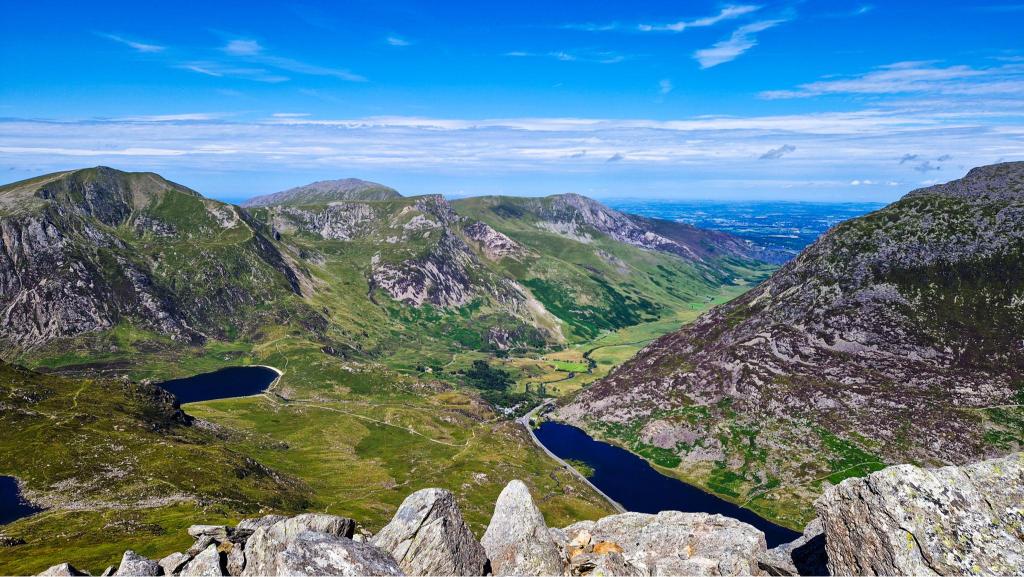
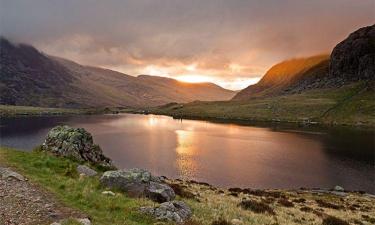
North of Yr Wyddfa, the Glyderau and Carneddau ranges offer serious ridge walking with far fewer crowds. This is where you’ll find Tryfan, regularly voted the favourite peak among British hillwalkers, and Cwm Idwal — a glacially carved bowl of a valley where Charles Darwin studied rock formations and Sir Edmund Hillary trained before his 1953 Everest expedition. The circular walk around Llyn Idwal is a relatively gentle way into this dramatic scenery without needing a full ridge scramble, taking most walkers around two hours at an easy pace, with parking available at the Ogwen Cottage car park (arrive early on weekends, as spaces fill quickly).
Couples looking for a quieter, more atmospheric alternative to Yr Wyddfa often find the Glyderau ridge delivers a bigger sense of wild remoteness for a similar level of physical effort, particularly outside peak summer weekends. Tryfan itself involves genuine scrambling and isn’t recommended for inexperienced walkers or anyone uncomfortable with exposed rock, but the approach paths and lower slopes still offer excellent views for those who’d rather admire it from below.
Try Adventure Sports
Eryri has built a genuine reputation for adrenaline activities on top of its hiking credentials. Zip World runs several sites across the park, including underground zip lines through former slate caverns near Blaenau Ffestiniog, with experiences typically priced from around £45–75 depending on the course. Surf Snowdonia, near Conwy, operates an artificial surf lagoon suited to complete beginners as well as experienced surfers. Go Below offers underground adventure caving and via ferrata routes through old mine workings, usually running three to five hours and requiring advance booking. For a calmer pace, Llyn Padarn and Llyn Tegid (Bala Lake) both offer kayaking, paddleboarding, and sailing, with equipment hire available lakeside through the summer season.
Most of these activities suit families with children old enough to follow safety briefings (typically age eight upwards, though this varies by operator), and nearly all require booking ahead rather than turning up on the day, especially during school holidays.
Top Attractions in Eryri National Park
Llanberis is the main gateway village for Yr Wyddfa, sitting between Llyn Padarn and Llyn Peris beneath the huge terraced face of the old Dinorwic Slate Quarry. Almost every visitor tackling the mountain passes through here at some point. Note that the National Slate Museum, housed in the former quarry workshops, is closed for major redevelopment through late 2026 — check ahead before building it into your plans.
Portmeirion sits just outside the park’s southern boundary near Porthmadog — an eccentric Italianate village built by architect Clough Williams-Ellis, famous as the filming location for the 1960s TV series The Prisoner. It’s a strange, colourful contrast to the slate-grey mountain villages elsewhere in the region.
Harlech Castle, a UNESCO World Heritage Site, stands on a rocky outcrop with commanding coastal views and dates from the reign of Edward I in the 13th century. It’s an easy half-day visit combined with Harlech’s beach below.
Conwy Castle and town walls, just outside the park boundary on the north coast, form another UNESCO-listed medieval fortress, with one of the best-preserved sets of town walls in Britain.
Beddgelert is a compact stone village at the meeting point of two river valleys, home to the legendary grave of Gelert — a dog said to have been wrongly killed by Prince Llywelyn after being mistaken for attacking his son, when in fact he’d fought off a wolf to protect him. A flat, easy footpath leads from the village to the grave and on to views of the dramatic Aberglaslyn Pass gorge.
Llechwedd Slate Caverns, near Blaenau Ffestiniog, take visitors underground into Wales’s 19th-century slate mining industry, now recognised as part of a UNESCO World Heritage Site covering the North Wales slate landscape.
Quick facts: planning your attraction visits
| Attraction | Typical visit time | Approx. adult admission |
|---|---|---|
| Llanberis (village + lakeshore) | 2–3 hours | Free to wander |
| Portmeirion | 3–4 hours | £15–20 |
| Harlech Castle | 1–1.5 hours | £9–12 |
| Conwy Castle & walls | 1.5–2 hours | £10–13 |
| Beddgelert & Aberglaslyn Pass walk | 1.5–2 hours | Free |
| Llechwedd Slate Caverns | 1.5–2.5 hours | £25–30 |
These are approximate figures and change with the season, so check each site’s official page before you travel. Most of these attractions are manageable for solo travellers and families alike, and Harlech Castle in particular has been adapted with lift access to its upper levels, making it one of the more accessible historic sites in the park.
Hidden Gems in Eryri National Park
Not everything in Eryri involves a summit push. A few quieter spots reward the extra effort of finding them:
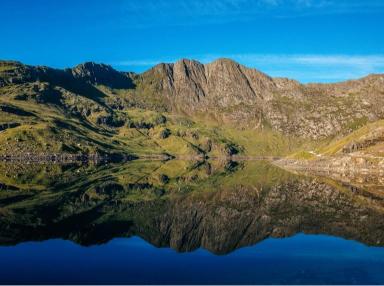
- Llynnau Mymbyr, near Capel Curig, offers some of the most photographed lake reflections in Wales, with Garnedd Ugain and Crib Goch mirrored on a still morning.
- Cregennan Lakes, above the Mawddach Estuary, are a peaceful, lesser-visited spot reached through ancient woodland — ideal for a picnic with mountain views and almost none of the Yr Wyddfa crowds.
- Coed Cymerau National Nature Reserve, near Blaenau Ffestiniog, protects a pocket of Celtic rainforest — a rare temperate rainforest habitat considered by some ecologists to be scarcer globally than its tropical counterpart.
- Cwm Idwal’s quieter corners, away from the main circular path, still offer solitude even in peak season if you’re willing to walk a little further from the car park.
- Llyn Tegid (Bala Lake), Wales’s largest natural lake, sits at the eastern edge of the park and is a genuinely quiet base for watersports, away from the Yr Wyddfa bottleneck entirely.
- Nant Gwynant valley, between Beddgelert and Pen-y-Pass, is often driven straight through by visitors racing to the mountain — but a short stop at Llyn Gwynant or Llyn Dinas rewards you with some of the most peaceful lakeside picnic spots in the entire park.
None of these places charge admission, and most have small free or low-cost car parks nearby rather than the pre-booking systems now required at Pen-y-Pass. If your main goal is a slower, more contemplative visit rather than a summit tick, building a day around two or three of these hidden gems is one of the best ways to experience Eryri without the crowds.
Best Beaches and Coastal Walks
Eryri’s boundary takes in around 23 miles of coastline between Porthmadog and Aberdyfi, plus sections further north near Penmaenmawr. Harlech Beach is a vast stretch of sand below the castle, backed by dunes, and rarely crowded even in summer. Barmouth offers a lively seaside town with a long beach and the historic Barmouth Bridge crossing the Mawddach Estuary.
The Mawddach Trail (Lôn Mawddach) is one of the best coastal-adjacent walks in the park — a flat, disused railway line running between Barmouth and Dolgellau along the Mawddach Estuary, with Cadair Idris as a constant backdrop. It’s fully accessible for wheelchairs and buggies for most of its length, making it one of the park’s best options for visitors who want the scenery without the climbing.
Further inland along the coast, the Wales Coast Path runs through the park between Machynlleth and Penrhyndeudraeth, with short excluded sections around Tywyn and Barmouth where an inland alternative takes over.
Criccieth, on the Llŷn Peninsula just west of the park boundary, adds a smaller, quieter beach town with its own hilltop castle ruin overlooking the bay — a good stop if you’re combining coast and mountains in the same trip. For photography, both Harlech and Barmouth beaches work best in the two hours either side of low tide, when the wet sand reflects the sky and the castle or bridge silhouettes stand out clearly. Most coastal paths in the park, including the Mawddach Trail, are dog-friendly and pushchair-accessible, making them a reliable fallback on days when the higher mountain trails are shrouded in cloud.
Local Food and Famous Specialties
Eryri sits within a wider Welsh food culture built on hearty, resourceful cooking — historically the food of quarrymen, hill farmers, and fishing communities.
Cawl is generally considered the national dish: a slow-cooked broth of lamb (sometimes beef) with leeks, carrots, potatoes, and swede, traditionally served with crusty bread and a chunk of Caerphilly cheese on the side. In parts of North Wales, including areas of Eryri, you’ll see it called lobscows instead.
Welsh cakes (pice ar y maen, “cakes on the stone”) are small, spiced griddle cakes studded with raisins or sultanas, best eaten warm off the bakestone with a dusting of sugar. Bara brith, meaning “speckled bread,” is a dense fruit loaf made by soaking dried fruit in strong tea overnight — sliced thick and spread with salted butter, it’s the classic accompaniment to a Welsh café stop after a wet walk.
Welsh rarebit is a step up from ordinary cheese on toast — a sauce of melted cheese, ale, and mustard poured over toasted bread, found on pub menus throughout the park. Look out too for Caerphilly cheese, Welsh lamb (raised on the very hillsides you’ll be walking), and locally brewed ales in village pubs from Beddgelert to Betws-y-Coed.
Seafood lovers should also look for laverbread, a dark, intensely flavoured paste made from cooked seaweed harvested along the Welsh coast, often served alongside bacon and cockles as part of a traditional Welsh breakfast — sometimes nicknamed “Welshman’s caviar.” Beer is the more traditional pub drink here, though Penderyn, Wales’s best-known whisky distillery, has also built a following among visitors looking for something to bring home.
Tip box: For a genuinely local souvenir, look for wax-wrapped Snowdonia cheese, a jar of Welsh honey, or a bara brith from a village bakery — most travel well and keep for days. Expect a hearty pub meal in a village like Beddgelert or Betws-y-Coed to run somewhere between £12 and £20 per main course, with cawl often the cheapest and most filling option on the menu.
Eryri’s weather is genuinely unpredictable year-round, with roughly 3,000mm of rain falling annually in the wettest upland areas, so pack layers whatever season you travel.
- Spring (March–May): Wildflowers and lambing season bring a softer landscape and thinner crowds than summer, though weather is still changeable.
- Summer (June–August): Peak season, long daylight hours, the best conditions for lake swimming and watersports — but also the busiest trails and the trickiest parking, especially around Llanberis and Pen-y-Pass on weekends.
- Autumn (September–November): Quieter paths, rich colour in the woodlands, and some of the best stargazing conditions under the park’s International Dark Sky Reserve status.
- Winter (December–February): Short days and the possibility of snow on the highest peaks, which demands proper winter hillwalking experience and equipment — but also empty trails and cosy village pubs.
Quick fact: Snowdon Mountain Railway typically operates from late spring through the end of October, so winter summit visits mean walking, not riding.
Quick facts: seasonal planning
| Season | Typical daytime temp | Best for | Watch out for |
|---|---|---|---|
| Spring | 8–15°C | Wildflowers, fewer crowds | Sudden showers |
| Summer | 15–20°C | Long days, watersports | Traffic, parking, midges |
| Autumn | 8–14°C | Colour, stargazing | Shorter daylight |
| Winter | 1–8°C | Snow-capped peaks, quiet trails | Ice, need for winter gear |
If you’re timing a trip around a specific event, look out for the Sesiwn Fawr music festival in Dolgellau each July, and be aware that Easter weekend draws some of the heaviest crowds of the year to Yr Wyddfa, on par with peak summer weekends.
Where to Stay in Eryri National Park
Your choice of base largely depends on which part of the park you want to focus on — Eryri is too large to treat as a single day-trip radius.
Llanberis puts you at the foot of Yr Wyddfa itself, ideal if the mountain is your main goal. Expect a busy, walker-focused village with plenty of guesthouses and pubs.
Betws-y-Coed, often called the “Gateway to Snowdonia,” sits in the Conwy Valley with good train links, making it one of the easier bases if you’re travelling without a car. It’s surrounded by Gwydyr Forest and within reach of Swallow Falls and the Conwy Valley Railway Museum.
Beddgelert offers a quieter, more traditional village base in the heart of the park, close to the Aberglaslyn Pass and within striking distance of several Yr Wyddfa routes.
Porthmadog works well if you’re splitting time between the mountains and the coast — it sits at the meeting point of both and is the starting point for the Welsh Highland Railway, with Portmeirion, Harlech, and Criccieth all close by.
Dolgellau, in the southern half of the park, is the best base for Cadair Idris and the Mawddach Estuary, away from the busier northern crowds.
Accommodation ranges from farmhouse B&Bs and self-catering cottages to hostels, campsites, and a handful of country-house hotels. Book well ahead for July and August weekends, and check whether your accommodation offers a drying room — genuinely useful after a wet day on the hills.
As a rough guide, expect to pay £70–100 a night for a comfortable B&B double room, £100–180 for a mid-range hotel, and £25–40 per person for hostel or bunkhouse accommodation. Self-catering cottages typically start around £400–600 per week outside peak season, rising sharply in July and August. Campsites remain the most budget-friendly option, often £15–25 per night for a basic pitch, though facilities vary widely, so check reviews before booking.
How to Get to Eryri National Park
By car: The main approach roads are the A5 from Shrewsbury (via Betws-y-Coed) and the A55 North Wales Expressway to Bangor, then south on the A4086 or A4085. Expect the Llanberis Pass (A4086) to be badly congested on peak summer weekends — add at least 45 minutes to journey estimates around Llanberis and Pen-y-Pass between 9am and 6pm in July and August.
Important 2026 update: The Pen-y-Pass car park now operates strictly on a pre-book-only basis from late March through November. You can no longer simply turn up early and hope for a space — book through the JustPark app in advance. National Trust car parks elsewhere in the park typically require the PayByPhone app, and cash is no longer accepted at many mountain trailheads, so download both apps before you arrive, ideally while you still have signal.
By train: Bangor is the nearest mainline station, well served from Manchester and Chester. From there, local buses and the Sherpa’r Wyddfa shuttle connect to villages and trailheads throughout the park.
By bus: Once inside the park, the Sherpa’r Wyddfa shuttle bus links the main Yr Wyddfa trailheads and villages, letting you walk up one route and come down another without needing to return to your car — genuinely useful given the parking restrictions.
By air: International visitors typically fly into Manchester Airport, roughly two to two and a half hours’ drive from the park, or Liverpool. Cardiff Airport is a longer drive of around three and a half to four hours.
Parking charges apply at most popular trailheads, generally in the £5–10 per day range, though Pen-y-Pass and a handful of National Trust car parks run higher during peak season. If you’re relying on public transport for the whole trip, the Sherpa’r Wyddfa shuttle typically costs around £5–10 for a day ticket covering unlimited journeys between trailheads, which works out considerably cheaper than repeated taxi journeys between villages.
Sample 2-Day Itinerary for Eryri National Park
Day 1: Yr Wyddfa and Llanberis
Start early at Pen-y-Pass (pre-booked parking essential) and take the Pyg Track to the summit of Yr Wyddfa, allowing six to seven hours round trip. Alternatively, ride the Snowdon Mountain Railway from Llanberis if you’d rather save your legs. In the afternoon, explore Llanberis itself — walk the shore of Llyn Padarn, and if it has reopened, visit the National Slate Museum. Finish with dinner in one of the village’s walker-friendly pubs.
Day 2: Beddgelert, Aberglaslyn Pass, and the Coast
Head to Beddgelert for a gentle morning walk to Gelert’s Grave and on to the Aberglaslyn Pass gorge — a flat, family-friendly route with genuinely dramatic scenery for very little effort. In the afternoon, drive to Porthmadog and on to Harlech Castle, finishing with a walk on Harlech Beach as the tide allows, or a detour to the eccentric village of Portmeirion if you have energy left.
This two-day version works well as a first taste of the park, but if you have a third day to spare, consider adding a slower loop through the southern half — Cadair Idris, the Mawddach Trail, and Dolgellau — which sees noticeably fewer visitors than the Yr Wyddfa corridor and rounds out the trip with a different side of Eryri’s landscape. Travellers without a car can adapt this itinerary by basing themselves in Betws-y-Coed or Porthmadog and using the Sherpa’r Wyddfa shuttle and local trains to link the same stops, though journey times will run longer than driving.
[Image suggestion: Map-style graphic showing the two-day itinerary route with numbered stops. ALT text: “Two-day Eryri National Park itinerary map showing Yr Wyddfa, Beddgelert, and Harlech”]
Travel Tips for Visiting Eryri National Park
- Book Pen-y-Pass parking in advance — it’s compulsory from late March to November, and there’s no walk-up option in that window.
- Download JustPark and PayByPhone before you arrive — mobile signal is patchy across much of the park, and cash isn’t accepted at many trailheads.
- Check the Met Office mountain forecast, not just the general weather app, before any summit attempt — conditions at altitude can differ dramatically from the valley floor.
- Pack proper layers year-round, including a waterproof shell — the park’s high annual rainfall makes sudden downpours a near-certainty, even in summer.
- For families, the Mawddach Trail, the Beddgelert–Aberglaslyn walk, and a ride on the Snowdon Mountain Railway offer big scenery without technical difficulty.
- For solo travellers, stick to well-marked, popular routes like the Pyg Track or Llanberis Path rather than remote ridge walks, and always tell someone your planned route and return time.
- For couples, Llynnau Mymbyr at sunrise or sunset and a stay in one of the park’s shepherd’s huts or boutique B&Bs offer a quieter, more romantic side of Eryri away from the main trailheads.
- Photography tip: early morning light on Llynnau Mymbyr and late afternoon light on Harlech Castle both tend to outperform the midday sun, which flattens the mountain scenery.
- Accessibility: the Mawddach Trail and sections of the Lôn Gwyrfai route between Beddgelert and Rhyd Ddu are among the park’s most wheelchair- and buggy-friendly options.
Nearby Places to Visit Near Eryri National Park
If you have extra time, several worthwhile destinations sit just outside the park boundary. Caernarfon, with its imposing UNESCO-listed castle, is a short drive from Llanberis. Llandudno, a classic Victorian seaside resort on the north coast, offers a very different pace to the mountains. Bodnant Garden, near Conwy, is one of the finest gardens in Wales, particularly striking in late spring. Anglesey, connected by bridge near Bangor, adds beaches, coastal walking, and its own distinct island character if your trip stretches beyond a few days.
Frequently Asked Questions About Eryri National Park
What is Eryri National Park called in English? Eryri National Park was formerly known in English as Snowdonia National Park. The park authority began transitioning to the Welsh name Eryri in late 2022 and confirmed the change permanently in November 2024, though both names are still widely used and understood.
How long does it take to climb Yr Wyddfa (Snowdon)? Most walkers should budget six to seven hours for a round trip on the popular Pyg Track, including rest stops. Fitness, weather, and chosen route all affect timing, and the longer Llanberis Path typically adds extra time overall.
Do I need to book parking at Pen-y-Pass? Yes. As of 2026, the Pen-y-Pass car park operates on a strict pre-book-only basis from late March through November. Walk-up parking is no longer available during that period, so book through the JustPark app ahead of your visit.
Is Eryri National Park free to enter? Yes, entry to the national park itself is free, with no gates or general admission charge. Individual attractions, car parks, and activities such as the Snowdon Mountain Railway charge separately.
What is the best time of year to visit Eryri National Park? Late spring and early autumn generally offer the best balance of decent weather and manageable crowds. Summer is busiest and requires more planning around parking, while winter suits experienced hillwalkers prepared for snow and short daylight hours.
Can you visit Eryri National Park without a car? Yes, though it takes more planning. Bangor and Betws-y-Coed both have train stations, and the Sherpa’r Wyddfa shuttle bus connects the main trailheads and villages around Yr Wyddfa.
What is the highest mountain in Eryri National Park? Yr Wyddfa (Snowdon) is the highest peak, at 1,085 metres, and is also the highest point in both Wales and England.
Are dogs allowed in Eryri National Park? Dogs are generally welcome on most trails, though they should be kept under control around livestock, which graze freely across much of the open hill country.
What should I pack for a trip to Eryri National Park? Waterproof layers, sturdy walking boots, and a change of clothes are essential given the park’s high rainfall. For any summit attempt, add a map, a charged phone, and a check of the mountain-specific weather forecast beforehand.
Is the Snowdon Mountain Railway open all year? No, the railway typically operates from late spring through the end of October, weather permitting. Outside that window, reaching the summit means walking one of the established routes.
How many days do I need to see Eryri National Park properly? A single day is enough to summit Yr Wyddfa or explore one area, such as Beddgelert and the coast. Most visitors find three to five days lets them combine mountain walking, castles, and coastal stops without feeling rushed, while a week allows time for both the northern and southern halves of the park.
Is Eryri National Park suitable for beginners with no hiking experience? Yes. While Yr Wyddfa and the higher ridges demand fitness and preparation, routes like the Mawddach Trail, the Beddgelert–Aberglaslyn walk, and the Snowdon Mountain Railway let complete beginners experience the park’s scenery without technical difficulty or steep climbing.
Conclusion
Eryri National Park rewards exactly the kind of trip you want to build around it — a single hard day on Yr Wyddfa, a slow week moving between slate villages and coastal castles, or anything in between. What sets it apart from Britain’s other national parks is the combination: genuinely serious mountain terrain, a living Welsh culture that hasn’t been smoothed over for tourists, and a coastline within easy reach of the highest peaks in Wales.
The practical side has changed in the past couple of years — pre-booked parking at Pen-y-Pass, a renamed park authority, and phone-based payment replacing cash at most trailheads — so a little planning ahead genuinely pays off. Do that, and Eryri National Park delivers some of the best walking and scenery anywhere in the UK.
Whether you come for a single ambitious day on Yr Wyddfa or a slower week working through castles, lakes, and slate villages, the park tends to leave visitors already planning their next trip before they’ve left the car park. Book your parking, pack for four seasons in one day, and give yourself more time than you think you’ll need — Eryri has a way of slowing travellers down in the best possible sense.