
Table of Contents
Wye Valley Travel Guide
Few landscapes in Britain have been drawing travellers for as long as the Wye Valley. More than 250 years ago, an 18th-century clergyman named William Gilpin wrote a bestselling guidebook about his boat trip down the River Wye, and in doing so, he more or less invented British tourism as we know it. Visitors began arriving with sketchbooks and telescopes, climbing up from the riverbanks to paint the view from limestone viewpoints that still stop people in their tracks today.
The Wye Valley straddles the border between England and Wales, following the River Wye as it winds south from Herefordshire, past the wooded slopes of the Forest of Dean, and down to the tidal waters near Chepstow. It is protected as a National Landscape (formerly known as an Area of Outstanding Natural Beauty), and it earns that status with limestone gorges, ancient woodland, medieval castles, and one of the most photographed river bends in the country at Symonds Yat Rock.
This guide covers everything you need to plan a trip to the Wye Valley, whether you have a single day to spare or a full long weekend. You’ll find practical advice on getting there, where the best viewpoints and walking trails are, how to spend time on the water, where families and dog owners will feel welcome, and what a realistic two-day itinerary looks like. We’ve also included a quick-facts table, an FAQ section covering the questions people actually search for, and honest guidance on costs, parking, and seasonal differences, so you can plan a visit that matches what you’re actually looking for.
Whether you’re drawn by the romantic ruins of Tintern Abbey, the thrill of paddling a canoe past peregrine falcons, or simply the idea of slow walks through ancient woodland, the Wye Valley rewards travellers who take their time. It isn’t a place you rush through in an afternoon and tick off a list. It’s a place you come back to.
Quick Facts: Wye Valley at a Glance
| Information | Details |
|---|---|
| Location | Border of England and Wales, spanning Herefordshire, Gloucestershire, and Monmouthshire |
| Best time to visit | Late spring to early autumn (May–September) for weather; April–May for wild garlic and bluebells |
| Recommended visit length | 2–4 days to see the highlights properly |
| Best for | Walking, canoeing, castles, wildlife, couples, families, history lovers |
| Nearest train stations | Hereford, Chepstow, Gloucester, Ledbury |
| Getting around | A car is strongly recommended; public transport is limited |
| Difficulty (main trails) | Easy to moderate, with some steep sections near gorges |
| Dog-friendly | Yes, most trails and many pubs welcome dogs |
| Iconic viewpoint | Symonds Yat Rock |
| Iconic landmark | Tintern Abbey |
Why Visit the Wye Valley?
The Wye Valley earns its reputation honestly. It was, quite literally, where the idea of touring for pleasure began in Britain, and the landscape that inspired those early Georgian tourists hasn’t lost its pull. The River Wye carves a dramatic, looping course through limestone gorges and ancient broadleaf woodland, creating views that shift completely depending on where you’re standing.
What sets the Wye Valley apart from many other scenic corners of Britain is its variety within a relatively compact area. In a single weekend, you can stand on a clifftop that was fortified by Iron Age settlers 2,500 years ago, wander through the roofless nave of a 12th-century abbey, paddle a canoe past nesting peregrine falcons, and finish the day in a proper riverside pub. Few destinations pack in history, wildlife, and outdoor adventure quite so efficiently.
It’s also a genuinely cross-border experience. The Wye forms part of the boundary between England and Wales for much of its length, so a short drive can take you from a Herefordshire market town to a Welsh castle without you really noticing the change, aside from the road signs switching to bilingual. Chepstow, at the southern end of the valley, lets you literally walk across a bridge and stand in a different country.
Families are well catered for, with gentle riverside walks, accessible viewpoints, and canoe hire companies that cater to complete beginners. At the same time, serious walkers can tackle sections of the Wye Valley Walk or the Offa’s Dyke Path, both of which pass through the area and offer far more demanding routes for those who want them. Food and drink lovers will find Wye Valley beef, lamb, cider, and locally smoked fish on menus throughout the region, much of it produced within a few miles of where it’s served.
Ultimately, the Wye Valley works because it doesn’t try too hard. Nothing here is manufactured for tourists. Tintern Abbey has been quietly falling into elegant ruin since the 16th century. Symonds Yat Rock has been a vantage point since long before anyone thought to charge for parking. That sense of a landscape that simply is what it is, rather than one dressed up for visitors, is a large part of the appeal.
Best Things to Do in the Wye Valley
There’s enough here to fill several trips, but a handful of experiences consistently top visitors’ lists.
Symonds Yat Rock is the valley’s signature view: a huge, looping bend in the River Wye seen from high above, framed by forest on both sides. It’s also one of the best places in England to watch peregrine falcons hunting, particularly between March and July when they’re nesting on the cliffs nearby.
Canoeing and kayaking on the River Wye is arguably the best way to actually experience the valley rather than just look at it. Several operators around Symonds Yat, Ross-on-Wye, and Hereford hire out canoes, kayaks, and stand-up paddleboards, with routes suited to complete beginners and short, exciting rapids for those wanting more of a challenge.
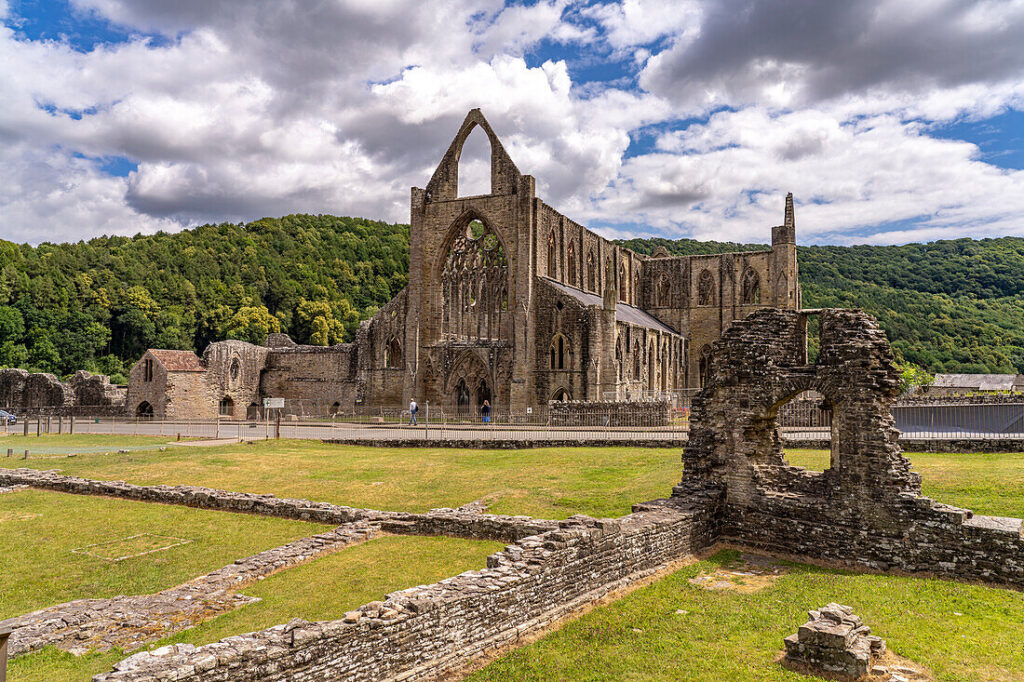
Tintern Abbey, founded by Cistercian monks in 1131, is one of the most atmospheric ruins in Britain. Its roofless Gothic nave, framed by wooded hillsides, has been inspiring poets and painters since the 18th century, and it’s easy to see why once you’re standing inside it.
Goodrich Castle, a red sandstone ruin overlooking the river near Ross-on-Wye, is one of the best-preserved medieval castles in the region and offers an excellent audio guide that brings the site to life without feeling gimmicky.
Wild swimming has become increasingly popular along the Wye, with gravel beaches at spots like Sellack, Kerne Bridge, and below the Iron Bridge at Redbrook offering safe, scenic places to cool off on a warm day.

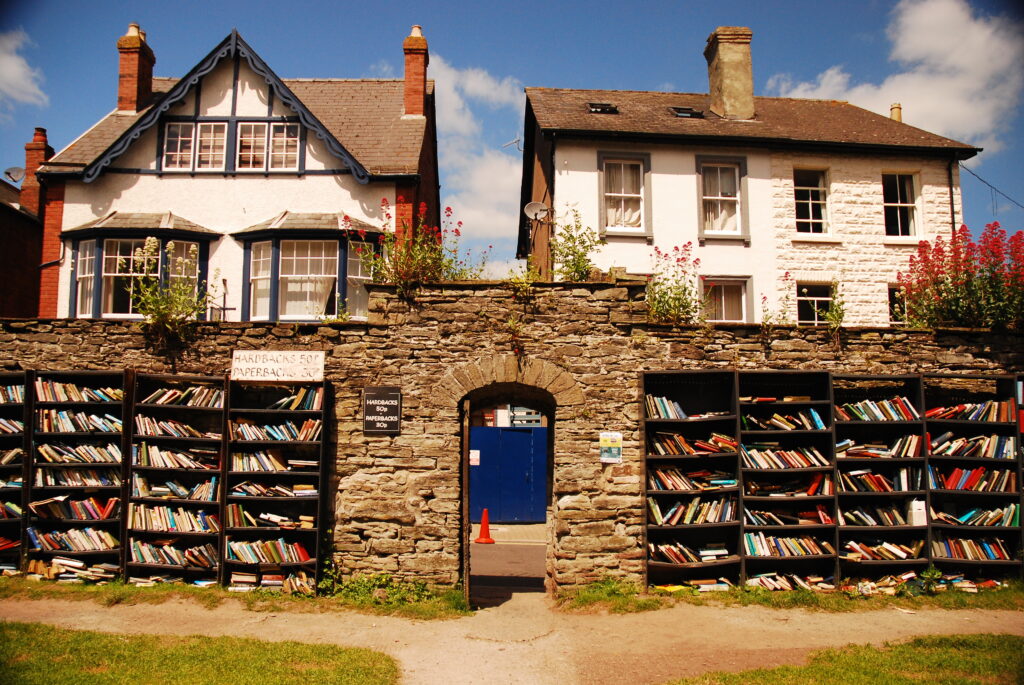
Hay-on-Wye, the self-proclaimed “town of books,” sits just outside the official boundary of the Wye Valley AONB but is close enough to justify a detour, especially for anyone who enjoys second-hand bookshops or happens to be visiting during the Hay Festival in late May or early June.
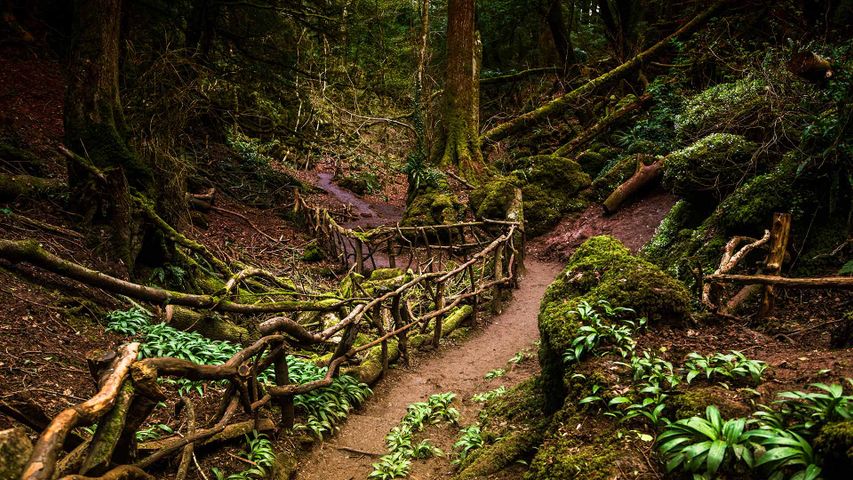
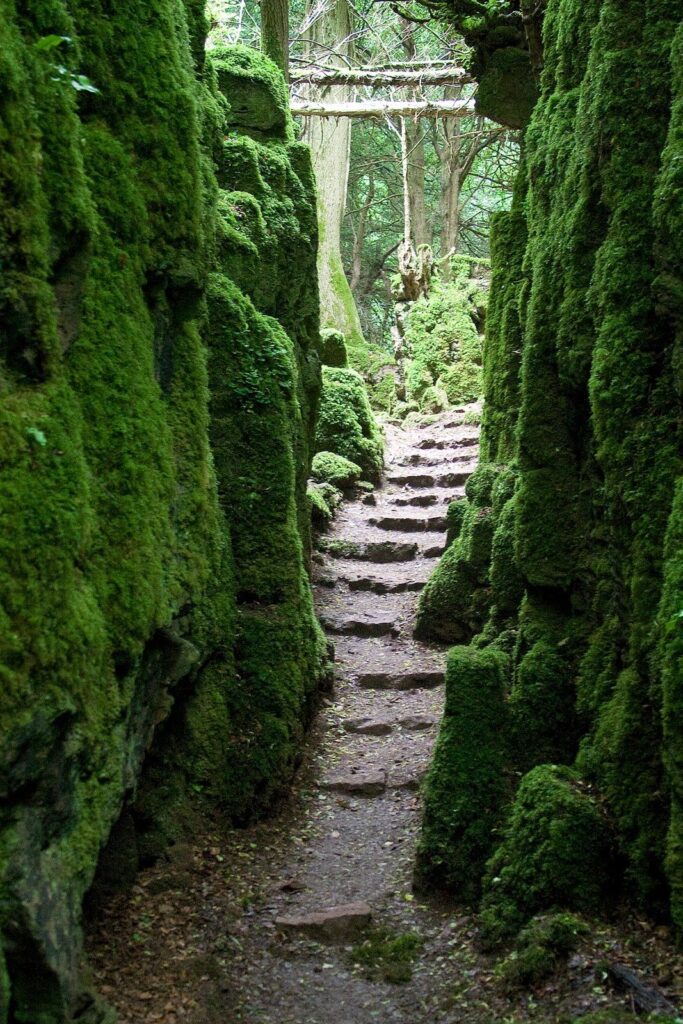
Puzzlewood, in the nearby Forest of Dean, is a genuinely otherworldly ancient woodland of moss-covered rocks and twisting paths that has featured in several major film and television productions, and it’s a hit with children regardless of whether they recognise it.
The Kymin, a hilltop near Monmouth with a curious 18th-century naval temple and roundhouse, offers sweeping views over the town and valley and makes for a rewarding short walk.
Best Places to Visit in the Wye Valley
If you’re planning your route through the valley, a handful of towns and villages act as natural anchor points.
Ross-on-Wye is often called the “Gateway to the Wye” and makes an excellent starting point for a trip. Its 17th-century Market House still hosts markets twice a week, and the town’s elevated position gives it lovely views over a horseshoe bend in the river from a spot called The Prospect.
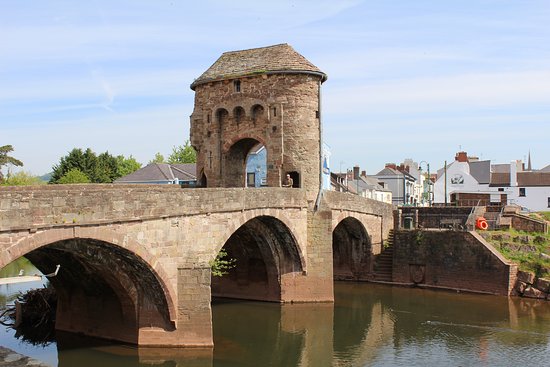
Monmouth, a little further south, is a handsome market town with a genuinely unusual claim to fame: the Monnow Bridge, the only remaining fortified river bridge in Britain still standing on its original site. The town also has strong connections to Henry V, who was born in Monmouth Castle.
Chepstow marks the southern gateway to the valley, where the Wye meets the tidal Severn Estuary. Chepstow Castle, begun in 1067, is one of the oldest surviving stone castles in Britain and sits dramatically above the river on a limestone cliff. The town’s iron arch bridge, once the largest of its kind in the world, still carries traffic across the border.
Symonds Yat, split into East and West villages connected by a hand-pulled ferry, is the activity hub of the valley, with canoe hire, cafés, and pubs clustered around the river.
Tintern, a small village that has grown up around its famous abbey, is worth lingering in beyond the ruins themselves, with riverside walks and a handful of good pubs.
Each of these places is small enough to explore in a few hours, which makes it easy to string together two or three in a single day if you’re driving.
How to Get to the Wye Valley
Reaching the Wye Valley is straightforward by car and manageable, if slightly more planning-intensive, by train and bus.
By car, the valley is well served by major roads. The M50 connects to the M5 in under half an hour, making the area easily reachable from Birmingham, Bristol, and South Wales. The A40 and A466 run through the heart of the valley and link most of the main towns.
By train, Hereford is the best-connected gateway, with direct services from London Paddington taking under three hours via Great Western Railway. Chepstow and Gloucester also have useful rail links, and Ledbury offers another option for the northern end of the valley. From any of these stations, you’ll generally need a local bus, taxi, or hire car to reach the smaller villages and viewpoints, since public transport thins out quickly once you leave the main towns.
By bus, National Express coach services run to Chepstow and Monmouth, and local bus routes connect towns like Hereford, Ross-on-Wye, and Hay-on-Wye, though services can be infrequent, particularly on Sundays and in winter.
Realistically, a car is the most practical way to see more than one or two spots in a single day. Many of the best viewpoints, canoe launch points, and walking trailheads sit down rural lanes that simply aren’t served by public transport. If you don’t drive, it’s worth basing yourself in one town, such as Ross-on-Wye, Monmouth, or Chepstow, and using local buses or taxis for day trips from there.
Best Time to Visit the Wye Valley
The Wye Valley is a year-round destination, but each season offers something different.
Spring (April–May) is a strong choice for anyone who wants to avoid the busiest crowds while still getting reasonable weather. Woodland floors turn carpets of bluebells and wild garlic, and walking trails like the route to the Devil’s Pulpit above Tintern Abbey are especially atmospheric at this time of year.
Summer (June–August) brings the warmest weather and the longest days, with daylight lasting until after 9:30pm in June. This is peak season for canoeing, wild swimming, and outdoor activities generally, but it’s also when the valley is at its busiest and most expensive, particularly around popular spots like Symonds Yat and during the Hay Festival.
Autumn (September–October) offers a genuine sweet spot for many travellers: the crowds thin out noticeably after the summer holidays end, the weather often remains mild into September, and the woodland turns spectacular shades of gold and copper by October.
Winter (November–March) is quiet and often overlooked, but it has its own appeal for travellers who don’t mind cooler, wetter conditions. Castles and abbeys take on a moodier character without the crowds, and accommodation prices drop considerably. Do note that the Wye can flood after heavy rain during this period, particularly in low-lying riverside areas, so it’s worth checking conditions before setting off on riverside walks.
Whatever time of year you visit, pack for changeable weather. The valley’s woodland and gorge sections can be noticeably cooler and more sheltered than open, exposed viewpoints, and conditions can shift quickly.
Walking and Hiking in the Wye Valley
Walking is arguably the best way to properly get under the skin of the Wye Valley, and the region has trails to suit almost every fitness level.
The Wye Valley Walk is the area’s flagship long-distance trail, running 219 kilometres from Hafren Forest in mid-Wales down to Chepstow Castle. Very few visitors attempt the whole route, but shorter sections make excellent day walks, particularly the stretch between Tintern and Bigsweir Bridge, or the section linking Symonds Yat to Kerne Bridge.
The Offa’s Dyke Path, a 285-kilometre National Trail tracing the historic border between England and Wales, also runs through the valley and connects with several worthwhile detours, including the walk up to the Devil’s Pulpit for its dramatic view down onto Tintern Abbey.
Around Symonds Yat Rock, a network of shorter, well-signposted trails suits families and casual walkers. The main viewpoint path from the car park is wide, well-surfaced, and manageable for pushchairs and most wheelchair users, while longer loops head down to the river and across the Biblins footbridge, taking in King Arthur’s Cave and the Little Doward Iron Age hillfort along the way.
Difficulty across the valley varies considerably. Riverside paths tend to be gentle and mostly flat, while routes climbing up to viewpoints like Coppett Hill, The Kymin, or the Devil’s Pulpit involve genuine, if short, ascents on sometimes uneven ground. Sturdy footwear is a sensible idea for anything beyond the main paved viewpoints, since paths can turn muddy quickly after rain, and limestone underfoot can be slippery when wet.
For a memorable half-day out, the “Head for the Hillforts” walk from Symonds Yat is a good option: it follows in the footsteps of the original 18th-century Wye Tourists, crossing the river via the Biblins footbridge and returning on the hand ferry at Symonds Yat West.
Canoeing, Kayaking, and Life on the River
The River Wye is one of the best canoeing rivers in the country, and getting out on the water is where the valley really comes alive.
Canoe, kayak, and stand-up paddleboard hire is available at multiple points along the river, with Symonds Yat, Ross-on-Wye, and Hereford serving as the main hubs. Beginners are well catered for, with gentle, wide sections of river between Hereford and Symonds Yat, including the popular Hoarwithy to Ross-on-Wye stretch, offering scenery without demanding much technical paddling skill.
More experienced paddlers often head for the Symonds Yat Rapids, a grade-two section that provides a genuine thrill without tipping into anything approaching whitewater territory. Below the rapids, paddlers pass close to the Seven Sisters Rocks and can stop to explore King Arthur’s Cave nearby.
Wild swimming has also grown in popularity, with several well-loved gravel beaches offering safe, scenic spots for a dip. Sellack is a particular favourite for families, thanks to a good picnic spot alongside the water, while the stretch below the Iron Bridge at Redbrook and the area near Brewardine are also popular. As with any wild swimming, it’s worth checking current river conditions beforehand, since levels can rise quickly after heavy rain upstream.
Most hire companies provide all necessary safety equipment, including buoyancy aids, and can arrange trips ranging from a couple of hours to a full day. Booking ahead is recommended during the busy summer months, particularly at weekends.
Where to Stay in the Wye Valley
Accommodation in the Wye Valley ranges from countryside campsites to boutique riverside inns, and where you base yourself makes a real difference to how your trip flows.
Ross-on-Wye is a popular base for first-time visitors, with a good spread of hotels, guesthouses, and self-catering cottages, plus easy access north towards Hereford and south towards Symonds Yat and Monmouth.
Tintern suits anyone prioritising walking and the abbey itself, with a number of cosy pubs offering rooms and campsites nearby that make for a good evening base after a day on the trails.
Symonds Yat is the obvious choice if canoeing and water activities are the main focus of your trip, given its cluster of riverside accommodation and easy access to hire companies.
Chepstow works well for anyone wanting a slightly more urban base with good transport connections, plus quick access to the castle and the southern end of the valley.
For something more distinctive, the region has a growing collection of characterful stays, from woodland cabins with wood-fired hot tubs near Ross-on-Wye to riverside inns right on the water in the heart of Ross town itself. Camping and glamping are widely available throughout the valley and tend to be the most budget-friendly option, particularly appealing to walkers and paddlers who want to be close to the trailheads and put-in points first thing in the morning.
Booking ahead is strongly advised for summer weekends and especially during the Hay Festival period in late May and early June, when accommodation across the wider area fills up quickly.
Food and Drink in the Wye Valley
The Wye Valley takes its food seriously, and the surrounding countryside supplies much of what ends up on local menus.
Wye Valley beef, lamb, and venison feature heavily on pub menus throughout the region, often sourced from farms just a few miles from where they’re served. The area is also well known for its cider and perry production, with Herefordshire’s orchards feeding a strong tradition of small-scale cider makers; guided orchard walks and tastings are available at several farms around Ross-on-Wye through the summer months.
Riverside pubs are something of a Wye Valley institution. Many towns and villages have at least one pub with a garden or terrace overlooking the water, making them a natural stop after a day of walking or paddling. Near Symonds Yat and Tintern in particular, expect hearty, unpretentious pub food alongside a good selection of local ales and ciders.
For something more specialist, the Severn & Wye Smokery, near the southern end of the valley, combines a fish market, food hall, and restaurant, and is well worth a stop for anyone who enjoys smoked salmon, mackerel, and other locally smoked produce. It’s also a good spot to pick up food gifts to take home.
Farmers’ markets pop up regularly in towns like Ross-on-Wye and Monmouth, offering a chance to buy directly from local producers, and several vineyards in the wider region, including one near Abergavenny, run guided tours and tastings for anyone interested in the area’s smaller-scale wine production.
Family-Friendly Activities and Practical Tips
The Wye Valley is a genuinely good destination for families, with a wide range of activities that don’t require much prior experience or specialist gear.
Symonds Yat Rock is one of the easiest and most rewarding stops for families, thanks to its short, well-surfaced path from the car park to the viewpoint, on-site log cabin café, and toilets. Children tend to love spotting peregrine falcons through the on-site viewing scopes during nesting season.
Canoe hire companies routinely cater to families with young children, offering shorter, gentler routes and all necessary safety equipment. Puzzlewood, in the nearby Forest of Dean, is another consistently popular family stop, with its maze of moss-covered paths appealing to children regardless of their interest in its film and television credits.
A few practical points worth knowing before you go: mobile phone signal can be patchy in the wooded gorge sections of the valley, so it’s worth downloading maps or directions in advance if you’re relying on your phone for navigation. Parking at popular spots like Symonds Yat Rock and Tintern Abbey is pay and display, typically operated by card or the RingGo app, and Tintern Abbey’s car park charge is refundable against a minimum spend on-site. Toilets and cafés are available at the main visitor hubs, including Symonds Yat Rock, but are more limited at smaller, quieter viewpoints, so plan accordingly.
Dogs are welcome on the vast majority of trails and in many pubs throughout the region, though it’s sensible to keep dogs on leads near livestock, which is common on farmland sections of the walking routes. As with any rural car park, it’s worth keeping valuables out of sight in parked vehicles, particularly at busy trailheads.
Hidden Gems in the Wye Valley
Beyond the well-known highlights, the Wye Valley rewards travellers willing to venture slightly off the obvious route.
King Arthur’s Cave, in the Doward area near Symonds Yat, is a genuinely fascinating Palaeolithic archaeological site that sees a fraction of the visitors that Symonds Yat Rock does, despite being only a short walk away.
The Devil’s Pulpit, reached via a walk through dense woodland along the Offa’s Dyke Path, offers a bird’s-eye view straight down onto Tintern Abbey that’s arguably more dramatic than the view from ground level, complete with a local legend about the devil taunting the monks below.
Coppett Hill, near Goodrich, offers panoramic views across six counties on a clear day, and it remains far quieter than better-known viewpoints in the valley, making it an excellent choice for anyone seeking a bit of solitude.
The Eagle’s Nest, a double-decker viewing platform perched on cliffs near Wyndcliff, gives sweeping views over the Wye with a genuine sense of exposure that makes it feel more adventurous than most viewpoints in the region.
Goytre Wharf, on the Monmouthshire and Brecon Canal south of Abergavenny, offers a quieter, slower alternative to the main river for anyone who fancies a gentle canoe hire or canalside walk away from the busier Wye itself.
Nearby Places to Explore
If you have extra time, several worthwhile destinations sit within easy reach of the Wye Valley.
The Forest of Dean borders much of the valley and adds an entirely different kind of woodland adventure, with mountain biking trails, high ropes courses, cave systems at Clearwell, and a scenic steam railway journey through the trees.
The Brecon Beacons National Park (now officially known by its Welsh name, Bannau Brycheiniog) lies within an easy drive to the west and offers dramatic mountain scenery for anyone wanting to extend their trip with proper upland walking.
Hereford, at the northern end of the valley, is worth a stop in its own right for Hereford Cathedral, home to the Mappa Mundi, a remarkable medieval map of the world crafted around the year 1300 on a single sheet of calfskin.
Hay-on-Wye, though technically outside the official AONB boundary, sits close enough to justify a detour for its extraordinary concentration of second-hand bookshops and its world-famous literary festival.
Two-Day Wye Valley Sample Itinerary
Day One: Ross-on-Wye to Symonds Yat Start the morning exploring Ross-on-Wye’s Market House and the view from The Prospect. Drive south to Goodrich Castle for a couple of hours exploring the ruins, then continue to Symonds Yat Rock for the valley’s most iconic view and a spot of falcon-watching if visiting between March and July. In the afternoon, hire a canoe or kayak at Symonds Yat for a couple of hours on the river, then settle in at a riverside pub for the evening.
Day Two: Tintern and Chepstow Head south to Tintern Abbey for a morning exploring the ruins, followed by the walk up to the Devil’s Pulpit for the elevated view back down over the abbey, if you’re up for a moderate climb. Have lunch in Tintern village before continuing to Chepstow, where you can explore Chepstow Castle and walk across the historic iron bridge into Wales before heading home.
This itinerary can easily be extended into a third or fourth day by adding Monmouth, Hay-on-Wye, or a longer walking or canoeing session, depending on your interests.
Frequently Asked Questions
Is the Wye Valley in England or Wales? The Wye Valley sits on the border between England and Wales, with the River Wye forming part of that border for much of its length. The northern section, around Hereford and Ross-on-Wye, lies in England, while the southern section around Tintern and Chepstow lies in Wales. Many day trips cross back and forth between the two countries without much fanfare, since the transition is often marked by little more than a road sign.
How many days do you need in the Wye Valley? Two to four days is generally enough to see the main highlights without feeling rushed. A single day allows you to focus on one or two spots, such as Symonds Yat and Tintern Abbey, while three or four days gives you time to add walking, canoeing, and some of the quieter towns like Monmouth or Hay-on-Wye into the mix.
Is the Wye Valley good for walking? Yes, the Wye Valley is one of the best walking destinations in this part of Britain, with routes ranging from short, accessible paths at viewpoints like Symonds Yat Rock to longer, more demanding stretches of the Wye Valley Walk and Offa’s Dyke Path. Most trails are easy to moderate, though some viewpoint climbs involve genuine ascents.
Can you swim in the River Wye? Yes, wild swimming is popular at several spots along the river, including Sellack, the area below the Iron Bridge at Redbrook, and near Brewardine. It’s worth checking current river conditions before swimming, since water levels can rise quickly after heavy rain, and it’s best to avoid busy canoeing periods for a quieter dip.
What is Symonds Yat Rock famous for? Symonds Yat Rock is famous for its panoramic view of a dramatic looping bend in the River Wye, seen from high above. It’s also one of the best places in the country to watch peregrine falcons hunting, particularly during their nesting season between March and July, and the site has a history stretching back to an Iron Age hillfort built around 2,500 years ago.
Do I need a car to visit the Wye Valley? While Hereford and Chepstow are reachable by train, a car is strongly recommended for exploring the wider Wye Valley, since public transport thins out considerably once you leave the main towns. Many of the best viewpoints, canoe launch points, and walking trailheads sit along rural lanes without regular bus services.
Is Tintern Abbey free to visit? No, Tintern Abbey charges an entrance fee, and there is also a separate pay-and-display parking charge at the on-site car park, which is refundable against a minimum spend during your visit. It’s worth checking current opening times and ticket prices in advance, as these can vary seasonally.
Is the Wye Valley dog-friendly? Yes, the Wye Valley is generally very dog-friendly, with most walking trails and many pubs welcoming dogs. It’s sensible to keep dogs on leads around livestock, which is common on farmland sections of the region’s walking routes, and to check individual pub or attraction policies if you’re planning to bring your dog inside.
When do peregrine falcons nest at Symonds Yat? Peregrine falcons typically nest at Symonds Yat Rock between late March and July, making this the best window for spotting them. Viewing scopes are usually available on-site during this period to help visitors get a closer look at the birds without disturbing them.
What’s the best month to visit the Wye Valley? May and September are often considered the sweet spot, offering good weather with noticeably fewer crowds than the peak summer months. April and May bring bluebells and wild garlic to the woodland floor, while September tends to retain mild weather after the summer school holidays have ended.
Conclusion
The Wye Valley earns its long-standing reputation the honest way: through genuinely dramatic scenery, a manageable size that rewards exploring by car or on foot, and a level of variety that few other parts of Britain can match in such a compact area. Whether your priority is standing at the clifftop viewpoint that launched British tourism over two centuries ago, paddling a canoe past nesting falcons, or wandering the roofless nave of a medieval abbey, this stretch of the England-Wales border delivers on nearly every front.
Give yourself at least two days if you can, since the valley rewards a slower pace far more than a single rushed afternoon. Bring sturdy shoes for the trails, book canoe hire and accommodation ahead during summer weekends, and don’t be afraid to detour off the obvious route toward quieter spots like Coppett Hill or King Arthur’s Cave. Whatever time of year you go, the Wye Valley has a way of living up to its reputation, and then quietly asking you to come back for more.
yeh this is good