
Table of Contents
Sandwood Bay
Sandwood Bay sits on the far northwest coast of Sutherland, tucked into some of the wildest coastline in mainland Scotland. There’s no road to it. No car park at the beach itself. No café, no gift shop, no toilet block waiting at the end of the walk. Getting there means a four-mile hike across open moorland, and that effort is exactly why Sandwood Bay has such a strong reputation among UK travellers who want a beach that feels genuinely untouched.
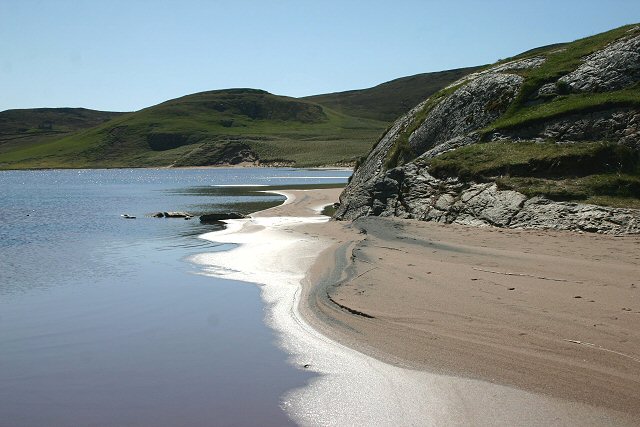
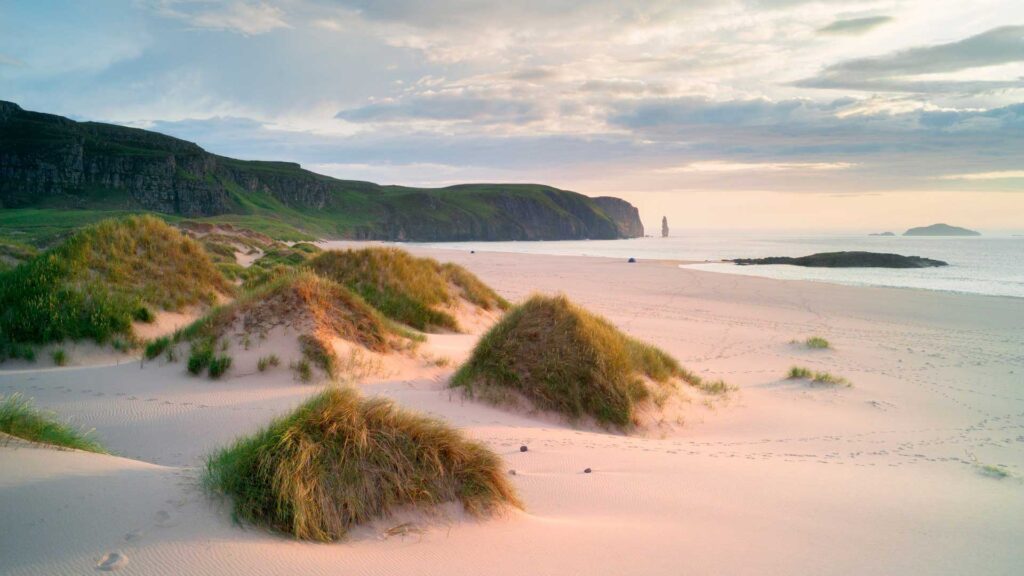
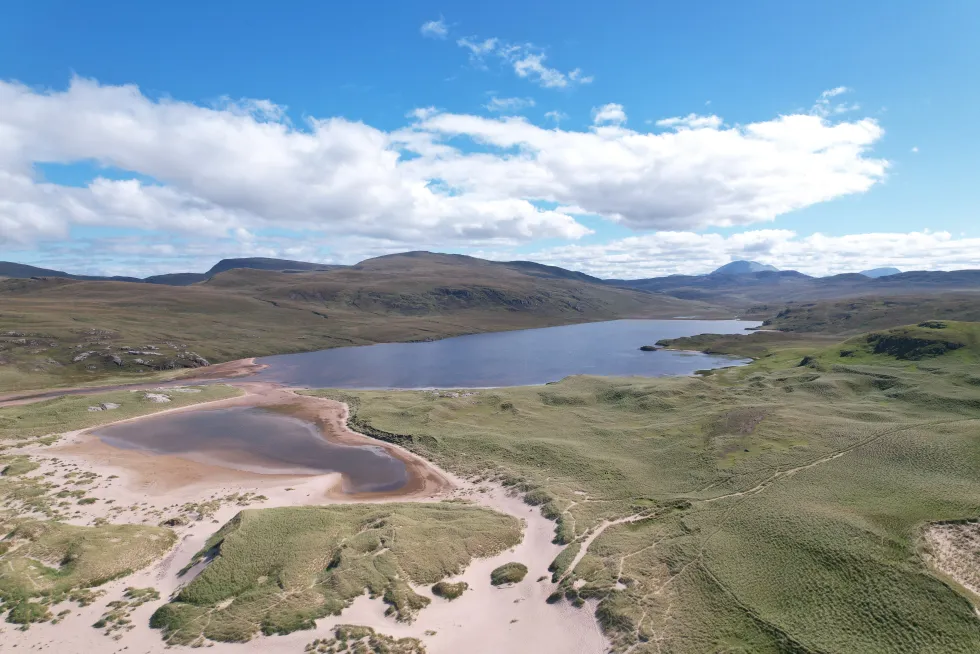
The bay is framed by high dunes, pink-tinged sand, and a dramatic sea stack called Am Buachaille rising just offshore. Behind the beach lies Sandwood Loch, a freshwater loch that adds another layer of scenery to the walk in. The whole area is managed by the John Muir Trust and protected for its dune grassland and machair habitat, which means it has stayed largely free of development.
This guide covers what you actually need to know before visiting Sandwood Bay: the walk from Blairmore car park, what the terrain is like, when to go, what wildlife to expect, and how to plan around the fact that there are no facilities once you leave the road. Whether you’re combining it with a North Coast 500 route or making a dedicated trip to Sutherland, here’s what to expect from one of Scotland’s most rewarding coastal walks.
Why Visit Sandwood Bay?
Sandwood Bay is regularly named among the best beaches in the UK, and the lack of road access is a big part of the appeal. Because it can only be reached on foot, visitor numbers stay relatively low compared with more accessible Scottish beaches, even in peak summer.
The scenery is the main draw: roughly a mile of open sand, backed by dunes and framed by Am Buachaille at the southern end. Sandwood Loch sits just inland, adding still water and hill views to the approach. The area is also a designated Site of Special Scientific Interest, protected for its dune systems and machair grassland.
For walkers, the appeal goes beyond the beach itself. The route out from Blairmore crosses genuine Highland peat moorland, with views toward Cranstackie and Foinaven on a clear day. It’s a walk that rewards patience rather than technical skill, which makes Sandwood Bay accessible to most reasonably fit visitors.
The Walk from Blairmore Car Park
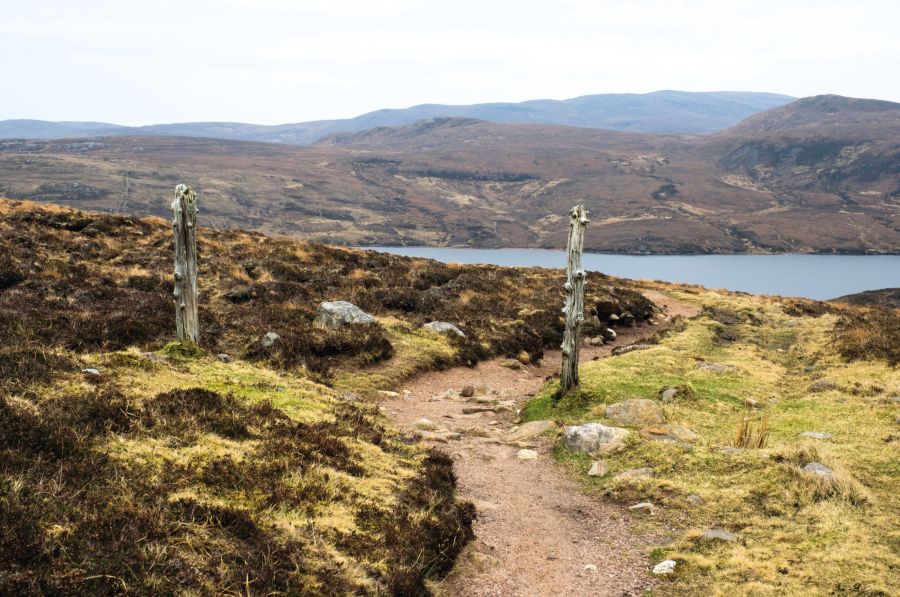
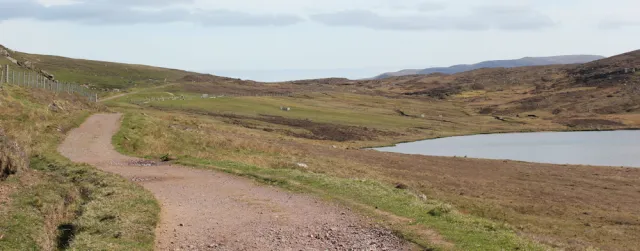
The standard route to Sandwood Bay starts at the car park in Blairmore, a small hamlet reached via the B801 from Rhiconich, just off the A838. From the car park, a signposted path leads through a gate opposite and follows a gravel track for around four miles to the coast.
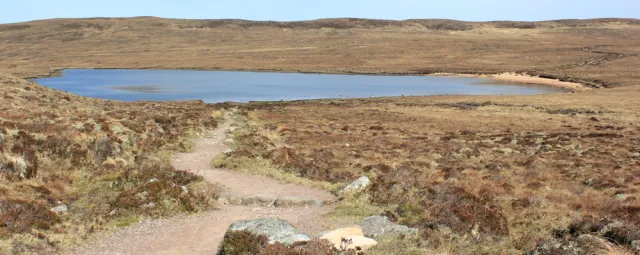
Along the way, the path passes several lochs and lochans, including Loch Aisir, Loch na Gainimh, and Loch a’ Mhuilinn, before the coastline and Sandwood Loch come into view. There’s little in the way of sea views until the final stretch, so much of the walk is inland moorland rather than coastal scenery.
The path is well maintained for most of its length and becomes a proper track around the two-mile mark. Underfoot conditions are generally reasonable, though the ground can be soft after rain given the peat terrain.
Terrain and Difficulty
The walk to Sandwood Bay is gently undulating rather than steep, with no significant climbs. That said, the eight-mile round trip is enough to catch out visitors who underestimate it, especially in poor weather or strong wind, which is common on this exposed stretch of coast. Sturdy waterproof footwear is worth packing, since sections of track can be uneven or waterlogged. Allow around three to four hours for the return walk, plus time at the beach.
Am Buachaille and the Best Places to Explore
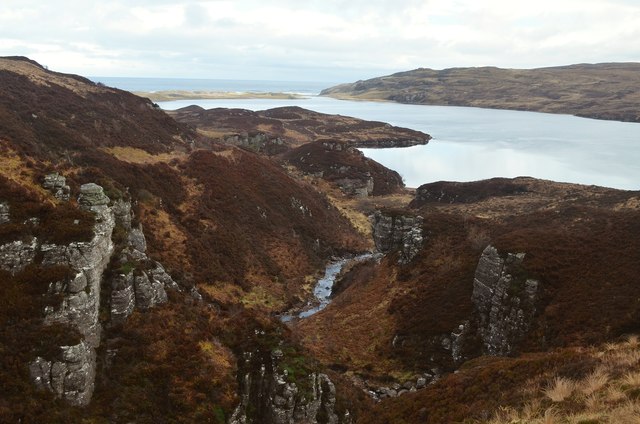
The sea stack Am Buachaille, meaning “the herdsman,” stands at the southern end of Sandwood Bay and is one of its most recognisable features. Formed from Torridonian sandstone, the stack rises around 65 metres above the sea and was first climbed in 1968 by mountaineers Tom Patey, Ian Clough, and John Cleare.
Sandwood Loch itself is worth pausing at on the way in. It stretches roughly a mile long, with the slope of Carn Call rising above it. Near the loch are the ruins of a former farmhouse, with walls still largely intact despite the roof and woodwork having long since disappeared.
The beach runs for about a mile, giving plenty of room to walk its full length before heading back. Because the sand is so exposed to Atlantic weather, its appearance can change noticeably between visits, with dune erosion an ongoing feature of the landscape here.
Best Time to Visit Sandwood Bay
Spring and summer are generally the most comfortable seasons to visit, with longer daylight hours making the eight-mile round trip easier to plan around. Given the remoteness of the walk, extra daylight is a genuine practical advantage rather than just a scenic bonus.
Autumn can bring dramatic skies and quieter paths, though weather becomes less predictable. Winter visits are possible but demand more preparation, since daylight hours are short this far north and the moorland path offers no shelter from wind or rain.
Regardless of season, Sandwood Bay’s exposed position means weather can change quickly. Checking a Highland-specific forecast before setting out, rather than a general Scotland-wide one, gives a more accurate picture of conditions on the day.
Wildlife and Nature at Sandwood
The wider Sandwood estate, covering around 4,700 hectares, is recognised as one of the most important wildlife habitats in northwest Scotland. The peatlands and coastline support nesting seabirds including fulmars, guillemots, razorbills, and shags, while great northern divers and golden plovers are among the seasonal visitors to the area.
Dolphins are occasionally spotted offshore from the beach, and the surrounding machair grassland near Sheigra and Oldshoremore supports over 200 plant species, including eight types of orchid. The area is also home to the rare Great Yellow bumblebee, a species with a limited UK range concentrated in the far north and west of Scotland.
Because the estate falls within a Special Area of Conservation, visitors are encouraged to stick to the main path where possible to avoid disturbing sensitive dune and machair habitats.
What to Know Before You Go
There are no facilities of any kind at Sandwood Bay itself, so anything brought in needs to be carried back out, including litter. Toilets are available at Blairmore before setting off, but not along the route or at the beach.
Mobile signal is limited across much of this stretch of coast, so it’s worth telling someone your planned route and expected return time before heading out. An OS Explorer map (446: Durness & Cape Wrath) or a downloaded GPX route is a sensible backup to phone-based navigation.
Wild Camping at Sandwood Bay
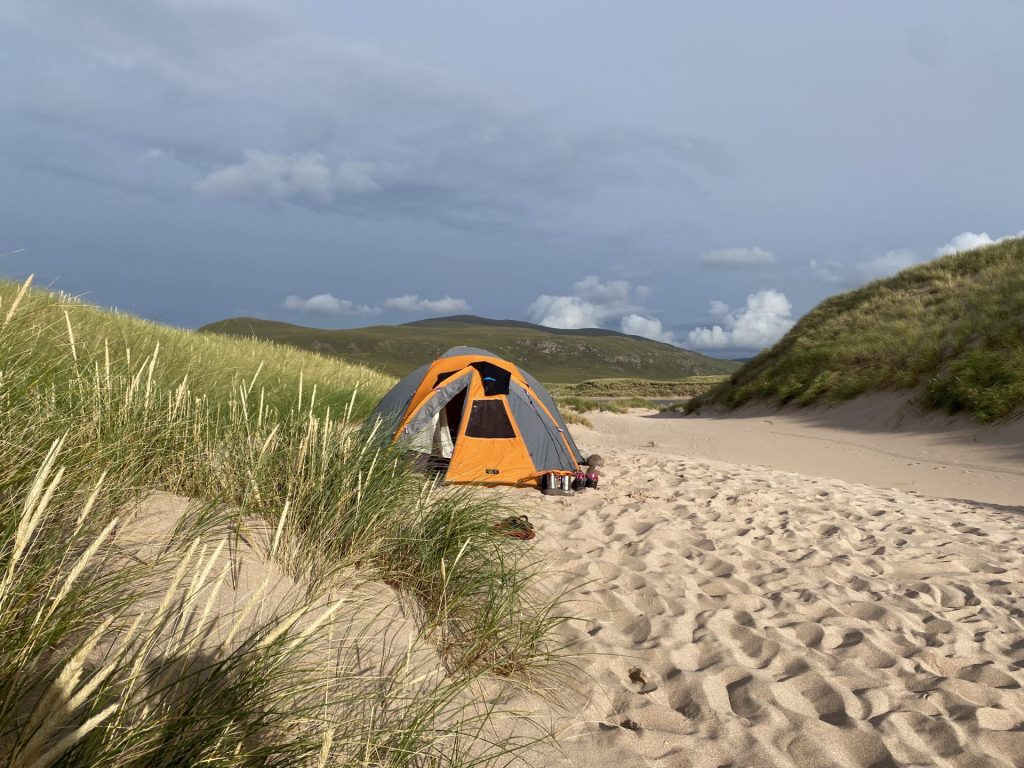
Wild camping is a popular option at Sandwood Bay, thanks to Scotland’s access legislation and the beach’s remote setting. Anyone planning to camp should follow Leave No Trace principles closely, given the site’s conservation status, and be prepared for genuinely exposed conditions with no shelter nearby.
Nearby Places to Visit
Blairmore and the surrounding area sit close to several other worthwhile Sutherland stops. Kinlochbervie, a few miles south, has the nearest facilities including shops and accommodation. Cape Wrath, mainland Britain’s most northwesterly point, lies around 11 miles north of Sandwood and can be reached via a separate, longer route for those wanting to extend their trip.
Sheigra and Oldshoremore, both a short drive from Blairmore, offer their own quieter beaches and are worth combining with a Sandwood Bay visit if time allows.
FAQ
How far is the walk to Sandwood Bay?
The walk from Blairmore car park to Sandwood Bay is just over four miles each way, making it an eight-mile round trip across peat moorland with no significant climbs.
Are there toilets or facilities at Sandwood Bay?
No. There are no facilities at the beach itself. Toilets are available at Blairmore before you start the walk, and anything you bring in needs to be carried back out.
Can you drive to Sandwood Bay?
No, there’s no road access. The nearest parking is the car park at Blairmore, from where the beach is reached entirely on foot.
Is wild camping allowed at Sandwood Bay?
Yes, wild camping is possible under Scotland’s access legislation, though visitors are asked to follow Leave No Trace principles given the site’s protected conservation status.
What’s the best time of year to visit Sandwood Bay?
Spring and summer offer the most daylight for the return walk and generally milder conditions, though the exposed location means weather can shift quickly at any time of year.
Conclusion
Sandwood Bay rewards the effort it takes to reach it. The four-mile walk from Blairmore crosses genuinely wild Sutherland moorland, passing lochs and lochans before opening onto a mile of dune-backed sand guarded by the Am Buachaille sea stack. With no road access and no facilities at the beach, a visit takes some planning, from footwear and navigation to daylight hours and weather checks. But for travellers looking for one of Scotland’s most remote and unspoiled beaches, Sandwood Bay remains one of the most memorable coastal walks in the Highlands, and a fitting highlight for anyone exploring this stretch of the North Coast.