
Table of Contents
Cairngorms National Park
The Cairngorms National Park covers more than 4,500 square kilometres of the Scottish Highlands, making it the largest national park in the UK. Within its boundaries sit five of Scotland’s six highest mountains, ancient Caledonian pine forest, wide glens, and a scattering of villages that make good bases for exploring. Unlike some Highland destinations that feel remote and difficult to reach, the Cairngorms are relatively accessible, with the A9 running along the western edge and regular rail connections into Aviemore.
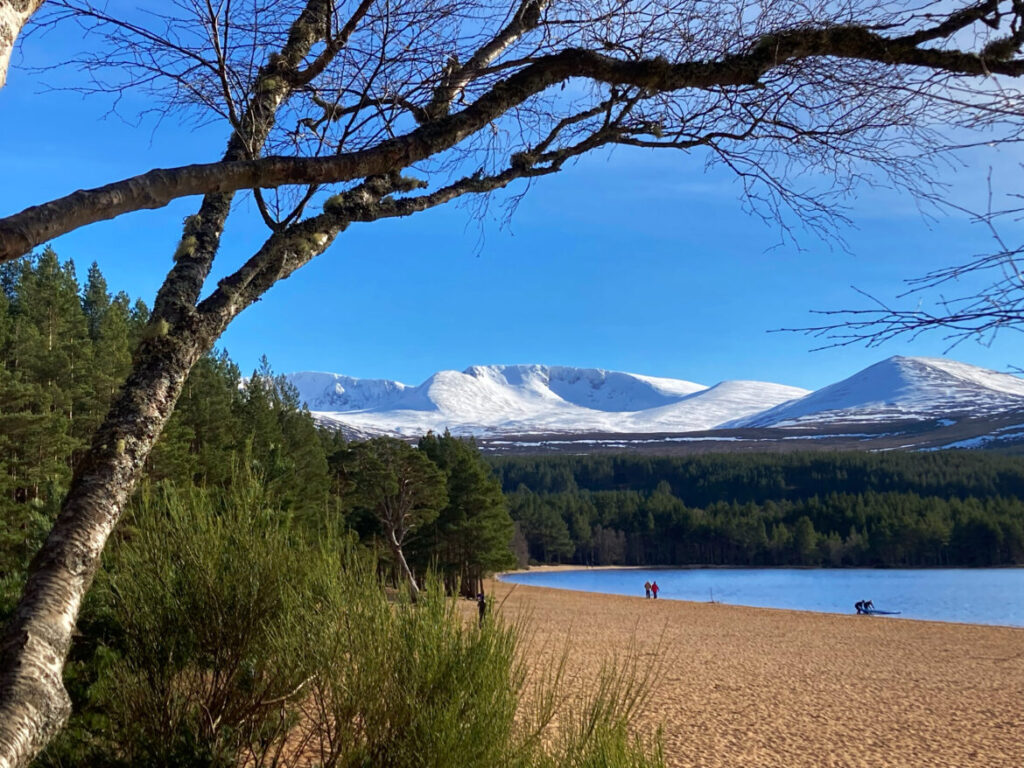
Visitors come here for very different reasons. Some want serious mountain walking, including routes onto the Cairngorm plateau itself. Others are drawn by the wildlife, since the park is one of the best places in Britain to see red squirrels, capercaillie, and reintroduced species such as beavers. Families often base themselves around Aviemore or Loch Morlie for gentler forest trails and watersports, while photographers head for locations like Loch an Eilein or the Lairig Ghru pass.
This guide covers the practical information needed to plan a visit to the Cairngorms National Park: the best areas to explore, walking options for different abilities, when to go, how to get there, and where to base yourself. Whether the plan is a single day trip from Inverness or a longer stay exploring several glens, the sections below cover what matters most before setting off.
Why Visit the Cairngorms National Park?
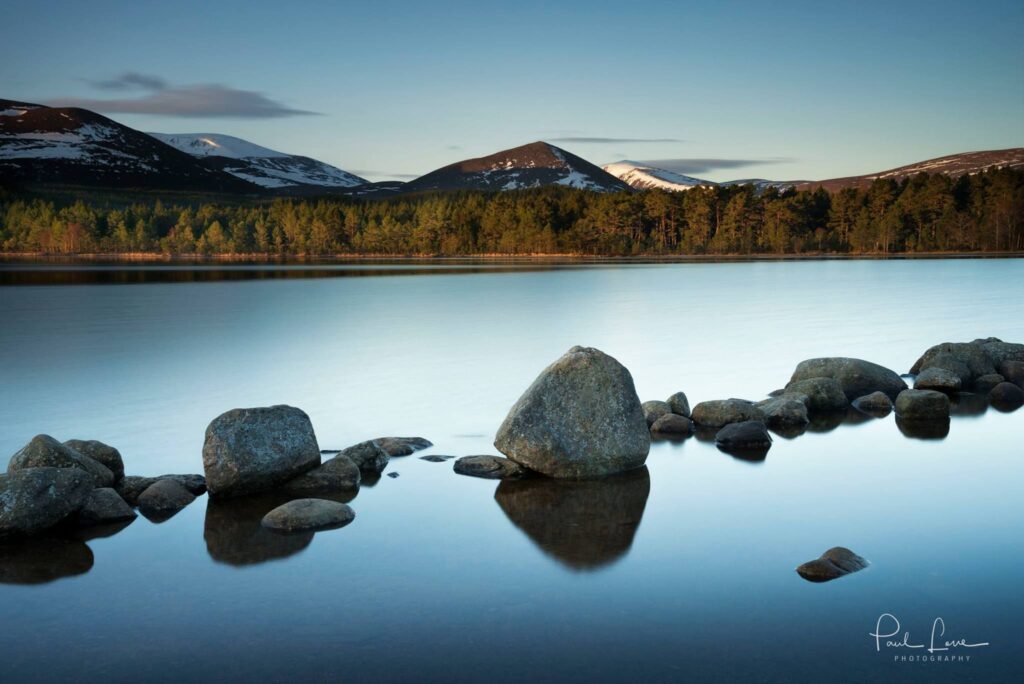
The scale of the Cairngorms sets it apart from other UK national parks. This is genuine wild country, with a subarctic plateau above 1,000 metres that holds snow patches for much of the year, bordered by farmland, forest, and lochs at lower levels. That range of landscape within one park means visitors can choose between demanding mountain days and easy loch-side strolls without travelling far.
The park is also a stronghold for species that have become rare elsewhere in Britain. Ancient Caledonian pine forest survives in pockets such as Rothiemurchas and Abernethy, supporting capercaillie, crested tits, and pine martens. Reindeer have been kept semi-wild in the Cairngorms since the 1950s, and the Cairngorm Reindeer Herd remains a popular visitor attraction. For anyone interested in Highland wildlife and landscape in a single trip, the Cairngorms offer more variety than most comparable destinations.
Best Things to Do in the Cairngorms
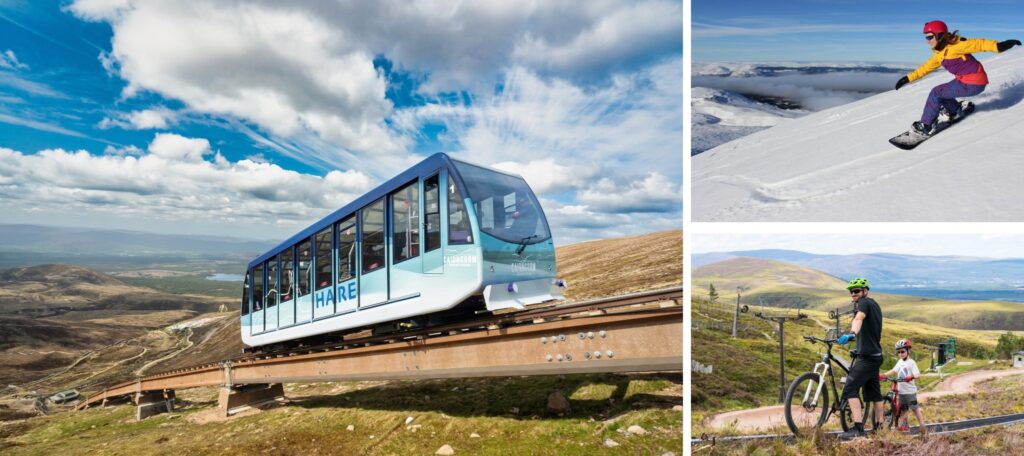
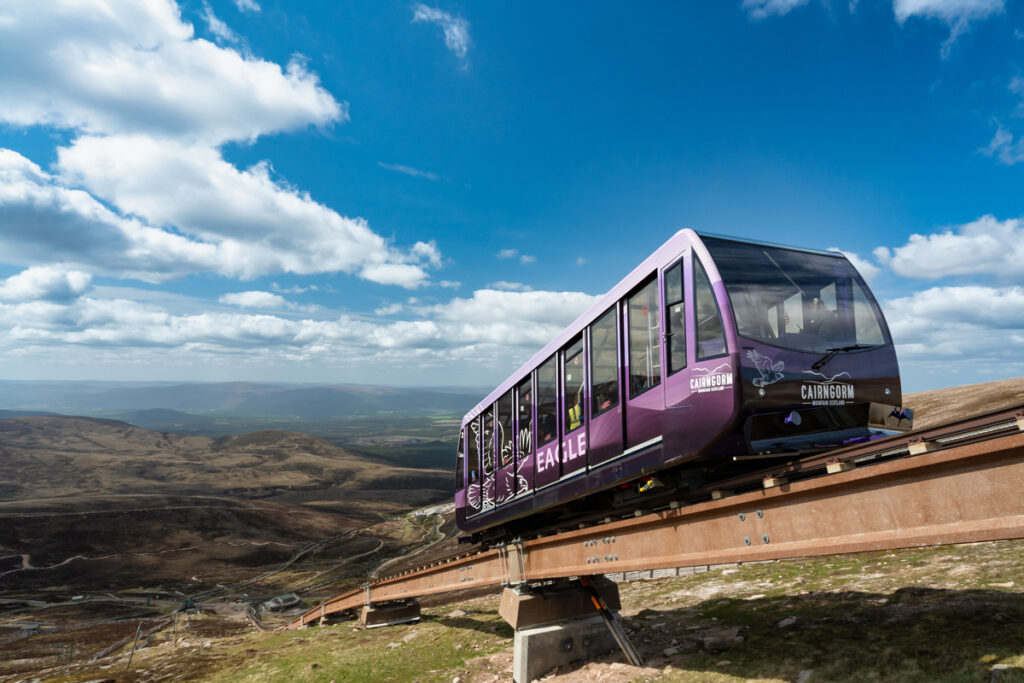
Beyond walking, the park has a wide range of activities suited to different visitors. The Cairngorm Mountain funicular railway and ski area near Aviemore operates through the seasons, with summer visits offering views over Strathspey even without snow. Watersports on Loch Morlich and Loch Insh include kayaking, paddleboarding, and sailing, with equipment hire available locally.
Wildlife-focused visitors can join guided walks aimed at spotting red squirrels or capercaillie, though the latter are protected and require care not to disturb them during breeding season. The Cairngorm Reindeer Centre near Glenmore runs guided hill walks to see the herd. Cycling is popular too, with dedicated trails through Glenmore Forest Park and longer routes following old drove roads. For a quieter day, Rothiemurchus Estate offers waymarked walks, a farm shop, and activities suited to families without requiring a full hillwalking outing.
Best Places to Visit in the Cairngorms
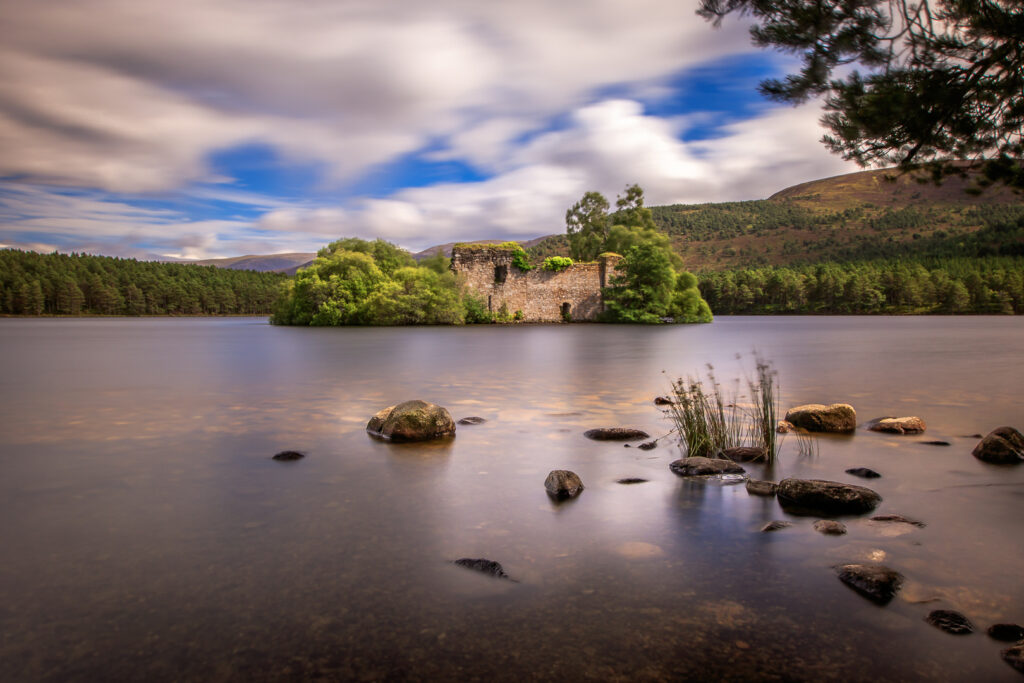
Several locations within the park stand out for visitors with limited time. Loch an Eilein, with its ruined castle on a small island, is one of the most photographed spots in the Cairngorms and has an easy path around the water. Glen Feshie is quieter than the main Aviemore area and known for its regenerating pinewoods and red deer.
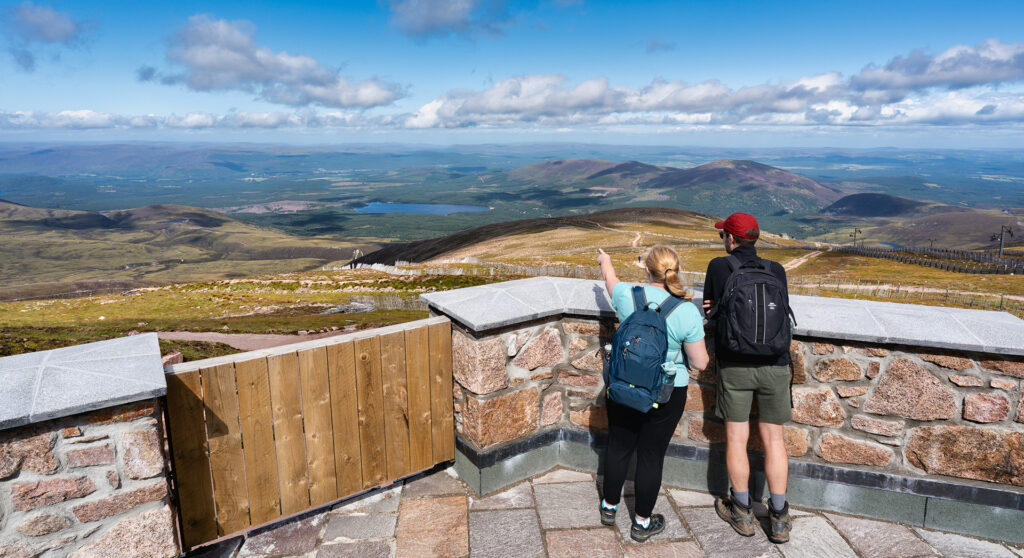
The village of Braemar, on the eastern side of the park, gives access to Deeside and is close to Balmoral, while Tomintoul is Scotland’s highest village and a good base for whisky-related visits nearby. For those wanting to see the high plateau without a full mountain walk, the funicular railway at Cairngorm Mountain gives access to viewpoints near the summit area, though visitors cannot walk onto the open plateau from the top station due to conservation restrictions.
Best Walks and Hikes
Walking options in the Cairngorms range from short forest loops to serious mountain days. The path around Loch an Eilein is around 4.5 miles, flat, and suitable for most visitors, making it one of the most popular short walks in the park. Longer options include the Lairig Ghru, a classic through-route between Aviemore and Braemar that crosses the mountains via a high pass; this is a full-day undertaking of around 19 miles and only suitable for experienced, well-equipped hillwalkers.
For those wanting a proper hill without the full mountain commitment, Meall a’ Bhuachaille near Glenmore is a popular introduction to Cairngorm hillwalking, with clear paths and good views over Loch Morlich. Anyone heading onto the higher ground, including Ben Macdui or Cairn Gorm itself, should be prepared for fast-changing weather, carry a map and compass, and check conditions in advance, since the plateau is exposed and can be dangerous even in summer.
Best Time to Visit
The Cairngorms can be visited year-round, but conditions vary considerably by season. Late spring and early summer, from May to June, tend to bring clearer weather and longer daylight hours, along with wildflowers and active wildlife, before the midges become troublesome later in summer. Autumn, particularly September and October, brings the deer rut and changing colours in the pine forests, and is popular with photographers.
Winter transforms the higher ground, with skiing possible at Cairngorm Mountain when snow cover allows, though access to higher paths becomes more difficult and requires proper winter hillwalking experience. Visitors travelling with dogs, families, or without specialist winter equipment are generally better suited to a visit between April and October, when lower-level paths and forest trails are more reliably accessible.
How to Get There
The Cairngorms National Park is most commonly reached via the A9, which runs north from Perth through Aviemore and on towards Inverness. Aviemore has a railway station on the main Highland line, making it possible to reach the park by train from Edinburgh, Glasgow, or Inverness without a car, though a vehicle is useful for reaching more remote glens and trailheads.
From Inverness, Aviemore is around 30 miles and typically takes 40 minutes to an hour by car. From Perth, the drive is roughly 90 minutes. Once in the park, public transport between smaller villages is limited, and many trailheads, such as those for Glen Feshie or Glen Lyon, are only practically reached by car.
Where to Stay
Aviemore is the main hub for accommodation, with a wide range of hotels, guesthouses, and self-catering options, plus easy access to Glenmore and Loch Morlich a short drive away. Grantown-on-Spey offers a quieter alternative on the northern edge of the park, with a good choice of B&Bs and a compact town centre.
For those focusing on the eastern side of the park, Braemar and Ballater both provide accommodation closer to Deeside and the Balmoral area. Camping and caravan sites are available at Glenmore and around Loch Insh, and wild camping is permitted in most of the park under Scotland’s access legislation, subject to the usual guidance on responsible camping away from roads and buildings.
FAQ
Is the Cairngorms National Park good for a day trip?
Yes, though the park is large, so a day trip usually focuses on one area, such as Aviemore, Glenmore, and Loch an Eilein. Trying to cover the whole park in a single day is not realistic given the distances involved.
Do I need a car to visit the Cairngorms?
A car is not essential for reaching Aviemore, which has a train station, but exploring further afield, including many trailheads and smaller villages, is much easier with your own transport.
Can you see the Cairngorms plateau without hiking?
The Cairngorm Mountain funicular railway gives access to a viewpoint near the summit, but visitors cannot currently walk out onto the open plateau from the top station due to conservation measures.
Is wild camping allowed in the Cairngorms?
Wild camping is generally permitted across most of the park under Scotland’s outdoor access rights, though visitors should follow the Scottish Outdoor Access Code and camp responsibly away from roads and buildings.
What wildlife can you see in the Cairngorms?
The park is known for red squirrels, capercaillie, red deer, and reindeer at the Cairngorm Reindeer Herd near Glenmore, along with reintroduced beavers in some areas.
Conclusion
The Cairngorms National Park rewards visitors at every level, from families taking an easy loop around Loch an Eilein to experienced hillwalkers tackling the Lairig Ghru. Its combination of ancient pine forest, high mountain plateau, and distinctive wildlife makes it one of the most varied destinations in the Highlands. Aviemore remains the natural base for most first-time visitors, with good transport links and easy access to Glenmore and the surrounding glens.
Anyone planning a trip should think carefully about the season, since conditions on higher ground change quickly and winter visits demand more preparation than a summer forest walk. With that in mind, the Cairngorms National Park works equally well as a short break or a longer Highland stay, and its size means there is always somewhere new to explore on a return visit.