
Table of Contents
Assynt Scotland
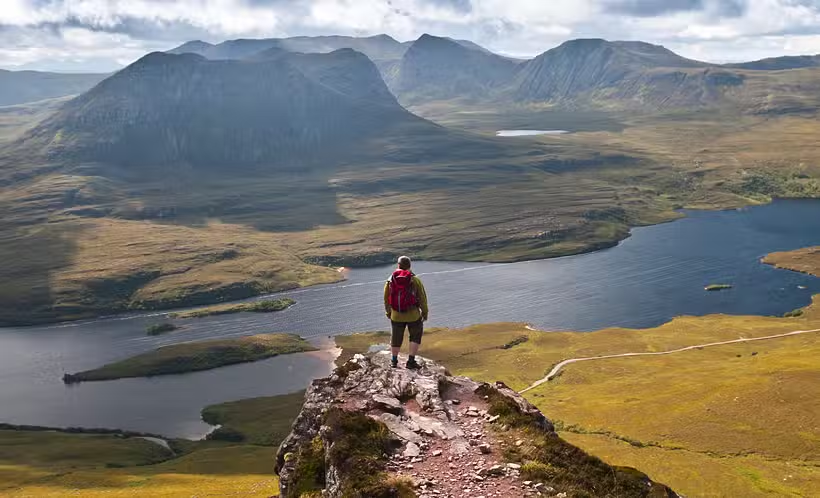
Assynt Scotland sits in the far northwest Highlands, a landscape so unusual that first-time visitors often stop the car just to look at it properly. Ancient mountains rise straight out of flat, lochan-scattered moorland with no foothills to soften the effect. Suilven, Canisp and Stac Pollaidh stand apart from one another like sculptures rather than a connected range, and the geology beneath them is among the oldest exposed rock on the planet.
This part of Scotland lies along the North Coast 500 route, between Ullapool and Kylesku, but it rewards travellers who slow down rather than simply pass through. Beyond the mountains, Assynt has sweeping white sand beaches at Achmelvich and Clachtoll, the fishing village of Lochinver, and single-track roads that wind through some of the emptiest scenery in the country. Wildlife is part of the appeal too, from golden eagles overhead to otters along the shore.
This guide covers the best places to visit, the walks worth the effort, when to come, and the practical details that make a trip to Assynt easier to plan. Whether the goal is a serious hike up Suilven or a relaxed few days exploring the coast, Assynt offers a side of the Highlands that feels genuinely remote.
Why Visit Assynt?
Assynt stands out because its mountains don’t follow the usual rules. Instead of ridgelines and connected peaks, isolated summits like Suilven and Stac Pollaidh rise abruptly from the moor, a result of ancient Torridonian sandstone sitting on much older Lewisian gneiss bedrock. The area forms part of the North West Highlands UNESCO Global Geopark, recognised for this exposed geological history.
Beyond the scenery, Assynt is one of the least populated parts of the UK, which means quiet roads, dark skies, and a strong sense of space. Visitors come for serious hillwalking, but also for the coastline, the wildlife, and the slower pace of village life in places like Lochinver and Achiltibuie. It suits people who want a Highlands trip without the crowds found further south on the NC500.
Best Things to Do in Assynt
Suilven and Stac Pollaidh are the headline attractions, but Assynt has plenty beyond hillwalking. Achmelvich and Clachtoll beaches offer turquoise water and white sand that regularly surprise visitors expecting a grey Scottish coastline. Knockan Crag, a national nature reserve with a free visitor centre, explains the area’s geology through interpretation boards and a short walking trail, and is worth at least an hour.
Ardvreck Castle, a ruined 16th-century stronghold on the shore of Loch Assynt, is an easy stop for photographs and a short walk. For wildlife, boat trips from Lochinver or the surrounding coast can reach Handa Island, known for its seabird colonies including puffins in season. Anglers are drawn to Assynt’s lochs, some of which offer permitted trout fishing. For a lower-effort day, simply driving the coastal roads between viewpoints delivers scenery that elsewhere would require a long walk to reach.
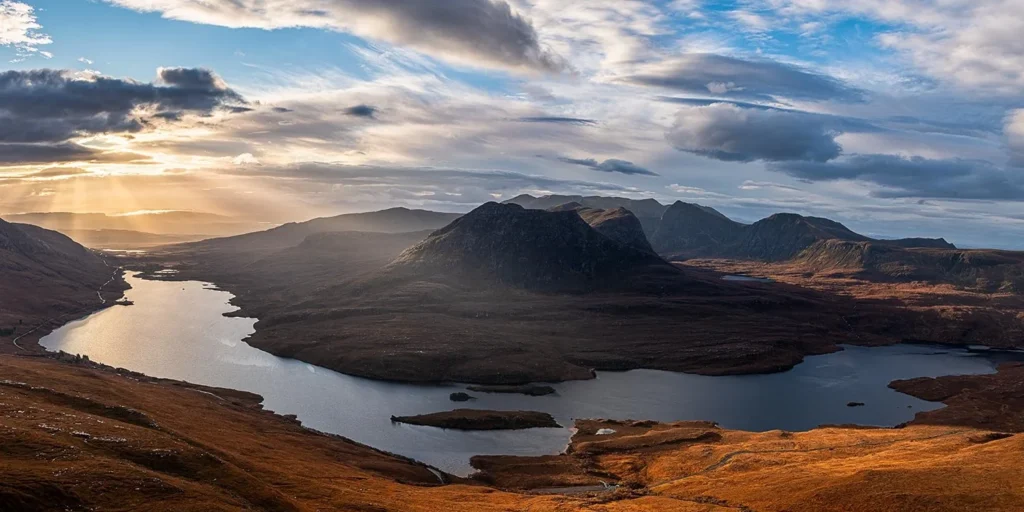
Best Places to Visit
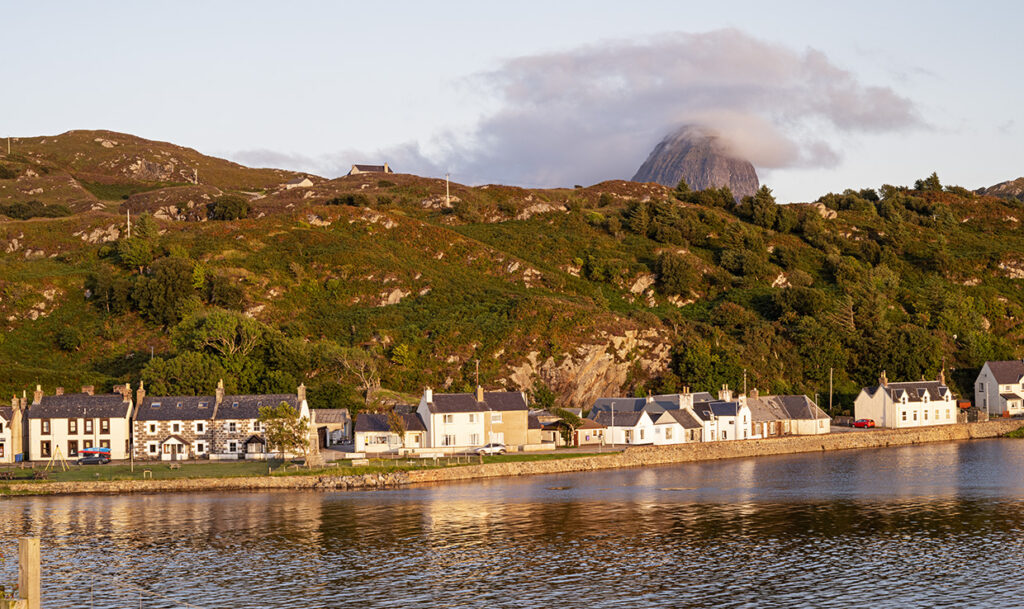
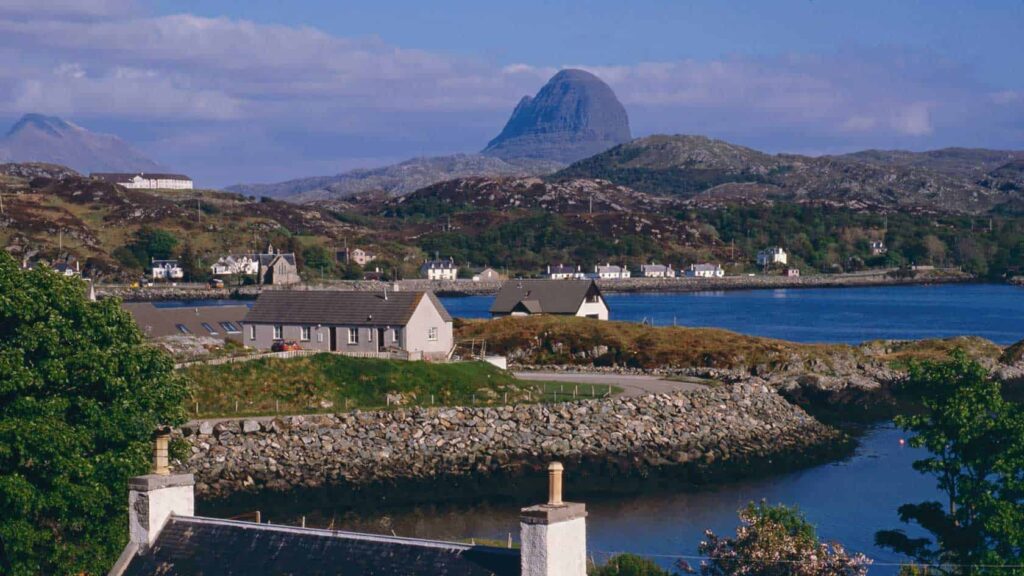
Lochinver is Assynt’s main village and a natural base, with a working harbour, shops, and the well-known Lochinver Larder, famous for its pies. Achiltibuie, further north along the coast, looks out toward the Summer Isles and has a quieter, more scattered feel. Clachtoll and Achmelvich are the beaches to aim for if coastal scenery is the priority, both reachable by short detours off the main road.
Inchnadamph, at the southeastern edge of Assynt near Loch Assynt, gives access to Ben More Assynt and Conival, the area’s highest peaks, along with limestone cave systems nearby. The Drumbeg road, a single-track route between Kylesku and Lochinver, is considered one of the most scenic drives in Scotland and is worth allocating a slow afternoon to rather than rushing through.
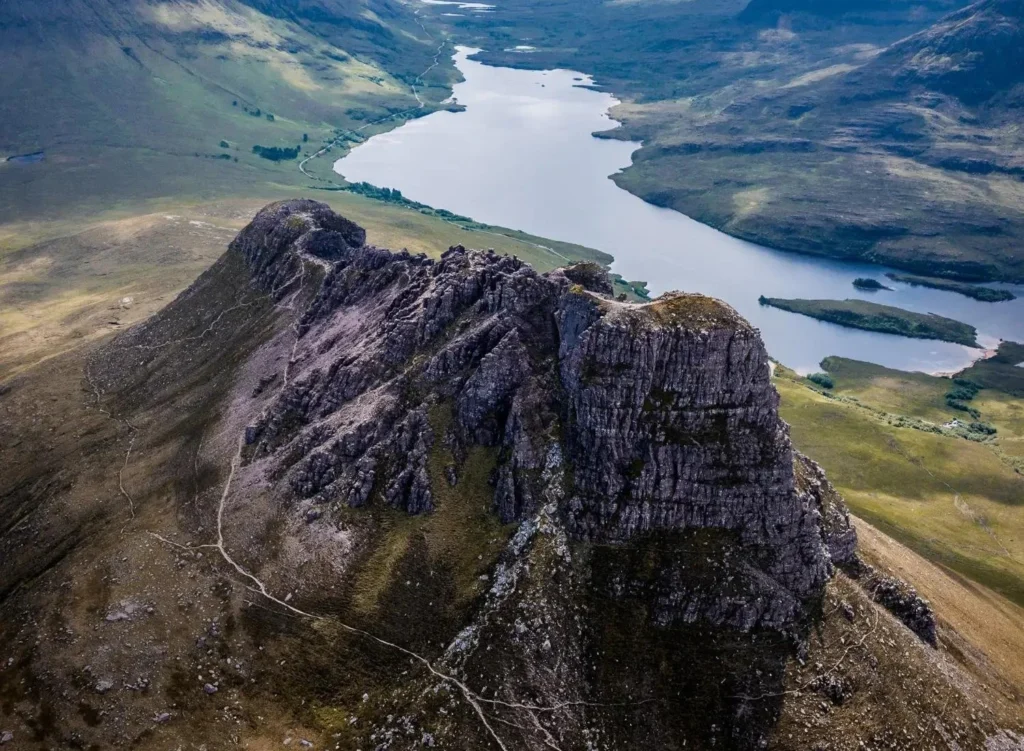
Best Walks and Hikes
Stac Pollaidh is the most popular hill in Assynt for good reason. At around 612 metres, it has a well-maintained path from the car park at Loch Lurgainn, and most walkers reach the ridge in under two hours. The main ridge gives dramatic views without technical difficulty, though the true summit involves a short scramble that some choose to skip.
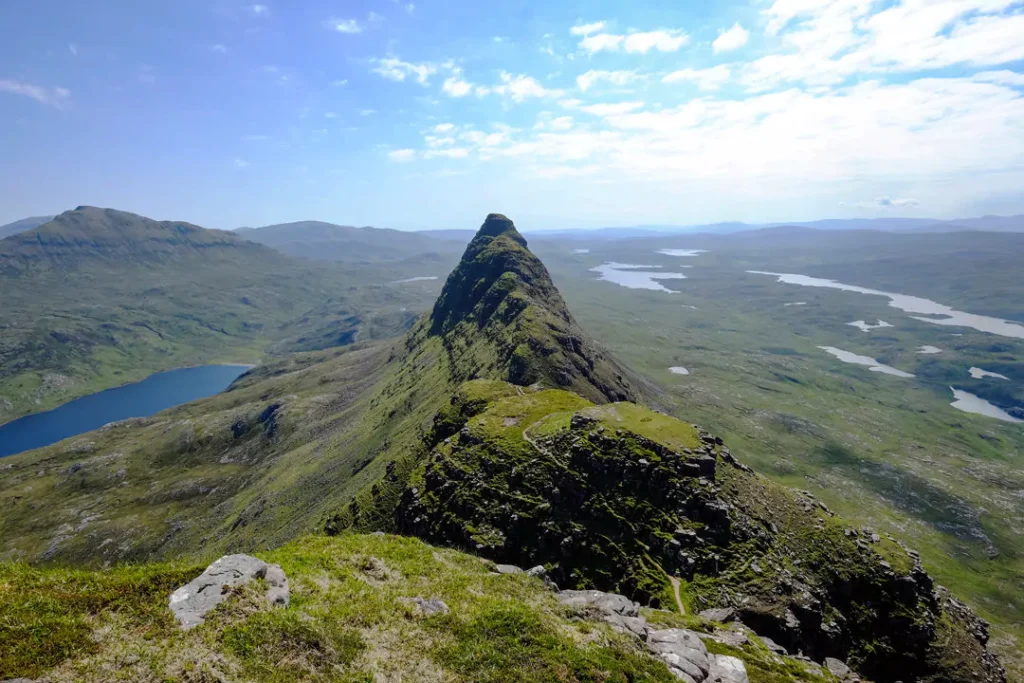
Suilven is the bigger undertaking. It sits well away from any road, and reaching the base alone takes around two hours on foot, usually starting from the car park near Glencanisp Lodge outside Lochinver. The final ascent is steep and requires use of hands in places. A full return trip typically takes eight to nine hours, so this is a walk for fit, well-prepared hikers with a full day and settled weather. For those who prefer to admire Suilven rather than climb it, the surrounding roads and the summit of Stac Pollaidh both offer excellent views of its distinctive profile.
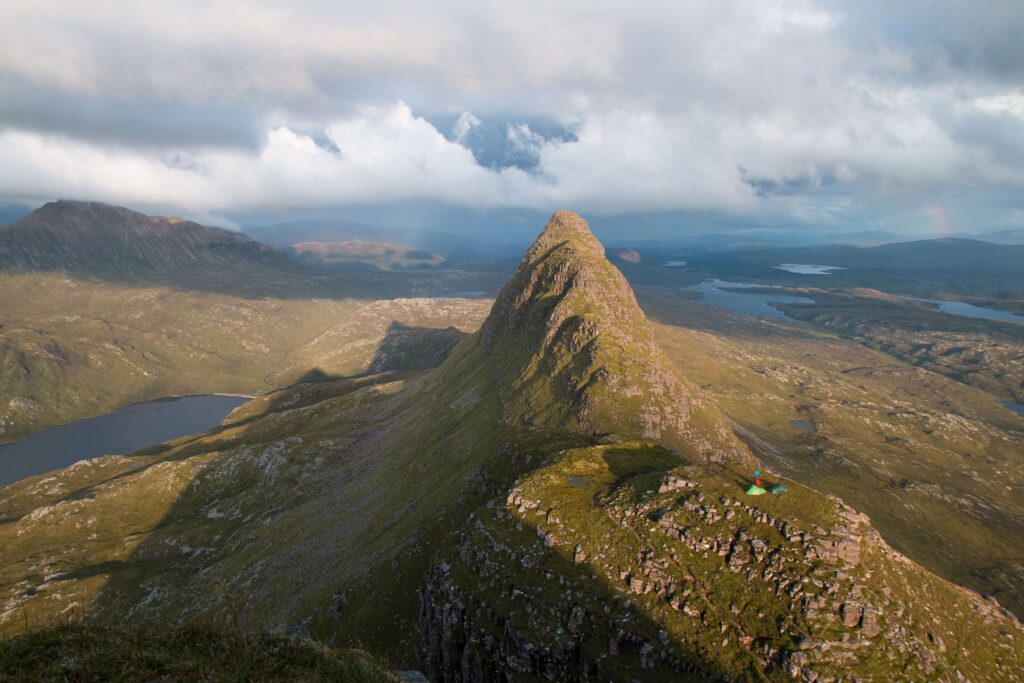
Best Time to Visit
Late spring through early autumn is generally the most reliable period for hillwalking in Assynt, with longer daylight hours and a better chance of clear summit views. Midges can be a significant nuisance from June to August, particularly on still, humid days, so insect repellent is worth packing for that period.
Winter brings shorter days and more unpredictable weather, and hill conditions can turn technical without warning, so winter ascents of Suilven or Stac Pollaidh are better suited to experienced hillwalkers. Spring and autumn often provide a good balance of manageable weather and quieter paths. Whatever the season, mountain weather in this part of Scotland changes quickly, and checking a Highland-specific forecast before setting out is worth the extra few minutes.
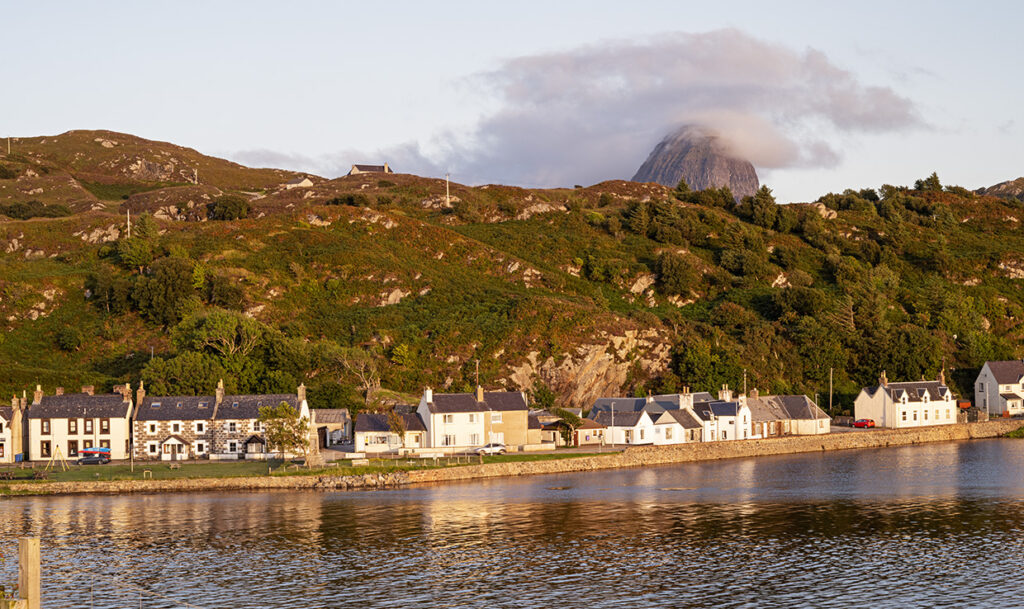
How to Get There
Assynt is roughly a two-hour drive north from Inverness, following the A835 to Ullapool and continuing north on the A837 or A835 depending on the exact destination within Assynt. Inverness itself is well connected, with flights from London and other UK cities, plus the option of the overnight Caledonian Sleeper train from London Euston.
There is no rail line into Assynt itself, and public bus services are limited, so a car is the most practical way to explore the area properly, particularly for reaching trailheads and remote beaches. Many of the roads within Assynt are single-track with passing places, so journeys often take longer than the distance alone suggests, and this should be factored into daily plans.
Where to Stay and What to Know Before Visiting
Accommodation in Assynt is concentrated in and around Lochinver and Achiltibuie, ranging from guesthouses and self-catering cottages to a limited number of hotels. Given how few options exist relative to demand along the NC500, booking ahead is strongly advised, especially between May and September.
Mobile signal is patchy across much of Assynt, particularly away from the main villages, so it’s worth downloading maps and checking route details in advance rather than relying on data while out walking. Fuel stations are limited too, and it’s sensible to top up in Ullapover or Lochinver rather than assuming another will appear further along the road. Midge repellent, waterproofs, and proper hiking boots are worth packing regardless of season, given how quickly weather and ground conditions can change.
| Information | Details |
|---|---|
| Best time to visit | Late spring to early autumn for hillwalking |
| Nearest hub | Lochinver or Ullapool |
| Main draws | Suilven, Stac Pollaidh, Achmelvich Beach |
| Difficulty | Ranges from easy coastal walks to full-day mountain hikes |
| Getting around | Car recommended; single-track roads |
FAQ
Is Assynt worth visiting?
Yes. Assynt offers some of Scotland’s most distinctive mountain scenery, quiet beaches, and a genuine sense of remoteness, making it a highlight for travellers exploring the North Coast 500 or the wider Highlands.
How long do you need in Assynt?
Two to three days allows time for at least one major hike, a beach visit, and some driving along the scenic coastal roads without feeling rushed.
Is Suilven hard to climb?
Suilven is a serious, full-day hike involving a long approach and a steep, hands-on final ascent. It suits experienced, well-prepared hillwalkers rather than casual visitors.
What is the easiest mountain to climb in Assynt?
Stac Pollaidh is generally considered the most accessible, with a well-built path and a round trip that most walkers complete in under three hours to the main ridge.
Do I need a car to visit Assynt?
A car is strongly recommended, since public transport is limited and many of the best beaches, viewpoints and trailheads are only practically reachable by road.
Conclusion
Assynt Scotland rewards travellers willing to venture beyond the more heavily visited parts of the Highlands. Its isolated mountains, quiet beaches, and single-track coastal roads create a landscape that feels distinct even by Highland standards. Whether the plan is a full-day ascent of Suilven, an easier climb up Stac Pollaidh, or simply a slow drive along the Drumbeg road with plenty of stops, Assynt offers something memorable at almost any pace. Booking accommodation ahead, packing for changeable weather, and allowing extra time on single-track roads will make the trip smoother. For anyone planning a North Coast 500 route or a dedicated Highlands trip, Assynt deserves more than a quick drive-through.