
Table of Contents
Beinn Eighe
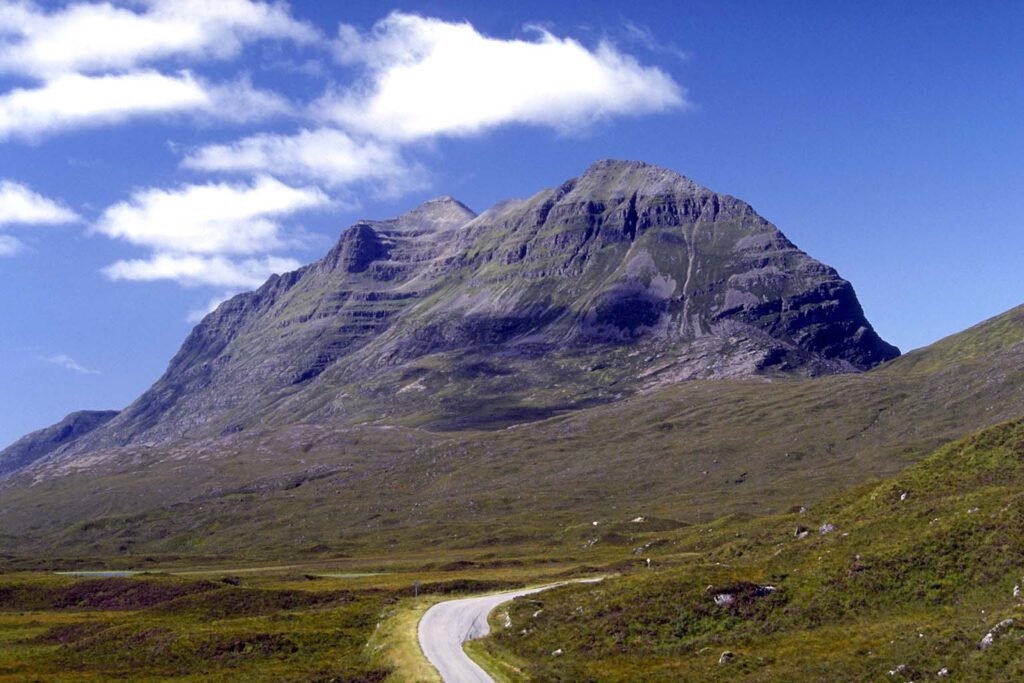
Few mountains in Britain announce themselves the way Beinn Eighe does. Drive west along the A896 through Glen Torridon and the whole northern side of the glen is taken up by a long, pale ridge that looks dusted with snow even in August. That pale colour is quartzite scree, sitting on much older Torridonian sandstone, and it gives the mountain its distinctive look from miles away. The Gaelic name is usually translated as “file mountain”, a reference to the serrated ridgeline.
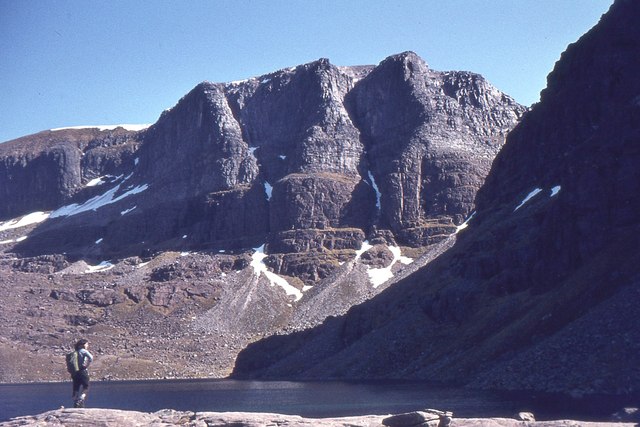
Beinn Eighe matters for reasons beyond its appearance. In 1951 it became Britain’s first National Nature Reserve, protecting one of the largest surviving fragments of ancient Caledonian pinewood on the shores of Loch Maree. That means the mountain works on two levels for visitors. Serious hillwalkers come for two Munro summits and for Coire Mhic Fhearchair, a corrie with a triple rock buttress that is regularly described as one of the finest in the country. Everyone else can walk waymarked reserve trails through old pine woodland without needing mountain experience at all.
This guide covers what actually helps when you are planning a visit: the main walking routes and how demanding they are, the nature reserve trails, when to come, how to get there and where to park, where to base yourself, and the practical points that catch people out in Wester Ross. Nothing here assumes you are an experienced mountaineer, but it is honest about which parts of Beinn Eighe require real hill skills and which do not. Torridon rewards planning more than most places in Scotland, largely because the weather changes fast and the nearest facilities can be a long drive away.
Why Beinn Eighe Is Worth the Journey
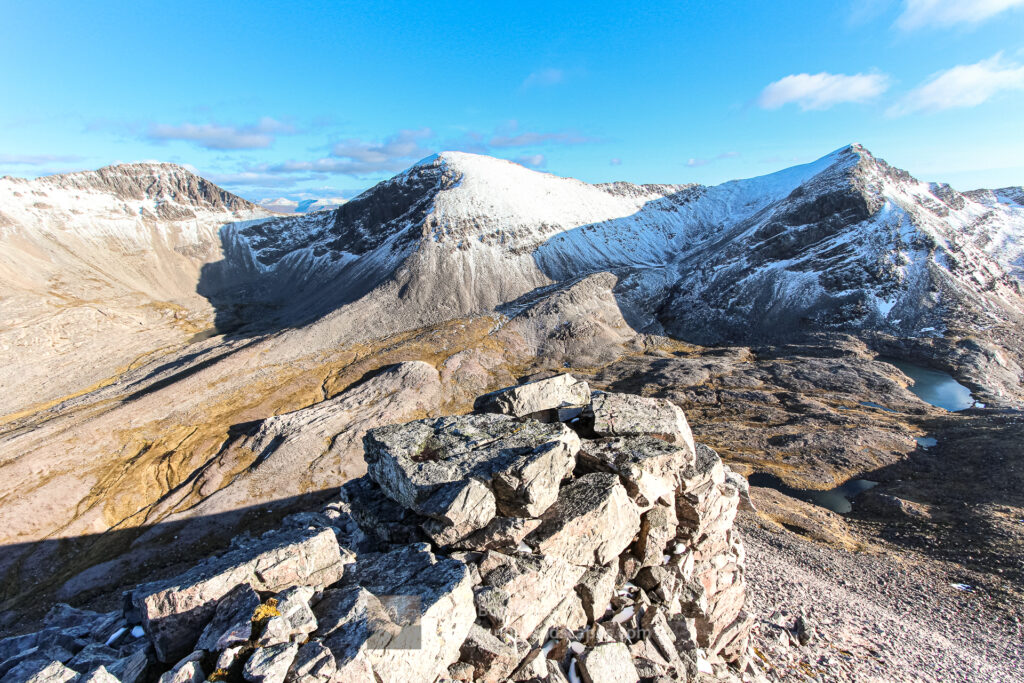
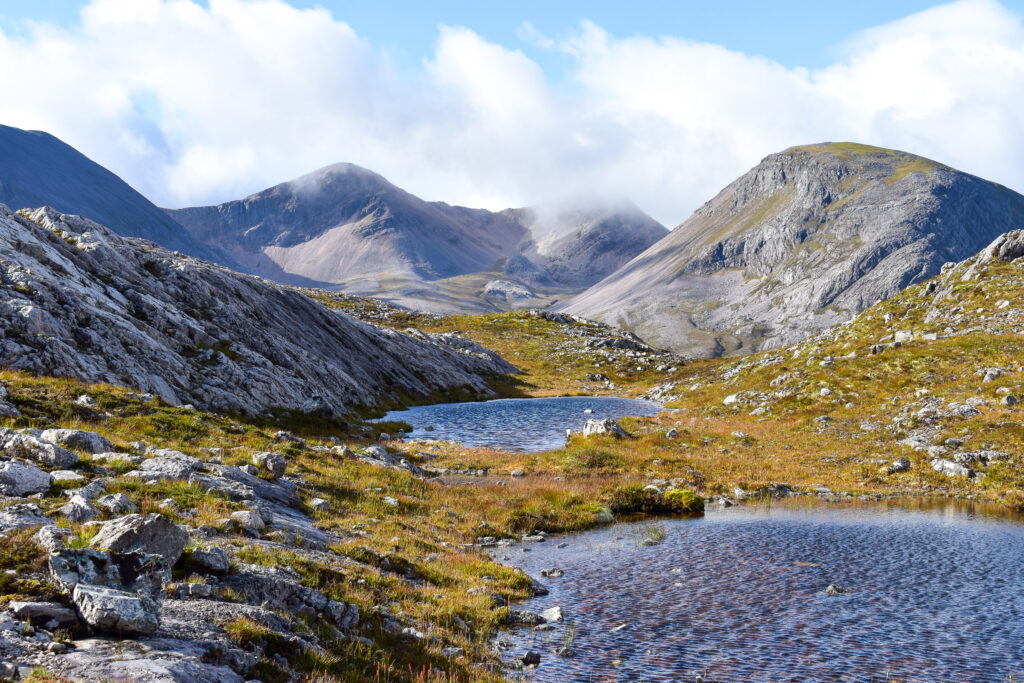
The appeal is partly geological. Beinn Eighe is built from some of the oldest rock in Britain, and the contrast between the dark red sandstone lower slopes and the light grey quartzite caps is visible from the road, no walking required. Photographers often stop at Loch Clair or Loch Coulin, east of the mountain, where the ridge reflects in still water on a calm morning.
It is also one of the best places in Scotland to see Highland wildlife in a protected setting. Red deer are common on the lower ground, golden eagles are sometimes seen over the corries, and the pinewoods hold pine martens and a range of woodland birds. Ptarmigan live on the high stony ground.
| Information | Details |
|---|---|
| Location | Wester Ross, near Kinlochewe, Scottish Highlands |
| Highest summit | Ruadh-stac Mòr, 1,010m |
| Best for | Hillwalkers, photographers, wildlife watchers, woodland walkers |
| Visit length | Half a day for reserve trails; a full day for the hills |
| Difficulty | Easy woodland walks to serious mountain routes |
The other reason to come is space. Even in summer, the corries on the north side feel genuinely remote, and walkers often go long stretches without seeing anyone.
Best Walks and Hikes on Beinn Eighe
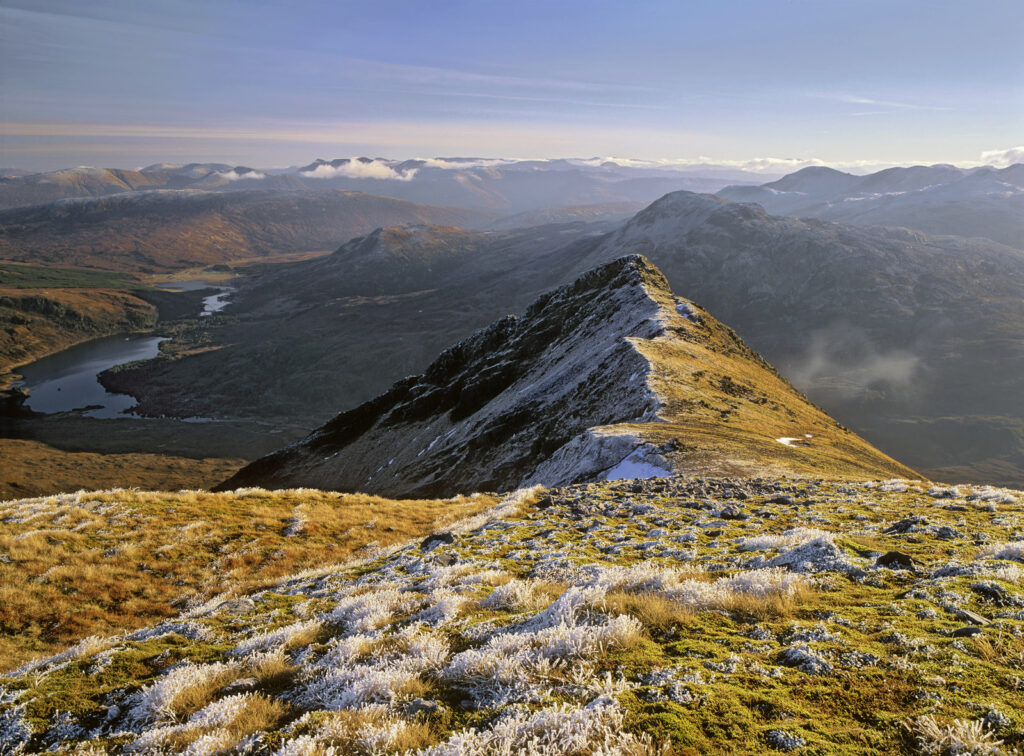
Beinn Eighe offers a wide range of walking, and the gap between the easiest and hardest routes is enormous. The reserve trails near Loch Maree are suitable for most reasonably fit visitors. The mountain routes are long days on rough ground, with loose quartzite, steep sections and very limited escape options once you are on the ridge.
Anyone heading onto the mountain should carry a map and compass and know how to use them. Mobile signal is unreliable across much of the area and is effectively absent in the deep corries. Cloud can drop onto the ridge within minutes.
The Walk into Coire Mhic Fhearchair
This is the single most rewarding walk on Beinn Eighe for anyone who does not want to tackle a summit. The path starts from the Coire Dubh Mòr car park in Glen Torridon and follows a well-built stalkers’ path between Beinn Eighe and Liathach before curving round to the corrie. The reward is a lochan beneath the Triple Buttress, three huge tiers of rock rising directly from the water.
It is a long there-and-back walk on rough but mostly clear paths, with some wet and stony sections. Allow most of a day and treat it as a proper hill walk rather than a stroll.
Climbing the Beinn Eighe Munros
Beinn Eighe has two Munro summits: Ruadh-stac Mòr at 1,010m and Spidean Coire nan Clach at 993m. Many walkers climb Spidean Coire nan Clach from Glen Torridon, while others combine both summits in one longer circuit, often approached via the Coire Mhic Fhearchair path.
Expect steep ground, loose scree and sections of easy scrambling depending on the line taken. The full ridge traverse, including the Black Carls, involves genuine scrambling and exposure and is not a beginner route. In winter conditions any of these routes becomes a mountaineering day.
Beinn Eighe National Nature Reserve
The Beinn Eighe reserve, managed by NatureScot, protects ancient pinewood, moorland, lochs and high mountain ground. It is the part of the mountain most visitors can enjoy regardless of fitness or experience, and it explains why Beinn Eighe is important to conservation in Scotland rather than only to hillwalkers.
Two waymarked trails leave from the reserve car park at Coille na Glas Leitire, on the A832 beside Loch Maree, a short drive from Kinlochewe. The Woodland Trail is the shorter of the two, a gentle circuit through Scots pine with good views across the loch. The Mountain Trail is considerably harder: it climbs steeply onto open, stony ground above the treeline and is often described as the first waymarked mountain trail built in Britain. It is a rough upland walk, so boots and waterproofs are sensible even though the route is signed throughout.
There is also a visitor centre near Kinlochewe with information about the reserve and its wildlife. Check current opening arrangements before relying on it, as seasonal hours apply.
Best Time to Visit Beinn Eighe
Late spring and early autumn are generally the most comfortable times to visit Beinn Eighe. May and early June bring long daylight hours, relatively settled spells and, crucially, fewer midges than high summer. September and October give strong light, autumn colour in the pinewoods and quieter paths, though the days shorten quickly.
July and August are the busiest months and the peak of midge season. If you visit then, carry repellent and consider a head net, especially for early mornings and still evenings near the woodland and lochside.
Winter transforms the mountain. Snow and ice can linger on the high ground well into spring, and the ridge becomes a full winter mountaineering objective requiring an ice axe, crampons and the experience to use them. The reserve trails remain walkable in winter, but they can be icy, and daylight is very limited.
Whatever the season, check the mountain weather forecast the night before and again on the morning of your walk. Conditions in Glen Torridon and conditions at 1,000m are often completely different.
Getting to Beinn Eighe and Where to Park
The nearest village is Kinlochewe, which sits at the junction of the A832 and A896 and functions as the practical base for the area. Most visitors arrive by car from Inverness, following the A835 and A832 west through Garve and Achnasheen. It is a long drive on roads that are scenic but slow in places, so allow more time than a mapping app suggests.
For the mountain routes, the main starting point is the Coire Dubh Mòr car park in Glen Torridon on the A896. There is a second small parking area further west used for the direct approach to Spidean Coire nan Clach. Both fill up quickly on good weekends. For the nature reserve trails, use the Coille na Glas Leitire car park on the A832 north-west of Kinlochewe.
Public transport is limited. The nearest railway station is Achnasheen on the Inverness to Kyle of Lochalsh line, with infrequent bus connections onward. Visitors relying on public transport should plan carefully around timetables. Fuel stations are sparse in this part of Wester Ross, so fill up before heading into the area.
Where to Stay and Eat Nearby
Kinlochewe is the most convenient base for Beinn Eighe, with a hotel, bunkhouse-style accommodation, a campsite and a small shop and filling station. Staying here puts both the reserve trails and the Glen Torridon car parks within a short drive.
Torridon village, about half an hour west, offers a hostel, a campsite and hotel accommodation, and gives easier access to Liathach and Beinn Alligin if you plan several days of walking. Shieldaig and Gairloch are alternatives with a slightly wider choice of places to eat, and Gairloch has more shops and services.
Eating options are limited and often seasonal, so it is worth booking meals ahead in summer and carrying supplies at quieter times of year. Many walkers simply take a packed lunch, since there is nowhere to buy food once you leave the road. Wild camping is permitted in Scotland under access rights, but campers should follow the Scottish Outdoor Access Code, camp well away from paths and roads, and leave no trace. Accommodation across Wester Ross books up early for summer and for the North Coast 500 season.
What to Know Before You Visit
A few practical points make a real difference on Beinn Eighe:
- Wear proper boots with good ankle support. Quartzite scree is loose and sharp underfoot.
- Carry full waterproofs and an extra warm layer, even in summer. The ridge is far colder and windier than the glen.
- Take a paper map and compass, and do not rely on phone navigation alone.
- Bring all your own food and water, and start early to allow a full day.
- Carry midge repellent between roughly June and September.
- Tell someone your route and expected return time.
Dogs are welcome on the hills but should be kept under close control, particularly during the bird nesting season in spring and the deer stalking season in autumn. On the nature reserve, follow any signs about dogs and livestock. There are no toilets or cafés at the mountain car parks, so plan around the facilities in Kinlochewe or Torridon.
FAQ
How hard is the walk up Beinn Eighe?
It depends entirely on the route. The Woodland Trail in the nature reserve is easy, while the Mountain Trail is a rough upland walk. The Munro summits are long, steep days on loose ground, and the full ridge traverse involves scrambling and exposure suitable only for experienced hillwalkers.
How many Munros does Beinn Eighe have?
Beinn Eighe has two Munro summits: Ruadh-stac Mòr at 1,010m and Spidean Coire nan Clach at 993m. Many walkers climb one of them as a day route from Glen Torridon, while stronger parties combine both in a single longer circuit.
Where do you park for Beinn Eighe?
For the mountain routes, use the Coire Dubh Mòr car park in Glen Torridon on the A896. For the nature reserve trails, use the Coille na Glas Leitire car park on the A832 beside Loch Maree. Both are small and busy in summer.
Is Beinn Eighe suitable for families?
The reserve’s Woodland Trail near Loch Maree suits families with children, offering woodland scenery and loch views on a short circuit. The Mountain Trail and the summit routes are far more demanding and are better suited to older children with hill walking experience.
What is the best time of year to visit Beinn Eighe?
Late spring and early autumn usually offer the best balance of daylight, weather and lower midge numbers. July and August are busiest, while winter turns the high ground into a serious mountaineering environment requiring specialist equipment and experience.
Conclusion
Beinn Eighe is one of those rare places that works for almost everyone who makes the journey. You can spend an hour on a woodland trail beside Loch Maree, half a day walking in to the Triple Buttress of Coire Mhic Fhearchair, or a full day on two Munro summits with views stretching to Skye and the Hebrides. What ties those experiences together is the scale and strangeness of the landscape, and the fact that it has been protected since 1951.
The practical advice is simple: base yourself in Kinlochewe or Torridon, arrive early for parking, carry more clothing and food than you think you need, and check the mountain forecast before committing to the high ground. Do that, and Beinn Eighe will give you one of the best days in the Scottish Highlands.