
Table of Contents
Buttermere Valley
Introduction
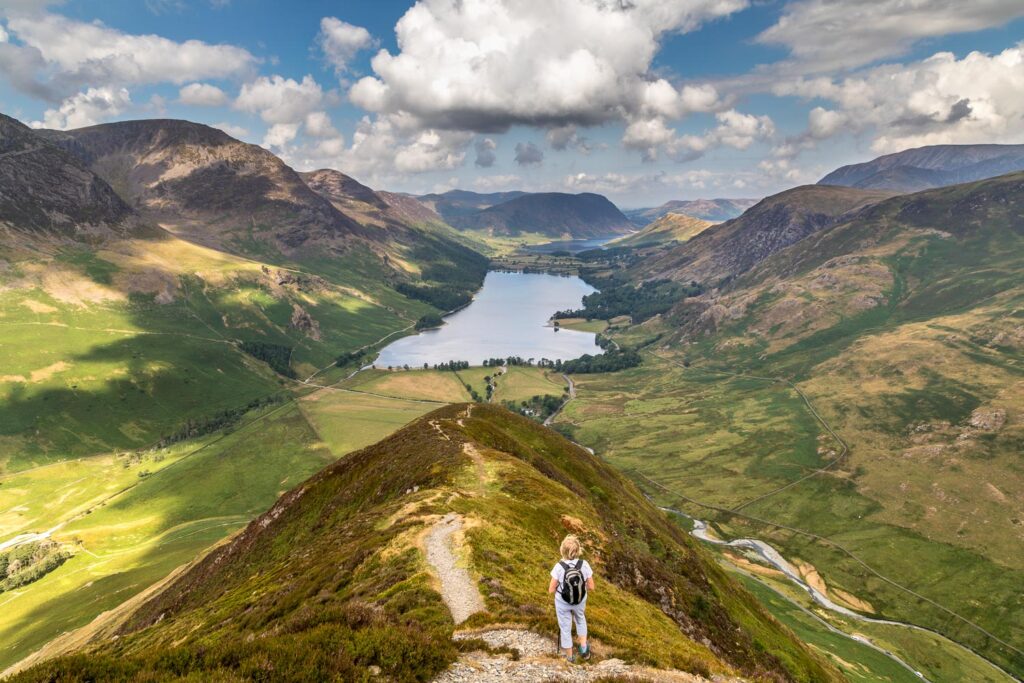
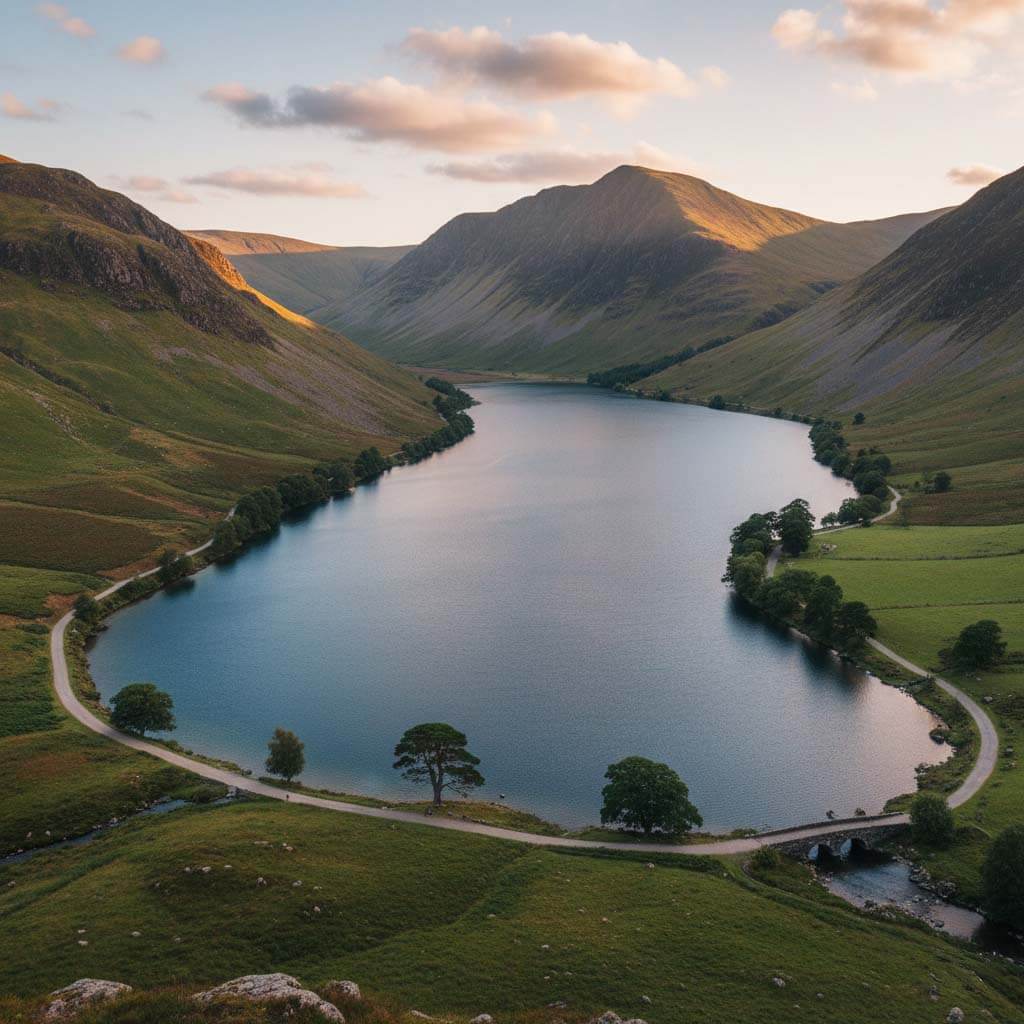
Tucked between Honister Pass and the Newlands Valley, Buttermere Valley is the corner of the Lake District that locals quietly keep to themselves. Two glacial lakes, Buttermere and Crummock Water, sit in a narrow bowl of fells so steep that cloud often clings to their tops long after the valley floor has warmed in the sun. Unlike Windermere or Derwentwater, there are no motor launches here, no ice cream queues stretching down the high street, and often no mobile signal at all.
What Buttermere Valley does have is scenery that regularly tops “best view in Britain” polls, a lakeshore walk gentle enough for families, and some of the most rewarding fell routes in Cumbria rising directly from its edges. Alfred Wainwright, the legendary fellwalker and guidebook author, loved this valley so much that his ashes were scattered on Haystacks, the fell that watches over the lake from the south.
This guide covers everything you need for a visit to Buttermere Valley: the best walks for every ability, where to park, what it costs, when to go, where to eat and sleep, and a two-day itinerary that fits in the valley’s highlights without rushing. Whether you’re planning a quiet afternoon stroll or an ambitious ridge walk, Buttermere Valley rewards the effort of getting there.
Where Is Buttermere Valley and How to Get There
Buttermere Valley sits in the western Lake District, roughly nine miles from Keswick and a similar distance from Cockermouth. It’s one of the more remote valleys in the national park, which is exactly why it stays quieter than the honeypots further east.
Three main routes lead into the valley, and each is an attraction in its own right. From Keswick, the classic approach runs south through Borrowdale, climbs <cite index=”14-1″>the steep and rocky slopes of Honister Pass following Gatesgarth Beck</cite>, then drops into the valley past Gatesgarth Farm. This road is narrow with passing places, so allow extra time and drive with care, particularly if you’re not used to Lakeland fell roads.
From the north, the Newlands Pass connects Buttermere to the Keswick area via Braithwaite, offering a slightly gentler drive with its own spectacular views over Newlands Valley. A third option comes in from the west via Lorton and Loweswater, approaching Crummock Water first before reaching Buttermere village itself. Drivers report that <cite index=”9-1″>the drive down Borrowdale, over Honister to Buttermere and back through Newlands takes roughly 75 minutes</cite> when done as a loop, though photo stops will add time.
If you’d rather not drive the passes yourself, the 77/77A bus service runs a circular route from Keswick through Buttermere, Honister, Borrowdale and Whinlatter, though it only operates from Easter to October. Guided minibus tours from Windermere and Keswick also include Buttermere as part of wider Lake District circuits, which suits visitors who want the scenery without navigating single-track roads themselves.
Quick Facts: Buttermere Valley
| Detail | Information |
|---|---|
| Location | Western Lake District, Cumbria, England |
| Nearest town | Keswick (9 miles / 15 minutes’ drive) |
| Main lakes | Buttermere, Crummock Water, Loweswater |
| Lakeshore walk distance | 4.5 miles (7km), roughly 2–2.5 hours |
| Highest peak nearby | Red Pike (755m) |
| Famous fell | Haystacks (Wainwright’s favourite) |
| Best time to visit | May–June and September–October |
| Mobile signal | Very limited to none |
| Dog friendly | Yes, on lead near livestock |
Buttermere Lake: The Round-the-Lake Walk
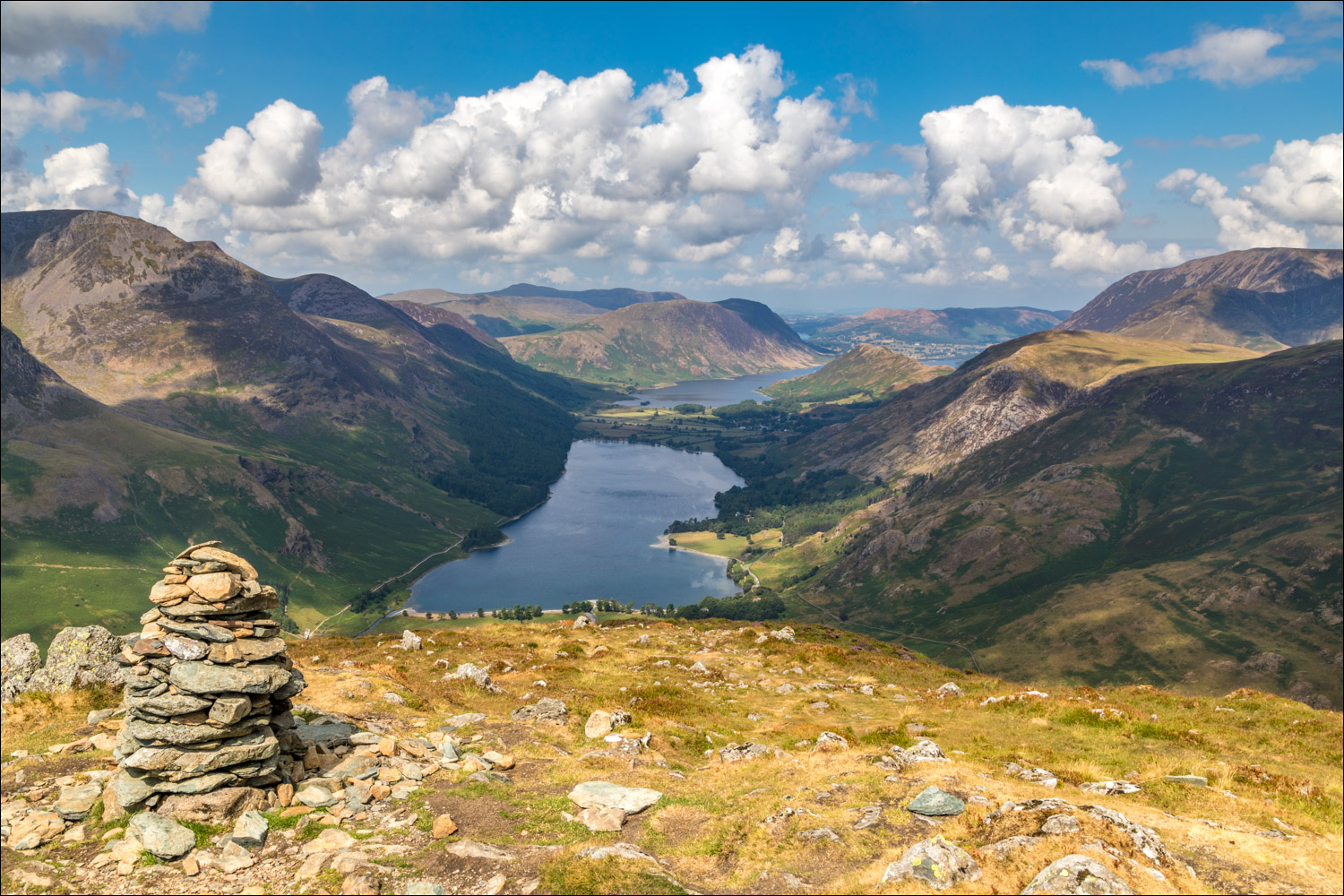
The single most popular activity in the valley is also its easiest: the walk around Buttermere itself. <cite index=”2-1″>The lakeshore path circles the lake for 4.5 miles (7km), with one very short stretch on the road and one “rock step,” a brief scramble where you may need to use your hands</cite>. Beyond that one section, the path is flat, well maintained, and suitable for most fitness levels, which makes it the valley’s best introduction for first-time visitors.
Starting from Buttermere village, the route heads north along the western shore before curving around the head of the lake near Gatesgarth Farm and returning along the eastern side. Along the way you’ll pass Sourmilk Gill, a waterfall that tumbles down from Bleaberry Tarn, and a short Victorian tunnel cut through a rocky outcrop, originally built so a local landowner wouldn’t have to look at quarry workings from his house.
Allow two to two and a half hours at an easy pace, longer if you plan to stop for photographs or a swim. The lake is genuinely swimmable in summer, and wild swimmers regularly use the pebbly beaches on the eastern shore, though the water stays cold even in August. There are no lifeguards and no facilities beyond the village, so swim well within your ability and check conditions before entering.
Families with pushchairs should note the rock step section can be awkward; it’s passable with care but not pram-friendly without lifting the wheels through briefly. An accessible path variant exists on part of the far shore, and the National Trust publishes a dedicated accessibility guide for anyone needing step-free routes around the valley.
Photography tip: the classic view down the lake toward Fleetwith Pike is best captured from the northern shore in early morning light, when the water is stillest and the fells are less likely to be capped in cloud.
Crummock Water and Scale Force
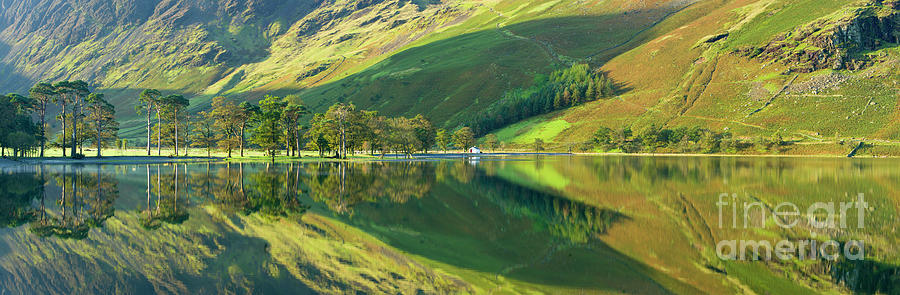
A short walk or drive north of Buttermere village lies Crummock Water, the valley’s second and larger lake. Quieter still than Buttermere, it’s ringed by <cite index=”3-1″>an amphitheatre of high fells and offers arguably some of the best views in the entire national park</cite>, according to local travel writers who rate this valley as the most beautiful in the Lake District.
The main draw beyond the lake itself is Scale Force, <cite index=”3-1″>the tallest single-drop waterfall in the Lake District at 170 feet (51.8 metres)</cite>. The walk to reach it follows the western shore of Crummock Water through mixed woodland before climbing gently to the falls, and makes an excellent low-level option on a day when cloud is sitting on the higher fells. It’s a good three to four hour round trip from Buttermere village, longer if combined with a full circuit of the lake.
Lanthwaite Wood, at the northern end of Crummock Water, offers one of the valley’s easiest walks: a short stroll from the National Trust car park down to the lakeshore that delivers disproportionately good views for very little effort, making it ideal for visitors short on time or mobility.
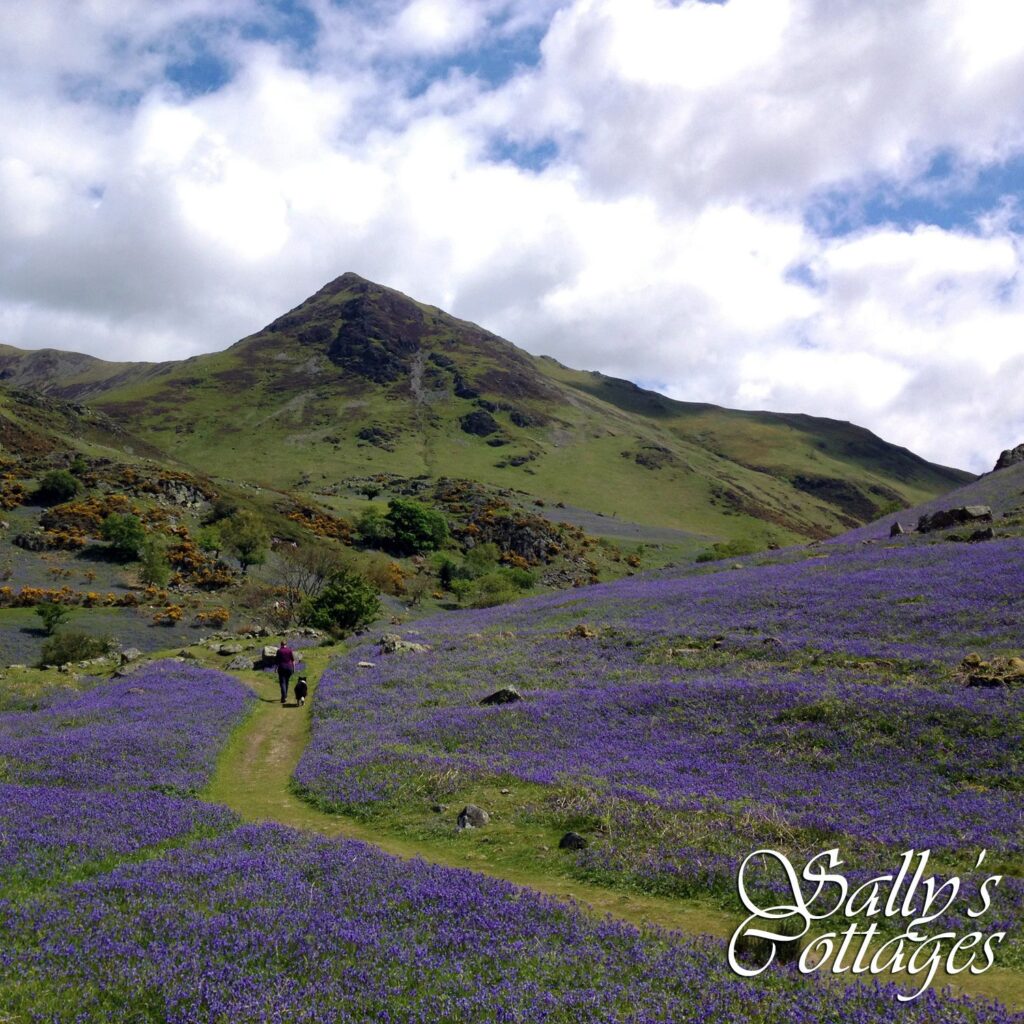
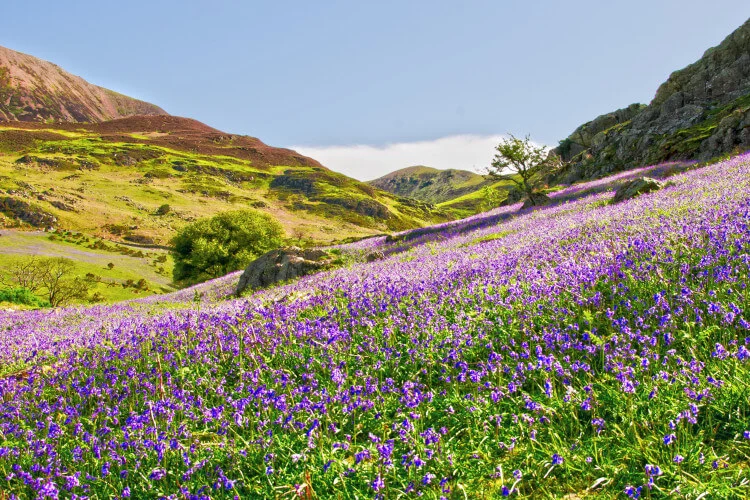
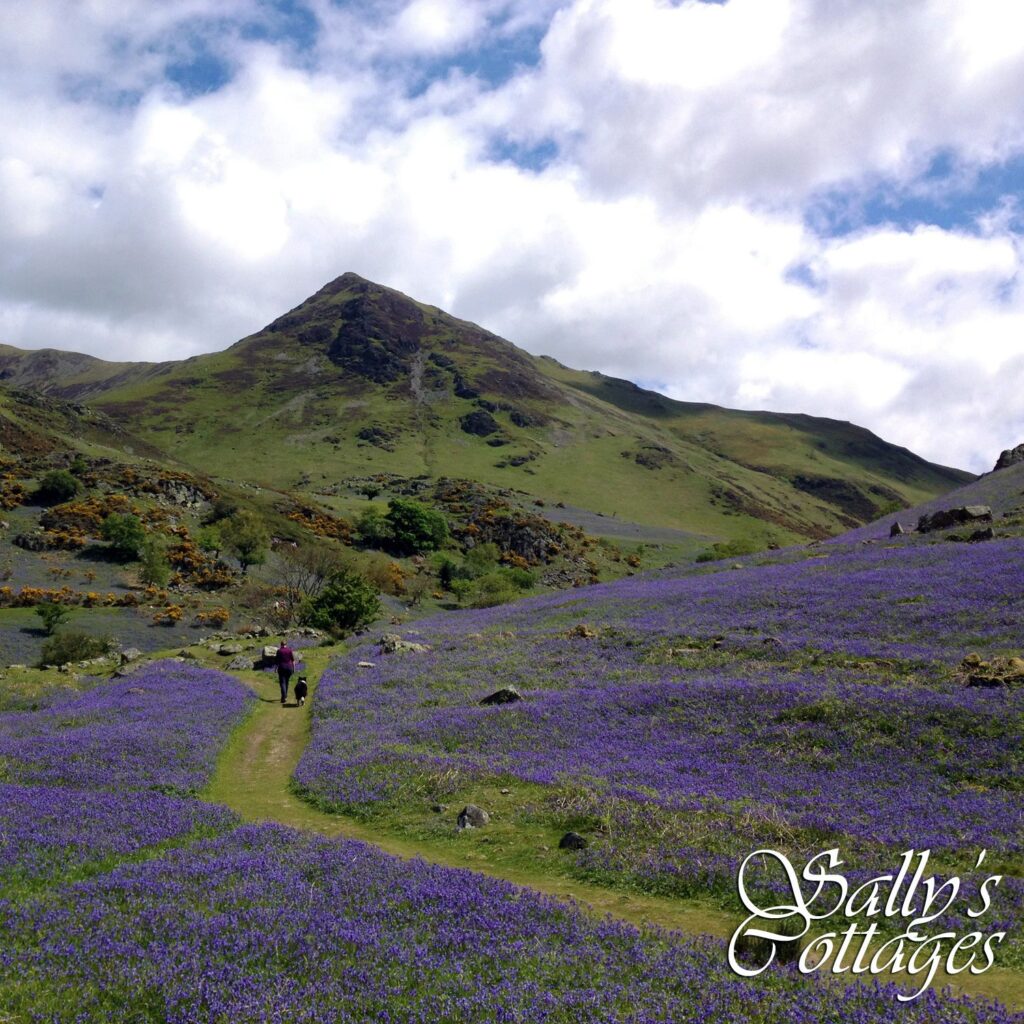
Between Crummock Water and Buttermere sits Rannerdale Knotts, famous for a genuinely spectacular display of bluebells each spring. <cite index=”8-1″>From April to May, the hillside erupts into a vibrant display of protected wildflowers</cite>, and the short but steep climb to the summit is rewarded with one of the best panoramic views in the valley, taking in both lakes at once.
Haystacks: Wainwright’s Favourite Fell
No visit to Buttermere Valley is complete without at least considering Haystacks, the fell that alpine and fellwalking author Alfred Wainwright called his favourite in the entire Lake District. <cite index=”8-1″>Wainwright’s ashes were scattered here, at the fell top he loved best of all his hand-drawn guidebook subjects</cite>.
Haystacks is modest in height compared to its neighbours, but what it lacks in altitude it makes up for in character: a maze of small tarns, rocky knolls and hidden corners that reward slow exploration rather than a straight there-and-back march. Innominate Tarn, near the summit, is the specific spot associated with Wainwright’s memorial.
The most popular route starts from Gatesgarth car park at the head of Buttermere, climbing steadily via Scarth Gap before reaching the summit plateau. A full circuit taking in Haystacks and dropping back via Warnscale Bothy and the old tramway path makes for a satisfying four to five hour outing. Wilderness guides note that <cite index=”8-1″>a circular route is possible and takes in the best of the region, though a linear path exists too</cite>.
This is genuine mountain terrain. <cite index=”8-1″>Higher paths are not waymarked, and even on a summer’s day, cloud and rain can roll in quickly, leaving unprepared hikers disorientated</cite>, so a map, compass, and the skills to use them are essential, not optional extras. Anyone uneasy navigating open fell should consider a local guide instead.
Estimated time: 4–5 hours round trip from Gatesgarth Difficulty: Moderate to challenging; steep sections, no waymarking above the tree line Best for: Experienced hikers, solo walkers comfortable with navigation, couples seeking a rewarding but achievable summit day
Fleetwith Pike and the High Fells
Rising dramatically above Gatesgarth Farm at the head of the valley, Fleetwith Pike is the mountain most photographed from the Buttermere lakeshore, its pyramidal profile forming the backdrop to countless postcards of the valley. The summit is reached via a steep but direct path from Gatesgarth, climbing past old slate workings before a final pull to the top.
The mountain’s slopes hold real industrial history. <cite index=”6-1″>The discovery of bands of green slate at Honister opened a new source of income for locals, with much of the mining done from within the mountain, and Fleetwith Pike is still honeycombed with old workings accessed at different levels and linked by vertical shafts</cite>. Look for the memorial to Fanny Mercer partway up the path, a Victorian visitor who died on the mountain in 1887, a sober reminder that these are serious hills despite their proximity to the road.
From the summit, walkers can continue the ridge toward Honister Pass and the Slate Mine visitor centre, or descend directly back to Gatesgarth for a shorter loop. Allow three to four hours for the direct ascent and descent, or a full day if extending along the ridge.
For those who’d rather admire the high fells from below, Honister Slate Mine itself makes an excellent stop. <cite index=”6-1″>The mine closed in 1986 but reopened in 1997, and has since become an award-winning tourist attraction with guided tours and a Via Ferrata course</cite> for visitors wanting a taste of exposure and adventure without a full mountain walk.
Estimated cost: Honister Slate Mine tours and Via Ferrata sessions typically run £20–£40 per person; check current pricing before visiting.
Red Pike, High Stile and the Buttermere Round
For experienced hillwalkers, the ridge above the western shore of Buttermere, taking in Red Pike, High Stile and High Crag, forms one of the finest high-level walks in the Lake District. Known locally as the Buttermere Round when combined with Haystacks and Fleetwith Pike on the eastern side, it’s a full horseshoe circling the entire valley.
Red Pike, at 755 metres, is the highest point directly accessible from the valley floor and offers uninterrupted views across the Solway Firth to Scotland on a clear day. The ascent typically begins from Buttermere village via Scale Beck or Sourmilk Gill, climbing steeply through bracken and heather before the gradient eases onto open fell.
This is a serious undertaking, not a casual afternoon walk. The full round covers around 12 miles with over 1,200 metres of ascent, and should only be attempted by fit, experienced hikers with proper navigation skills, appropriate clothing, and enough daylight in hand. Weather on this ridge can change within minutes, and there is no shelter above the tree line.
For a shorter taste of the same terrain, walkers can climb Red Pike alone and return the same way, roughly a five to six hour round trip, or combine it with Rannerdale Knotts at valley level for a lower-level alternative on a poor-weather day.
Family-friendly alternative: none of the high ridge walks suit young children; families should stick to the lakeshore paths and Lanthwaite Wood instead.
Buttermere Village: Where to Eat and Drink
Buttermere village itself is tiny, little more than a cluster of buildings around St James’ Church, but it punches well above its weight for food and drink given its size. <cite index=”7-1″>The village sits between Buttermere Lake and Crummock Water and is one of the smallest villages in the Lakes</cite>, yet it still supports two historic hotels, a farm tearoom and a village shop.
The Fish Hotel has deep roots in local history: <cite index=”22-1″>the inn is full of charm and traditional character, respecting its historical importance as the home of Mary Robinson, the famed “Maid of Buttermere”</cite>, a young woman whose story of deception by a bigamist conman scandalised Georgian England and drew writers including Wordsworth and Coleridge to the valley. Today it serves classic pub food alongside real ale in a genuinely historic setting.
A short walk away, the Bridge Hotel has been on the site for over a thousand years in various forms, <cite index=”20-1″>first licensed in 1735 as a coaching inn</cite>, and remains a popular stop for walkers coming off the fells. Its bar serves hearty, homemade British pub food in generous portions, and the beer garden is a fine spot to watch the light change on the surrounding peaks.
For something lighter, Syke Farm Tearoom near the village centre is a Buttermere institution, best known for its homemade ice cream made using milk from the farm’s own herd. It’s a popular stop for walkers finishing the lakeshore circuit and gets busy on sunny afternoons, so expect a short queue in peak season.
Insider tip: book accommodation and dinner tables well in advance for weekends between May and September; the valley’s tiny capacity fills quickly and there is no large overflow of alternatives nearby.
Where to Stay in Buttermere Valley
Accommodation in Buttermere Valley is limited by design, and that scarcity is part of what keeps the area peaceful. Options range from traditional lakeland hotels to farm campsites and a handful of self-catering cottages, but there is no large-scale development here and rooms should be booked well ahead of your visit.
The Bridge Hotel offers <cite index=”20-1″>21 en-suite rooms, some with four-poster beds and balconies, deliberately without televisions or phone signal</cite> to encourage guests to properly switch off. <cite index=”27-1″>Reviewers consistently praise the friendly staff, cozy fireside lounge and generous pub food</cite>, and its dog-friendly rooms suit walkers travelling with four-legged companions.
The Fish Hotel, now trading as Buttermere Court Hotel after a recent renovation, sits close to both lakes and <cite index=”18-1″>offers a range of rooms from singles and doubles to a self-contained family apartment with its own kitchenette</cite>, with a beer garden overlooking the fells.
Beyond the two hotels, self-catering apartments and cottages scattered through the valley offer more privacy and flexibility, particularly useful for longer stays or larger groups. Camping and bothy-style accommodation is available near Gatesgarth for those wanting to be closest to the high fells, though facilities are basic.
Approximate costs: Expect from around £175 per night for a double room at the valley’s hotels in peak season, with self-catering options varying widely by size and season. Book at least two to three months ahead for summer weekends.
Wildlife and Nature in the Valley
Buttermere Valley’s relative remoteness has helped preserve a rich variety of wildlife alongside its dramatic scenery. <cite index=”5-1″>Holme Wood on the shore of Loweswater is particularly known for deer, red squirrels, and the Holme Force waterfall</cite>, making it a rewarding detour for anyone hoping to spot native wildlife away from the busier main lake.
Red squirrels, increasingly rare across much of England due to competition from grey squirrels, still hold on in pockets of woodland around the valley, particularly in the quieter areas near Loweswater. Buzzards and ravens are a near-constant presence overhead, riding thermals along the fellsides, while peregrine falcons occasionally nest on the higher crags.
The lakes themselves support populations of native brown trout and Arctic charr, a relict species left behind after the last ice age that survives in only a handful of deep, cold British lakes. Fishing is permitted on both Buttermere and Crummock Water with the appropriate permit, available locally.
Spring brings the valley’s most photographed natural spectacle beyond the bluebells of Rannerdale: newborn lambs in the fields around Buttermere village, and wildflowers carpeting the lower slopes as the bracken begins to unfurl. Autumn, by contrast, turns the valley gold and copper as the bracken dies back and the rowan trees around the lakeshore turn scarlet.
Best Time to Visit Buttermere Valley
Buttermere Valley rewards visits across all four seasons, but each brings a genuinely different character to the landscape, so the right time depends on what you want from your trip.
Late spring, particularly May, is arguably the valley’s finest month. The Rannerdale bluebells are typically at their peak, days are lengthening, and the fells are green after winter without yet drawing peak summer crowds. Early June offers similar conditions with slightly longer daylight for tackling the higher ridge walks.
Summer brings the longest days and the best chance of settled weather for the high fells, but also the busiest car parks and fullest accommodation. If visiting in July or August, arrive early, ideally before 9am, to secure parking at Gatesgarth or the National Trust car park, both of which fill quickly on fine weekends.
September and early October offer a genuine sweet spot: crowds thin noticeably after the school summer holidays end, the bracken begins its autumn colour change, and the water in the lakes tends to be at its clearest. Wild swimmers often rate early autumn as the best time for a dip, once the water has warmed through summer but before the crowds of August.
Winter transforms the valley into something starker and more dramatic, with snow frequently dusting the tops of Red Pike and Fleetwith Pike while the valley floor stays clear. This is a season for experienced hillwalkers only on the high routes; the lakeshore path remains accessible year-round with appropriate footwear, but ice and short daylight hours demand extra caution.
Practical Travel Tips for Buttermere Valley
A handful of practical realities shape any visit to Buttermere Valley, and knowing them in advance saves real frustration on the day.
Mobile signal: <cite index=”12-1″>mobile phone reception is poor, patchy and unreliable throughout the valley</cite>. Download offline maps before you arrive, tell someone your planned route, and don’t rely on your phone for navigation once on the fells.
Parking: <cite index=”11-1″>pay-and-display National Trust car parks are available at Buttermere village, Lanthwaite Wood and Honister Pass, with parking also available at Loweswater and Crummock Water</cite>. Overnight parking isn’t permitted at National Trust sites. In peak season, arrive early or expect to park some distance from your intended starting point, and never park along the narrow pass roads themselves; <cite index=”17-1″>doing so creates serious congestion that can block emergency vehicles</cite>.
Roads: the approach roads via Honister and Newlands passes are narrow, twisting, and shared with livestock. <cite index=”12-1″>Sheep, cows and even chickens may be encountered directly on the road</cite>, and dairy herds are sometimes walked through the village at milking time. Drive slowly and be prepared to reverse to a passing place.
What to pack: waterproofs regardless of season, layers for changeable fell weather, and proper walking boots for anything beyond the flat lakeshore path. Cloud can drop onto the higher fells within minutes even on a sunny morning.
Facilities: the village has limited public toilets, a small shop, and no ATM, so bring cash for tearooms and honesty-box stalls, and fuel up before leaving Keswick or Cockermouth.
Dogs: <cite index=”11-1″>dogs are welcome throughout the National Trust land but must be kept under close control</cite> near livestock and wildlife, particularly during lambing season in spring.
A Two-Day Buttermere Valley Itinerary
Day One: Lake, Village and Bluebells
Arrive in the morning and park at the National Trust car park in Buttermere village. Walk the full lakeshore circuit of Buttermere, allowing around two and a half hours including photo stops at the Victorian tunnel and Sourmilk Gill. Break for lunch at the Bridge Hotel or Syke Farm Tearoom back in the village.
In the afternoon, drive or walk the short distance to Rannerdale Knotts for the climb up to its bluebell-covered slopes, ideally timed for late April or May, and enjoy the panoramic view over both lakes from the summit. Finish the day with dinner at the Fish Hotel, and stay overnight in the village if possible to make the most of the second day’s early start.
Day Two: Haystacks and the High Fells
Start early and drive to Gatesgarth car park at the head of the valley. Tackle the climb to Haystacks via Scarth Gap, allowing four to five hours for the full circuit including time at Innominate Tarn. Pack a proper lunch, as there are no facilities once you leave the car park.
Descend back to Gatesgarth by mid-afternoon, then drive up to Honister Pass to visit the Slate Mine visitor centre, either for a guided mine tour or simply to browse the shop and enjoy the views from the highest road pass in the Lake District. Head back down through Borrowdale toward Keswick as the light softens over the fells, closing out a two-day visit that covers the valley’s lake, village and mountain character.
Nearby Destinations Worth Combining With Buttermere
Buttermere Valley pairs naturally with several other western Lake District highlights, making it easy to extend a trip beyond two days. Borrowdale, reached over Honister Pass, offers its own beautiful valley scenery along with the popular Bowder Stone and Castle Crag. Keswick, the nearest sizeable town, has shops, restaurants and Derwentwater’s own lakeshore walks and boat launches.
Loweswater, the smallest and least-visited of the three lakes in this corner of the national park, sits just beyond Crummock Water and offers a genuinely peaceful alternative for anyone seeking solitude even from Buttermere’s relative quiet. Whinlatter Forest, roughly thirty minutes away via the Newlands Pass, adds mountain biking trails and an osprey viewpoint to a wider itinerary.
For those with more time, the western coast around Cockermouth and the Solway Firth lies within easy reach, offering a change of pace from the fells and a chance to see where the region’s rivers finally meet the sea.
Buttermere for Solo Travelers, Couples and Photographers
Buttermere Valley suits solo travelers particularly well. The lakeshore walk is safe, well-trodden and easy to navigate alone, and the village’s small hotels and tearooms make it simple to strike up conversation with fellow walkers over dinner. Staying at the Bridge Hotel or Fish Hotel mid-week, outside peak season, often means eating in a half-full dining room where staff and other guests are happy to swap route recommendations. Solo hikers heading onto Haystacks or the high ridge routes should still take the usual precautions: tell someone your planned route and expected return time, and carry a means of navigation that doesn’t depend on phone signal.
For couples, Buttermere has quietly built a reputation as one of the more romantic corners of the Lake District, helped by its lack of crowds and its genuinely spectacular sunset views over the western fells. The Bridge Hotel’s rooms with balconies and four-poster beds are popular for anniversary and honeymoon stays, and a slow lakeshore walk timed for early evening, followed by dinner and a local ale by the fire, is a well-worn but reliably lovely way to spend an evening here. Couples wanting more of a challenge together often pair the Red Pike ascent with a picnic near the summit tarns, weather permitting.
Photographers are drawn to Buttermere for good reason. The valley’s combination of still water, dramatic ridgelines and constantly shifting light makes it one of the most photographed locations in the national park, rivaling even Wastwater for atmosphere. Early morning, particularly in the hour after sunrise, tends to deliver the calmest water and the best chance of mist sitting low over the lake surface. The view from the eastern shore looking toward Fleetwith Pike is the valley’s signature composition, but the lesser-known view from Rannerdale Knotts down over both lakes at once is arguably even stronger, especially in bluebell season. A polarising filter helps cut glare off the water in the middle of the day, and a sturdy tripod is worth carrying if you’re planning long-exposure shots of Scale Force or Sourmilk Gill.
Families, meanwhile, are best served sticking to the valley floor. The lakeshore path, Lanthwaite Wood, and the short stroll to Holme Wood on Loweswater all offer big scenery without the exposure or navigation demands of the high fells, and Syke Farm Tearoom’s ice cream provides reliable incentive for younger walkers to finish the last stretch of any route.
Frequently Asked Questions
How long does it take to walk around Buttermere lake? The full round-the-lake walk covers 4.5 miles and typically takes two to two and a half hours at a relaxed pace, including one short scramble known locally as the “rock step.”
Is Buttermere or Crummock Water better for swimming? Both are swimmable, but Buttermere’s eastern shore has the more popular pebbly beaches. Crummock Water is larger and quieter, appealing to those seeking more solitude, though both stay cold year-round.
Where is the best parking for Haystacks? Gatesgarth car park at the southern end of Buttermere is the main starting point for climbing both Haystacks and Fleetwith Pike, and fills quickly on fine weekends.
Is there mobile signal in Buttermere Valley? Reception throughout the valley is poor, patchy and unreliable, so download offline maps and inform someone of your walking route before setting out.
Can you visit Buttermere Valley without a car? Yes, the 77/77A bus service runs a seasonal circular route from Keswick through Buttermere, Honister and Borrowdale, though it only operates from Easter to October.
What is the best time of year to see the Rannerdale bluebells? The Rannerdale hillside between Crummock Water and Buttermere typically peaks between April and May, drawing photographers from across the region.
Are dogs allowed in Buttermere Valley? Yes, dogs are welcome across National Trust land in the valley but must be kept on a lead and under close control near livestock, particularly during spring lambing.
How difficult is the walk up Haystacks? It’s a moderate to challenging fell walk with steep, unwaymarked sections above the tree line, best suited to experienced hikers with map and compass skills rather than casual walkers.
Where did the “Maid of Buttermere” story come from? It refers to Mary Robinson, a local innkeeper’s daughter connected to the historic Fish Hotel, whose Georgian-era deception by a bigamist conman became a national scandal and drew early literary tourists to the valley.
What is the highest fell overlooking Buttermere? Red Pike, at 755 metres, is the highest peak directly accessible from the valley floor, forming part of the western ridge alongside High Stile and High Crag.
Conclusion
Buttermere Valley distills everything special about the Lake District into one compact, dramatic setting: two lakes worth their fame, a genuinely rewarding mix of easy and challenging walks, and a village small enough to feel like a secret even though it isn’t one. Whether you spend a single afternoon circling the lakeshore or commit two full days to the high fells and their history, Buttermere Valley leaves a stronger impression than its modest size suggests.
Come prepared for changeable weather, book accommodation early, and give yourself time to simply stand still at the water’s edge. Few places in England reward that kind of patience quite like this valley does.