
Table of Contents
Conkles Hollow State Nature Preserve
Ask most people to name a famous American landscape and they will say the Grand Canyon, Yosemite, or possibly a very large diner. Ohio rarely makes the list. That is a shame, because in the southeast of the state there is a gorge that deserves a lot more credit than it gets.
Conkles Hollow State Nature Preserve is a small but dramatic sandstone gorge in Ohio’s Hocking Hills region, an area known for cliffs, ferns, hemlock trees and quiet waterfalls. It covers about 87 acres, which sounds tiny until visitors are standing at the bottom of a rocky corridor with the walls rising high above them. Then it feels like exactly the right size.
This guide walks through seven of the best views, plus how to get there, when to go and what to bring. It also covers a few mistakes worth avoiding. Fair warning: a few jokes were harmed in the making of this article.
What Is Conkles Hollow State Nature Preserve?
Conkles Hollow (sometimes written Conkle’s Hollow) is a state nature preserve looked after by the Ohio Department of Natural Resources. Most descriptions call it one of the deepest gorges in Ohio. The cliffs are made of Blackhand sandstone and rise to somewhere close to 200 feet. In places the gorge is only around 100 feet wide. It feels narrow, shady and a bit like the setting of a fantasy film where somebody is about to find a sword.
The valley floor is packed with ferns and wildflowers, while hemlock, birch and other hardwood trees grow overhead. In some spots the growth is so thick that very little sunlight reaches the ground, so the gorge stays cool even when the weather outside is not.
Visitors can choose between two main routes. The Gorge Trail runs along the bottom and ends near the foot of the cliff, where a waterfall flows when conditions are right. The Rim Trail climbs a set of wooden stairs and follows the top edge of the gorge. Published distances vary a little from one source to another, so treat the numbers in this guide as rough. The gorge walk is roughly half a mile each way, and the rim loop is a couple of miles.
Because this is a nature preserve and not a regular park, the rules are stricter. Dogs are not allowed, and visitors are expected to stay on the marked trails. The hollow is a fragile place, and the ferns do not care how good your shortcut looked.
Getting There and Parking
The preserve is at 24858 Big Pine Road in Rockbridge, Ohio, just off State Route 374. It is part of the wider Conkles Hollow Hocking Hills area, so it is easy to combine with other well-known sites nearby, such as Old Man’s Cave and Ash Cave.
Anyone planning a trip to Conkles Hollow State Nature Preserve from the UK will almost certainly need a hire car. The region is rural, so it is best not to count on public transport. Columbus is the closest big city with an airport, and the drive from there usually takes somewhere between one and one and a half hours, depending on traffic and where you start.
Once you arrive, there is a parking lot, flush restrooms and a few picnic tables. There is no drinking water, so bring your own. The lot can fill up on busy weekends, which turns parking into a low-stakes competitive sport. Visitors who arrive early tend to get a better spot and a quieter gorge. Anyone planning a Conkles Hollow Ohio trip around a weekend should treat the morning as the best bet.
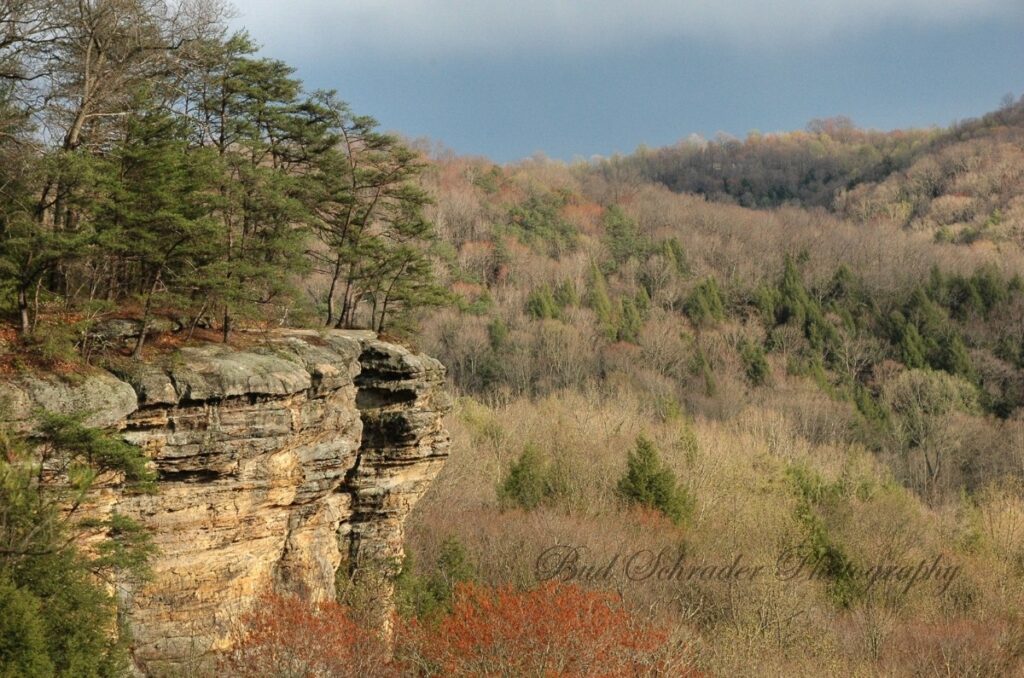
The 7 Stunning Views
The views at Conkles Hollow State Nature Preserve come in two flavours: looking up from the bottom, and looking out from the top. Here are seven worth stopping for, roughly in the order visitors meet them.
The Gorge Entrance
The walk begins on a paved path, and the first view arrives almost straight away. Sandstone walls close in on both sides, with ferns spilling over the edges. It is the sort of scene that makes people stop mid-sentence.
The path is flat and easy, so visitors can look up without tripping over anything. Do look up, but maybe not while walking backwards.
The Narrow Corridor
Further along, the gorge tightens. In places the walls are only about 100 feet apart, and the cliffs rise close to 200 feet overhead. Visitors can stand in the middle, tilt their heads back and feel pleasantly small.
The trees stretch up towards whatever light gets in, and the air is noticeably cooler. This is the view that makes the hollow feel like a corridor rather than a valley. The cliffs have been standing here for a very long time, so they are not impressed by your pose.
The Waterfall at the End of the Gorge
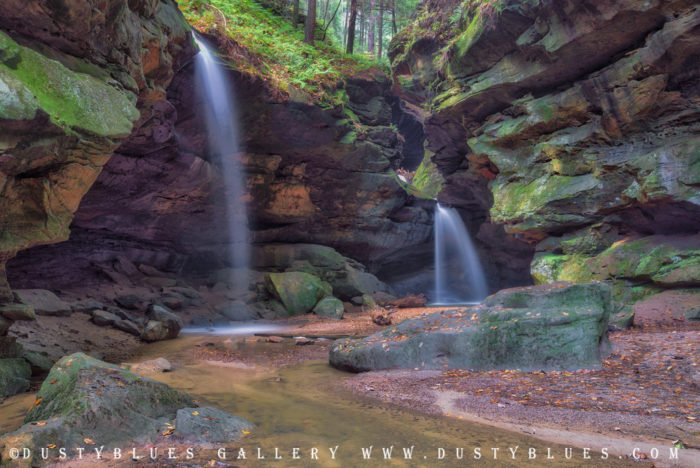
The Gorge Trail finishes at the foot of the cliff, and this is where the waterfall appears. How impressive it looks depends on the weather. Water flow tends to be stronger after rain and weaker during dry spells.
Even a modest trickle looks good against dark sandstone and green moss. Visitors who want the best flow should aim for a wetter week, which UK travellers will find oddly familiar.
The Halfway Rest Spot on the Rim Stairs
The Rim Trail starts with dozens of wooden stairs. Halfway up there is a rest spot with a small sign explaining the plants that grow in the zone between the rich gorge floor and the rocky rim.
Calling it a viewpoint is a little generous, but it does let visitors look back down through the tree canopy. The sign is educational, and the pause is medically necessary.
The First Rim Overlook
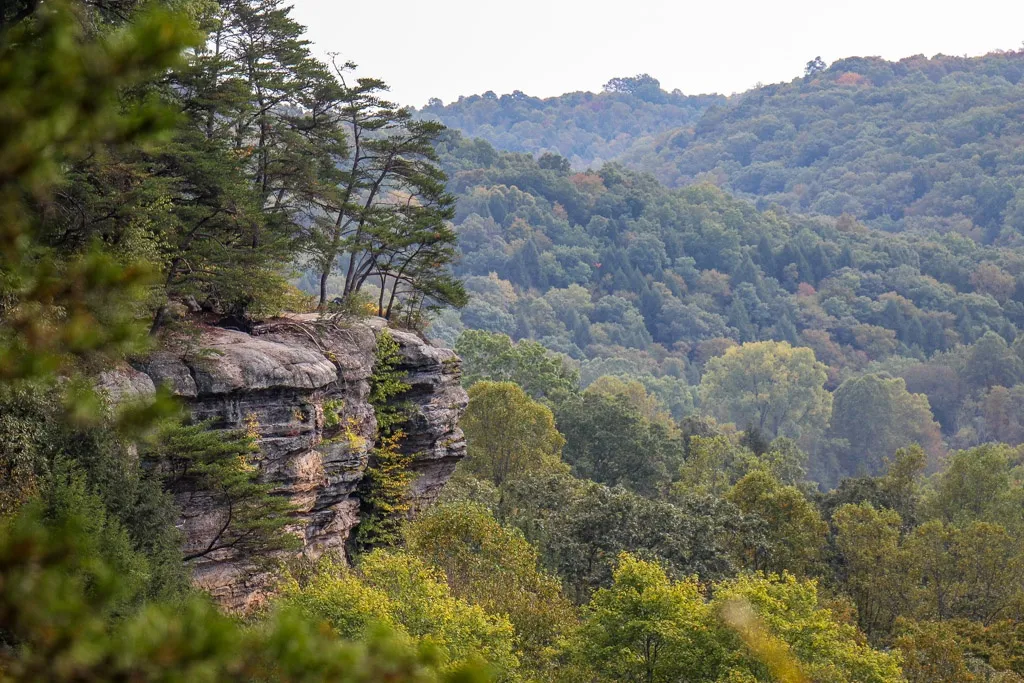
The reward for those stairs comes quickly. Almost as soon as visitors reach the top, the first wide views open up across the gorge and the forest beyond. The first overlook at Conkles Hollow State Nature Preserve is where most people finally get their breath back and then immediately lose it again.
This is a good place for a longer stop. The gorge looks very different from above than it did from the bottom, and the green rolls out in every direction.
The Long Edge Views Across the Gorge
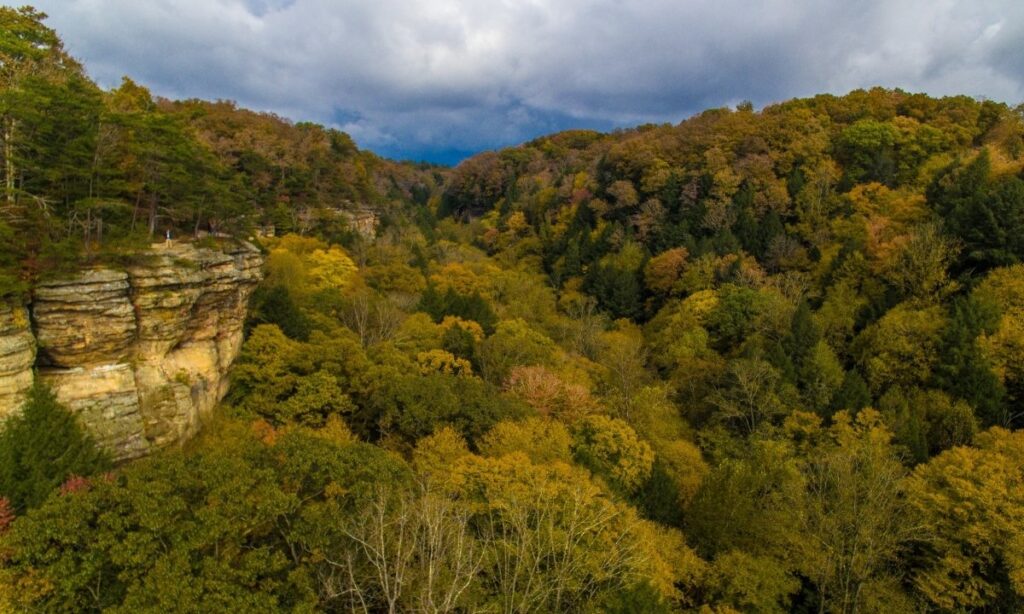
From here the trail follows the very edge of the rim, with open views across the gorge for much of the walk. The cliffs are more than 200 feet high in places, and the drop-offs are real.
Stay on the established path. Photo opportunities are everywhere, and none of them are worth a fall. The trail is also often wet, so good footwear matters more than a good angle.
The Descent Back Towards the Gorge Floor
The Rim Trail is a loop, so another set of stairs eventually brings visitors back down to the gorge. This last stretch gives a different look at the hemlocks and the fern-covered floor, seen from higher up and then slowly from closer in.
By this point the knees may have opinions. Visitors can listen to them, but they should still enjoy the view.
Best Time to Visit
Each season gives the hollow a different mood:
Spring: Ferns and wildflowers are at their best, and water tends to be flowing well.
Summer: The shaded gorge stays cool, but it is also busier.
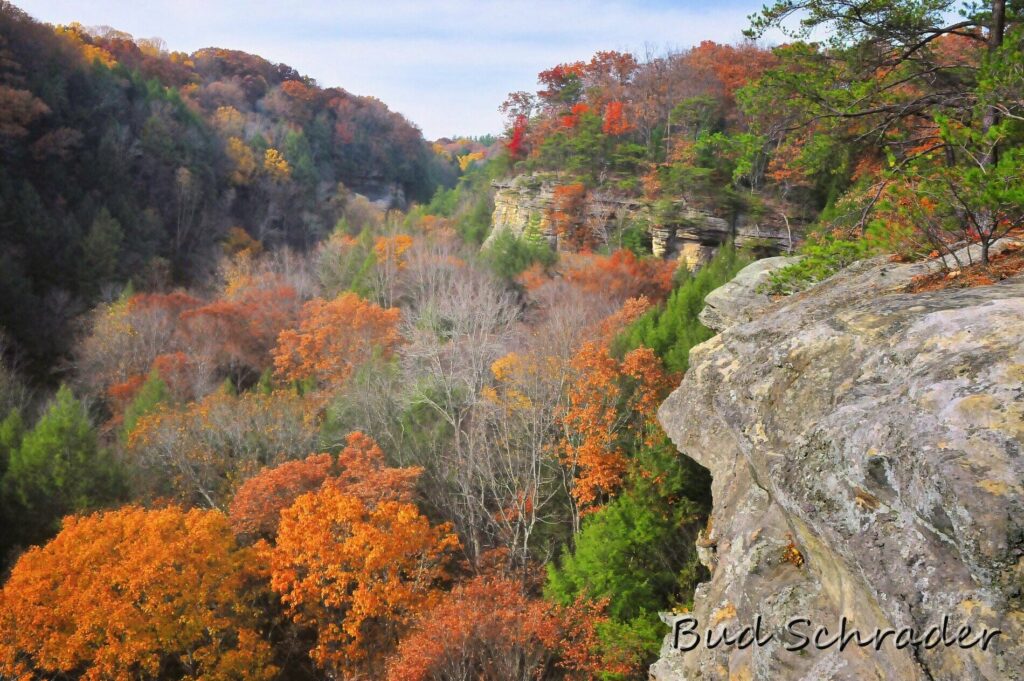
Autumn: The hardwoods turn, and the rim views are especially colourful. It is popular for a reason.
Winter: The preserve is quieter, but the Rim Trail is often wet and can be slippery, so visitors should take extra care and check conditions before travelling.
The time of day matters too. Early morning usually means fewer people, softer light and easier parking. The simplest advice on when to visit Conkles Hollow State Nature Preserve is to arrive early, whatever the season.
Visitors combining several Conkles Hollow Hocking Hills stops in one trip should plan this one for the start of the day, before the crowds build up elsewhere.
What to Bring
A short packing list goes a long way:
Shoes with good grip. There are stairs, and the rim path is often wet. Flip-flops are technically footwear, but the stairs will have thoughts.
Water. There is no drinking water at the preserve.
Layers and a light rain jacket. The gorge is cooler than the car park.
A charged phone or camera. Download any maps in advance in case signal is patchy.
Snacks. The picnic tables are there for a reason.
Final Tips Before You Go
Start with the Gorge Trail. It is paved, easy and described as accessible for most of its length.
Think carefully about the Rim Trail. It involves stairs, steep drop-offs and big heights. It is not recommended for small children, and visitors who dislike heights may prefer to skip it.
Leave the dog at home. Pets are not allowed in Ohio’s state nature preserves.
Stay on the trail. It protects both visitors and the plants.
Pack patience. Weekends can be busy, and the stairs are not going anywhere.
Conkles Hollow Ohio is not the biggest or most famous natural attraction in the country, and that is part of its charm. Conkles Hollow State Nature Preserve packs deep cliffs, ferns, a waterfall and some of the best rim views in Hocking Hills into a short, manageable visit. Go early, wear proper shoes, and keep both feet on the path.
Frequently Asked Questions
Where is Conkles Hollow State Nature Preserve?
Conkles Hollow State Nature Preserve is at 24858 Big Pine Road in Rockbridge, Ohio, just off State Route 374 in the Hocking Hills region.
Is Conkles Hollow part of Hocking Hills State Park?
It sits in the wider Hocking Hills region and is usually visited alongside the state park’s sites. It is a state nature preserve, though, so it has its own rules, including no pets.
How long are the trails?
The Gorge Trail is roughly half a mile each way, and the Rim Trail is a couple of miles. Distances vary a little between sources, so treat these as approximate.
Is the Gorge Trail wheelchair accessible?
The Gorge Trail is paved and is described as accessible for most of its length. The Rim Trail is not suitable, as it starts with stairs.
Can I take my dog to Conkles Hollow State Nature Preserve?
No. Dogs are not allowed in Ohio’s state nature preserves. Your dog will have to stay home and judge you from the sofa.
Is the Rim Trail safe for children?
It is not recommended for small children. The trail has steep drop-offs and cliffs over 200 feet high, so adults should use their own judgement.
How long does a visit take?
Most visitors allow around two hours for both trails, plus extra time for photos and rest stops.
When is the best time to visit?
Spring and autumn are popular for ferns, wildflowers and colour. Early morning is best in any season for fewer crowds.
Are there restrooms and drinking water?
There are flush restrooms and a parking lot, but there is no drinking water, so bring your own.
Is there an entrance fee?
Ohio’s state nature preserves are generally free to enter, but it is worth checking the ODNR website for current details before you travel.