Table of Contents
Craster Travel
Introduction
There’s a particular smell that meets you before you even see the sea at Craster. It drifts up the lane from the smokehouse — oak smoke, salt, and something faintly sweet — and it tells you everything you need to know about this place before you’ve parked the car. Craster is tiny. You could walk from one end of it to the other in under ten minutes. And yet this stone fishing village on the Northumberland coast pulls in visitors by the thousand every year, drawn by a ruined castle, a working harbour, and kippers that have reportedly found their way onto the Royal breakfast table.
This Craster travel guide covers everything you need for a proper visit: the walk to Dunstanburgh Castle, where to eat (and what to order), the quieter corners most day-trippers miss, and honest advice on timing, parking, and getting here without a car. I’ve structured it the way I’d plan the trip myself — start with why the village is worth the detour, then work through the practical detail.
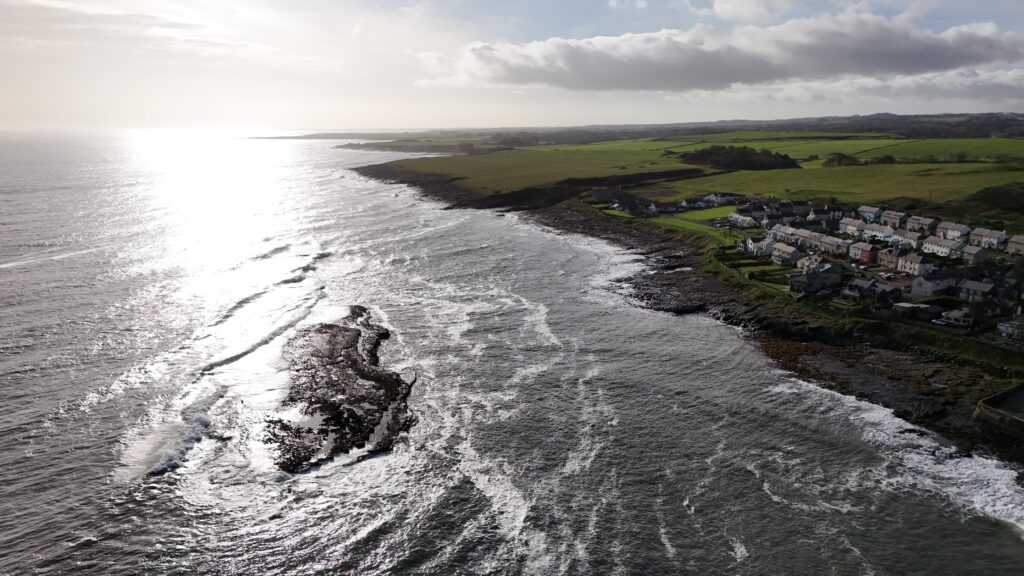
Craster sits on the Northumberland Coast Area of Outstanding Natural Beauty, about eight miles northeast of Alnwick. It has no beach of its own, which surprises some first-time visitors, but what it lacks in sand it makes up for with rock pools, cliff paths, and one of the best castle approaches in the north of England. Whether you’ve got two hours or two days, here’s how to make the most of them.
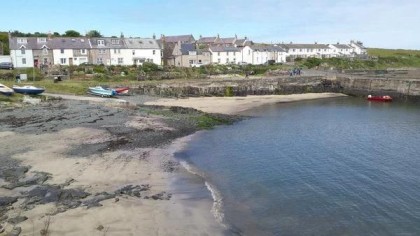
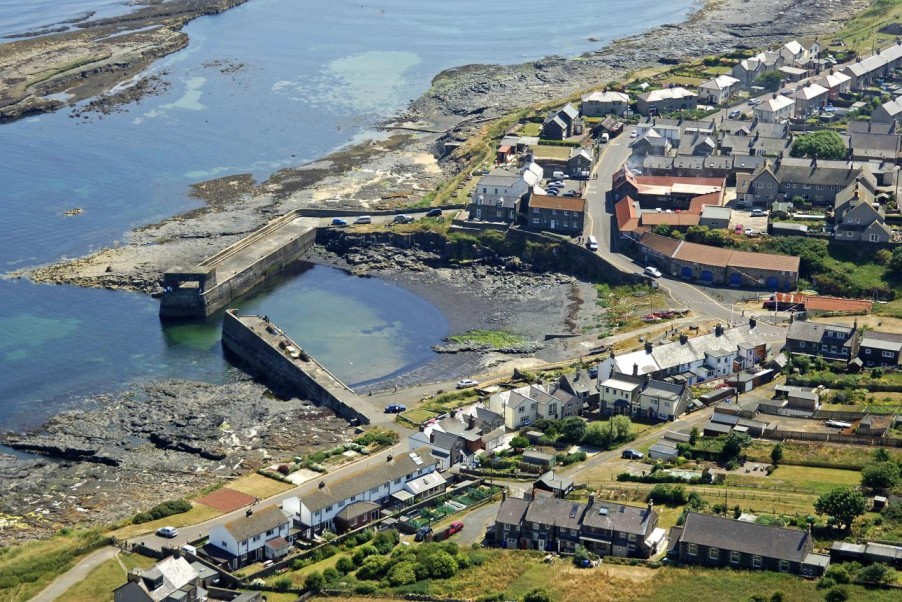
Image: Craster Harbour with fishing boats and Dunstanburgh Castle in the background ALT text: Fishing boats moored in Craster Harbour with Dunstanburgh Castle visible on the headland.
Why Visit Craster
Craster earns its reputation honestly. It isn’t dressed up for tourists — there are no gift-shop rows or themed cafés — it’s a working harbour village that happens to be beautiful, and that’s a large part of its appeal.
The headline reasons people come are well known: the kippers, the castle, and the coastal walking. Craster Harbour is the village’s most popular attraction, a working port that serves as the starting point for coastal walks and is known for its fishing boats and traditionally smoked kippers. L. Robson & Sons has been smoking kippers here using the traditional method for more than a century, and the smokehouse is still very much in operation rather than preserved as a museum piece.
Then there’s the castle. The walk from Craster to Dunstanburgh Castle covers almost exactly a mile of exposed coastline along a flat, mostly grassed track, and it’s one of the few major castle ruins in England that can only be reached on foot. No car park at the gates, no coach drop-off — just a headland, a sea view, and the silhouette of a 14th-century fortress getting larger with every step.
Beyond the obvious draws, Craster works as a base for slower travel. It sits within the Northumberland Coast AONB, surrounded by nature reserves, golf links, and villages that rarely make it onto a first-timer’s itinerary. If you want to understand why this stretch of coastline keeps locals coming back decade after decade, a night or two in Craster will explain it better than any list of attractions.
There’s also a practical case for choosing Craster as a base rather than a bigger town nearby. Alnwick has more restaurants and shops, and Bamburgh has the showstopping beach, but neither puts you within walking distance of a working harbour and a medieval castle ruin at the same time. Stay in Craster and you can do the castle walk before breakfast if you’re an early riser, or save it for golden hour without worrying about driving back in the dark on unlit coastal roads. For walkers especially, that flexibility is hard to replicate from a base further inland.
The village also rewards a slower pace of travel that’s increasingly rare on the British coast. There’s no pressure to “see everything” in an afternoon, because there isn’t a long list of paid attractions competing for your time. Most visitors find that the lack of a packed itinerary is itself part of the appeal — Craster invites you to sit by the harbour with a coffee, watch the boats, and let the day move at its own speed.
Best Things to See and Do
Craster’s attractions cluster within a few minutes’ walk of each other, which means you can take them at whatever pace suits you — rushed in two hours, or spread comfortably across a full day with stops for food and photographs. Below is a closer look at the must-sees, followed by the spots that reward a little extra curiosity.
Top Attractions
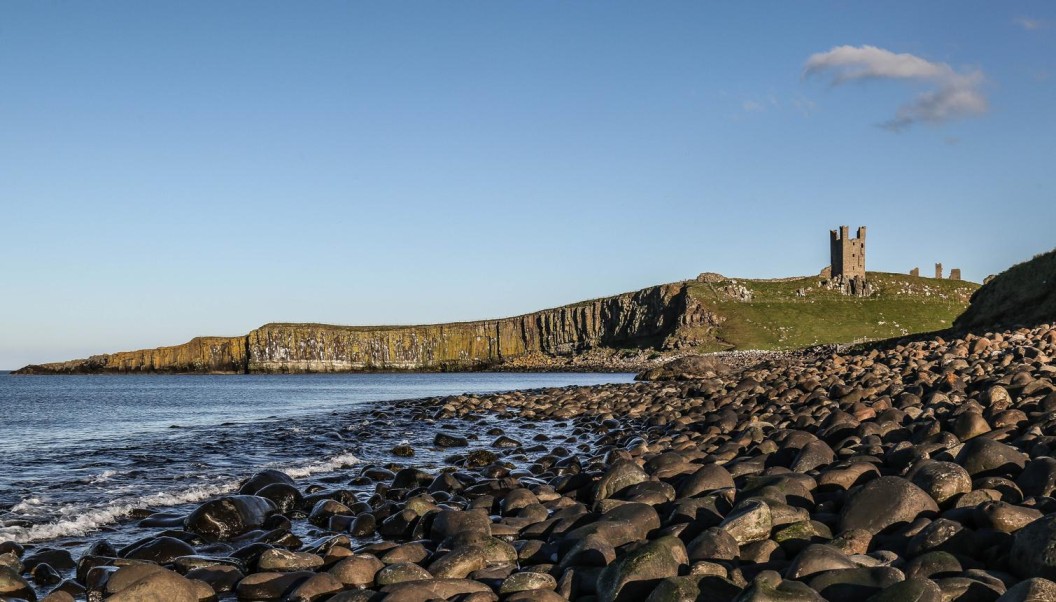
Dunstanburgh Castle This is the reason most visitors come. The castle was once a stronghold that suffered major damage during the Wars of the Roses, and construction began in 1313 under Thomas, Earl of Lancaster, a powerful baron openly opposed to King Edward II. Recent archaeological research suggests Lancaster built it on a far grander scale than previously thought, more as a political statement against the Crown than a purely military stronghold.
Today only fragments survive, but they’re dramatic fragments. You can see the crumbling remains of the huge gatehouse and the Egyncleugh Tower, which overlooks Queen Margaret’s Cove. Inside, a steep winding staircase leads to the top of the tower, with sweeping views in every direction and seabirds nesting on the cliffs below.
Quick facts: Dunstanburgh Castle
- Distance from Craster: 1.3 miles, on foot only
- Walking time: roughly 25–40 minutes each way
- Managed by: English Heritage (land owned by the National Trust)
- Entry: paid for non-members; free for English Heritage and National Trust members
- Dogs: welcome on leads outside; not permitted inside the castle itself
Buy tickets online in advance where possible — prices booked online include a discount, and admission costs more if you pay on the day. Visitors who book ahead can arrive any time within opening hours, no later than one hour before closing, and stay as long as they like.
Craster Harbour The harbour was built to commemorate a member of the Craster family who died serving in the army in Tibet in 1904, and the memorial is still visible on the harbour wall today. You can also spot the remains of a much taller structure that was once used to lift quarried stone onto waiting boats. It’s a small, working harbour rather than a marina, which is exactly why it photographs so well — real boats, real nets, no polish.
It’s also worth allowing time simply to stand on the harbour wall and watch the fishing boats come and go, particularly in the morning when crews are unloading the day’s catch. This isn’t a staged photo opportunity laid on for visitors; it’s how the village has functioned for generations, and that authenticity is part of what makes a stop here feel different from a more commercialised seaside town.
L. Robson & Sons Smokehouse The kippers produced here are exported to food lovers across the country and are reputedly popular with the British Royal Family. You can buy them straight from the smokehouse shop to take home, and the attached restaurant serves them cooked, which is the better introduction if you’ve never tried one. Plan 20–30 minutes for a browse and a chat with the staff about the smoking process.
The Mick Oxley Gallery Mick is a self-taught artist based in the village, and the gallery sells his original work and prints, often with the chance to meet the artist himself, working mainly in watercolour and acrylic seascapes. It’s a quiet, unhurried stop — ten minutes if you’re just browsing, longer if you get talking.
Image: The gatehouse ruins of Dunstanburgh Castle ALT text: Stone ruins of the gatehouse at Dunstanburgh Castle on the Northumberland coast.
Hidden Gems
Most day-trippers do the harbour, the smokehouse, and the castle walk, then leave. A few extra detours reward the people who stay longer.
- Arnold Memorial Nature Reserve. Owned by the Northumberland Wildlife Trust, this reserve has abundant greenery and birdlife, with rarities including wryneck, icterine, and red-breasted flycatchers recorded here. It occupies the site of a former stone quarry that closed in 1939, and most visitors walk straight past the entrance without realizing what’s there.
- Cullernose Point. Head south out of the village instead of north, and you’ll reach a headland of dramatic basalt cliffs. Spring visitors should look out for kittiwakes nesting in the cliffs along this stretch.
- The southern coastal path to Howick. This route leads south via Cullernose Point towards Howick, and far fewer people walk it compared to the busier northern route to the castle.
Best Beaches and Coastal Walks
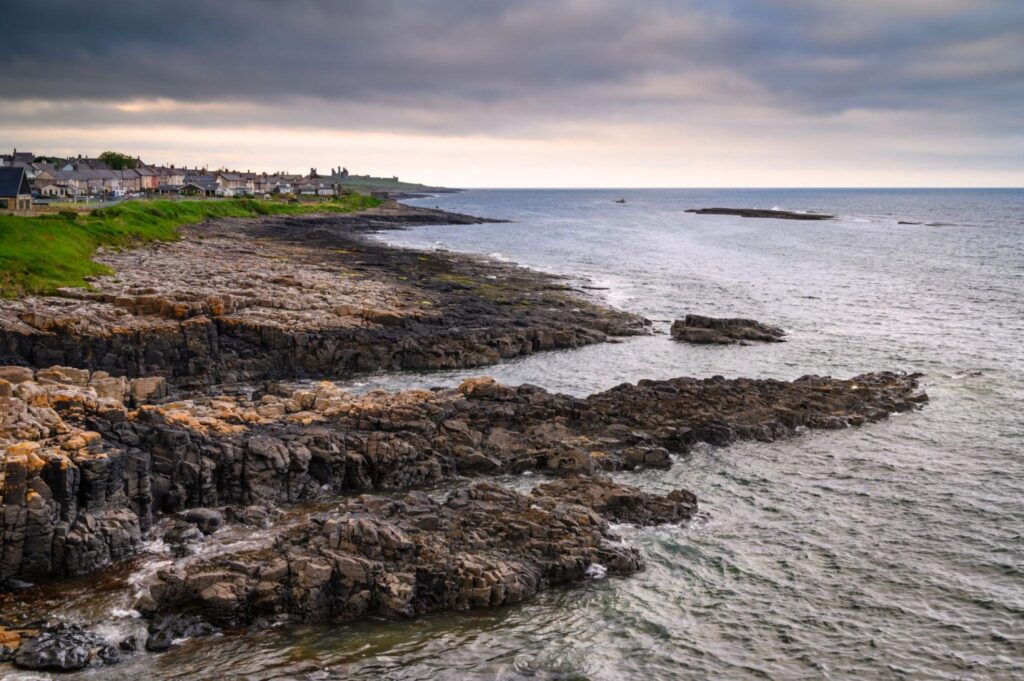
Craster itself has no sandy beach — it’s rock, harbour wall, and headland. That’s not a downside; it’s just worth knowing before you pack the buckets and spades. For sand, you’ll need to walk or drive a short distance.
| Walk / Beach | Distance from Craster | Difficulty | Highlights |
|---|---|---|---|
| Craster to Dunstanburgh Castle | 1.3 miles one-way | Easy, flat coastal path | Castle ruins, sea views, livestock fields |
| Dunstanburgh to Embleton Bay | Add 1 mile beyond the castle | Easy | Sweeping sandy beach, dunes |
| Embleton Bay to Low Newton | Further 2 miles | Moderate | The Ship Inn, sandy cove |
| Craster south to Howick | 2.5 miles one-way | Moderate, cliff path | Cullernose Point, Howick Hall Gardens |
The more adventurous walker can continue past the castle along Embleton Bay to the village of Low Newton, taking in the Ship Inn, before returning on a circular route along the dunes back to Craster. This makes a satisfying half-day loop for confident walkers, with proper boots recommended — sections of the path can be uneven, and the final approach to the castle involves a short, steep climb that’s best avoided in heavy rain.
For families with pushchairs or anyone after an easier outing, the flat stretch from Craster to the castle and back is manageable for most fitness levels and takes around 90 minutes round trip with photo stops.
Photography tip: the best light on Dunstanburgh Castle comes in the late afternoon, with the sun behind you as you approach from Craster, or at sunset from the beach side at Embleton Bay if you want the castle silhouetted against the sky.
Local Food and Famous Specialties
Food is not an afterthought in Craster — it’s arguably the second reason people visit, after the castle.
Craster kippers are the headline act: oak-smoked herring with a deep amber colour and a smoky, salty flavour that’s stronger than most supermarket versions. The Robson family has smoked herring here for well over a hundred years using traditional methods, and the smokehouse remains a working business rather than a heritage display.
Beyond kippers, the village punches above its weight for food. Craster has previously been nominated for a “Foodie Street” award, and you’ll find:
- Craster Fish Restaurant, attached to the smokehouse, with harbour views from the dining room — it’s gained a strong reputation for its food, though service can be mixed according to visitor reviews.
- The Jolly Fisherman, a long-standing pub near the harbour known for crab sandwiches and seafood.
- A seafood food truck and seaside café, both popular for a quicker bite — crab sandwiches, kipper rolls, and homemade soup are common menu staples on the Northumberland coast circuit.
Tip box: What to order If you only try one thing, make it a kipper, either grilled whole at a restaurant table or as a kipper pâté starter, which is a gentler introduction for first-timers. Pair it with a strong pot of tea — it’s traditional, and it actually balances the smokiness well.
Vegetarian and vegan options exist but are limited in a village this size; if you have dietary requirements, it’s worth checking ahead with the specific café or pub before you travel.
Image: Oak-smoked kippers hanging in the traditional smokehouse ALT text: Traditional oak-smoked Craster kippers hanging in L. Robson and Sons smokehouse.
Best Time to Visit
Craster works in every season, but each one offers something different.
Spring (March–May): Quieter than summer, with nesting seabirds along the cliffs near Cullernose Point and the castle. Good for photography and for avoiding crowds at Dunstanburgh.
Summer (June–August): Peak season, longer daylight hours, and the best chance of dry walking weather. Dunstanburgh Castle is open every day over the summer months, so this is the easiest time to guarantee access without checking opening days in advance. Expect a busier car park and harbour.
Autumn (September–October): A good middle ground — mild weather often persists into early autumn, crowds thin out, and the light on the castle ruins is particularly good for photography.
Winter (November–February): The castle is only open on weekends over the winter, so plan your trip around that if a castle visit is the priority. The village is at its most atmospheric in winter, with woodsmoke and sea spray, but pack for genuinely cold, windy coastal conditions.
Quick fact: whatever the season, the walk to Dunstanburgh Castle is exposed the entire way, with no shelter. Bring a windproof layer even in summer.
Where to Stay
Craster itself is small, so accommodation options are limited but characterful. Visitors can choose from campsites, local B&Bs, or self-catering options such as the Craster Tower Penthouse Apartment, depending on budget and group size.
In the village:
- Self-catering fisherman’s cottages. Many original fisherman’s cottages in Craster have been refurbished and now offer views over the harbour. These suit couples and small families wanting a proper “stay in the village” experience.
- Craster Tower Coach House. A Grade II listed coach house within the grounds of the historic Craster Tower, sleeping up to seven guests with a private garden and shared tennis court access — a strong option for larger family groups.
Just outside the village:
- Dunstan Hill campsite, roughly a mile from Craster, with around 150 pitches, suited to budget travellers and those touring by camper van.
- Boutique hotels in nearby Alnwick or Alnmouth, for travellers who want more facilities (restaurants, bars, spas) than a one-street fishing village can offer.
Couples tend to do best in a harbour-view cottage or a boutique room in nearby Alnwick. Families are usually better served by a self-catering cottage with space to spread out, or the Craster Tower Coach House if travelling in a group. Solo travellers on a budget will find the campsites and B&Bs the most flexible and sociable option, with the added benefit of being able to walk into the village for an evening meal without needing a car.
Book well ahead for summer weekends — Craster’s accommodation stock is genuinely small, and it sells out fast in July and August.
Image: A traditional stone fisherman’s cottage overlooking Craster Harbour <br>ALT text: Renovated fisherman’s cottage with harbour views in Craster, Northumberland.
How to Get There
By car: Craster sits just off the A1, around eight miles northeast of Alnwick via the B1340. From Alnwick, the village is about 12.9 km (8 miles) along this route. There is ample parking on the right just before the harbour, behind the Tourist Information Centre — arrive early in summer, as this car park fills quickly by mid-morning.
By train: Craster has no station of its own. The nearest options are Alnmouth, around 11.2 km from Craster, and Chathill, about 8 km from Embleton, both requiring a onward taxi or bus connection. Alnmouth is on the East Coast Main Line, so it’s reachable directly from London, Edinburgh, and Newcastle.
By bus: The Arriva X18 service and the Travelsure 418 service both run to Craster, making the village accessible without a car, particularly from Alnwick.
Accessibility note: the village centre and harbour area are largely flat and manageable for wheelchairs and pushchairs, but the coastal path to Dunstanburgh Castle has an uneven, partly rocky surface and isn’t suitable for standard wheelchairs without assistance.
Sample 2-Day Itinerary
Day 1: The classics
- Morning: Arrive in Craster, park near the Tourist Information Centre, and walk the harbour. Visit L. Robson & Sons smokehouse and pick up kippers for later.
- Midday: Lunch at Craster Fish Restaurant or grab a crab sandwich from the seafront food truck.
- Afternoon: Walk to Dunstanburgh Castle (1.3 miles), explore the ruins, then return the same way or continue on to Embleton Bay before looping back inland.
- Evening: Dinner at The Jolly Fisherman; overnight in a harbour-view cottage or nearby B&B.
Day 2: Beyond the village
- Morning: Walk south from Craster towards Cullernose Point and on to Howick Hall and Gardens, home of the original Earl Grey tea blend.
- Midday: Lunch at the Howick Hall tea room.
- Afternoon: Drive to Alnwick (around 20 minutes) for Alnwick Castle and The Alnwick Garden, or head north to Bamburgh and Seahouses if you’d rather stay on the coast.
- Evening: Return to Craster for a final harbour walk at sunset before heading home.
This pacing works well for couples and solo travellers. Families with young children may prefer splitting Day 1’s walking across both mornings instead, with afternoons kept free for rest.
Travel Tips
- Wear proper footwear. The coastal path is mostly flat but uneven in places, and rain makes the final approach to the castle slippery.
- Book Dunstanburgh Castle tickets online in advance for the cheaper rate and guaranteed entry, especially on summer weekends.
- Bring cash as well as card. Some smaller cafés and the food truck may prefer cash, particularly outside peak season.
- Check castle opening days in winter, since access drops to weekends only outside the summer season.
- Arrive early for parking. The main Craster car park fills by mid-morning in July and August.
- Pack layers regardless of season. The coastal walk is exposed to wind the entire way, with no shelter until you reach the castle or village.
- Keep dogs on leads near livestock. Fields along the coastal path to the castle are often grazed by cattle.
- Don’t rush the smokehouse. It’s easy to treat it as a five-minute photo stop, but the staff are usually happy to talk through the smoking process if you ask.
- Mind the mobile signal. Coverage along the coastal path can be patchy, so download maps or directions before you set off if you’re relying on a phone.
- Travel light if you’re walking on to Embleton Bay or Low Newton. There’s nowhere to leave bags safely along the route, and the return loop adds significant distance to your day.
- Visit midweek if you can. Even in peak season, a Tuesday or Wednesday in Craster feels noticeably quieter than a Saturday, with easier parking and shorter waits at the smokehouse counter.
Nearby Places to Visit
- Dunstanburgh Castle — the headline day out, reachable only on foot from Craster.
- Howick Hall and Gardens — the historic home of Earl Grey, creator of the famous Earl Grey tea, with gardens, woodland trails, and a tea house serving the original blend.
- Alnwick Castle and The Alnwick Garden — around 8 miles away, one of Northumberland’s biggest single attractions, worth a half or full day.
- Bamburgh — a beach widely regarded as one of the best in the country, plus Bamburgh Castle and the RNLI heritage centre.
- Seahouses and the Farne Islands — a larger fishing village than Craster, also known for its kipper history, and the main departure point for boat trips to see puffins and seals on the Farne Islands.
- Low Newton-by-the-Sea — a small sandy cove with the popular Ship Inn, reachable on foot from Craster via Embleton Bay.
Frequently Asked Questions
Is Craster worth visiting? Yes. It’s a small, working fishing village with a genuinely scenic harbour, famous oak-smoked kippers, and the only foot-access route to Dunstanburgh Castle, one of Northumberland’s most photographed ruins. Most visitors find half a day enough, though staying overnight lets you explore quieter walks.
How long is the walk from Craster to Dunstanburgh Castle? The walk is 1.3 miles each way along a mostly flat coastal path. Allow 25–40 minutes per direction depending on fitness and how many photo stops you make, plus time to explore the ruins themselves.
Does Craster have a beach? No, Craster has a rocky harbour rather than a sandy beach. The nearest sandy beaches are at Embleton Bay, about a mile beyond Dunstanburgh Castle, and at Low Newton-by-the-Sea, a little further on.
Where can I buy Craster kippers? L. Robson & Sons smokehouse in the village centre sells fresh oak-smoked kippers to take home, along with smoked salmon and other seafood. The attached restaurant also serves them cooked.
Is there parking in Craster? Yes, there’s a pay-and-display car park near the Tourist Information Centre, just before the harbour. It fills up quickly on summer weekends, so arriving early is recommended.
Can you drive to Dunstanburgh Castle? No. The castle has no road access and can only be reached on foot, via the coastal path from Craster or from the village of Embleton.
Is the coastal walk to Dunstanburgh Castle dog-friendly? Yes, dogs are welcome on the walk if kept on leads, since the path crosses farmland with grazing livestock. Dogs are not permitted inside the castle itself but can wait outside with you.
What is the best time of year to visit Craster? Summer offers the longest opening hours at the castle and the best chance of dry weather, while spring and autumn offer a quieter experience with fewer crowds. Winter visits should be planned around weekend-only castle opening hours.
How do I get to Craster without a car? The nearest train stations are Alnmouth and Chathill, both requiring a bus or taxi onward. Direct bus services, including the Arriva X18 and Travelsure 418, also run to the village.
What else is there to do near Craster besides the castle? Nearby options include Howick Hall and Gardens, Alnwick Castle and Garden, the beach at Bamburgh, and boat trips to the Farne Islands from Seahouses, all within a short drive.
Conclusion
Craster doesn’t try to be more than it is, and that’s precisely its charm. This Craster travel guide has covered the essentials — the castle walk, the smokehouse, where to eat and sleep, and how to time your visit — but the real value of the place is harder to put in a list. It’s the smell of oak smoke on a cold morning, the first sight of Dunstanburgh’s broken towers across the headland, and a harbour that still earns its living from the sea rather than from tourism alone.
Two hours is enough to tick off the highlights. Two days lets you walk further, eat slower, and understand why this corner of the Northumberland coast keeps drawing people back. However long you have, build in time for the walk to the castle without rushing it — that mile of coastline is, for most visitors, the whole reason to come.