
Table of Contents
The Lizard Peninsula
The Lizard Peninsula is the southernmost part of Cornwall and of mainland Britain. It is roughly ten miles long and ten miles across at its widest, and it is made up of open cliffs, quiet lanes, heathland and small fishing coves. Compared with the busiest parts of the county, it can feel slower and more open. The main attractions here are the walking, the wildlife and the light on the sea.
The area is protected as an Area of Outstanding Natural Beauty, and its rocks are unusual too. Much of the peninsula is serpentinite, a green and red stone that shows up along the cliffs and around Kynance Cove. Thatched cottages, working harbours and wide stretches of heath fill the gaps in between, with the South West Coast Path running around the edge.
Planning matters here. Roads are narrow, some of the best beaches almost vanish at high tide, and popular car parks fill early in summer. A few decisions about timing and transport can make the difference between a stressful day and an easy one.
This guide covers what to see on the Lizard Peninsula, the best walks, how to get there, when to go and how to stay safe on the beaches. It also looks at food stops, wildlife and nearby places worth adding to your trip. Prices, opening times and bus routes can change, so check current details before you set out.
Why Visit the Lizard Peninsula?
The Lizard offers a mix of scenery that is hard to find in one place. Working fishing villages, thatched cottages and small harbours sit alongside open clifftops and quiet lanes. There are dramatic cliffs and turquoise coves, but also open heathland and long sections of coast path with few buildings in sight. Because the peninsula is fairly compact, you can see a good part of it in a few days without long drives.
It is also a good place for nature. Visitors watch from the clifftops at Lizard Point for grey seals, porpoises and dolphins, and basking sharks appear offshore at some times of year. Seabirds and birds of prey use the cliffs, and the Cornish chough is one of the species people hope to spot.
The geology adds to the appeal. Around 400 million years ago, part of the ocean crust was pushed above sea level here, leaving the serpentinite that gives the coast its distinctive colours. You do not need a guidebook to notice it. The green and red seams are easy to see as you walk.
Best Places to Visit on the Lizard Peninsula
The Lizard has no single town to build a day around, so it works best to pick a few stops and link them by car or coast path. Helston is the largest town in the area and the usual gateway.
Kynance Cove
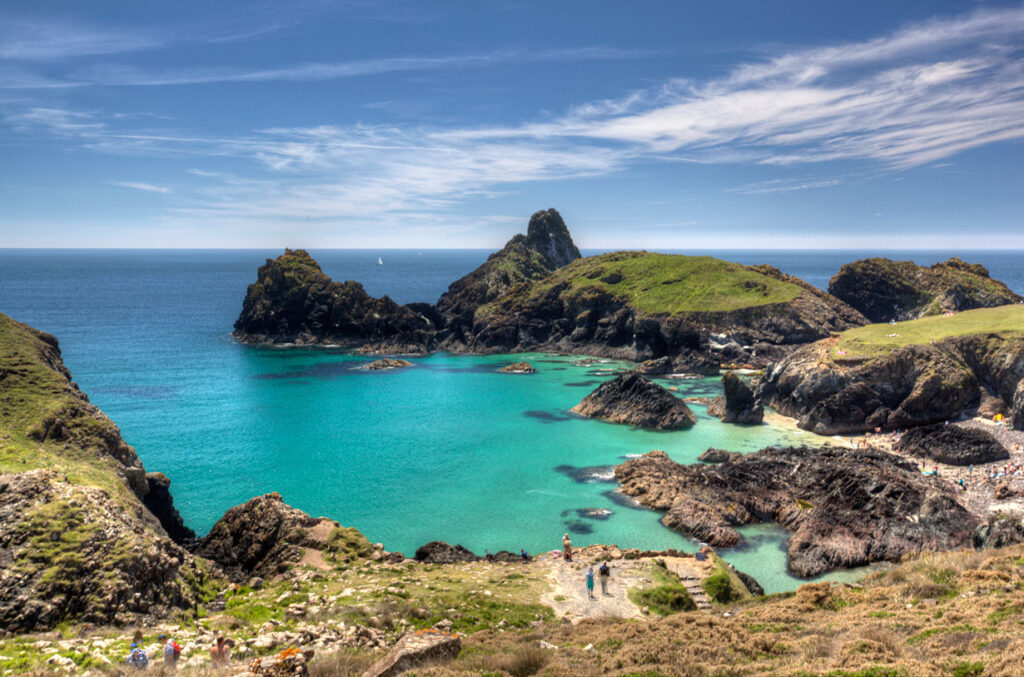
Kynance Cove is the best-known beach on the peninsula. White sand, turquoise water and dark serpentine stacks make it one of the most photographed spots in Cornwall. At low tide, caves and rocky islands open up to explore. At high tide the sand almost disappears, so the tide table matters more than the weather forecast.
| Kynance Cove | Details |
|---|---|
| Walk from car park | About 10 minutes, steep in places, with steps onto the beach |
| Parking | National Trust members free; others pay from about £2 to £10 depending on time |
| Lifeguards | None |
| Dogs on the beach | Not allowed 1 July to 31 August, 10am to 6pm |
| Food | Café above the beach |
Lizard Point and Lizard Village
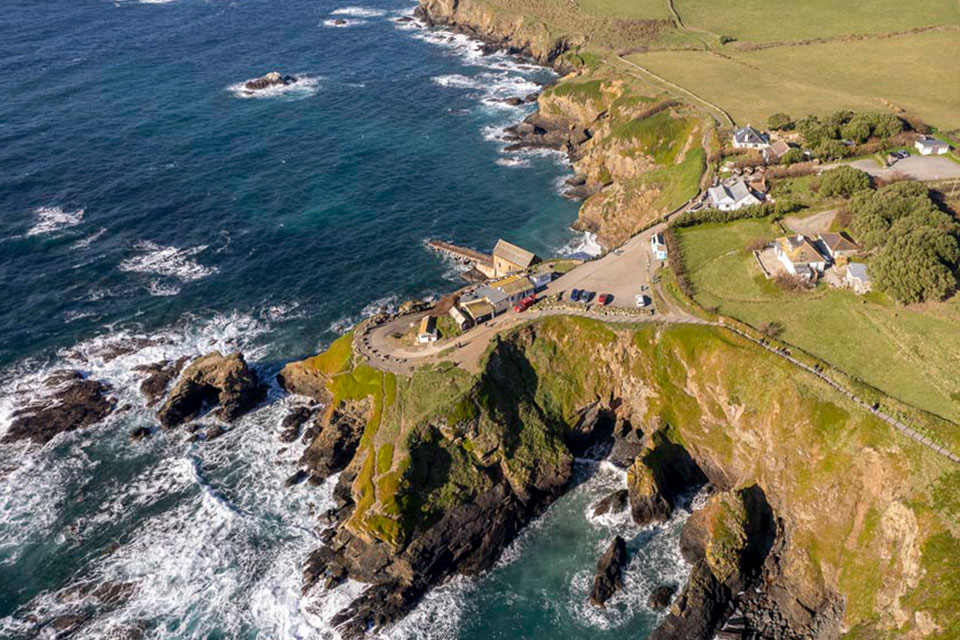
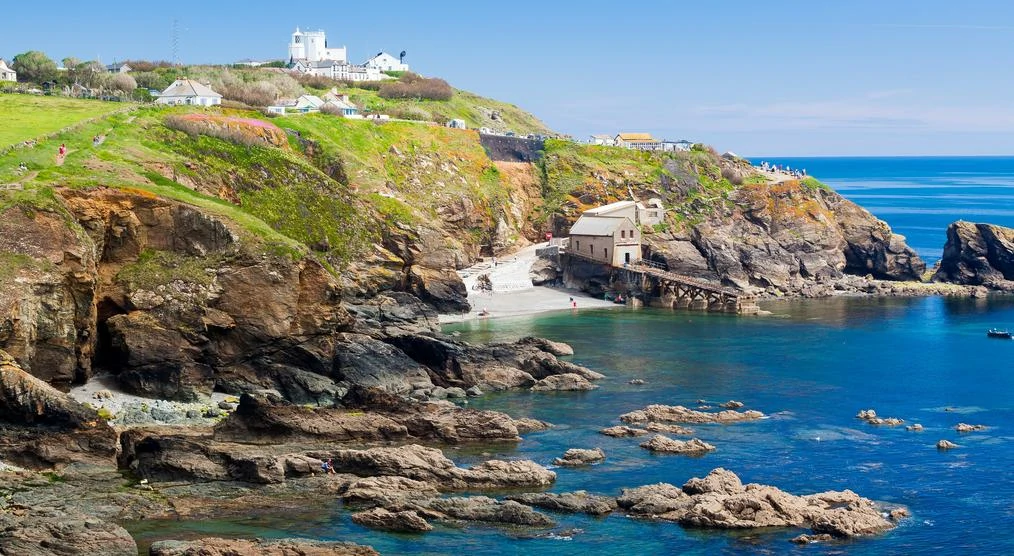
Lizard Point is the most southerly point of mainland Britain. The headland has a lighthouse that has guided ships through these dangerous waters for around 260 years, and the Polpeor Café sits right by the water. Lizard village, just inland, has pubs, cafés and shops, and it makes a useful starting point for walks. The waters around the point are treacherous, so treat the cliff edges and the sea with respect. The village itself is often described as the last in England, and it is a handy place to park, use the facilities and pick up supplies before a longer walk.
Cadgwith, Coverack and Mullion Cove
Cadgwith is a working fishing village with thatched cottages and boats pulled up on the beach. A coast path walk from here leads to the Devil’s Frying Pan, and the Cadgwith Cove Inn is a handy stop afterwards. Mullion Cove has a small harbour completed in 1897, and it suits a short visit better than a beach day. Coverack, on the eastern side, has a harbour and a bay that is popular in summer. A mile or so north, Lowland Point is a wilder spot where seals sometimes rest on the shore.
Best Walks on the Lizard Coast Path
The South West Coast Path runs around the whole peninsula, so you can choose anything from a short stroll to a full day. Some of the most useful routes are:
- Lizard Point circular: about 2.5 miles from Lizard village, described as easy, passing Housel Bay and Marconi’s Signal Station before reaching the point.
- Lizard Coastal Walk from Kynance Cove: the National Trust lists this loop at about 7 miles (11.2 km) and around three hours, with slopes and steps on stony cliff-top paths.
- Mullion Cove to Poldhu Cove: about 2 miles each way, rated moderate by one local guide.
- Coverack to Kennack Sands: about 5.1 miles one way, but there is no bus between the two, so plan your return.
Wear proper walking shoes, because many paths are steep or stony. Circular routes often cross fields and footpaths, so an Ordnance Survey map or a mapping app is worth having. If you want to see Kynance without dealing with the car park, you can also walk there from Lizard village or Lizard Point along the coast path, roughly 2.5 miles.
How to Get to the Lizard Peninsula
Most visitors drive. The usual route is the A394 to Helston, then south through the peninsula, with the A3083 leading to Lizard village. Side roads are narrow, so allow extra time in summer and be ready to reverse to a passing place.
Buses link Helston with Lizard village, Poldhu Cove and Mullion Cove, according to a local guide, but services are far less frequent than in a town. Check the current timetable before you plan a car-free day, and do not assume a bus will connect every beach.
Parking at Kynance Cove
The National Trust car park sits on the cliffs above the cove. In summer it has limited spaces, so arrive early. Private car parks open seasonally around the Lizard, but they are roughly a 30 to 40 minute walk from the beach. If the main car park is full, parking in Lizard village and walking the coast path is a better option than circling the lanes.
Best Time to Visit the Lizard Peninsula
Each season has a different feel. In spring and early summer the cliffs are covered in wildflowers. In late summer, purple heather carpets the heathland just inland from the coast. Autumn is a good time for the woods along the Helford River.
Summer brings the biggest crowds. Kynance Cove can be very busy in the school holidays, and car parks fill early. If you can, choose a weekday, arrive in the morning or come later in the afternoon, and consider a spring or autumn visit for a calmer trip.
Two mistakes catch people out on the Lizard Peninsula: arriving at Kynance Cove at high tide and expecting a beach, and trying to fit too many stops into one day on narrow lanes. Tides matter more than most visitors expect. Kynance is a tidal beach, and the caves and rock stacks are at their best at low tide, so check tide times before you leave. The cliffs are exposed to the Atlantic, so pack layers and a waterproof even on a sunny day, and allow extra time if the weather turns.
Beaches, Dogs and Safety Tips
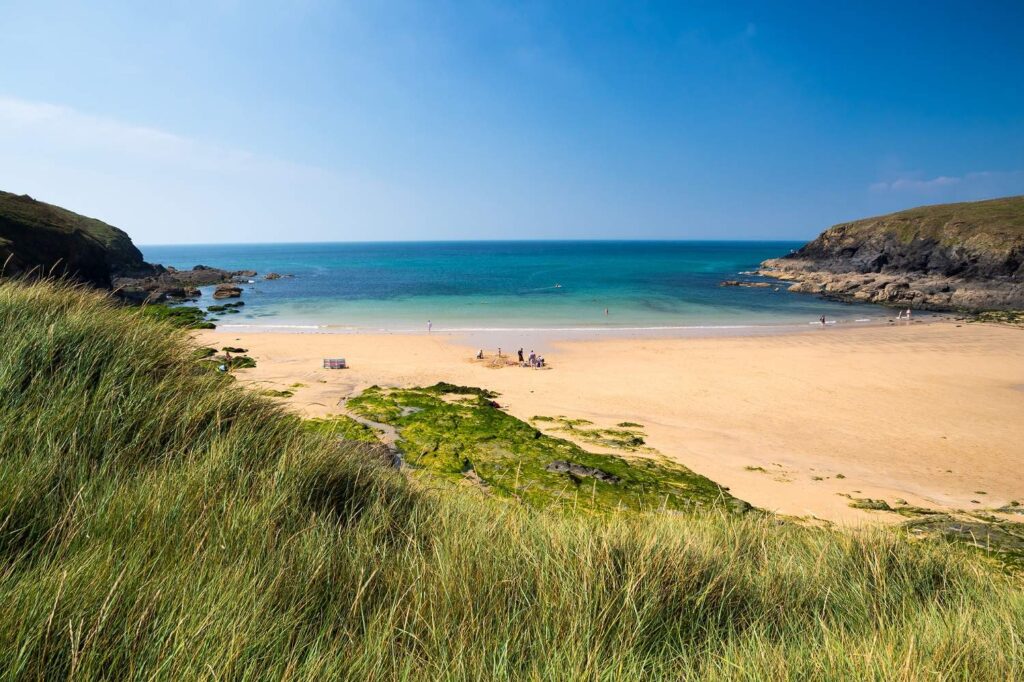
Not every Lizard beach suits swimming. Kynance has no lifeguards, the National Trust warns that visitors can be cut off by the tide, and the sea can be rough. Poldhu Cove is a long sandy beach where some sand remains even at high tide, and it has a summer lifeguard and a café. It is popular with families and surfers, though the usual sea cautions still apply. Cadgwith has two small shingle beaches, no lifeguard, and its water quality is not tested.
Mullion Cove has a cave that is exposed at low tide. Only go in while the tide is going out, and make sure you leave well before it turns.
Dogs are welcome on Kynance Cove beach outside the summer restriction, which runs from 1 July to 31 August between 10am and 6pm. They are welcome on the surrounding footpaths all year, but keep them on a lead near cliff edges.
For accessibility, the National Trust describes the walk down to Kynance as steep in places with steps. Local guides mention a longer, flatter route to the café that suits pushchairs better, so check the Trust’s accessibility information before you go.
Food, Wildlife and Nearby Places
Food stops are simple and often have a view. The Polpeor Café at Lizard Point is a popular refuelling stop, Kynance has its beach café, and Cadgwith Cove Inn serves lunch. Poldhu Cove also has a café at the far end of the beach.
To broaden the trip, head north to the Helford River, where an oyster fishery works the estuary and a foot ferry crosses to the village of Durgan and the National Trust garden at Glendurgan. Goonhilly Downs, which the reserve’s trails cross, offers a very different landscape from the coast. Around Mount’s Bay, Gunwalloe Cove and Loe Pool are quieter spots.
Holiday cottages are widely available across the peninsula, so it is easy to base yourself in one place and explore in short trips.
FAQ
What is the Lizard Peninsula famous for?
The Lizard Peninsula is famous for Lizard Point, the most southerly point of mainland Britain, and for Kynance Cove, one of Cornwall’s most photographed beaches. It is also known for its coast path walks, serpentine rock, thatched fishing villages and wildlife such as seals, porpoises and basking sharks.
How long do you need to visit the Lizard Peninsula?
A single day is enough for two or three stops, such as Kynance Cove and Lizard Point. Walkers and anyone who wants time in villages like Cadgwith or Coverack will enjoy a couple of days more. The peninsula is compact, but narrow roads and busy car parks slow things down in summer.
Where do you park for Kynance Cove?
Use the National Trust car park above the cove. Members park free, and other visitors pay by duration. It fills early in summer, so arrive in the morning. If it is full, park in Lizard village and walk the coast path, or use a private car park, which is a longer walk from the beach.
Are dogs allowed at Kynance Cove?
Yes, for most of the year. Dogs are not allowed on the beach from 1 July to 31 August between 10am and 6pm. Outside those dates and hours, they are welcome, and the surrounding footpaths are open to dogs all year. Keep them on a lead near the cliff edge.
Is it safe to swim at Kynance Cove?
Take care. Kynance has no lifeguards, the sea can be rough, and the tide can cut people off from parts of the beach. Check tide times first, keep to the shallows if you are unsure, and consider Poldhu Cove instead, which has a lifeguard in summer.
Conclusion
The Lizard Peninsula rewards people who slow down. Choose a few places rather than trying to see everything, check the tide before you go to Kynance Cove, and arrive early in summer to avoid the worst of the parking pressure. Wear proper footwear for the coast path, carry a waterproof, and treat the beaches and cliffs with care.
Kynance, Lizard Point and the fishing villages are the headline stops, but the real pleasure is in the walking between them. A few hours on the coast path can show you more than a day of driving. If you are planning a trip to the Lizard Peninsula, leave room in your day for a café stop, a viewpoint and a change of plan when the weather or tide decides.