

Table of Contents
Suilven Walk
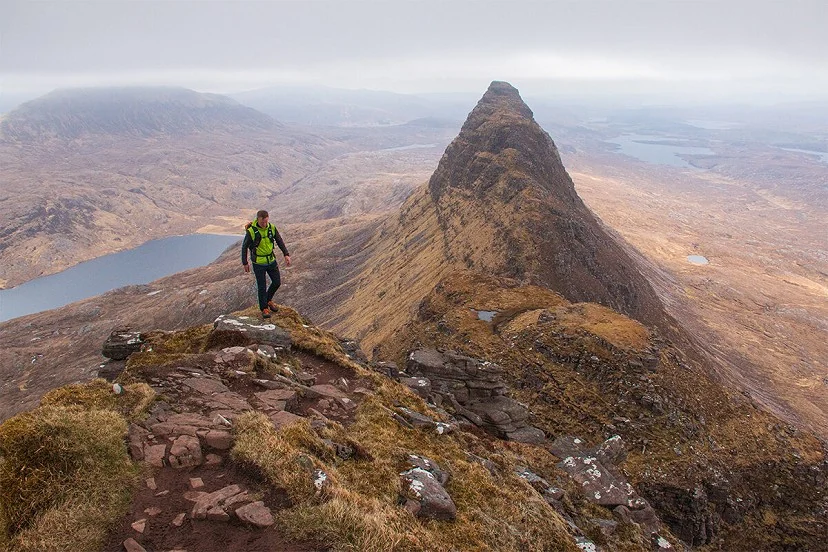
Some mountains are famous for being tall. Others are famous for being crowded. Then there is Suilven, which is famous for looking like a giant loaf of bread that somebody left on the Assynt moorland and never came back for. It rises out of a flat, watery landscape in the far north-west of Scotland, and once you have seen it, you will want to stand on top of it.
The good news is that you can. The bad news is that it takes a full day, and the weather has its own opinions about your plans. This guide gives you seven practical tips for a Suilven walk that goes well, from choosing a path to packing the right snacks. It is written for people with some hill experience, not for elite mountaineers.
1. Understand What You Are Signing Up For
Before anything else, be honest about the size of the day. The mountain is 731 metres high, which sounds like a gentle stroll until you remember that the walk starts almost at sea level. There is no car park halfway up to cheat with. The highest point is Caisteal Liath, Gaelic for “Grey Castle”, and reaching it means a long approach, a steep climb and a narrow ridge.
A round trip from Lochinver is roughly 24 kilometres, or about 15 miles. Most walkers allow a full day, often somewhere between eight and ten hours with breaks. Your legs will do the maths at kilometre 18, and they will not be happy about it.
Reasonably fit walkers who are comfortable on rough hill paths can manage it. If your usual exercise is walking to the fridge, start with something smaller first. Nobody ever regretted a warm-up hill.
2. Pick the Right Suilven Route
There is more than one way up, so decide before you leave the house. The most popular path starts in Lochinver and runs through the Glencanisp estate, and this guide mostly follows it. Visitors can also take the longer approach from Inverkirkaig, which passes the Falls of Kirkaig and runs beside Fionn Loch. It is scenic, but it is longer and boggier, so it suits people who like a bigger adventure and do not mind wet socks.
Whichever path you choose, carry a proper map. OS Explorer 442 covers the area. Phone signal comes and goes, and “no signal” is not a navigation plan. Paths and conditions can change, so check recent local information before you set off.
3. Start Early From Lochinver
A Suilven walk from Lochinver starts gently. You head out along the wide estate track near Glencanisp Lodge, with the mountain sitting on the horizon looking calm and innocent. The track is so friendly that you may think the whole day will be like this. It will not.
Leave early, ideally by 8 am in summer, and earlier in spring and autumn when daylight is shorter. An early start gives you time to stop for photos, eat lunch sitting down and still be back before dark. Nobody wants to find out how dark a Highland moor gets at night.
Park considerately in Lochinver, and do not block gates or passing places. Local people still need to get to work, and they have seen enough badly parked cars already.
4. Check the Weather, Then Check It Again
Scottish weather can do all four seasons before lunch, and the top of a mountain is where it likes to show off. The summit can sit in cloud while the car park enjoys sunshine. Wind is the big one here, because the ridge is narrow and exposed.
Check the Met Office mountain forecast and the Mountain Weather Information Service the night before and again in the morning. Pay attention to wind speed and cloud height, not just the little sun and cloud icons. If the forecast looks rough, the mountain will still be there next week. It is not going anywhere. It is a mountain.
Rain also turns the lower moorland into a sponge, and some of the path will be wet even after a dry week. Think of it as free foot spa treatment.
5. Pack Like You Mean It
A long day on rough ground needs the right kit. Here is a simple checklist:
- Walking boots with good grip and ankle support (trainers are a bad idea here)
- Waterproof jacket and trousers, even if the sky looks friendly
- Warm layer, hat and gloves, because it is colder on the ridge than in the village
- Map and compass, plus a charged phone with an offline map
- Head torch and spare batteries
- Plenty of water and enough food for the whole day
- First aid kit and a whistle
Food deserves its own mention. Pack more than you think you need, and include something that makes you happy at the summit. A cheese sandwich eaten on a Highland ridge tastes better than any restaurant meal. This is scientific fact, or at least it feels like it at hour six.
6. Take Your Time on the Steep Climb and the Ridge
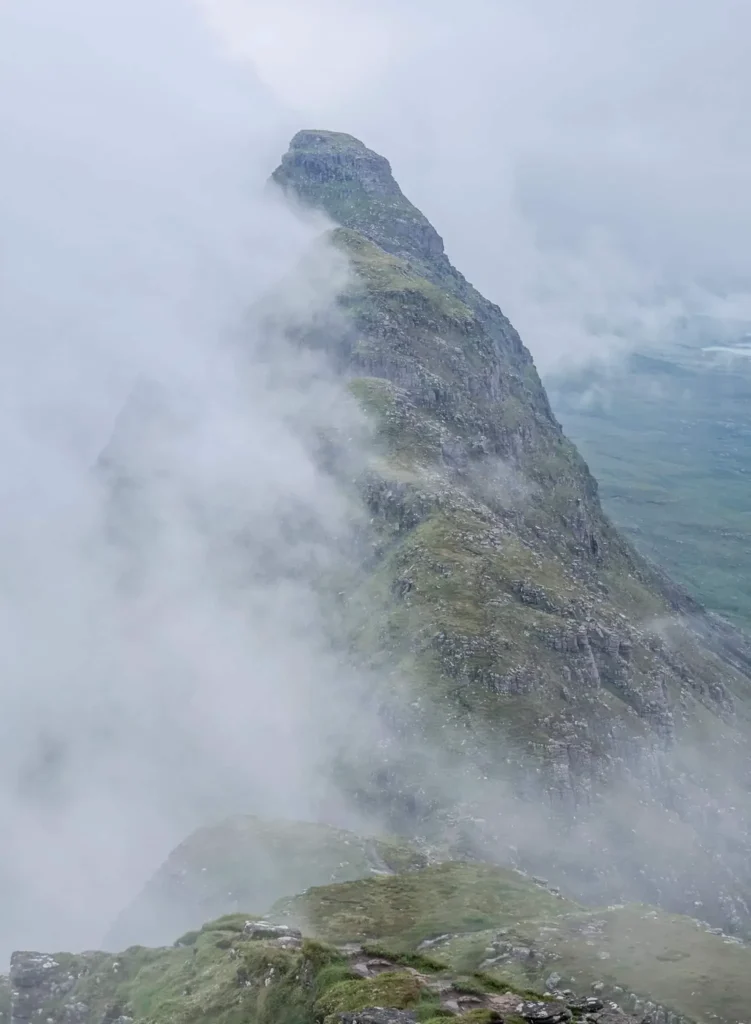
After the long approach, the path climbs steeply up to the pass known as Bealach Mòr, which sits in the middle of the ridge. This is where the day gets serious. The ground can be loose in places, and tired legs make mistakes, so go slowly and place your feet carefully.
From the pass, the highest top, Caisteal Liath, is a short but steep climb. The ridge itself is narrow and grassy, with big drops on both sides, and the views are enormous. Lochs, hills and sea are all laid out below you like a map somebody forgot to fold.
Do not rush up here, and stay well back from the edges, especially in strong wind. Stop to look at the view only when you are standing still, never while walking. If the cloud drops in or the wind picks up, turning around is a smart decision, not a failure. The summit is optional. Getting home is not.
7. Respect the Land, Midges and All
The Glencanisp estate is community-owned land, and it is also home to deer, birds and a lot of people who live and work nearby. Visitors can help by following a few simple habits:
- Check for estate notices about deer stalking, which usually happens in autumn
- Keep to the paths and close gates behind you
- Take all your rubbish home, including apple cores and banana skins
- Keep dogs under close control, especially near livestock and ground-nesting birds
Then there are the midges. These tiny biting insects are the unofficial residents of the Highlands from late spring to early autumn, and they are most active on calm, damp days, especially around dawn and dusk. Bring insect repellent and a midge head net. You will look slightly ridiculous, but you will be ridiculous and itch-free.
Final Thoughts
Suilven is not the highest mountain in Scotland, but it might be one of the most memorable. It is a long day with a steep middle and a spectacular finish, and it rewards walkers who prepare properly and take their time. Pick your path, start early, watch the weather and pack that cheese sandwich. Do all that, and you will go home tired, muddy, a bit bitten and very happy.
Frequently Asked Questions
1. How long does a Suilven walk take?
Most walkers need between eight and ten hours for the full round trip from Lochinver, including breaks. Fast and very fit walkers may do it quicker, but it is better to plan for a full day and finish early than to rush.
2. How far is the walk from Lochinver?
The round trip is roughly 24 kilometres, or about 15 miles. The first part follows an easy track, and most of the effort comes in the final climb to the ridge.
3. Is Suilven a Munro?
No. At 731 metres, it falls below the Munro height of 914 metres. It is classed as a Graham, which is a Scottish hill between 2,000 and 2,500 feet. Do not let the lower category fool you, because it is a tough day out.
4. Can beginners climb Suilven?
It is not ideal as a first hill walk. The distance is long, the climb is steep and the ridge is exposed. Beginners with good fitness can do it if they go with an experienced companion or a guide, but smaller hills are a better starting point.
5. What is the best time of year for the climb?
Late spring to early autumn usually gives the longest daylight and the most settled conditions. Summer brings midges, while winter brings snow, ice and short days that need winter skills and equipment.
6. Do I need scrambling skills?
Not for the normal path in good conditions. You will use your hands on a few steep sections, and a head for heights helps on the ridge, but this is not a technical rock climb.
7. Is there phone signal on the mountain?
Signal is patchy at best, and in many places there is none. Carry a paper map and compass, and tell someone your plan and expected return time before you leave.
8. Where do I park in Lochinver?
There are car parks in and around the village. Choose a proper parking space, avoid blocking gates, driveways and passing places, and check any local signs, since arrangements can change.
9. Can I take my dog?
Many walkers do, but it is a very long day for a dog, and the steep and rocky sections are hard on paws. Keep your dog on a lead around livestock and wildlife, and carry extra water for them.
10. What does the name Suilven mean?
The name is thought to come from Old Norse, and “pillar” is the meaning most often given. Considering how the mountain looks rising from the flat moorland, that name fits perfectly.