

Table of Contents
St Davids Travel
Britain’s smallest city sits at the very edge of Wales, where green farmland gives way to cliffs, surf beaches, and some of the cleanest coastal air you’ll ever breathe. St Davids has fewer than 2,000 residents, yet it carries the weight of over a thousand years of pilgrimage, a cathedral that rivals anything in London or Cardiff, and a peninsula packed with puffins, seals, and Iron Age forts.
This guide pulls together everything you need to plan a trip to St Davids: what to see, where to eat, where to sleep, and how to get there without wasting half a day on the road. Whether you’re after a quiet weekend escape or an active coastal adventure on the Pembrokeshire coast, here’s how to make the most of your visit.
Why Visit St Davids?
St Davids earned its city status because of a cathedral, not because of its size. Officially the smallest city in the United Kingdom, it has a population that wouldn’t fill a large secondary school, yet it has held city status (lost, then restored by the Queen in 1995) since the 16th century.
The draw here isn’t urban buzz. It’s the combination of a genuinely important religious site, dramatic Pembrokeshire coastline on every side, and a slow pace of life that’s hard to find elsewhere in the UK. People travel to St Davids for the same reason pilgrims did centuries ago: it feels like the edge of somewhere significant.
The city sits at the heart of the St Davids Peninsula, inside the Pembrokeshire Coast National Park. That means you get sheltered streets and historic buildings in the centre, with wild cliffs, surf beaches, and uninhabited islands just a short walk or drive away.
Locals and longtime visitors talk about a particular calm that settles over the place, especially around the cathedral grounds. Part of that comes from the setting. The cathedral was deliberately built low in a hollow, hidden from Viking raiders who plagued the coast centuries ago, so you barely see it until you’re right on top of it.
St Davids also has a strong independent streak. The high street is lined with small galleries, outdoor adventure operators, and family-run cafés rather than chain shops. That gives the city a personality that’s distinct from more commercialised seaside towns elsewhere in Wales.
Food culture matters here too. Pembrokeshire has built a genuine reputation for foraged ingredients, fresh seafood, and small-batch producers, and St Davids restaurants lean into that heavily. You’ll find menus shaped by what washed up on the shore or grew in the hedgerows that morning.
For walkers, the appeal is obvious. St Davids sits directly on the Pembrokeshire Coast Path, arguably one of the best sections of the entire Wales Coast Path, with cliffs, coves, and wildlife around almost every bend.
Families like it because there’s a manageable mix of easy attractions (the cathedral, the shops, gentle beach time) alongside more adventurous options (coasteering, boat trips, surfing) depending on what the day calls for.
In short, St Davids works as a destination whether you want history, scenery, food, or adrenaline. Few places in Britain pack that range into somewhere you can walk across in fifteen minutes.
Top Things to Do in St Davids
St Davids rewards a slower pace. Most of the best experiences here are free or low-cost, and many involve simply being outdoors. Below are the highlights worth building a trip around.
Visit St Davids Cathedral
The cathedral is the reason St Davids exists as a city at all. Built from dusky purple sandstone, the 12th-century building stands on the site of an earlier monastery founded by Saint David, the patron saint of Wales, who is honoured every year on the 1st of March, St David’s Day.
Saint David himself is said to have been born nearby and is buried within the cathedral. Step inside and you’ll find an ornate timber ceiling, a Treasury collection of historic artefacts, and a calm that’s noticeably different from the bustle of bigger English cathedrals.
Entry to look around is free, though donations are welcomed and genuinely needed to maintain the building. Budget an hour or so to explore properly, longer if you want to sit through a service or just absorb the atmosphere.
Don’t rush off afterwards. The on-site coffee shop serves home-cooked, locally sourced food, and there are a couple of small gift shops worth a browse, including one dedicated entirely to books.
Explore the Bishop’s Palace
Right across the river from the cathedral sit the Gothic ruins of St Davids Bishop’s Palace. Built largely by Bishop Henry de Gower, the palace once housed lavish banqueting halls and now makes a dramatic backdrop for open-air theatre in summer.
It’s a quieter, more atmospheric stop than the cathedral, and a great spot for photography, especially with the cathedral visible across the valley.
Walk the Pembrokeshire Coast Path
No visit to St Davids is complete without time on the coast path. This stretch of the Wales Coast Path is consistently rated among the best in the country, with sheer cliffs, hidden coves, and sweeping Atlantic views.
A popular short route is the St Davids Head circular walk, starting from Whitesands car park. It takes a little over an hour and passes the Coetan Arthur Neolithic burial chamber along with rugged, mountain-backed coastline.
For something longer, the roughly four-mile circular walk linking St Non’s Chapel, Porthclais Harbour, and back to the cathedral makes an excellent half-day outing, with Porthclais a good spot to stop for a coffee in summer.
Visit Whitesands Bay
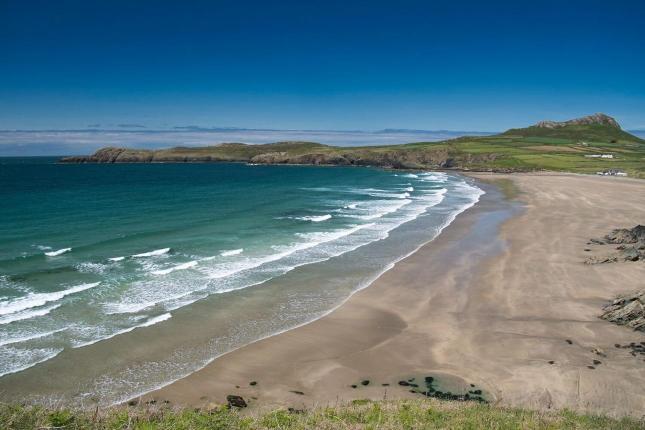
Two miles from the city centre, Whitesands Bay is the area’s standout beach. Wide, sandy, and Blue Flag-rated, it’s a magnet for surfers, bodyboarders, and families looking for a proper day at the seaside.
Surf schools operate here regularly, and there’s a beach café for chips and a hot drink once you’ve had enough of the water. Parking fills up fast on sunny days, so arrive early if you’re driving.
Take a Boat Trip to Ramsey Island
Boats leave from St Justinian’s, just a couple of miles outside St Davids, heading out to Ramsey Island and beyond. Ramsey is a nature reserve known for its breeding seabird cliffs, grey seals, and the chance of spotting dolphins or porpoises along the way.
Several local operators run these trips, including options that circle the island without landing and others that allow you to step ashore. If puffins are the goal, you’ll need to head slightly further to Skomer Island instead, as Ramsey doesn’t host a puffin colony.
Visit St Non’s Chapel and Well
A short walk or drive from the city centre brings you to St Non’s Chapel, said to mark the birthplace of Saint David. Little remains of the original building, but the site is still an important place of pilgrimage, and the nearby well is reputed to have healing properties.
There’s no charge to visit, and a small car park nearby holds just a handful of cars, so many visitors prefer to walk there along the coast path instead.
Try Coasteering or Kayaking
For something more adrenaline-fuelled, local operators run coasteering sessions around the cliffs and sea caves near St Davids. Expect swimming, scrambling, and the occasional supervised cliff jump, all led by qualified guides.
Several operators can adapt sessions for different ability levels, and some offer accessible options for visitors with disabilities if you contact them in advance. Kayaking trips around the sheltered waters of Porthclais Harbour are a gentler alternative if you’d rather stay closer to sea level.
Browse the Independent Shops and Galleries
St Davids’ compact high street punches well above its weight for independent shopping. Expect art galleries showing local landscape and wildlife photography, Welsh craft and homeware shops, and at least one dedicated to books and souvenirs.
Oriel y Parc Landscape Gallery, run as part of the Pembrokeshire Coast National Park Visitor Centre, is free to enter and exhibits work from the national Welsh art collection alongside changing local displays.
Catch the Sunset from the Cathedral Grounds or Coast Path
St Davids sits on the westernmost edge of Wales, which makes for genuinely spectacular sunsets. The cathedral grounds offer an easy, accessible spot to watch the sky change colour, while a short walk onto the coast path gives you sea views to go with it.
Best Places to Visit Near St Davids
St Davids makes an excellent base for exploring the wider peninsula and beyond. A car helps, though several spots are reachable by local bus too.
Solva is a picturesque harbour village about 15 minutes from St Davids, with a sheltered tidal harbour, art galleries, and a stretch of coast path either side considered some of the finest in Pembrokeshire. The walk from Newgale to Solva passes Gwadn, a pebbly cove that’s one of the most enjoyable smaller beaches in the area.
Newgale Beach offers a long, dramatic stretch of sand backed by pebbles, popular with surfers and kitesurfers thanks to consistent Atlantic swell.
The Blue Lagoon at Abereiddy is a former slate quarry that’s flooded into a strikingly blue-green pool, now used for coasteering and wild swimming. It’s also the starting point for one of the most photographed sections of coast path in Wales.
Skomer Island is the place to go if puffins are on your wish list, home to one of the largest Atlantic puffin colonies in southern Britain. It’s best reached from Marloes, on the other side of the Pembrokeshire coastline, so it works well as a separate day trip rather than a quick add-on.
Dr Beynon’s Bug Farm, around a mile from St Davids, is a hands-on attraction and working scientific research centre that’s popular with families and anyone curious about insects and conservation.

Roch Castle, a 12th-century fortress overlooking St Bride’s Bay, sits just off the main road from Haverfordwest and now operates as a luxury place to stay, with tours sometimes available even if you’re not booked in overnight.
For a fuller Pembrokeshire trip, Tenby is well worth the detour. It’s roughly an hour’s drive south and offers four excellent beaches plus a livelier, more traditional seaside town atmosphere, a good contrast to St Davids’ quieter charm.
Best Time to Visit St Davids
St Davids is a year-round destination, but each season offers a different experience.
Spring (March to May) brings daffodils around the cathedral, lambing season in the surrounding fields, and noticeably fewer crowds than summer. Weather is changeable, so pack layers, but the coast path is at its greenest and wildflowers start appearing along the cliffs.
Summer (June to August) is peak season, with the longest days, the warmest sea temperatures, and the best chance of calm conditions for boat trips. Expect busier beaches, fuller car parks, and higher accommodation prices, especially around school holidays. Book popular restaurants and boat trips in advance during this period.
Autumn (September to November) is arguably the sweet spot for many visitors. The crowds thin out noticeably after the school summer holidays end, the sea is often still warm enough for a dip, and the coast path is quieter for walking. Storms become more frequent later in the season, bringing dramatic skies but also rougher conditions for boat trips.
Winter (December to February) is the quietest time, with some seasonal attractions and boat trip operators closing or reducing schedules. What you lose in activities, you gain in solitude. The cathedral feels especially atmospheric, and storm-watching from the cliffs (safely, and from a distance) draws a dedicated few. Days are short, so plan accordingly.
If you want a balance of good weather, open attractions, and manageable crowds, late May, June, and September tend to offer the best combination.
Where to Stay in St Davids
Accommodation in St Davids has improved considerably in recent years, and there’s now a genuine range to suit every budget.
Luxury hotels include options converted from historic buildings, such as a four-star hotel built into a former mill tower behind Oriel y Parc Gallery, and a five-star countryside property a short walk from the centre. These tend to come with excellent on-site restaurants and spa facilities.
Mid-range hotels and guesthouses are scattered around the city centre and just outside it, often family-run and within easy walking distance of the cathedral and high street.
Bed and breakfasts remain a strong option in and around St Davids, typically offering a more personal, locally-informed welcome along with a hearty Welsh breakfast to fuel a day of walking.
Self-catering cottages are popular with families and groups wanting more space and flexibility, and there’s a healthy supply scattered across the peninsula, from converted farm buildings to seafront properties.
Budget options include campsites and caravan parks dotted around the peninsula, particularly near Whitesands, which suit walkers and surfers who want to be close to the coast path without paying hotel prices.
Whichever option you choose, booking ahead for summer weekends is strongly recommended, as St Davids’ small size means accommodation fills up quickly during peak season.

Where to Eat in St Davids
Despite its size, St Davids has built a genuine reputation among food lovers, helped along by annual food festivals and a strong culture of local sourcing.
Seafood is the obvious highlight, given the city’s coastal position. Expect fresh catch on menus across the city, often landed locally, alongside Pembrokeshire’s well-known smoked products.
Fine dining is available at hotel restaurants in the city, where chefs build menus around seasonal, foraged, and locally caught ingredients, alongside small-plates restaurants known for their use of wild and foraged produce.
Casual dining comes in the form of wood-fired pizza and craft beer spots, along with traditional pub fare. Local pubs serve Welsh ales in sunny beer gardens during summer and offer a cosy fireplace to retreat to in winter.
Cafés are plentiful for breakfast, lunch, or a mid-walk coffee stop. Several operate from historic settings, including one set within the ruins of a 14th-century college building attached to the cathedral, known for its Welsh cakes. Others serve brunch with international influences, alongside straightforward coffee and cake spots dotted around the high street and harbour areas.
Family dining is well catered for too, with relaxed, casual venues that don’t mind muddy boots or sandy children fresh off the beach.
Budget at least one meal around fresh Pembrokeshire seafood while you’re here. It’s the dish the region is genuinely known for, rather than just a tourist cliché.
How to Get to St Davids
St Davids’ remote, westerly position means a little planning goes a long way.
By car is the most flexible option and the way most visitors arrive. From the south, take the A40 to Haverfordwest, then join the A487, which runs all the way to St Davids. From the north, follow the A487 through Fishguard and continue along the same road. Some sections narrow to single lanes, so allow extra time, particularly in summer traffic.
By train, the nearest station is Haverfordwest, around 16 miles away, with services connecting to Cardiff, Milford Haven, and further afield. There’s no direct rail line into St Davids itself.
By bus, the T11 service connects Haverfordwest to St Davids, taking around 50 minutes and timed to meet incoming trains. Local buses also run to nearby spots like Whitesands, Newgale, and Solva, though for more remote attractions you may need a taxi.
By air, the nearest airport is Cardiff, roughly a two-and-a-half-hour drive away, making St Davids more of a road-trip destination than a fly-in one.
Parking in the city centre is available in several pay car parks, with additional parking at Whitesands and other beach access points. These fill quickly on warm summer days, so arriving early is worthwhile if you’re driving in for a beach day.
Local transport within the peninsula relies mainly on a small network of seasonal buses alongside taxis, so if you plan to explore widely without a car, check current timetables through Traveline Cymru before you travel.
Practical St Davids Travel Tips
A handful of practical points will make your trip smoother.
- Pack proper walking shoes. Even short coast path walks involve uneven, sometimes muddy ground, and trainers won’t cut it if rain has been recent.
- Bring layers regardless of season. Coastal weather changes quickly, and what starts sunny can turn windy and cool within an hour.
- Book boat trips and popular restaurants ahead during summer, since availability is limited by the city’s small size.
- Arrive early for beach car parks in peak season, particularly at Whitesands, which fills by mid-morning on sunny weekends.
- Carry cash as well as card. Smaller cafés and some attractions, including donation boxes at the cathedral, still appreciate cash.
- Check tide times before heading to beaches or coastal walks, as some routes and coves are only accessible at low tide.
- For photography, early morning and late evening light suits the cathedral and coastline particularly well, and golden hour at Whitesands or St Davids Head is hard to beat.
- Accessibility support is available. The Pembrokeshire Coast National Park runs an Outdoor Mobility Scheme offering beach wheelchairs and all-terrain equipment, bookable in advance, and some coasteering operators can adapt sessions for additional needs.
- Budget tip: many of the best things to do here, including the cathedral, coast path walks, and beaches, are free. Spend your budget on one good meal and perhaps a single boat trip or activity instead of trying to do everything.
Suggested One-Day St Davids Itinerary
If you only have a single day, here’s a realistic way to use it well.
Morning: Start at St Davids Cathedral and the Bishop’s Palace, allowing around 90 minutes to take in both unhurried. Grab a coffee and Welsh cake at one of the cafés near the cathedral grounds before heading back up into the city centre.
Late morning: Browse the high street’s independent shops and Oriel y Parc Gallery, then drive or take the short walk out to St Non’s Chapel and Well.
Midday: Head to Whitesands Bay for lunch at the beach café, followed by a swim, surf lesson, or simply time on the sand depending on the weather and your energy levels.
Afternoon: Walk part of the St Davids Head circular route from the Whitesands car park, taking in the Coetan Arthur burial chamber and coastal views. Alternatively, book a boat trip from St Justinian’s to Ramsey Island if you’d rather be on the water.
Evening: Return to the city centre for dinner, prioritising fresh local seafood. Finish the day with a walk back to the cathedral grounds or out onto the coast path for sunset, weather permitting.
This itinerary covers the essentials without feeling rushed, though St Davids genuinely rewards a longer stay if you can manage it.
Frequently Asked Questions (FAQs)
Is St Davids worth visiting? Yes. It combines a genuinely significant religious site with some of the best coastal scenery in Wales, all within a compact, walkable area.
How many days do you need in St Davids? A single day covers the highlights, but two to three days lets you properly explore the coast path, nearby villages, and take a boat trip without rushing.
Is St Davids good for families? Yes, with beaches, gentle walks, and family-friendly attractions like the Bug Farm alongside more active options for older children and teens.
Can you see puffins in St Davids? Not on Ramsey Island, which is the main boat trip destination from St Davids. For puffins, you’ll need to travel to Skomer Island, usually reached from Marloes on the other side of Pembrokeshire.
Is St Davids accessible without a car? It’s possible using trains to Haverfordwest and the connecting T11 bus, but a car gives far more flexibility for reaching beaches and viewpoints around the peninsula.
What is St Davids known for? It’s known as the UK’s smallest city, home to St Davids Cathedral, the resting place of Wales‘ patron saint, and for its position on the Pembrokeshire Coast Path.
Are dogs allowed on St Davids beaches? Many beaches in the area welcome dogs, though some operate seasonal restrictions during peak summer months. Check current rules for each specific beach before you travel.
What’s the closest train station to St Davids? Haverfordwest, around 16 miles away, with a connecting bus service completing the journey into the city.
Is the cathedral free to visit? Yes, entry is free, though donations are encouraged to help maintain the building.
What’s the best month to visit St Davids? Late spring and early autumn, particularly May, June, and September, tend to offer a good balance of decent weather, open attractions, and lighter crowds than peak summer.
Final Thoughts
St Davids manages something rare: it feels both significant and unhurried at the same time. You can spend a morning inside a building with over a thousand years of history, then spend the afternoon on a beach with barely anyone else on it.
Whether you’re drawn by the cathedral, the coast path, the seafood, or simply the idea of standing on the westernmost edge of Wales, St Davids has a way of making a short visit feel much longer than it actually was. Plan your trip around one or two unmissable experiences, leave room for slower moments, and the rest will fall into place.