
Table of Contents
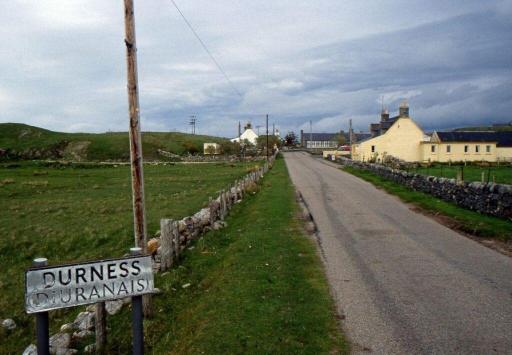
Durness Travel
Durness Travel sits at the top left corner of mainland Britain, where the A838 finally runs out of east-west road and turns south toward Ullapool. It’s the kind of place you reach almost by accident on the North Coast 500 and then can’t stop talking about for years afterward. White sand beaches that look photoshopped, a sea cave with a waterfall crashing through its roof, and a craft village built inside an old Cold War radar station — Durness Travel packs an unreasonable amount of “wait, this is in Scotland?” into a village of around 350 people.
This guide covers the best things to do in Durness Travel, how to actually get there, where to eat and sleep, and a sample two-day itinerary that won’t leave you rushing. Everything here is based on current visitor information, recent traveller reports, and the practical realities of getting around one of the most remote corners of the UK.
Quick Facts: Durness Travel
- Location: Sutherland, North Highlands, Scotland
- Nearest city: Inverness (around 2.5–3 hours by car)
- Best known for: Smoo Cave, Balnakeil Beach, Cape Wrath, North Coast 500
- Best time to visit: May, June, or September
- How to get around: Car strongly recommended; limited bus service
Why Choose Durness Travel
Durness Travel earns its reputation as one of the best stops on the North Coast 500, and that’s not tourist-board spin. It’s the most north-westerly village on the British mainland, set among sheltered coves of brilliant white sand and limestone cliffs covered in machair grassland. Most of Sutherland is made up of ancient, water-resistant gneiss rock topped with boggy heath, which is why Durness Travel looks and feels different the moment you arrive — the village itself sits on a patch of limestone, which drains better and supports richer plant life than the surrounding moorland.
That limestone is also responsible for the village’s signature attraction. Rainwater dissolves limestone over thousands of years, carving out the cave systems that make this stretch of coast geologically unusual for Scotland. It’s a rare combination: Caribbean-coloured water, dramatic caves, and a genuinely wild, undeveloped feel, all within walking distance of a Spar shop and a few good cafés.
Durness Travel also carries some social history worth knowing before you arrive. In 1841, crofters here became the first in the Highlands to resist eviction from their land rather than simply accept it when landowners tried to clear the area for sheep farming. Military force was used to push some clearances through, but the resistance in Durness Travel became an example for other Highland communities that pushback was possible. It’s a quiet but important chapter in Highland history, and locals are often happy to talk about it if you ask.
For music fans, there’s a more famous personal connection: Durness Travel held particular meaning for John Lennon, who reportedly drew on childhood memories of the area when writing “In My Life.” He used to holiday here with his aunt as a boy, and a small memorial garden in the village now marks that connection.
Insider tip: Durness Travelis small enough to walk around in twenty minutes, but the surrounding area — beaches, caves, craft village, Cape Wrath — needs a car or a lot of patience with the limited bus network. Budget at least two full days here, not a quick stopover.
Best Things to See and Do
What follows is a structured “top 10” of Durness’s Travel best activities, organised by type so you can build a day around your own interests, whether that’s geology, beaches, food, or a proper adrenaline hit on the edge of the Atlantic.
1. Smoo Cave
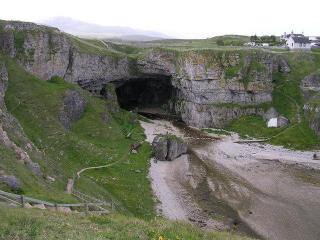
Smoo Cave is the single most-visited attraction in Durness Travel, and for good reason. It’s Britain’s largest limestone sea cave, with an entrance roughly 50 feet high and 130 feet wide. A flat, easy path leads down from near the youth hostel into a steep inlet where the cave mouth opens up like the entrance to a cathedral.
The free part of the visit takes you into the huge outer chamber, where an 80-foot waterfall plunges through the cave roof and is visible right from the entrance. If you want to go further, a paid boat trip takes you in an inflatable dinghy into the inner lake chamber, with hard hats provided for the experience. Pricing has hovered around the £15–16 mark per adult in recent seasons, though it’s worth confirming on the day, and some operators only accept cash, so don’t rely on a card here.
Quick Facts: Smoo Cave
| Detail | Information |
|---|---|
| Cost (outer chamber) | Free |
| Cost (boat trip) | Approx. £15–16 per adult, cash often required |
| Time needed | 30–60 minutes (outer chamber); add 30 minutes for the boat |
| Accessibility | Outer chamber is step-free via a paved path; boat trip involves a short scramble |
| Best for | All ages, photographers, families |
Photography tip: Visit on a brighter day. The cave stream and waterfall are at their most dramatic after rain, particularly in spring and early summer. Bring a lens cloth — spray from the waterfall drifts further than you’d expect.
2. Balnakeil Beach
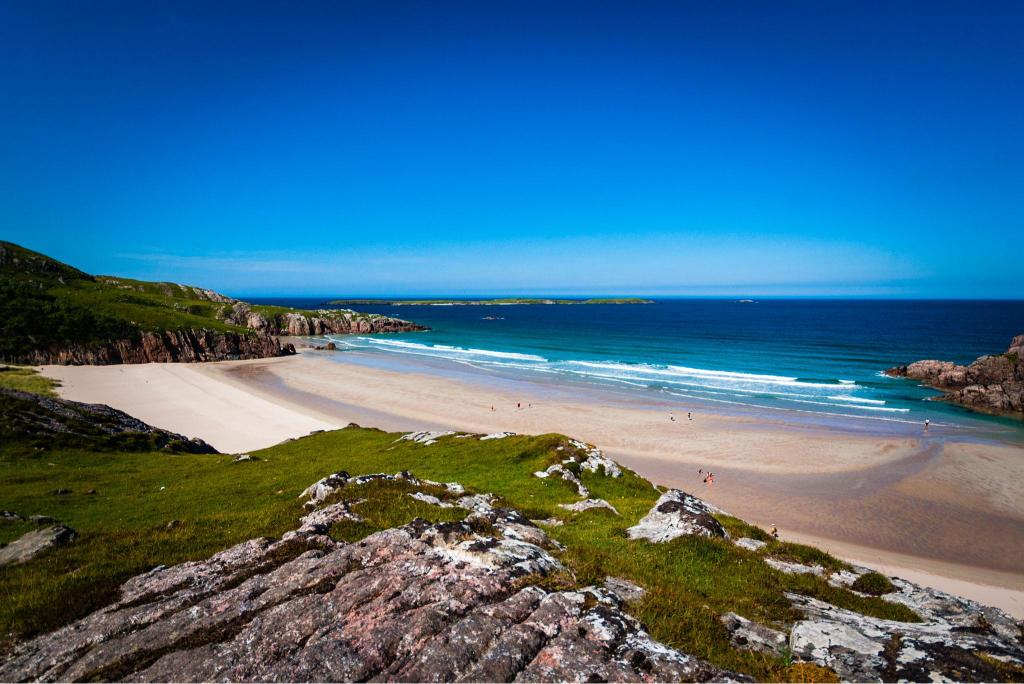
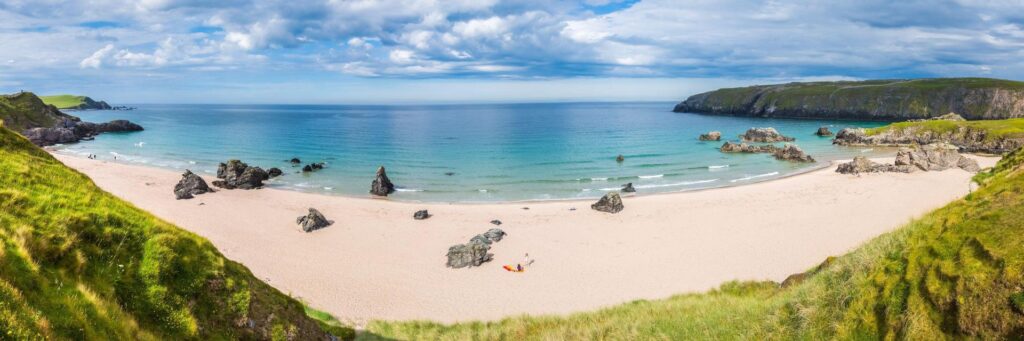
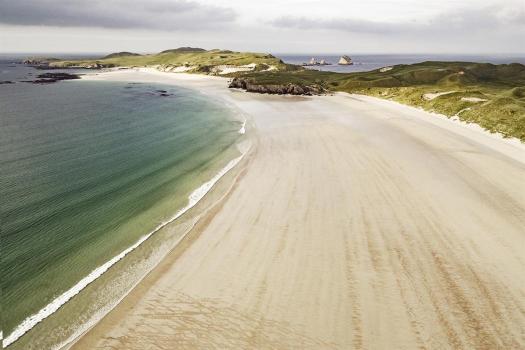
A short drive or 20-minute walk northwest of the village brings you to Balnakeil Beach, a wide curve of pale sand backed by dunes and machair. In good weather, the sea here turns a striking shade of turquoise that looks more Caribbean than Scottish Highlands.
It’s a proper walking beach — long, mostly flat, and rarely crowded even in peak season, since most visitors stop at the craft village and never make it the extra few hundred metres to the sand. A ruined 17th-century church sits at the edge of Balnakeil hamlet, with a gravestone in its south wall carved with a skull and crossbones marking the burial site of a notorious local highwayman. It’s an atmospheric spot worth ten minutes even if graveyards aren’t usually your thing.
Family-friendly note: The sand is firm enough for buggies near the dunes, and the gentle slope into the water makes it one of the safer paddling beaches in the area, though the North Atlantic is never warm.
3. Balnakeil Craft Village
A few minutes from the beach, the Balnakeil Craft Village is one of the more unusual stops on the entire NC500. It started life in the 1950s as an early-warning radar station built to detect a nuclear attack, but was never used for that purpose, and was later repurposed into the artists’ community visitors see today. Durness Travel has built up a genuine community of contemporary artists and craft makers over the decades since.
Inside the old prefab huts, you’ll find weavings, pottery, paintings, leatherwork, and woodwork for sale, alongside, in recent years, items made from driftwood, shells, and sea glass. Most studios are independently run, so opening hours vary, but the village is generally liveliest between April and October.
Don’t miss Cocoa Mountain. This small chocolate café inside the craft village has built a outsized reputation along the entire route. Visitors regularly rate the hot chocolate here among the best they’ve had anywhere, describing it as thick, rich, and genuinely indulgent — a perfect reward after a windy beach walk. They also offer chocolate tasting flights alongside drinks. Grab an outdoor table if the weather allows; the views over the craft village rooftops toward the dunes are part of the experience.
Insider tip: Email ahead if you want to visit Lotte Glob’s sculpture croft nearby — it’s a working studio by Loch Eriboll, generally open by appointment only, around a 50-mile round trip from Durness Travel. Worth it for ceramics fans, but plan your day around it.
4. Durness Travel Golf Course
Set right by Balnakeil Beach, this nine-hole course is the most northerly golf course on the British mainland, and it has genuine novelty value even if you’ve never picked up a club. The famous ninth hole requires players to drive directly over an inlet of the Atlantic Ocean — there’s no shot quite like it anywhere else in Britain.
It’s a relaxed, walkable course with sea views on almost every hole. Club hire is usually available for visitors who didn’t pack their own. Allow around two hours for nine holes at a leisurely pace, longer if you stop to photograph every shot (you will).
5. Cape Wrath and Cape Wrath Lighthouse
For many travellers, Cape Wrath is the actual reason to visit Durness Travel. It marks the most north-westerly point of mainland Britain, and the journey there is half the adventure. You first catch a small ferry across the Kyle of Durness Travel, then transfer to a minibus that bumps along a rough, unpaved track to the lighthouse at the cape itself.
The entire excursion typically takes at least 3.5 hours round trip, and independent access is genuinely difficult, so booking the ferry-and-minibus tour is the practical option for almost everyone. Weather can cancel the ferry entirely, in which case a fallback day exploring Smoo Cave and the village is the sensible plan B.
At the lighthouse itself, there’s a tiny café — arguably one of the most remote cafés anywhere in the country — and sweeping clifftop views with nothing but open ocean between you and Canada.
Solo traveller note: The minibus tour is well suited to solo travellers since you don’t need your own vehicle once you’ve reached Durness Travel; just show up at the Keoldale ferry point in good time.
6. Golden Eagle Zipline at Ceannabeinne Beach
If your idea of a good time involves flying across a beach at high speed, this is unique to the area. Golden Eagle Zipline is the most northerly zipline in the UK, carrying riders over one of Scotland’s most photogenic beaches at speeds up to 45mph.
It’s a small, weather-dependent operation. Because the location is exposed to changeable coastal weather, the zipline can’t be pre-booked — you check the operator’s Facebook page on the day to see if it’s running. Payment is informal too: you simply park opposite the site, walk up the coastal path, and pay your guide directly by bank transfer, with the experience costing around £19 per person.
Couples tip: This is a great half-hour add-on for an active couple’s day, paired with a coastal walk afterward to take in the same view at a slower pace.
7. Faraid Head
North of Balnakeil, the Faraid Head peninsula offers one of the best coastal walks in the area. It’s known for sweeping sandy beaches and dunes, with strong views toward Cape Wrath and seabirds nesting on the cliffs, plus grey seals at the right time of year. The official Faraid Head route covers around 4km, beginning at the unspoiled Balnakeil end of the peninsula.
May to July is peak season for cliff-nesting seabirds here, including puffins — pack binoculars if birdwatching is part of the appeal.
8. Brown Trout Fishing on the Durness Travel Lochs
A quieter pursuit, but a genuine local specialty. The four limestone lochs around Durness Travel vary considerably in character and the size of trout they hold, and the gin-clear limestone water makes for a challenging but rewarding angling experience. Permits are typically arranged locally; ask at the visitor centre or your accommodation for the current contact.
9. Sango Sands and the Village Walks
Right in the village, Sango Sands is the most convenient beach for anyone short on time, and the clifftop above it doubles as one of the best sunset spots in Durness Travel. The adjoining Sango Sands Oasis campsite and pub make this a natural base for the evening even if you’re not staying overnight there.
Durness Travel also has a network of eight signed local paths, ranging from short strolls to half-day routes:
- Route 1 (Bealach/Ceannabeinne): A gravelled hill track, often muddy, leading to a viewpoint over Durness Travel and Balnakeil to the west and Loch Eriboll to the east.
- Route 2 (Bhlar Duibhe): A 6km circular gravel track used by local crofters and mountain bikers.
- Route 3 (Caladail): A short 2km trail from the village square out to Loch Caladail.
- Route 4 (Aodann/Edens): A 4km beach and cliff walk leading toward Balnakeil beach and its ruined church.
- Route 5 (Faraid Head): The coastal walk described above, roughly 4km from Balnakeil.
10. Day Trip to Handa Island (Puffins)
Slightly further afield but well worth the detour for wildlife lovers. A small ferry runs to Handa Island from Tarbet near Scourie, about 45 minutes south of Durness Travel, and the island is home to around 100,000 seabirds, including puffins, kittiwakes, and eagles soaring over the sea stacks. A circular boardwalk path covers the island’s 4-mile perimeter and takes around two hours to walk, longer with regular stops for photos. Entry costs around £15 per adult.
May through July is the reliable window for puffins, after which most head back out to sea for the rest of the year.
Hidden Gems
Beyond the well-trodden top 10, a few lesser-known spots reward visitors with extra time:
- Loch Eriboll detour: East of Durness Travel, Choraidh Farm Park sits halfway around Loch Eriboll, with a tea room, more than 40 animal breeds, and a small museum on crofting life over the past 150 years.
- Dun Dornaigil Broch: An ancient stone tower whose age has sometimes been confirmed by Roman artefacts found inside, evidence of contact even this far north despite the Romans never conquering Scotland.
- Rispond Beach: A small, quiet cove east of the village, less visited than Sango Sands or Balnakeil but just as photogenic.
- John Lennon Memorial Garden: A peaceful, small-scale tribute that takes only a few minutes to visit but adds context to Durness’s Travel surprising cultural footprint.
Best Beaches and Coastal Walks
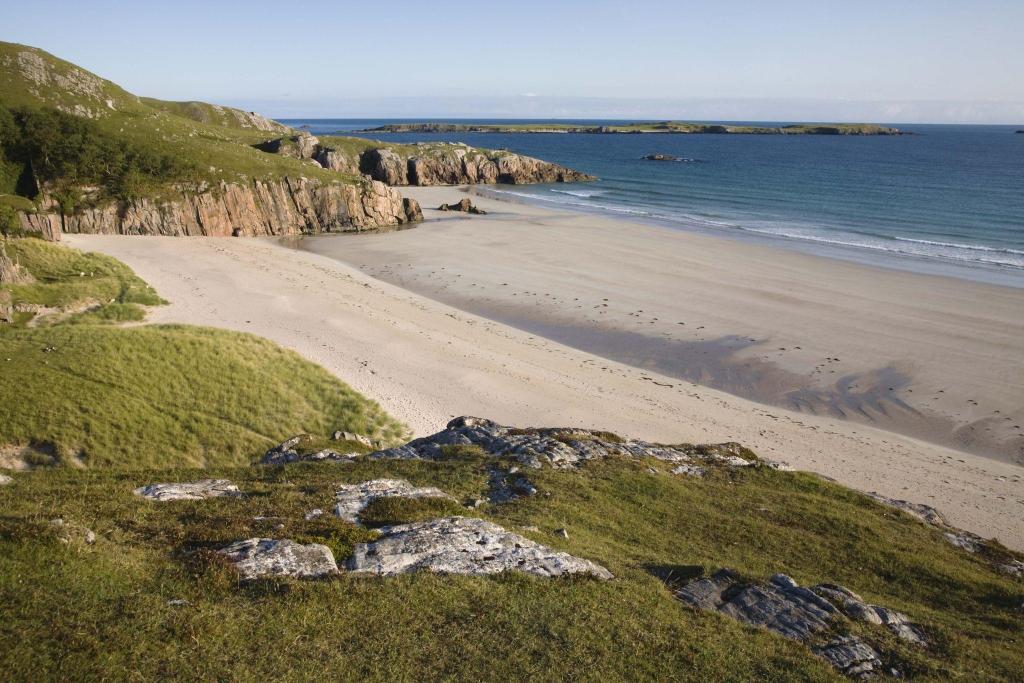
Durness’s Travel beaches are genuinely comparable to anywhere in Britain for colour and scenery, just considerably colder for swimming.
| Beach | Distance from village | Best for |
|---|---|---|
| Sango Sands | In the village | Sunsets, quick visits, camping |
| Balnakeil Beach | 1.5 miles | Long walks, photography, golf course views |
| Ceannabeinne Beach | 4 miles east | Zipline, dramatic cliffs |
| Rispond Beach | 5 miles east | Quiet, fewer visitors |
For coastal walking beyond the village paths listed above, the Faraid Head route and the Aodann/Edens trail to Balnakeil are the two most rewarding half-day options without a major time commitment.
Local Food and Famous Specialties
Eating out in Durness Travel is simple rather than extensive — this is a village of a few hundred people, not a culinary capital — but what’s here is good and reflects the surrounding land and sea.
Seafood is the obvious local strength, given Durness’s Travel position on the coast. The restaurant at the Smoo Cave Hotel is a popular choice for an evening seafood supper, and The Whale Tale, a small, cosy restaurant by the harbour on a hillside, is known for tasty, varied food worth the slight detour.
For something simpler, the pub nearest Balnakeil Beach serves straightforward chops and beer, ideal after a sandy, windswept walk. And no visit is complete without Cocoa Mountain at the craft village — the hot chocolate here is consistently rated among the best many visitors have ever tasted.
Practical note: The Spar shop in the village centre closes at 6pm, and the next shop is roughly 40 miles away in either direction, so stock up on essentials earlier in the day rather than assuming you can pop out later.
Best Time to Visit
Durness Travel rewards careful timing more than most destinations, mainly because of two competing factors: daylight and midges.
May to early June is widely considered the sweet spot. Daylight stretches past 18 hours by mid-June, the weather is about as stable as the Highlands get, and the midges haven’t really started yet.
June brings the longest daylight hours of the year, with sunsets around 10:30pm, every attraction and accommodation fully open, and puffins nesting on the north coast cliffs — but it’s also peak midge season, so repellent is non-negotiable.
July and August are the busiest and warmest months, fine if you’ve booked well ahead, but without the quiet solitude the area is otherwise known for, and midges are at their worst during this window.
September is a strong alternative for travellers who’d rather skip the crowds. Midges largely disappear by mid-September, crowds thin noticeably, and the light takes on a softer, golden quality that photographers tend to love.
Quick Facts: Midges
- Peak season: Most active in still air at dawn and dusk, especially near standing water and sheltered spots.
- Coastal stretches with any breeze are usually fine.
- Pack Smidge or a comparable repellent, and cover up in the evenings during summer.
Winter and early spring bring harsher driving conditions and shorter days, but also empty roads and a stark, dramatic beauty that summer crowds never see. If you’re not driving on single-track roads in snow or heavy rain before, this isn’t the season to start.
Where to Stay
Accommodation in and around Durness Travel ranges from basic campsites to comfortable guesthouses, but options are limited compared to larger towns, so booking ahead matters more here than almost anywhere else on the NC500.
- Sango Sands Oasis: Cliff-top camping pitches directly above Sango Bay, attached to a pub, with the main field offering the best sea views but more wind exposure. Arrive before 2pm in July and August to avoid being placed in the overflow field.
- Durness Travel Caravan & Camping Club site: Located about a mile east of the village, offering a more sheltered alternative with electric hook-ups at every pitch.
- Guesthouses and B&Bs: Several small, family-run guesthouses operate in and around the village, generally booked out months ahead for summer.
- Cape Wrath Lodge: A well-regarded option for travellers wanting a more comfortable, lodge-style stay near the zipline and beaches.
Budget tip: Book accommodation months in advance if travelling between April and September — even in April, many places fill up, and summer availability disappears even faster.
How to Get There
Durness’s Travel remoteness is part of its appeal, but it does require planning.
By car: This is overwhelmingly the most practical option. The drive from Inverness takes at least 2.5 hours, and Durness Travel sits on the A838, roughly 2.5 hours from Inverness via the A9 and A836. If you’re driving the full North Coast 500, the stretch around Durness Travel is one of the slowest on the route due to winding single-track roads, so build in extra time rather than estimating by distance alone.
Fuel planning: Fuel and EV charging points thin out fast once you leave the larger towns, particularly in the stretch between Durness Travel and Ullapool, so top up whenever you pass a station rather than waiting until you’re low.
By public transport: It’s possible, but requires patience. The nearest train station is Lairg, on the line between Thurso and Inverness, and the Durness Travel Bus Company connects with these train services. The Far North bus number 803 runs from Thurso to Durness Travel on Saturdays only. There’s no direct train to Durness Travel itself — it’s effectively a car-only destination for most practical purposes, though dedicated slow-travel enthusiasts do make it work with careful planning.
Mobile signal warning: Mobile coverage drops significantly in remote stretches of the Highlands, including the area between Ullapool and Durness Travel, and signal around Durness Travel itself is unreliable. Download offline maps before you set out.
Sample 2-Day Itinerary
Day 1: Caves, Beaches, and Crafts
- Morning: Arrive in Durness Travel, settle into your accommodation, and head straight to Smoo Cave while the morning light is good for photography. Allow an hour, longer if you take the boat trip.
- Midday: Walk or drive to Balnakeil, browse the Balnakeil Craft Village, and stop at Cocoa Mountain for lunch and that famous hot chocolate.
- Afternoon: Walk Balnakeil Beach, then visit the ruined church and graveyard at its edge.
- Evening: Dinner at the Smoo Cave Hotel or The Whale Tale, followed by a sunset walk on the clifftop above Sango Sands.
Day 2: Cape Wrath and the Coast
- Morning: Head to Keoldale for the Cape Wrath ferry and minibus tour. Allow at least 3.5 hours for the full round trip, weather permitting.
- Afternoon: Back in Durness Travel, grab a late lunch, then drive out to Ceannabeinne Beach for the Golden Eagle Zipline if it’s running, or simply walk the beach if conditions aren’t right.
- Late afternoon: Walk part of the Faraid Head route for coastal views and a chance at spotting seabirds.
- Evening: Pack and rest, or extend your stay with a day trip to Handa Island the following morning if puffins are a priority.
Travel Tips
- Pack midge repellent between May and September; Smidge is the most commonly recommended brand among regular visitors.
- Carry cash. Several local attractions, including the Smoo Cave boat trip and the zipline, operate on a cash or direct bank transfer basis.
- Fill up on fuel whenever you see a station — gaps between them in this region can be significant.
- Download offline maps before arriving, since mobile signal is unreliable around the village and along the approach roads.
- Book accommodation early, ideally months ahead for a summer visit.
- Bring layers regardless of season. Coastal weather here changes quickly, and wind off the Atlantic makes it feel colder than the forecast temperature suggests.
- Respect single-track road etiquette. Pull into passing places to let oncoming traffic through, and never leave less than one clear passing place between you and the vehicle in front when driving in convoy.
Nearby Places to Visit
Durness Travel works well as a base for exploring the wider far northwest of Scotland:
- Cape Wrath: Covered above, accessible by ferry and minibus from Keoldale.
- Handa Island: A short drive south to Tarbet, then a small ferry crossing for one of Scotland’s best puffin colonies.
- Loch Eriboll: A scenic loop east of Durness Travel, with Choraidh Farm Park and Dun Dornaigil Broch along the way.
- Assynt and Lochinver: Further south, known for dramatic mountains like Suilven and Stac Pollaidh, plus the famous Lochinver pies.
- Ullapool: A good overnight stop if continuing the NC500 south, with strong seafood options of its own.
Frequently Asked Questions
Is Durness Travel worth visiting? Yes. Durness Travel combines some of Scotland’s best beaches, Britain’s largest limestone sea cave, and access to Cape Wrath, the most north-westerly point on the mainland, all within a small, walkable village.
How many days do you need in Durness Travel? Two full days lets you cover Smoo Cave, the craft village, the beaches, and a Cape Wrath excursion without rushing. Add a third day if you want to fit in Handa Island or the Faraid Head walk properly.
Can you visit Durness Travel without a car? It’s difficult but not impossible. The nearest train station is Lairg, with bus connections onward, and a limited Far North bus service runs to Durness Travel on Saturdays. A car is strongly recommended for exploring the surrounding area.
What is Durness Travel famous for? Durness Travel is best known for Smoo Cave, its turquoise-tinted beaches, its connection to Cape Wrath, and being one of the most scenic and remote stops on the North Coast 500 route.
Are there midges in Durness Travel? Yes, particularly from May through September, with peak activity at dawn and dusk in still, sheltered conditions. Coastal breezes help, but repellent is recommended for any summer visit.
How do you get to Cape Wrath from Durness Travel? You take a small passenger ferry across the Kyle of Durness Travel Travel from Keoldale, then transfer to a minibus for the rough track out to the lighthouse. The full round trip takes at least 3.5 hours.
Is Smoo Cave free to visit? The large outer chamber is free to explore on foot via an easy path. Going further into the cave’s inner lake chamber requires a paid boat trip, typically around £15 per adult.
What is the best time of year to see puffins near Durness Travel? Puffins generally nest from May through July on cliffs around the north coast, including Faraid Head and nearby Handa Island, before heading back out to open water for the rest of the year.
Where can I eat in Durness travel? Options include the Smoo Cave Hotel restaurant for seafood, The Whale Tale near the harbour, a pub by Balnakeil Beach, and Cocoa Mountain at the craft village for hot chocolate and light bites.
Is Durness Travel suitable for families? Yes. Smoo Cave’s outer chamber is step-free, the beaches are generally safe for supervised paddling, and the craft village offers an easy, low-key activity that works for most ages.
Conclusion
Durness Travel rewards anyone willing to make the long drive north. Few places in Britain pack in a sea cave with an interior waterfall, beaches that rival the Caribbean for colour, a former nuclear radar station turned artists’ village, and the country’s most north-westerly point, all within a few miles of one small village. This Durness travel guide should give you everything needed to plan a trip that goes well beyond a quick photo stop on the North Coast 500 — pack the midge repellent, book ahead, and give yourself at least two days to actually enjoy it.