
Table of Contents
Exmoor National Park
Introduction
Exmoor National Park sits on the border of Somerset and Devon, where high heather moorland drops suddenly into some of the tallest sea cliffs in England. It is one of the smaller national parks in the UK, but it packs in wild ponies, red deer, ancient woodland, working fishing harbours, and a dramatic coastline.
What makes Exmoor special is the variety of landscapes found within a relatively compact area. Visitors can explore open moorland, coastal cliffs, woodland valleys, historic villages, and quiet walking routes in the same trip. This guide brings together practical information about the best places to visit, things to do, food, accommodation, the best time to go, and how to plan a two-day Exmoor trip.
The information in this guide is based on destination research and visitor information, so travelers can use it to plan their own Exmoor adventure.
Image: Exmoor ponies grazing on open moorland at dawn ALT: Wild Exmoor ponies grazing on heather moorland in Exmoor National Park at sunrise
Best Things to See and Do in Exmoor National Park
Exmoor National Park rewards slow travel. It has no single “must-see” landmark in the way the Lake District has Scafell Pike — instead, its appeal is spread across coastline, moor, woodland, and villages.
Watch wild ponies and red deer. Exmoor ponies are one of Britain’s oldest native breeds, and small herds still roam free across the moor, particularly around Winsford Hill and Dunkery Hill. Red deer are harder to spot but not rare; early morning or dusk near Horner Wood gives you the best chance.
Walk the coast path. The South West Coast Path runs through the entire northern edge of Exmoor National Park, tracing cliffs that rise over 300 metres above the Bristol Channel — among the highest sea cliffs in England.
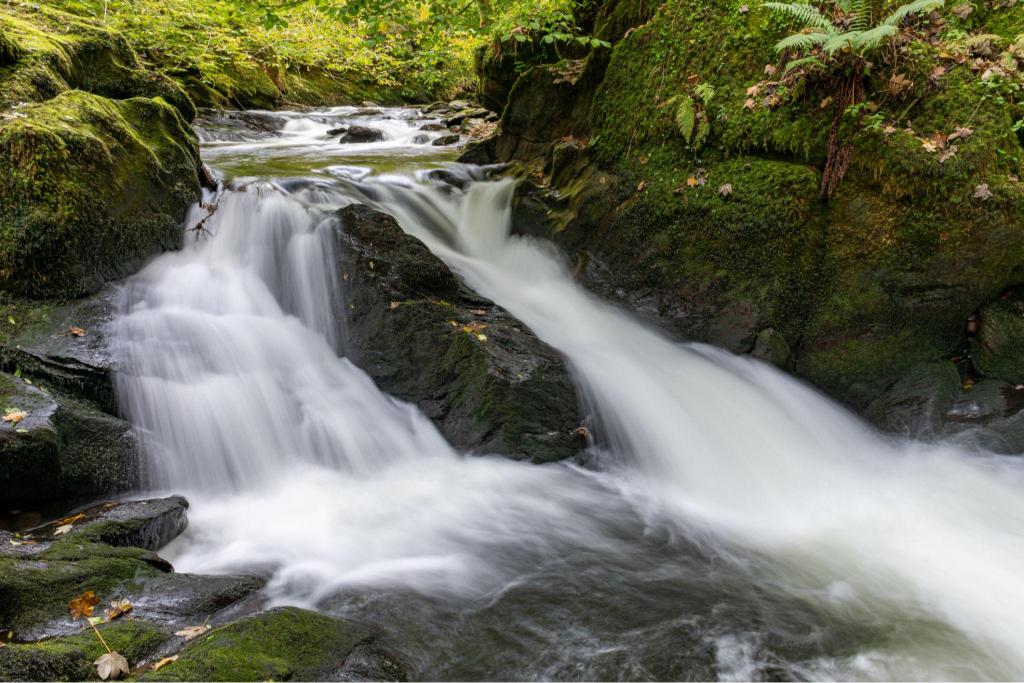
Explore Tarr Steps. This ancient clapper bridge, made from enormous flat stones laid across the River Barle, is one of the oldest and longest examples of its kind in Britain. Nobody knows exactly how old it is; estimates range from medieval to prehistoric.
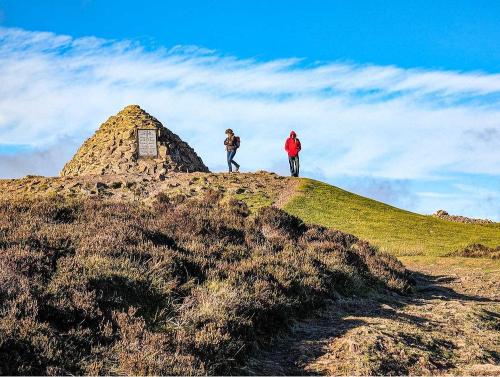
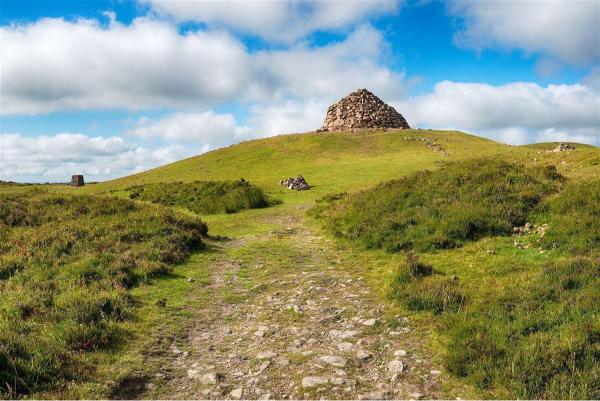
Visit Dunkery Beacon. At 519 metres, this is the highest point on Exmoor and in Somerset. On a clear day, you can see across the Bristol Channel to Wales.
Ride the West Somerset Railway. A heritage steam line that skirts the eastern edge of the park, connecting Minehead to Bishops Lydeard through some genuinely pretty countryside.
Image: Tarr Steps clapper bridge over the River Barle ALT: Ancient stone clapper bridge Tarr Steps crossing the River Barle in Exmoor National Park
Top Attractions
| Attraction | Best For | Estimated Time | Approximate Cost |
|---|---|---|---|
| Tarr Steps | Families, photographers | 1–2 hours | Free |
| Dunkery Beacon | Hikers, views | 2–3 hours (round trip) | Free |
| Valley of Rocks | Couples, casual walkers | 1 hour | Free |
| Watersmeet House | Families, tea stop | 1.5 hours | Free entry, National Trust café |
| Lynton and Lynmouth Cliff Railway | Families, accessibility | 30 minutes | Around £5 return |
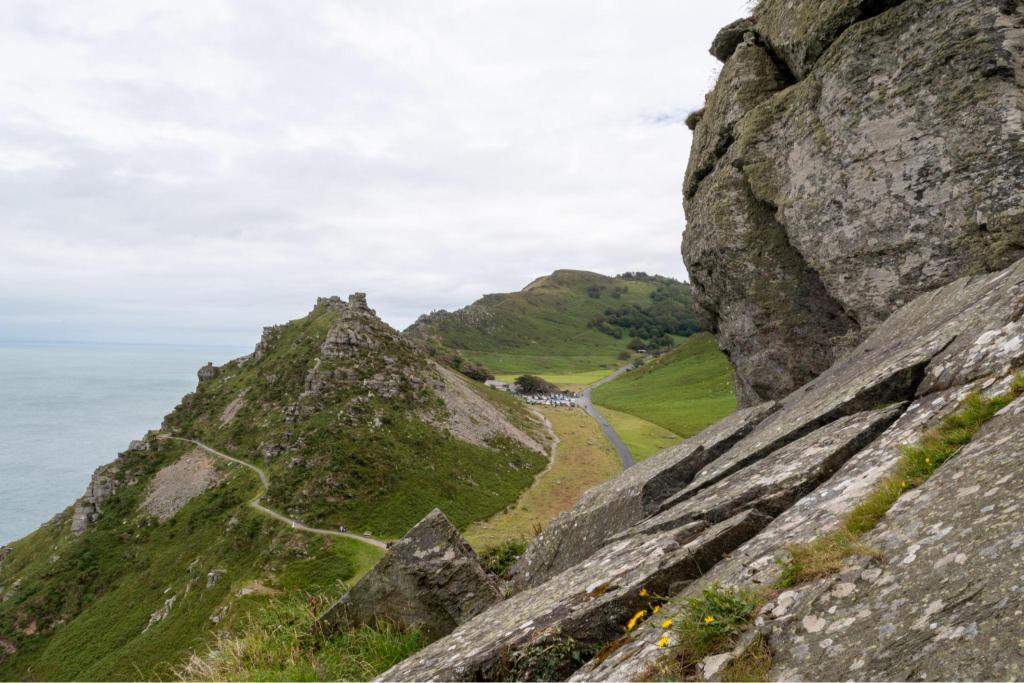
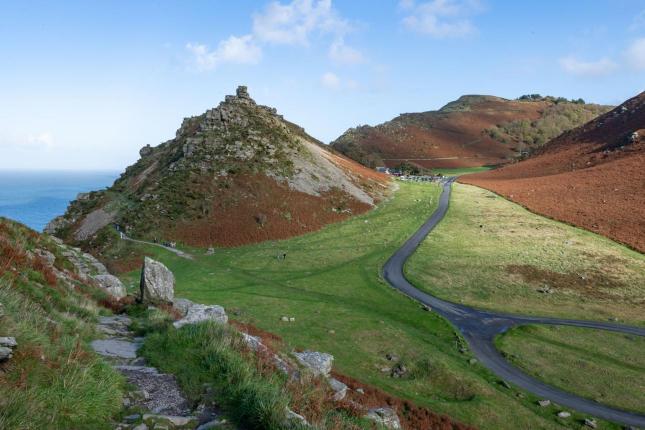
The Valley of Rocks, just west of Lynton, is one of the most photographed spots in Exmoor National Park. Jagged rock formations sit above the sea, and feral goats often wander the slopes — a strange, slightly otherworldly scene that feels far removed from typical English countryside.
Watersmeet, near Lynmouth, combines two rivers, a waterfall, and a National Trust tea garden housed in a Victorian fishing lodge. It’s an easy, mostly flat walk, which makes it one of the more accessible highlights in the park.
The Lynton and Lynmouth Cliff Railway is a Victorian water-powered funicular connecting the two towns, and it remains one of the only fully water-powered railways left in the world. It’s a genuinely unique piece of engineering, not just a tourist gimmick.
Hidden Gems
Most visitors to Exmoor National Park stick to Lynton, Lynmouth, and Dunster. A short detour gets you somewhere quieter.
- Horner Wood — one of the largest ancient oak woodlands in England, and a stronghold for red deer and rare lichens. Almost silent on weekday mornings.
- Culbone Church — often cited as the smallest complete parish church in England, reachable only on foot through woodland. No road access at all.
- Selworthy Green — a cluster of thatched, whitewashed cottages built as an estate model village in the 1820s, largely overlooked by day-trippers heading straight for Dunster.
- Robber’s Bridge — a quiet stone bridge on the road between Porlock and Oare, associated with local smuggling folklore and a good spot for a short, unhurried walk.
- Oare Church — the setting for the climax of R.D. Blackmore’s novel Lorna Doone, tucked into a valley that still feels remote today.
These spots rarely appear on the front page of generic travel roundups, but they’re where Exmoor National Park’s character actually lives — quiet, slightly wild, and largely unchanged for generations.
Image: Thatched cottages at Selworthy Green ALT: Whitewashed thatched cottages at Selworthy Green in Exmoor National Park
Best Beaches and Coastal Walks
The coastline of Exmoor National Park is rugged rather than sandy, but it’s some of the most dramatic in England.
Woody Bay is a wooded, pebbly cove reached via a steep path — quiet even in peak summer because of the walk required to reach it. Heddon’s Mouth, near Trentishoe, combines a wooded valley walk with a shingle beach at the river mouth, and is one of the more popular half-day walks in the park.
Porlock Weir offers a small, sheltered harbour rather than a beach, with rock pools and a working slipway. Combe Martin, just outside the park boundary, has the closest thing to a conventional sandy beach in the area, useful if you’re travelling with young children who want to build sandcastles rather than scramble over rocks.
For serious walkers, the stretch between Porlock and Lynmouth on the coast path is considered one of the toughest but most rewarding sections of the entire South West Coast Path, with repeated steep climbs rewarded by some of the best sea views in southern England.
Quick Fact: The highest cliff on the Exmoor coast, Great Hangman, stands at 318 metres — the tallest sea cliff in England.
Local Food and Famous Specialties
Food in Exmoor National Park leans heavily on what the land and coast actually produce, rather than imported trends.
- Exmoor lamb and venison — grazed on the moor itself, widely available in pub restaurants across Dulverton, Dunster, and Porlock.
- Lynmouth and Porlock seafood — crab and lobster landed daily, often sold straight from harbourside huts.
- Clotted cream teas — the West Country cream tea (scones, jam, clotted cream) is taken seriously here, and several tearooms in Dunster and Porlock have served it for generations.
- Exmoor ale — a handful of small breweries supply the park’s pubs, often brewed within a few miles of where it’s poured.
For a proper sit-down meal, the harbourside pubs in Porlock Weir and Lynmouth tend to offer the best combination of local sourcing and sea views. Dulverton, the unofficial “capital” of Exmoor National Park, has a growing reputation for independent cafés and delis worth building a lunch stop around.
Best Time to Visit
Spring (April–May): Newborn lambs, bluebells in Horner Wood, and noticeably fewer visitors than summer. Weather is unpredictable but the moor is at its greenest.
Summer (June–August): Peak season. Long daylight hours suit coastal walking, but Lynton, Lynmouth, and Dunster get busy, and parking fills early at popular trailheads.
Autumn (September–October): Widely considered the best time to visit Exmoor National Park by regular visitors. The red deer rut takes place from late September into October, with stags roaring across the moor at dawn — a genuinely memorable experience if you’re quiet and keep a respectful distance.
Winter (November–March): Quiet, atmospheric, and often misty. Many smaller attractions reduce hours or close, but the moor in low winter light is dramatic, and some walking routes essentially have you to yourself.
Tip Box: If your main goal is wildlife photography, plan around the autumn rut and book accommodation in Dulverton or Exford early — rooms sell out weeks ahead.
Where to Stay
Exmoor National Park has no large towns, so accommodation is spread across small villages, each offering a different base.
Dunster — best for first-time visitors, with a working watermill, castle, and easy access to the eastern moor. Good range of B&Bs and pubs with rooms.
Lynton and Lynmouth — best for coastal walking, with dramatic scenery on the doorstep and the cliff railway connecting the two towns.
Dulverton — best for a quieter, village-life base with good independent food, close to Tarr Steps and the southern moor.
Porlock and Porlock Weir — best for a mix of coast and moor, with easy access to Dunkery Beacon and the Valley of Rocks.
Exford — best for horse riders and those wanting deep moorland immersion, with limited but characterful accommodation.
For families, self-catering cottages around Dunster and Porlock tend to offer the most flexibility. For couples or solo travellers wanting atmosphere, a small inn in Lynton or Dulverton is hard to beat.
How to Get There
By car: Exmoor National Park is reachable via the A39 (connecting Bridgwater to Barnstaple) or the A396 through the Exe Valley. The nearest motorway access is the M5, roughly 30–40 minutes from the park’s eastern edge.
By train: The nearest mainline stations are Tiverton Parkway and Barnstaple, both roughly 40–60 minutes from the park by car or bus. The heritage West Somerset Railway connects Minehead, on the park’s edge, to Bishops Lydeard, where it meets national rail services.
By bus: Limited local bus routes connect Minehead, Porlock, Lynton, and Dulverton, though services are infrequent, especially outside summer. A car is strongly recommended for exploring beyond the main villages.
Parking: Most villages and trailheads have paid car parks. Popular spots like Tarr Steps and Dunkery Beacon fill quickly on summer weekends and bank holidays, so arriving before 10am is worth it.
Sample 2-Day Itinerary
Day 1 — Coast and Villages
- Morning: Start in Lynton, take the Cliff Railway down to Lynmouth, and walk along the harbour.
- Late morning: Walk to Watersmeet for a riverside tea stop (around 1.5 hours round trip).
- Afternoon: Drive to the Valley of Rocks for a short coastal walk and goat-spotting.
- Evening: Dinner in Porlock Weir, ideally seafood, watching the tide come in over the harbour.
Day 2 — Moorland and Rivers
- Morning: Drive to Dunkery Beacon for a moorland walk and views over the Bristol Channel (2–3 hours).
- Midday: Head south to Tarr Steps for lunch and a walk along the River Barle.
- Afternoon: Explore Dulverton’s independent shops and cafés.
- Evening: Return via Dunster for a look at Dunster Castle and a final dinner in the village.
This route covers coast, moor, river, and village in a realistic 48 hours without excessive driving between stops.
Travel Tips
- Mobile signal is patchy across much of the moor — download offline maps before setting out on longer walks.
- Weather changes quickly. Even in summer, pack a waterproof layer; moorland weather shifts faster than the forecast suggests.
- Livestock roams freely. Ponies and sheep often wander onto roads — drive slowly, especially at dawn and dusk.
- Book popular pubs ahead in summer, particularly in Porlock Weir and Lynmouth, where seating is limited.
- Accessibility: Watersmeet, Dunster village centre, and the Lynton and Lynmouth Cliff Railway are among the more accessible options for visitors with limited mobility. Many moorland paths, however, are uneven and unsuitable for wheelchairs or pushchairs.
- Solo travellers will find Dulverton and Exford relaxed, low-pressure bases with easy pub culture.
- Couples often prefer Lynton or Porlock Weir for the scenery-to-quiet-dinner ratio.
- Photography tip: early morning light on Dunkery Beacon and the coast near Countisbury produces the most dramatic results, especially in autumn mist.
Nearby Places to Visit
- Dartmoor National Park — around 1.5–2 hours south, offering a similar but distinct moorland landscape with granite tors.
- Bath — roughly 1.5 hours east, useful for combining a countryside trip with a city break.
- Clovelly, Devon — a privately owned, car-free historic fishing village around an hour southwest, worth combining with a coastal detour.
- Glastonbury — about an hour east, for those interested in history and folklore alongside natural scenery.
Frequently Asked Questions
Is Exmoor National Park worth visiting? Yes. Exmoor National Park combines dramatic coastal cliffs, open moorland, ancient woodland, and traditional villages within a compact area, making it well suited to both short weekend trips and longer countryside holidays.
How many days do you need in Exmoor National Park? Two to three days lets you cover the coast, moor, and at least one village properly. A week allows time for slower exploration, including Horner Wood and quieter southern moor villages.
Where is Exmoor National Park located? Exmoor National Park spans the border of west Somerset and north Devon in southwest England, bordering the Bristol Channel to the north.
What is Exmoor National Park famous for? It’s known for wild Exmoor ponies, red deer, some of the highest sea cliffs in England, ancient sites like Tarr Steps, and its associations with the novel Lorna Doone.
Can you see wild ponies in Exmoor National Park? Yes, herds roam freely across areas like Winsford Hill and Dunkery Hill. They are wild animals and should not be fed or approached closely.
Is Exmoor National Park good for families? Yes. Sites like Watersmeet, Dunster, and the Lynton and Lynmouth Cliff Railway offer relatively easy, family-friendly access to the park’s highlights.
What is the best walk in Exmoor National Park? Many regular visitors rate the coastal stretch between Porlock and Lynmouth, or the shorter Tarr Steps to Withypool river walk, among the best routes in the park.
Do you need a car to visit Exmoor National Park? A car is strongly recommended, since public transport within the park is limited and many highlights are spread across rural villages with infrequent bus connections.
When is the best time to see red deer in Exmoor National Park? Early morning and dusk offer the best chances year-round, with the autumn rut in late September and October being the most dramatic and reliable period.
Is Exmoor National Park free to enter? Yes, there is no entry fee for the national park itself, though individual attractions, car parks, and some National Trust sites may charge.
Conclusion
Exmoor National Park isn’t the biggest or best-known of England’s national parks, but that’s part of its appeal. It rewards visitors who slow down — who take the extra half hour to walk to Culbone Church, or wait quietly at dawn for red deer near Horner Wood, rather than rushing between checklist attractions.
Whether you come for the coastal walks between Porlock and Lynmouth, the ancient stones at Tarr Steps, or simply a quiet weekend in a village like Dulverton or Exford, Exmoor National Park offers a version of the English countryside that still feels genuinely wild. Plan around the seasons, book ahead in summer, and leave room in your itinerary to wander — that’s when this national park tends to reveal its best moments.