
Table of Contents
Introduction
There’s a stretch of England where the cliffs are older than memory itself. The Jurassic Coast runs for 95 miles between Orcombe Point near Exmouth in East Devon and Studland Bay in Dorset, and it packs more geological drama into that distance than almost anywhere else on Earth. This is the country’s only natural UNESCO World Heritage Site, recognised in 2001 for a run of rock that lays bare 185 million years of history in a single, walkable line.
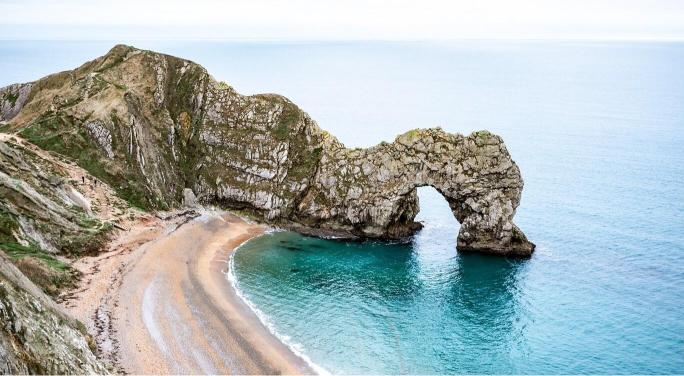
I first came here chasing a photograph of Durdle Door and ended up staying three extra days. That’s the thing about this coastline: the postcard shot is only the opener. Behind it are fossil beaches where Mary Anning once worked, fishing villages that still smell of the sea, and cliff paths that turn a short walk into an afternoon you don’t want to end.
This Jurassic Coast travel guide covers what to see, where to eat, when to go, and how to fit it all into a realistic itinerary, whether you have a weekend or a full week to spare.
Image: Durdle Door limestone arch at sunset ALT: Durdle Door natural limestone arch glowing at sunset on the Jurassic Coast.
Why Visit the Jurassic Coast
Most people come for the geology, whether they realise it or not. The cliffs here aren’t a single type of rock but three distinct chapters of Earth’s story stacked one after another: red Triassic desert sandstone around Exmouth and Sidmouth, Jurassic clays and limestones through the middle stretch, and pale Cretaceous chalk toward Swanage and Studland. Nowhere else can you walk through all three periods on foot in an afternoon.
Then there’s the wildlife of the past. This coastline has produced some of the most important fossil finds in palaeontology, from ichthyosaurs to a huge Pliosaur skull unearthed near Kimmeridge that made headlines when a BBC documentary followed its excavation. Fossil hunting here isn’t a novelty add-on; it’s part of the region’s identity, and Lyme Regis still trades on its connection to Mary Anning, one of the field’s most influential early collectors.
Beyond the science, this is simply a beautiful piece of English coast. Sweeping bays, chalk stacks, hidden coves, and old fishing harbours sit alongside genuinely excellent seafood and some of the best coastal walking in the country. Families come for fossil hunting and safe swimming beaches, couples come for clifftop walks and seafood dinners, and solo hikers come for long stretches of the South West Coast Path where you can walk for hours without seeing a road.
Quick Fact: The Jurassic Coast was awarded UNESCO World Heritage status in 2001 and remains England’s only entirely natural World Heritage Site.
Best Things to See and Do
There’s enough here to fill two weeks, but a handful of experiences define a Jurassic Coast trip. Here’s where to start.
Walk a Section of the South West Coast Path
The path runs the full length of the coast and beyond, but you don’t need to tackle it all. The stretch from Lulworth Cove to Durdle Door takes under an hour and delivers some of the best views on the entire route. For something longer, the walk between Lyme Regis and Charmouth, or further on toward Golden Cap, mixes fossil beaches with genuinely tough climbs and big payoff views. Wear proper footwear; the chalk and clay sections get slick after rain.
Go Fossil Hunting
Charmouth and Lyme Regis are the classic spots, and for good reason. Both beaches regularly turn up ammonites and belemnites after storms, and Charmouth’s Heritage Coast Centre runs guided walks led by local experts who know exactly where and how to look safely. The golden rule everywhere on this coast: only collect loose fossils from the beach itself, never dig into or hammer at the cliffs, and always check tide times before you go.
Visit a Fossil Museum
The Etches Collection in Kimmeridge houses a remarkable private collection assembled by Dr Steve Etches, including specimens tied to the Pliosaur skull discovery. Lyme Regis also has its own excellent Fossil Centre near the harbour, ideal for getting your bearings before heading out to hunt.
Take a Boat Trip
Seeing the cliffs from the water changes the whole experience. Several operators run trips out of Lyme Regis, Weymouth, and Exmouth, and boat tours are often the easiest way to reach sea caves and stacks that aren’t accessible on foot.
Image: Fossil hunters searching Charmouth beach ALT: Visitors searching for fossils among the pebbles at Charmouth beach.
Top Attractions
A short list of the landmarks that anchor most itineraries:
- Durdle Door – a limestone sea arch and easily the most photographed spot on the coast. Arrive early to beat the crowds and the car park queue.
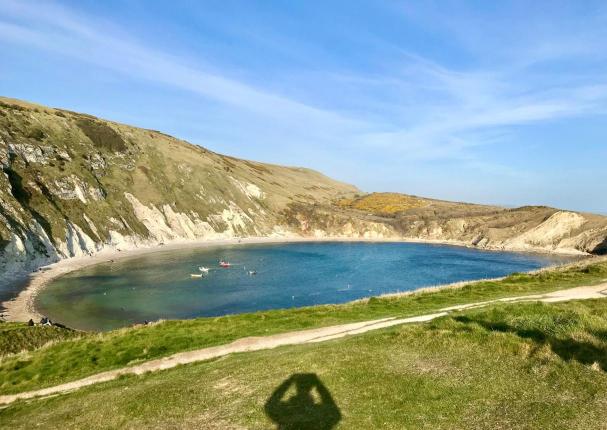
- Lulworth Cove – a near-perfect circular bay a short walk from Durdle Door, with cafés and an excellent visitor centre explaining the local geology.
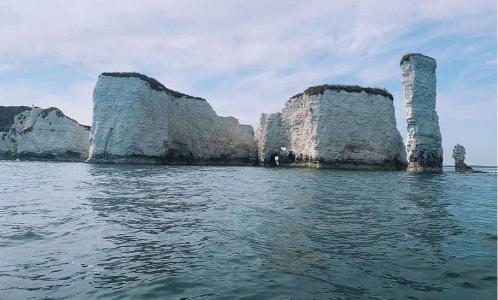
- Old Harry Rocks – chalk stacks off the coast near Swanage, best reached via a scenic clifftop walk from Studland.
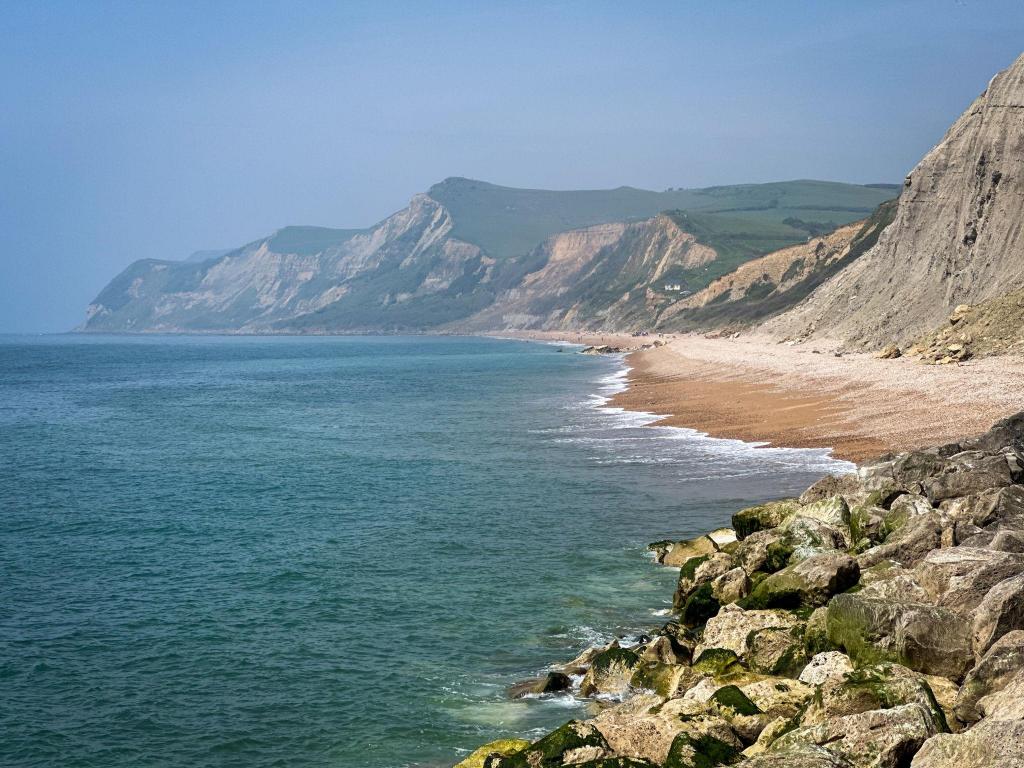
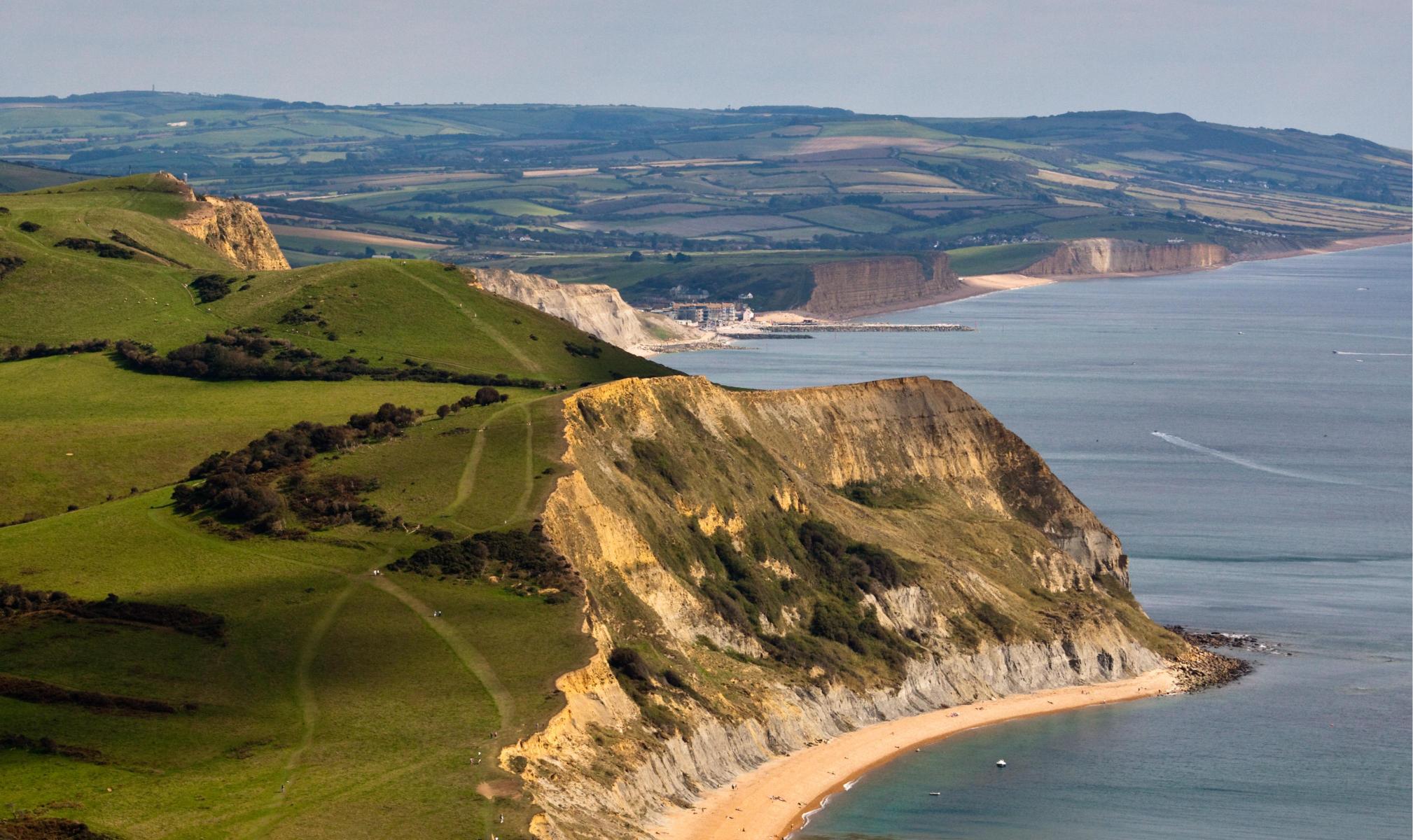
- Golden Cap – the highest point on England’s south coast, with panoramic views across the Channel on a clear day.
- Chesil Beach – an 18-mile shingle barrier beach running toward Portland, unusual enough geologically to be worth a stop in its own right.
| Attraction | Best For | Approx. Visit Time | Access |
|---|---|---|---|
| Durdle Door | Photography, swimming | 1–2 hours | Walk from Lulworth car park (steep steps) |
| Lulworth Cove | Families, easy walks | 1–2 hours | On-site parking, flat access |
| Old Harry Rocks | Coastal walking | 2–3 hours | Walk from Studland |
| Golden Cap | Hikers, views | 3–4 hours (round trip) | Walk from Seatown or Langdon Hill |
| Chesil Beach | Geology, quiet walks | 1 hour | Roadside parking near Abbotsbury |
Hidden Gems
Skip the queues and try these instead.
Man o’ War Beach, tucked beside Durdle Door but often overlooked because visitors stop at the more famous arch. It’s a genuinely peaceful cove for swimming when Durdle Door itself is packed.
Church Ope Cove on Portland is a quiet shingle beach below ruined Rufus Castle, with almost none of the footfall you’ll find elsewhere.
Seatown, a tiny hamlet near Golden Cap with one pub, one beach, and none of the coach-trip crowds that descend on Lyme Regis in summer.
Ringstead Bay, between Weymouth and Lulworth, a low-key pebble and sand beach popular with locals rather than tourists, with good rockpooling at low tide.
Best Beaches and Coastal Walks
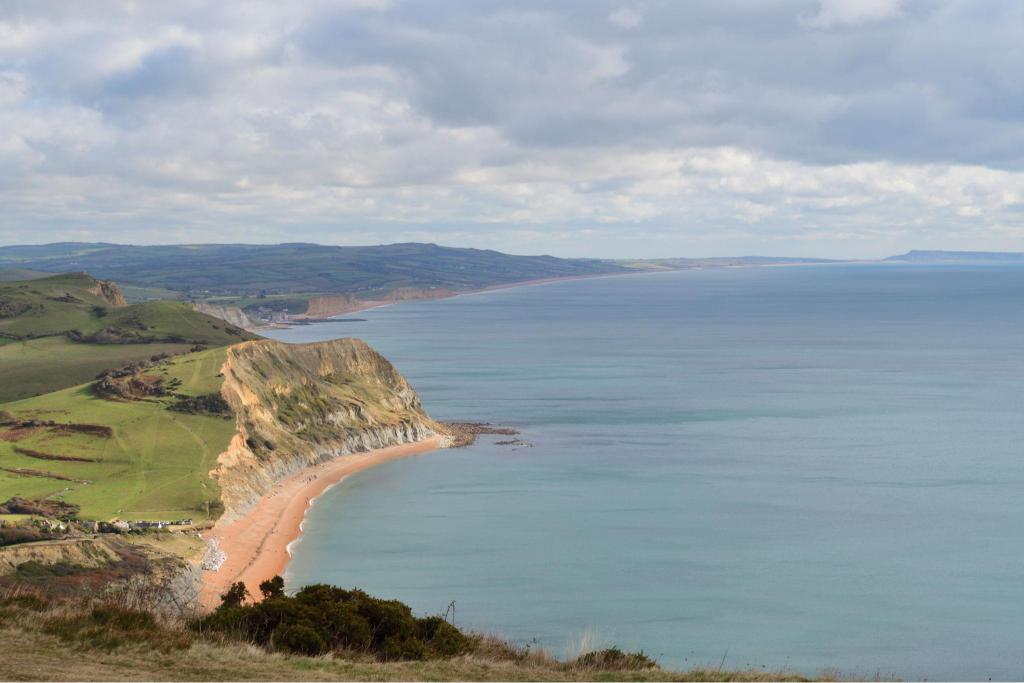
For swimming, Lulworth Cove and Ringstead Bay are reliably calm thanks to their sheltered shape. West Bay in Bridport offers a proper sandy stretch with the added draw of the striped sandstone cliffs made famous by the TV series Broadchurch.
For walking, the standout routes are:
- Lulworth Cove to Durdle Door – short, dramatic, and doable with young children.
- Lyme Regis to Charmouth – roughly 2 miles, fossil beaches at both ends.
- Weymouth to Osmington Mills – gentler terrain with good pub stops.
- Swanage to Studland via Old Harry Rocks – chalk downland walking with sweeping Channel views.
Tip Box: Photography works best in the two hours after sunrise or before sunset, when the low light catches the texture of the cliffs. Durdle Door in particular is worth an early start; by mid-morning in summer it’s difficult to get a clear shot without dozens of people in frame.
Image: Coastal path near Golden Cap ALT: Hikers on the South West Coast Path near Golden Cap on the Jurassic Coast.
Local Food and Famous Specialties
Seafood is the obvious highlight, and rightly so. Weymouth and Lyme Regis both have working harbours where you can buy the day’s catch straight off the boats or eat it a few steps away in a harbourside restaurant. Look out for local crab, mackerel, and Lyme Bay scallops on menus up and down the coast.
Dorset also has a strong dairy and cider tradition. Dorset Blue Vinny, a crumbly blue cheese, turns up on local cheeseboards, and small cider producers around Bridport and the Marshwood Vale are worth seeking out if you like a proper farmhouse cider rather than a mass-market brand.
For something sweeter, Dorset apple cake is a regular fixture in local cafés, dense and lightly spiced, usually served with clotted cream. Fish and chips remain the reliable standby in every seaside town, and the ones in Lyme Regis and Swanage consistently rank among the best on this stretch of coast.
Best Time to Visit
Summer (June–August) brings the warmest weather and the best swimming conditions, but also the biggest crowds, especially at Durdle Door and Lulworth Cove. Book parking and accommodation well ahead.
Spring (April–May) is arguably the sweet spot: mild weather, wildflowers on the clifftops, and noticeably thinner crowds.
Autumn (September–October) is the best season for fossil hunting, since storms churn up the cliffs and beaches and expose new material. The light is also excellent for photography.
Winter (November–March) is quiet and atmospheric, with dramatic stormy seas, though some cafés, boat trips, and smaller attractions reduce their hours or close entirely.
Quick Fact: Fossil hunters generally agree that the days immediately after a storm, in autumn or winter, offer the best chance of a real find.
Where to Stay
Lyme Regis works well as a base for the western end of the coast, with easy access to Charmouth and a walkable town centre full of independent shops and restaurants.
Weymouth sits roughly in the middle, with good transport links, a sandy town beach, and easy day trips to both Lulworth and Portland.
Swanage suits visitors focused on the eastern stretch, close to Studland and Old Harry Rocks, with a more traditional seaside-town feel.
For couples, smaller boutique guesthouses in Lyme Regis or Sidmouth tend to offer a quieter stay. Families often do well in Weymouth, where there’s more choice of self-catering apartments and family-friendly beaches within walking distance.
How to Get There
By car, the coast is accessible via the A35 and A31 through Dorset, or the A3052 through East Devon. Having a car makes it far easier to reach quieter spots like Golden Cap or Ringstead Bay.
By train, Exeter St Davids, Weymouth, and Dorchester all have direct rail connections, with local buses filling the gaps to smaller towns.
By bus, the Jurassic Coaster (X53) is a genuinely useful hop-on-hop-off service running along much of the coast between Exeter and Poole, calling at Sidmouth, Lyme Regis, Bridport, and other stops en route, making it a realistic option for visitors without a car.
Accessibility note: Coastal paths vary widely in difficulty. Lulworth Cove and Weymouth seafront have flat, accessible sections, while routes like Golden Cap and the steps down to Durdle Door involve steep, uneven ground and are not wheelchair accessible.
Sample 2-Day Itinerary
Day 1 – Western Jurassic Coast
Start in Lyme Regis, visiting the Fossil Centre before walking the beach toward Charmouth at low tide to look for ammonites. Have lunch at a harbourside café, then drive or bus to Golden Cap for an afternoon hike and clifftop views. Finish with dinner back in Lyme Regis.
Day 2 – Central and Eastern Coast
Head to Lulworth Cove early to beat the crowds, then walk the short but steep path to Durdle Door for photos and a swim if the weather allows. In the afternoon, drive to Weymouth for fish and chips on the harbour, then finish the day at Studland to walk out toward Old Harry Rocks in the evening light.
Travel Tips
- Check tide times before any beach walk; some coves and fossil beaches become cut off at high tide.
- Wear sturdy shoes; chalk and clay paths get slippery, even in dry weather.
- Arrive at Durdle Door and Lulworth Cove before 9am in summer to find parking.
- Bring cash for smaller cafés and parking machines in rural spots, as card readers aren’t always reliable.
- Book fossil-hunting guided walks in advance during school holidays; they fill up fast.
- Pack layers; sea breeze along exposed clifftops can be cool even on warm days.
Nearby Places to Visit
- Bath – around 90 minutes from Lyme Regis, worth a day trip for the Roman Baths and Georgian architecture.
- Exeter – a compact cathedral city at the western end of the coast, easy to combine with an East Devon visit.
- New Forest National Park – roughly an hour east of Swanage, a good add-on for a longer road trip.
Frequently Asked Questions
How long is the Jurassic Coast? The Jurassic Coast stretches 95 miles between Orcombe Point near Exmouth in East Devon and Studland Bay in Dorset, covering rock formations from the Triassic, Jurassic, and Cretaceous periods.
Why is it called the Jurassic Coast? It takes its name from the Jurassic-period rock exposed along much of the coastline, though the site actually spans three geological periods rather than one.
Is the Jurassic Coast good for fossil hunting? Yes. Charmouth and Lyme Regis are the most productive and accessible spots, with regular finds of ammonites and belemnites, especially after storms in autumn and winter.
Can you swim at Durdle Door? Yes, swimming is popular there and at neighbouring Man o’ War Beach, though conditions can change quickly, so check local safety advice before entering the water.
Is the Jurassic Coast suitable for families? Very much so. Fossil hunting, gentle coastal walks, and sheltered beaches like Lulworth Cove make it an easy destination for children.
What is the best base for exploring the coast? Lyme Regis suits the western stretch, Weymouth is a convenient central base, and Swanage works well for the eastern section near Studland.
Do you need a car to visit? Not necessarily. The X53 Jurassic Coaster bus connects most major towns, though a car gives easier access to quieter spots and rural walks.
When did the Jurassic Coast become a UNESCO site? It was inscribed in 2001, recognised as England’s only entirely natural UNESCO World Heritage Site.
What’s the best time of year to visit? Late spring and early autumn offer a good balance of decent weather and smaller crowds, while autumn and winter are best specifically for fossil hunting.
Are dogs allowed on the beaches? Policies vary by beach and season, with many spots restricting dogs during peak summer months, so it’s worth checking local council guidance before travelling.
Conclusion
The Jurassic Coast rewards exactly the kind of trip most people already want to take: a few big landmarks, some quiet detours, good food by the water, and enough walking to earn the view. Whether you’re chasing fossils at Charmouth, watching the light change over Durdle Door, or just working through a plate of fresh crab in Weymouth, this coastline gives you 185 million years of history without ever feeling like a lecture. Plan around the tides, pack proper shoes, and give yourself more time than you think you’ll need. Most visitors leave already planning when they’ll come back.