
Table of Contents
Mourne Mountains
Introduction
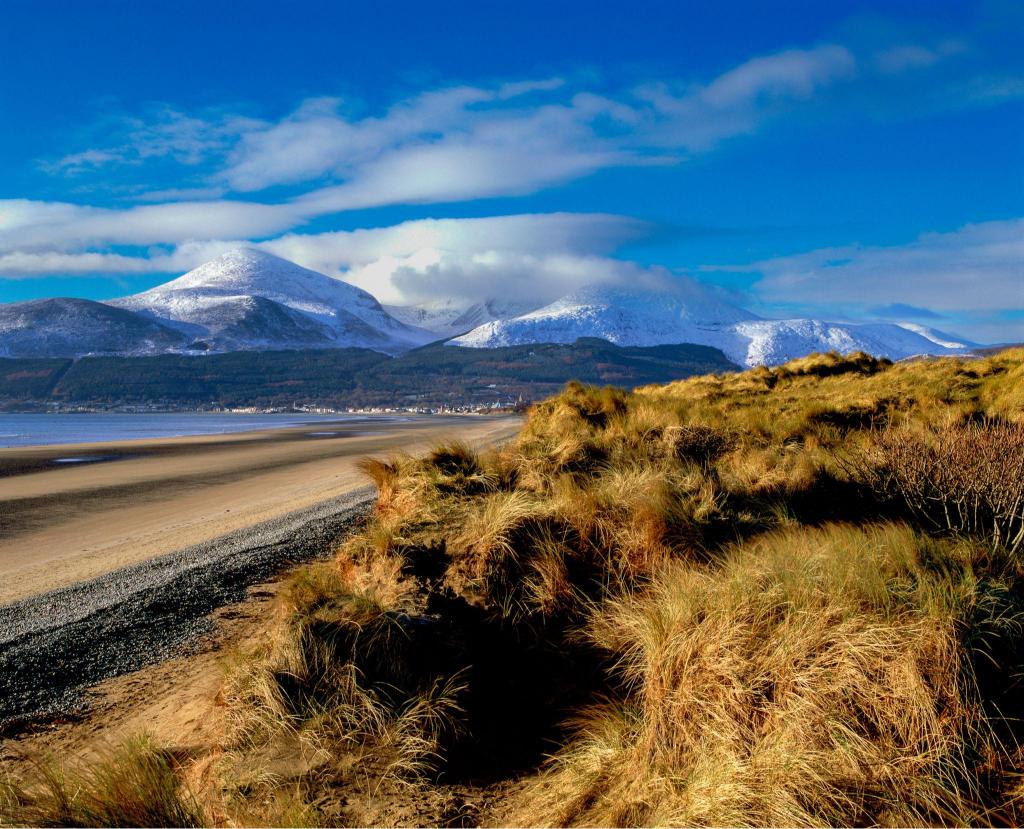
The first time I stood at the foot of Slieve Donard with the Irish Sea at my back, I understood why C.S. Lewis credited this landscape as part of his inspiration for Narnia. The Mourne Mountains rise so suddenly from the coastline of County Down that they seem almost theatrical, granite peaks stacked against the sky within sight of golden sand and fishing harbours.
This range in Northern Ireland is compact by world standards, yet it packs an extraordinary variety of scenery into a small footprint. You can hike a genuine mountain summit before lunch and be paddling in the sea by mid-afternoon. Locals call this corner of County Down a place where “the mountains sweep down to the sea,” a phrase borrowed from the old song that put this landscape on the map long before Instagram did.
Whether you are planning a weekend hiking trip, a family holiday, or a slower, food-focused getaway, this guide covers everything you need: the best trails, hidden corners most visitors miss, where to eat, where to sleep, and a ready-made two-day itinerary. Everything here draws on current, on-the-ground information so you can plan with confidence rather than guesswork.
Why Visit the Mourne Mountains
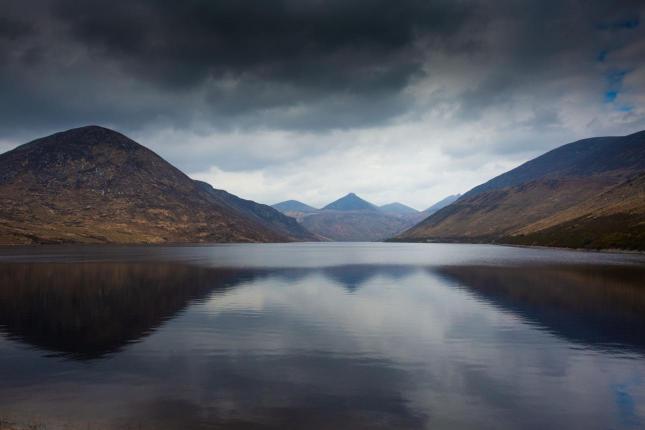
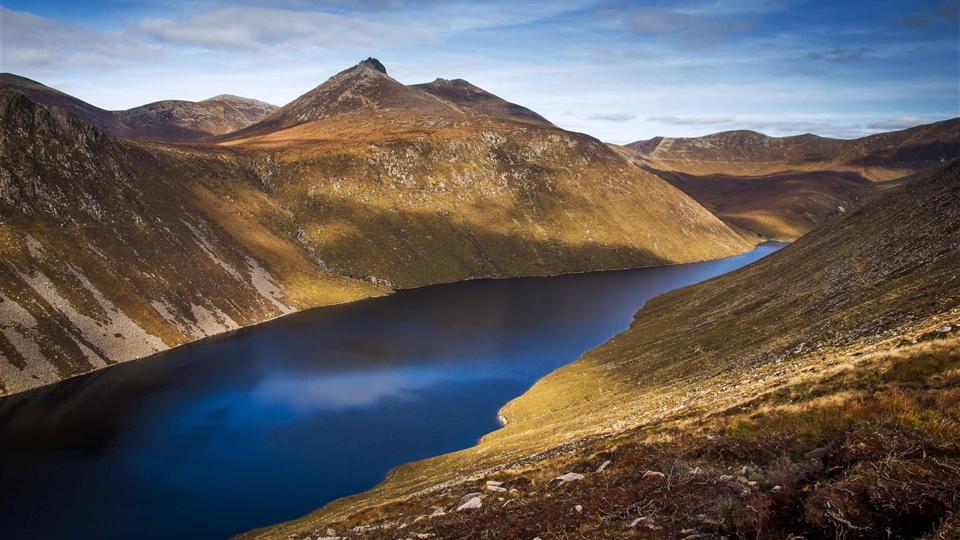
Northern Ireland has no shortage of scenic destinations, but this range holds a distinct appeal because of how the landscape changes within just a few kilometres. In one drive you pass working fishing harbours, forest parks planted with towering conifers, granite tors sculpted by wind and ice, and reservoirs so still they mirror the peaks above them.
The range sits within the Mourne Gullion Strangford UNESCO Global Geopark, a designation that recognises the geological story written into the granite here. That granite, quarried for over a century, built landmarks across Britain and Ireland, including parts of the Belfast City Hall and Dublin’s Custom House. Walking among the peaks, you are walking across rock that shaped cities elsewhere.
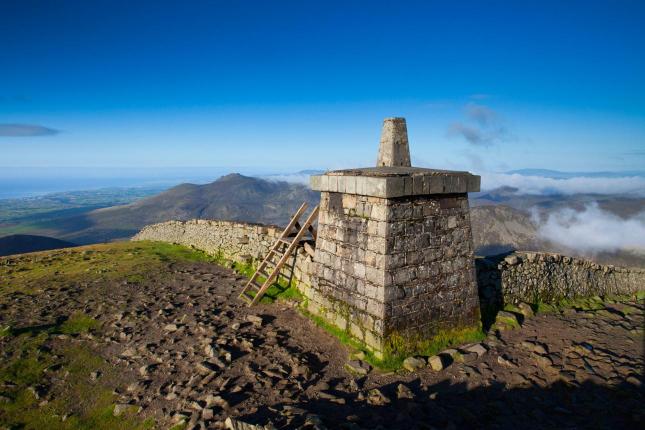
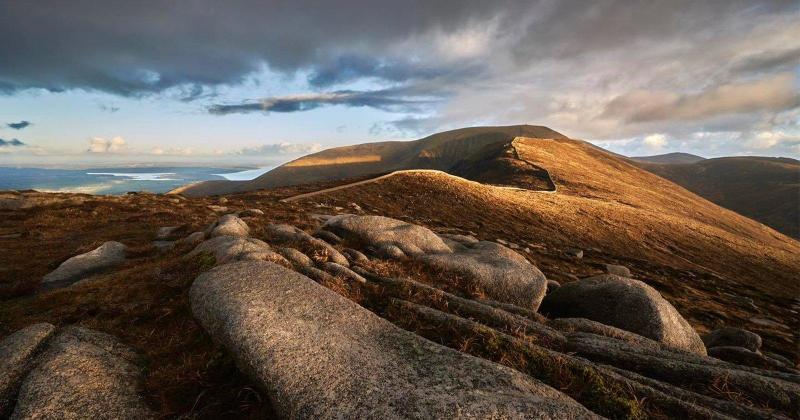
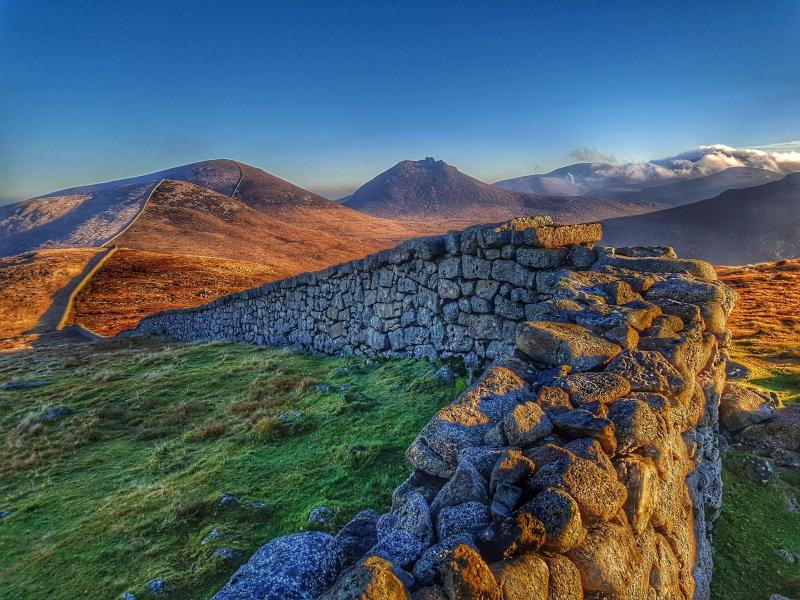
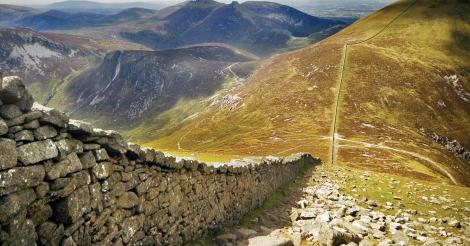
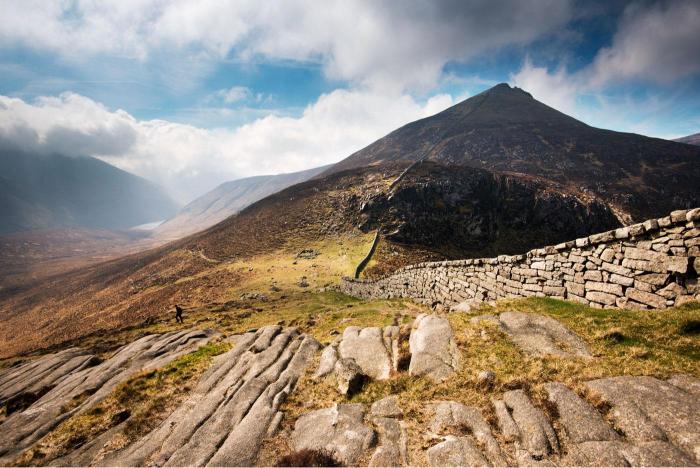
There is also the Mourne Wall, a dry-stone wall that stretches more than 35 kilometres (around 22 miles) across fifteen summits. Built between 1904 and 1922 to mark the boundary of the water catchment area feeding Belfast and County Down, it remains one of the most unusual man-made structures in Ireland, and hiking sections of it is a highlight for many visitors.
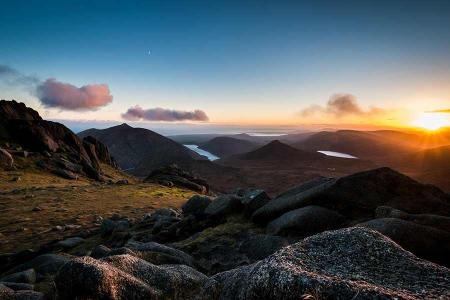
Families are drawn to Tollymore Forest Park’s fairy trails and gentle riverside walks. Serious hikers come for the challenge of summiting Slieve Donard, Northern Ireland’s highest peak at 850 metres. Surfers and wild swimmers head for Murlough Bay and the Annalong coastline. Photographers chase the low evening light that turns the granite pink and gold. Whatever draws you here, the Mournes rarely disappoint, and the compact geography means you rarely spend a whole day just getting from one attraction to the next.
For couples, the combination of dramatic scenery and cosy pubs makes for a memorable weekend away. For solo travellers, the well-marked trails and friendly small towns make it one of the more approachable wild landscapes in the UK and Ireland to explore alone.
Quick Facts: Mourne Mountains
| Detail | Information |
|---|---|
| Location | County Down, Northern Ireland |
| Highest peak | Slieve Donard (850m / 2,790ft) |
| Nearest town | Newcastle, Co. Down |
| Distance from Belfast | Approx. 50 miles (1 hour drive) |
| Designation | Area of Outstanding Natural Beauty, UNESCO Global Geopark |
| Best for | Hiking, coastal walks, wild swimming, cycling, photography |
| Best time to visit | May to September |
| Currency | Pound Sterling (£) |
A Brief History and Geology
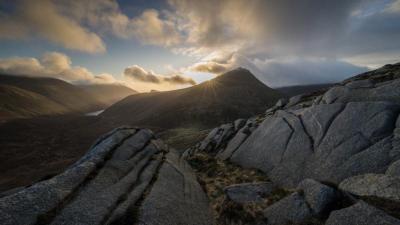
The granite that defines this landscape formed around 56 million years ago, part of the same volcanic activity that shaped the Antrim coast further north. Quarrying began in earnest in the nineteenth century, and Mourne Mountains granite was shipped out through small coastal ports to build streets, kerbstones, and grand civic buildings across Ireland and Britain. Traces of old quarry workings are still visible on several slopes, including around Thomas’s Mountain and Millstone Mountain, for visitors who know where to look.
Human history here stretches back much further than the quarries. Neolithic monuments like Goward Dolmen point to settlement in the area thousands of years ago, and the pattern of small stone-walled fields on the lower slopes reflects farming practices that have continued largely unchanged for generations. The Mourne Mountains Wall itself, though a relatively modern addition at just over a century old, has become as much a part of the area’s identity as the granite peaks it crosses, a reminder of the engineering ambition behind Belfast’s water supply in the early twentieth century.
Today, the Mourne Gullion Strangford Geopark designation ties this geological and human history together, linking the mountains with the volcanic ring of Gullion to the west and the glacially carved shores of Strangford Lough to the east, giving visitors a fuller picture of how this whole corner of County Down came to look the way it does.
Best Things to See and Do
This landscape rewards visitors who mix an active itinerary with slower, quieter moments. Here is a practical breakdown of how most people spend their time.
Hiking and mountain walking dominate most itineraries, and for good reason. Routes range from easy forest trails suitable for young children to demanding scrambles up granite tors that require proper boots, map skills, and respect for changeable mountain weather. Slieve Donard, Slieve Bearnagh, and Slieve Binnian are the three most popular summits, each offering a different character of climb.
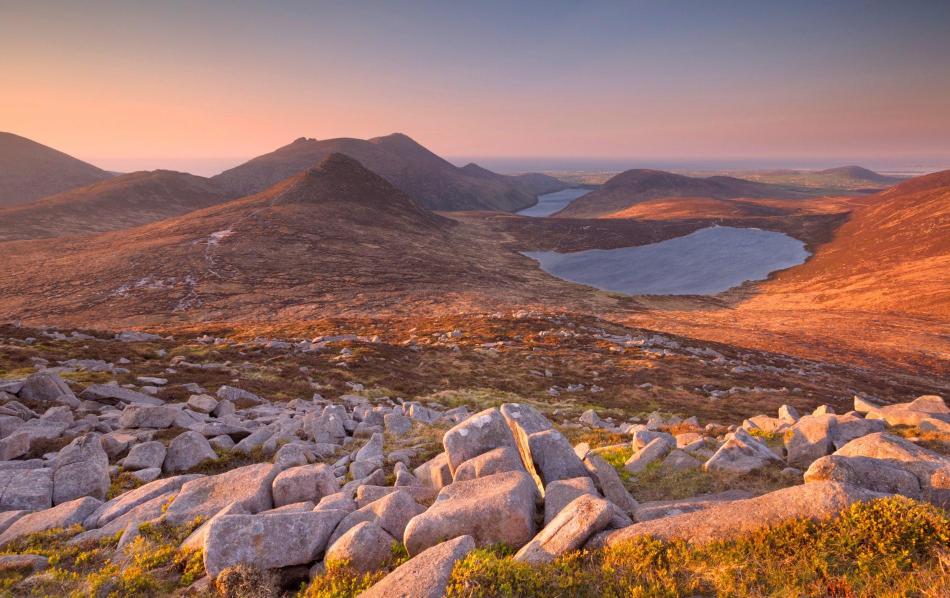
Wild swimming has become increasingly popular in recent years. The rock pools along the Annalong River and the still waters of Lough Shannagh beneath Slieve Doan are favourite cold-water dipping spots, best attempted with a group and appropriate footwear for the rocky entry points.
Cycling routes wind through Rostrevor and Tollymore, with mountain bike trails graded for different abilities. Road cyclists also use the coastal route between Newcastle and Kilkeel, which stays largely flat and offers constant sea views.
Golf enthusiasts should not miss Royal County Down, regularly ranked among the best golf courses in the world, set directly beneath Slieve Donard with the Irish Sea along several fairways.
Wildlife spotting is rewarding here too. Keep an eye out for peregrine falcons nesting on the granite tors, feral goats on the higher slopes, and seals along the Kilkeel and Annalong coastline.
Estimated visit time: allow a minimum of two full days to see a representative slice of the area, though a week gives you time to hike, swim, cycle, and still have lazy afternoons in Newcastle’s cafés. Most single attractions, such as Tollymore Forest Park or Silent Valley, need two to four hours to explore properly, while a full Slieve Donard summit hike typically takes five to seven hours return.
Top Attractions in the Mourne Mountains
Tollymore Forest Park is often the first stop for visitors, and it deserves the reputation. Ancient oak woodland, stone bridges, a Gothic-style gate, and the tumbling Shimna River combine to create one of the most photogenic forest parks in Northern Ireland. It was also a filming location for Game of Thrones, and fans still seek out the Hall of Faces exhibit near the park entrance. Entry is by parking charge, and the trails suit families, wheelchair users on the lower paths, and casual walkers alike.
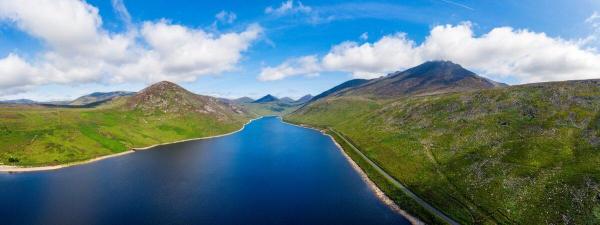
Silent Valley Mountain Park sits deep in the High Mournes and centres on a reservoir built between 1922 and 1932 to supply water to Belfast and County Down. The reservoir grounds are open daily, generally from 10am to 6pm between April and October, and 10am to 4pm from November to March, though it is worth checking current hours before visiting. Vehicle access is charged per car, with a small pedestrian charge for those arriving on foot or by bike. Trails here range from an easy, accessible nature trail suitable for prams and wheelchairs to the more demanding Ben Crom route into the High Mournes.
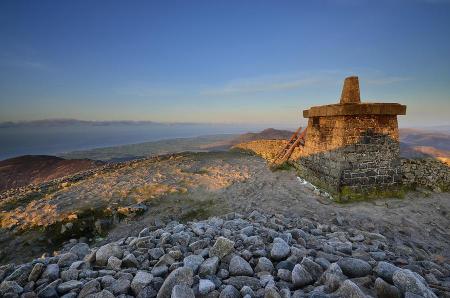
The Mourne Wall is best experienced on foot, following its stone line over multiple summits including Slieve Donard and Slieve Bearnagh. Even a short section gives a sense of the extraordinary labour involved in its construction over nearly two decades.
Royal County Down Golf Club attracts golfers from around the world, and even non-golfers often stop to admire the clubhouse and coastal setting from the adjacent beach path.
Murlough National Nature Reserve, Ireland’s oldest nature reserve, protects sand dunes, heathland, and one of the region’s best beaches, with boardwalks that make it accessible for families and those with mobility considerations.
Killowen Distillery, near Rostrevor, offers tastings and tours for visitors interested in local whiskey production, a newer addition to the area’s visitor attractions.
Photography tip: the golden hour before sunset lights up the granite peaks in warm tones, and the car park at Bloody Bridge on the coast road gives an easy, low-effort vantage point for capturing both mountains and sea in one frame.
Hidden Gems
Beyond the well-known attractions, a few quieter spots reward those willing to look a little further.
The Fairy Glen in Rostrevor is a lesser-visited hiking area threaded with folklore, waterfalls, and mossy stone paths that feel genuinely enchanted rather than staged for tourists. It connects to Kilbroney Park and the Narnia Trail, inspired by C.S. Lewis’s childhood visits to the area.
Goward Dolmen, a Neolithic portal tomb hidden down a quiet country lane, offers a glimpse into the region’s ancient history without the crowds found at larger heritage sites elsewhere in Ireland.
Spelga Dam, reached via the aptly named Electric Brae road, is a striking reservoir ringed by mountains that most day-trippers to Newcastle never see, since it sits slightly off the main coastal route.
Mary Catherine’s Cottage, a preserved traditional dwelling near Silent Valley, gives insight into how mountain communities once lived in this remote landscape.
Kilnassagart Stone, over the border in County Armagh but easily combined with a Ring of Gullion detour, is one of Ireland’s oldest inscribed stones, dating to the early Christian period.
Insider tip: arrive at any of these hidden gems in the early morning. Northern Ireland’s popular sites get busy by late morning in peak summer months, and the light for photography is far better before 10am regardless.
Best Beaches and Coastal Walks
The Mourne coastline stretches from Newcastle down to Kilkeel and around to Rostrevor on Carlingford Lough, and it offers as much variety as the mountains themselves.
Newcastle Beach is the most accessible, a long stretch of sand right in the town, backed by the promenade and within walking distance of cafés, ice cream shops, and parking. It suits families and anyone wanting an easy first taste of the coastline.
Murlough Beach, part of the Murlough National Nature Reserve, is a Blue Flag beach reached via boardwalks through the dunes. It is quieter than Newcastle and backed by one of the most important dune systems in Ireland, home to rare orchids and butterflies in summer.
Cranfield Beach, near Kilkeel, is popular with families for its shallow, sheltered waters and is a good choice for young children, though facilities are more basic than at Newcastle.
Annalong Harbour offers a shorter, quieter coastal walk around a working fishing harbour, with the option to continue along the coast path toward Bloody Bridge, a dramatic spot where the Mourne Wall meets the sea.
For a genuine coastal-meets-mountain walk, the route from Bloody Bridge car park up toward the Mourne Wall and Slieve Donard’s lower slopes combines sea views with mountain scenery in a single outing, without requiring a full summit attempt.
Accessibility note: Newcastle Beach and the Murlough boardwalks are the most manageable for wheelchair users and pushchairs; Cranfield and Annalong have more uneven ground.
Local Food and Famous Specialties
County Down’s food scene has grown considerably, and the Mournes area now punches well above its weight for a rural region.
Kilkeel remains one of Northern Ireland’s most important fishing ports, and fresh seafood, particularly prawns, crab, and whitefish, appears on menus throughout the area. Several harbourside spots serve the day’s catch with minimal fuss, which is often the best way to try it.
Comber potatoes, grown in the fertile land nearby, are a source of local pride and appear as a side dish in traditional Ulster fry breakfasts served across County Down guesthouses.
Soda bread and wheaten bread remain staples of the traditional Ulster fry, a hearty breakfast worth trying at least once, typically including bacon, sausage, egg, black and white pudding, and fried bread alongside the soda and wheaten varieties.
Killowen Distillery, mentioned earlier as an attraction, also produces small-batch whiskey that has begun appearing on bar menus in Rostrevor and Newcastle.
Newcastle’s café scene has expanded significantly, with several independent coffee roasters and bakeries opening in the past few years, giving hikers a good reason to reward themselves after a summit day.
For a memorable meal, look for restaurants that source directly from Kilkeel’s fishing fleet and nearby farms; menus that change seasonally are usually a good sign of quality in this region. Budget travellers can expect a casual pub meal for roughly £12 to £18, while a sit-down dinner at a nicer restaurant in Newcastle typically runs £25 to £40 per person before drinks.
Best Time to Visit the Mourne Mountains
May to September offers the most reliable weather for hiking and beach visits, with long daylight hours that allow for full-day summit attempts. July and August are the busiest months, particularly around Newcastle and Tollymore Forest Park, so early starts help you beat both crowds and midday heat.
April and October are excellent shoulder-season choices for visitors who prefer fewer crowds and don’t mind cooler temperatures. Autumn colours in Tollymore Forest Park in particular are worth planning around.
Winter (November to March) transforms the Mournes into a quieter, starker landscape. Snow occasionally dusts the higher peaks, and the shorter daylight hours mean hikes need earlier starts and more conservative planning. Silent Valley’s reduced winter opening hours (10am to 4pm) reflect this seasonal shift.
Weather note: Northern Ireland’s mountain weather changes quickly regardless of season. Clear conditions in Newcastle can mean low cloud and strong wind on Slieve Donard’s summit. Always check a mountain-specific forecast, not just the coastal town forecast, before setting out.
For families, the summer school holidays bring the most activities and events, including local festivals such as Eats & Beats in Newcastle. For photographers, spring and autumn offer the best combination of dramatic light and manageable crowds.
Where to Stay in the Mourne Mountains
Newcastle is the natural base for most visitors, offering the widest choice of hotels, guesthouses, and self-catering options, plus easy access to the beach, restaurants, and the trailheads for Slieve Donard.
Rostrevor, on the shores of Carlingford Lough, suits travellers who want a quieter base with easy access to the Fairy Glen, Kilbroney Park, and the western Mourne Mountains, while still being within a short drive of Newcastle.
Kilkeel, the fishing port, offers a more local, less touristy atmosphere and puts you closest to Silent Valley and the southern coastal walks.
Glamping and countryside stays have grown popular in recent years, with several sites offering pods or bell tents with direct mountain views, a good option for couples or those wanting a slower pace.
Self-catering cottages scattered through the foothills suit families or groups wanting space and flexibility, particularly for longer stays of a week or more.
Budget expectations vary: a comfortable guesthouse room typically runs £80 to £130 per night, self-catering cottages start around £100 per night for a small group, and glamping pods generally fall in a similar range depending on the season. Booking ahead is strongly advised for July and August, when Newcastle in particular fills up quickly.
Solo travellers often do well in Newcastle’s smaller guesthouses, where hosts are usually happy to share up-to-date trail advice, while couples looking for a bit more privacy tend to gravitate toward the glamping sites scattered through the foothills near Attical and Hilltown. Families should look specifically for self-catering properties advertising enclosed gardens or ground-floor bedrooms, since older stone cottages in the area sometimes have steep internal stairs that are less practical with young children or pushchairs. Whichever base you choose, ask about drying facilities for wet gear if you are visiting outside summer, since a place to dry boots and jackets overnight makes a noticeable difference after a wet day on the hills.
How to Get to the Mourne Mountains
By car: The Mourne Mountains sit roughly 50 miles south of Belfast, about an hour’s drive via the A24 and A2 coast road. This is the most flexible option, since public transport does not reach every trailhead.
By bus: Translink operates regular services from Belfast to Newcastle, taking around 90 minutes depending on the route and stops. From Newcastle, local buses connect to Kilkeel and other towns along the coast, though services to remote trailheads like Silent Valley are limited.
By train and bus combined: Trains run from Belfast to Newry, from where connecting buses reach towns on the western side of the Mourne Mountains, a useful option for visitors without a car who want to explore the Rostrevor and Ring of Gullion side of the region.
From Dublin: The Mourne Mountains are roughly a two-hour drive from Dublin, making them a feasible day trip or weekend base for visitors exploring both sides of the Irish border.
Getting around locally: A car remains the most practical option for reaching multiple trailheads in one trip, since many of the best starting points, including Bloody Bridge and Silent Valley, are not well served by public transport. Cycling between towns is a popular alternative for fitter travellers who want to reduce car dependency.
By air: Belfast International and Belfast City airports both connect to major UK and European cities, and either makes a workable starting point for a Mourne Mountains trip, with Belfast City airport slightly closer to the coast road south. Car hire desks operate at both airports, and picking up a vehicle on arrival is usually more convenient than relying on connecting public transport straight into the mountains. Dublin Airport is also a realistic option for international visitors, given the roughly two-hour onward drive north.
Parking practicalities: Most trailheads and forest parks charge a parking fee, typically a few pounds for a few hours, payable by card or contactless at machines in the larger car parks such as Tollymore and Silent Valley. Smaller roadside car parks, including Bloody Bridge, sometimes only accept cash, so it is worth carrying coins as a backup.
Sample 2-Day Itinerary
Day 1: Forest, Village, and Summit Views
Start the morning at Tollymore Forest Park, allowing two to three hours to walk the riverside trails and visit the Hall of Faces near the entrance. From here, drive to Newcastle for lunch along the promenade, then walk Newcastle Beach before an afternoon stroll up toward the lower slopes of Slieve Donard via the Bloody Bridge route if time and weather allow, a shorter alternative to a full summit attempt. In the evening, settle into a Newcastle restaurant for fresh Kilkeel seafood, then finish with a short walk along the harbour if energy allows.
Day 2: Silent Valley and the Western Mourne Mountains
Begin early at Silent Valley Mountain Park, arriving close to opening time to enjoy the reservoir trails before the day’s crowds build. The Ben Crom Trail suits confident walkers, while the nature trail near the car park is a gentler option for families. From Silent Valley, drive toward Rostrevor for lunch, then spend the afternoon exploring the Fairy Glen and Kilbroney Park’s Narnia Trail. Finish the day at Killowen Distillery for a tasting, or head back to the coast for a final look at Carlingford Lough as the sun sets over the mountains.
This itinerary suits couples and solo travellers well; families with young children may prefer to swap the Bloody Bridge walk for extra time at Murlough Beach instead.
Travel Tips for Visiting the Mourne Mountains
- Pack for changeable weather. Even in summer, bring a waterproof jacket, layers, and sturdy footwear for any mountain walk above the forest parks.
- Check mountain-specific forecasts, not just the general Newcastle or Kilkeel forecast, before attempting a summit hike.
- Carry a paper map or offline GPS route for higher routes, since phone signal is unreliable on many summits.
- Start summit hikes early, ideally before 9am in summer, to allow enough daylight for a safe return and to avoid the busiest trail conditions.
- Bring cash for smaller car parks and rural attractions, as card readers are not universal in more remote spots.
- Respect the Mourne Mountains Wall by not climbing directly over it where stiles are provided nearby.
- Book accommodation well ahead for July and August, particularly in Newcastle.
- For families, Tollymore Forest Park and Murlough Beach offer the easiest, most rewarding days out without the demands of a full mountain hike.
- For solo travellers, stick to well-marked routes like the Ben Crom and Nature trails at Silent Valley if hiking alone, and let someone know your planned route and return time.
- For couples, an evening walk along Newcastle promenade or a sunset visit to Spelga Dam offers a quieter, more romantic alternative to the busier daytime attractions.
- Layer clothing rather than relying on a single heavy coat. Temperatures can shift noticeably between the coast and higher ground, and layers let you adjust as you climb.
- Fill up on fuel and groceries in Newcastle or Kilkeel before heading into the hills, since options thin out quickly once you leave the main towns.
- Download an offline map app before your trip if you plan to explore beyond the marked forest park trails, since mobile data coverage drops in the deeper valleys.
- Watch for grazing sheep on higher trails and keep dogs on leads where livestock are present, particularly around Silent Valley and the Ben Crom catchment area.
- Plan car parking ahead in peak season. Small car parks at trailheads like Bloody Bridge and Meelmore Lodge fill early on sunny summer weekends, so arriving before 9am gives the best chance of a space.
Quick Packing Checklist for a Mourne Mountains Hiking Day
- Waterproof jacket and trousers, even on a forecast-clear day
- Sturdy, broken-in walking boots with good ankle support
- Warm mid-layer, since summit temperatures run several degrees cooler than the coast
- Ordnance Survey map or downloaded offline route, plus a compass if venturing off marked trails
- At least one litre of water per person, more for a full Slieve Donard attempt
- Snacks or packed lunch, since there are no facilities once you leave the car park
- Fully charged phone and a portable battery pack for emergencies
- Basic first aid kit and a whistle for signalling if needed
Nearby Places to Visit
Ring of Gullion, just west of the Mournes Mountains, offers a similarly dramatic volcanic landscape with its own hiking trails and heritage sites, including the Kilnassagart Stone and Slieve Gullion Forest Park.
Strangford Lough, on the other side of County Down, provides a complete change of pace with calm waters ideal for kayaking, plus historic sites like Montalto Estate and Castle Ward.
Downpatrick, a short drive north, is closely tied to the story of Saint Patrick, with the Saint Patrick Centre and his reputed grave both worth a visit for those interested in Irish heritage.
Warrenpoint, on Carlingford Lough, hosts local festivals and offers easy access across the border into County Louth in the Republic of Ireland for those wanting to extend their trip.
Combining a Mournes-based trip with one or two of these nearby areas works well for visitors staying a week or planning a broader County Down road trip.
For those with extra time, Carlingford across the border in County Louth makes an easy add-on from Rostrevor, with its own medieval streets, oyster bars, and views back across the lough to the peaks you have just left behind. Armagh City, roughly 40 minutes from the Ring of Gullion, offers cathedral architecture and a compact, walkable centre for a change of pace from outdoor activity. Travellers building a longer Northern Ireland road trip often pair a Mournes Mountains stay with the Causeway Coast further north, though that adds a significant drive, so it suits a two-week itinerary better than a long weekend.
Frequently Asked Questions
What is the highest peak in the Mourne Mountains? Slieve Donard is the highest peak at 850 metres (2,790 feet), and it is also the highest mountain in Northern Ireland. The hike to the summit typically takes five to seven hours return, starting from Newcastle or the Bloody Bridge car park.
How long does it take to hike the Mourne Mountains? This depends entirely on the route. Short forest walks in Tollymore take one to two hours, while a full Slieve Donard summit hike takes five to seven hours. Multi-day treks covering several peaks are also popular among experienced hikers.
Is the Mourne Wall worth visiting? Yes, the Mourne Mountains Wall is a unique dry-stone structure stretching over 35 kilometres across fifteen summits, built between 1904 and 1922. Walking even a short section gives a strong sense of its scale and the effort behind its construction.
Are the Mourne Mountains suitable for beginners? Many trails suit beginners, particularly in Tollymore Forest Park and around Silent Valley’s lower paths. Summit hikes like Slieve Donard require reasonable fitness and proper gear, so beginners should start with easier routes first.
How far are the Mourne Mountains from Belfast? The Mourne Mountains are about 50 miles from Belfast, roughly an hour’s drive, or around 90 minutes by Translink bus to Newcastle.
What is the best base for exploring the Mourne Mountains? Newcastle is the most popular base thanks to its beach, restaurants, and proximity to Slieve Donard. Rostrevor and Kilkeel suit visitors wanting a quieter, more local atmosphere.
Can you swim in the Mourne Mountains? Yes, wild swimming is popular at spots like Lough Shannagh and the Annalong River rock pools, along with sea swimming at Newcastle, Murlough, and Cranfield beaches.
Is Silent Valley free to enter? Entry on foot or by bicycle carries a small charge, while vehicles pay a per-car fee. Opening hours run 10am to 6pm from April to October and 10am to 4pm from November to March, though it is worth confirming current rates before visiting.
When is the best time to visit the Mourne Mountains? May to September offers the most reliable hiking weather, while April, October, and winter months suit visitors seeking fewer crowds and don’t mind cooler, more changeable conditions.
Do I need a car to visit the Mourne Mountains? A car is strongly recommended, since many trailheads, including Silent Valley and Bloody Bridge, have limited public transport access. Newcastle itself is reachable by bus from Belfast without a car.
Conclusion
The Mourne Mountains reward visitors at every pace, whether that means a hard day summiting Slieve Donard or a slow afternoon wandering Tollymore Forest Park’s riverside paths. Few regions in Ireland or the UK pack mountains, coastline, forest, and history into such a compact, easily explored area.
Plan around the shoulder seasons if you want quieter trails, pack for changeable mountain weather regardless of when you visit, and give yourself at least two full days to see a meaningful slice of what the region offers. Once you have stood where the mountains meet the sea, it becomes easy to understand why this corner of County Down keeps drawing hikers, photographers, and families back year after year.