
Table of Contents
Glen Nevis
Introduction
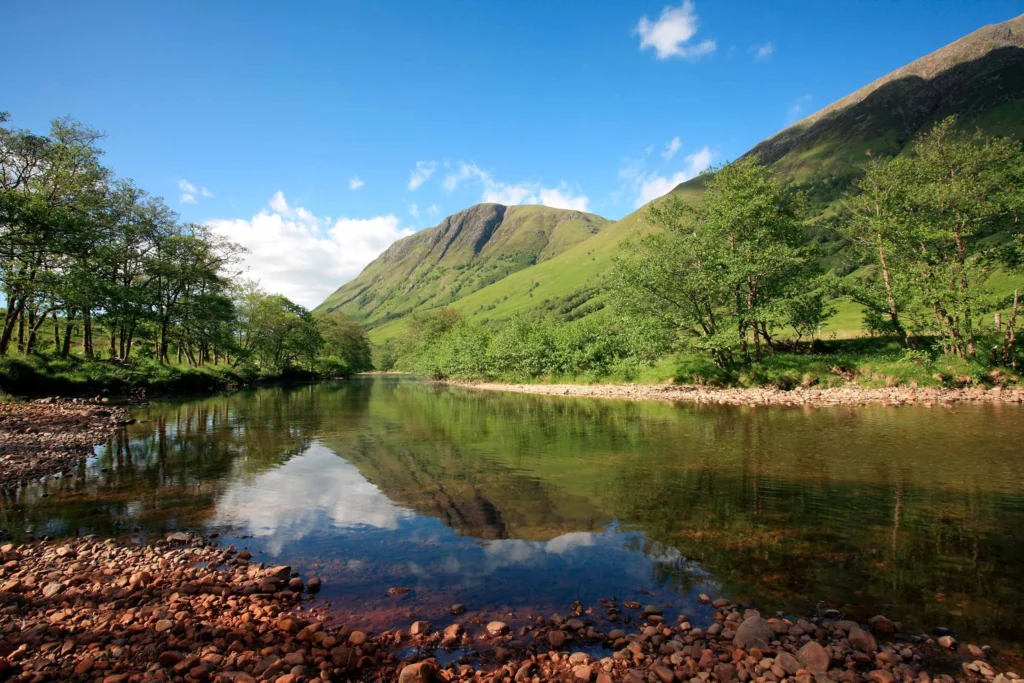
There’s a moment, just past the lower falls car park, where the road narrows to a single track and the glen suddenly closes in around you. Steep, grassy shoulders rise on both sides, the River Nevis churns over grey boulders below, and Ben Nevis itself disappears behind a wall of rock. That’s Glen Nevis in a nutshell: a place that keeps surprising you even after you think you’ve seen it.
Tucked just a few minutes from Fort William in the Scottish Highlands, Glen Nevis sits at the foot of Britain’s highest mountain, yet it’s a destination in its own right. You don’t need to be a hillwalker to fall for it. Families come for the gentle riverside paths and the paddling spots along the River Nevis. Film fans come because the glen has stood in for ancient Scotland in Braveheart and Highlander, and for Hogwarts grounds in the Harry Potter films. Hikers come for the Pony Track up Ben Nevis, and for the quieter, arguably more beautiful walk into Nevis Gorge to Steall Falls.
This guide pulls together what you actually need to plan a visit to Glen Nevis: the best things to see and do, honest advice on the best time to visit, where to stay, how to get there, a sample two-day itinerary, and answers to the questions most visitors ask before they arrive. Whether you’ve got a free afternoon after driving up from Glasgow, or you’re building a full Highlands trip around Ben Nevis and the glens beyond, here’s everything you need.
Why Visit Glen Nevis
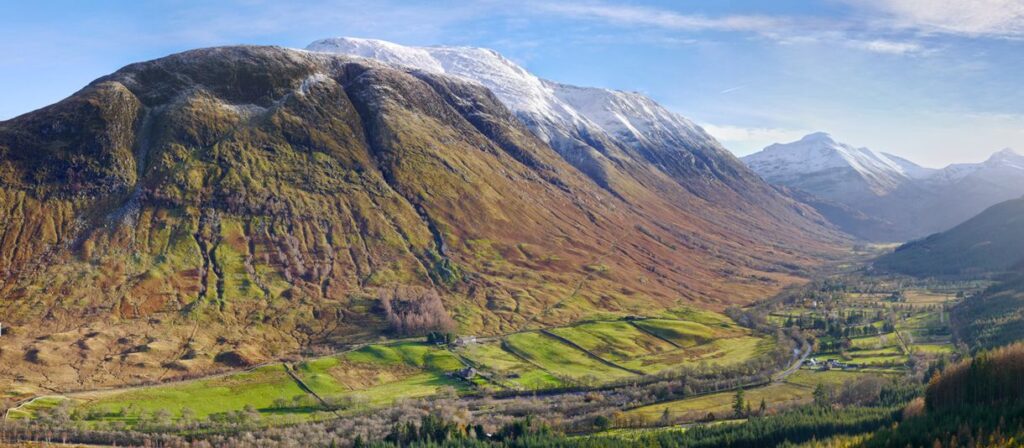
Glen Nevis earns its reputation the old-fashioned way: through scenery that doesn’t need any exaggeration. The glen runs roughly six miles from the outskirts of Fort William to the head of Nevis Gorge, and in that short distance the landscape changes dramatically. Near the start, the valley floor is broad and green, with the river looping lazily past picnic spots and grazing sheep. Further in, the road tightens, the cliffs of Polldubh rise on one side, and the whole place takes on a wilder, more enclosed feel.
Geologically, this is one of the more interesting corners of the Highlands. Ben Nevis is the eroded remnant of an ancient volcano that collapsed in on itself hundreds of millions of years ago, and the glen below was later carved and smoothed by Ice Age glaciers. You can still see the rounded, glacier-polished rock outcrops known as roches moutonnées near the roadside, along with exposed bands of different rock types that tell the story of how this landscape formed.
There’s also a strong sense of history here. Long before hillwalkers arrived with GPS watches and waterproof jackets, people lived and farmed in this glen. The vitrified Iron Age fort at Dun Deardail sits on a hill above the valley, its stone walls fused by intense heat thousands of years ago, and it’s still possible to walk up and stand where a fortified community once looked out over the same mountains you’re looking at today.
For most visitors, though, the pull is simpler: Glen Nevis is beautiful, it’s accessible, and it sits right at the edge of one of the most scenic small towns in Scotland. Fort William is often called the Outdoor Capital of the UK, and Glen Nevis is a big part of why that title sticks. Whether you’re planning a serious mountain day or a gentle riverside stroll with a flask of tea, the glen delivers.
Quick Facts: Glen Nevis
| Detail | Information |
|---|---|
| Location | Foot of Ben Nevis, 2–3 km from Fort William, Scottish Highlands |
| Length of glen | Around 6 miles (10 km), from Fort William to the head of Nevis Gorge |
| Highest point nearby | Ben Nevis, 1,345 m (4,413 ft) |
| Nearest town | Fort William |
| Famous for | Ben Nevis walks, Steall Falls, Nevis Gorge, film locations |
| Visitor Centre | Glen Nevis Visitor Centre, run by The Highland Council |
| Best base | Fort William or camping/self-catering within the glen |
Best Things to See and Do in Glen Nevis
Glen Nevis rewards both ambition and laziness in equal measure. You can spend a single hard day ticking off Britain’s highest summit, or you can spend a lazy afternoon paddling in the river and watching red squirrels. Most visitors end up doing a bit of both over a couple of days.
The classic activity is, unsurprisingly, the ascent of Ben Nevis itself via the Pony Track (sometimes still called the Tourist Path), which starts near the Glen Nevis Visitor Centre. It’s a long day out rather than a technical climb, but it should never be underestimated. The path climbs roughly 1,345 metres from close to sea level to the summit, and conditions at the top can be genuinely wintry even in July, with fog reducing visibility to a few metres. Anyone attempting it needs proper boots, warm and waterproof layers, food, water, and a map and compass, plus the sense to turn back if the weather closes in.
If a full mountain day isn’t on your agenda, the walk through Nevis Gorge to Steall Falls is, for many visitors, the highlight of the whole glen. It’s shorter, dramatically scenic, and doesn’t require a mountain-fit level of stamina. Cycling is another popular way to explore, with forest tracks and quiet roads running off the main glen road, and Fort William’s status as a mountain biking hub means there’s no shortage of route options nearby, including trails connected to the Nevis Range, home of the UCI Mountain Bike World Cup.
Wildlife watching is an underrated reason to visit. The surrounding estate and forest are home to red deer, red squirrels, and birds of prey, and quieter early morning or evening walks often turn up sightings that the midday crowds miss. For a lower-key day, simply following the riverside paths near the start of the glen gives you gorgeous views back toward Ben Nevis without much elevation gain at all.
Tip Box: If you only have half a day in Glen Nevis, skip the summit and walk the Nevis Gorge path instead. It delivers the glen’s most dramatic scenery in a fraction of the time and effort.
Top Attractions in Glen Nevis
Ben Nevis
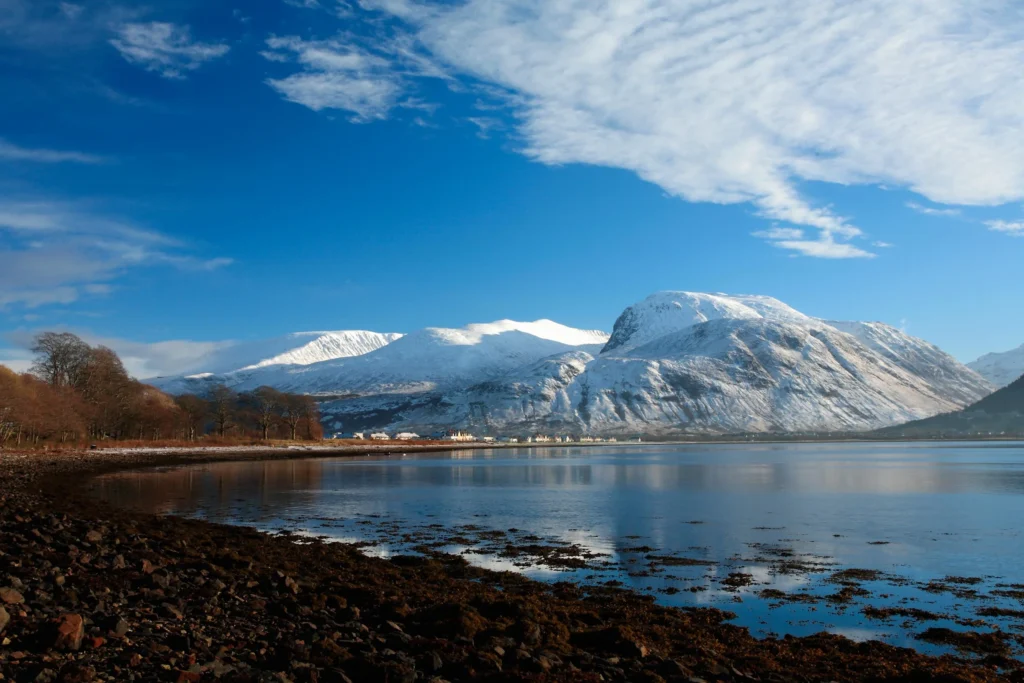
Britain’s highest mountain needs little introduction, but it’s worth knowing what you’re taking on before you commit. The summit sits at 1,345 metres, and the Pony Track route, while not technical, is a genuinely long day: allow seven to nine hours round trip for most walkers, more in poor conditions. Roughly 125,000 people attempt the ascent each year, and the mountain’s Gaelic name is generally translated as either “mountain with its head in the clouds” or “venomous mountain,” both of which feel accurate on a bad-weather day.
Start early, check the mountain weather forecast the night before (conditions at the summit are frequently very different from Fort William at the base), and be honest about your fitness and experience. The safest descent route in poor visibility follows specific compass bearings from the summit trig point, which is one reason a map and compass (and the knowledge to use them) matter more here than a phone app.
Nevis Gorge and Steall Falls
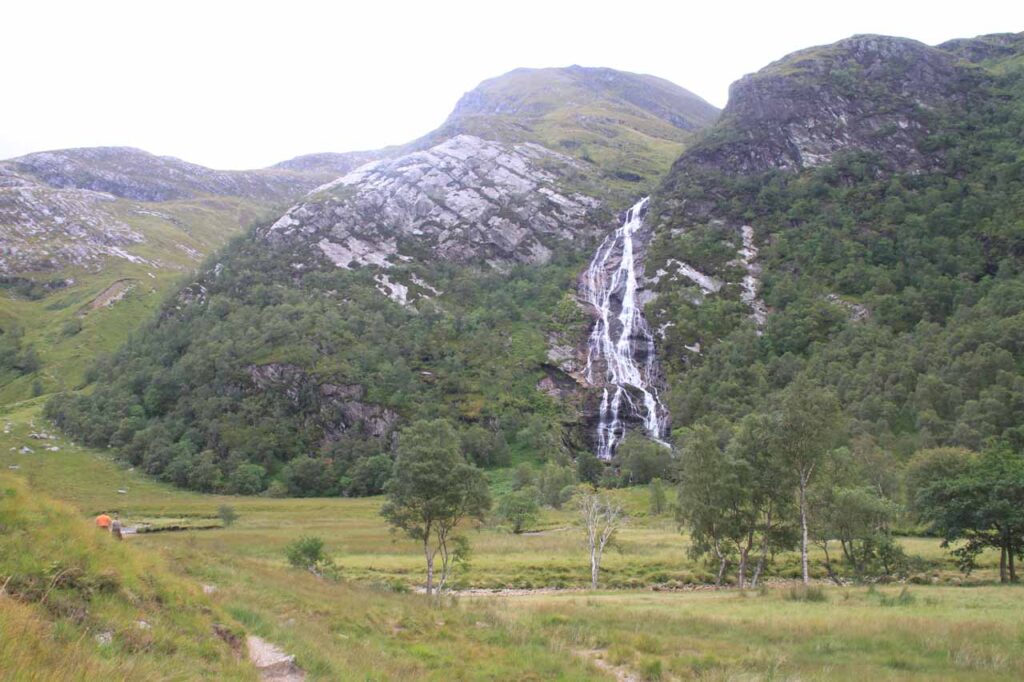
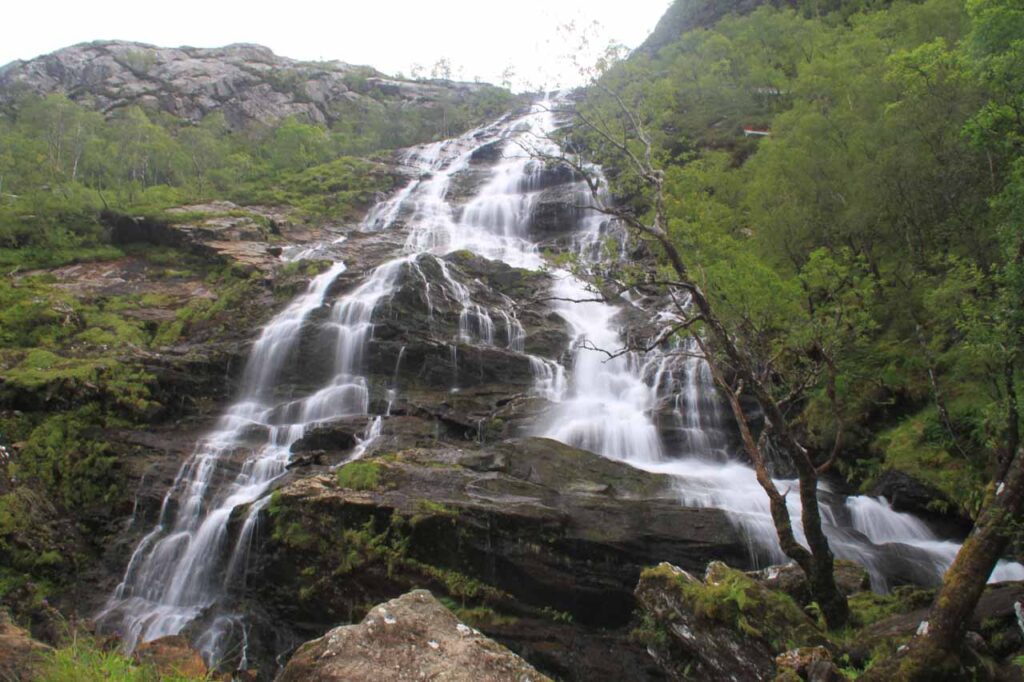
At the head of the glen, past the point where the road becomes single track, a footpath leads through the narrow, boulder-strewn Nevis Gorge into a wide, hanging valley. Steall Falls, the second highest waterfall in Scotland, drops in a long, elegant cascade at the far end. The walk in takes most people around 30 to 45 minutes each way over rocky, sometimes slippery terrain, so decent footwear matters even though this isn’t a mountain walk. A wire bridge crosses the river near the falls for those who want a closer look, though plenty of walkers are happy to admire it from the near bank.
Dun Deardail
This vitrified Iron Age hillfort sits above the glen and offers one of the better low-effort viewpoints in the area. The walk up from the Braveheart car park is around six miles round trip with roughly 340 metres of ascent, so it’s more substantial than a casual stroll, but it’s far gentler than a Ben Nevis attempt. An information board at the site explains the fort’s history and the vitrification process that fused its stone walls, and the views back down the glen and across to the surrounding Munros are worth the climb on their own.
Glen Nevis Visitor Centre
Run by The Highland Council, the Visitor Centre is the natural starting point for most trips into the glen. It has exhibits on the geology and human history of the area, up-to-date advice on weather and trail conditions, and a shop stocked with maps, guidebooks, and outdoor essentials. Staff here are a genuinely useful resource for checking conditions before a Ben Nevis attempt, particularly earlier or later in the season.
Hidden Gems in Glen Nevis
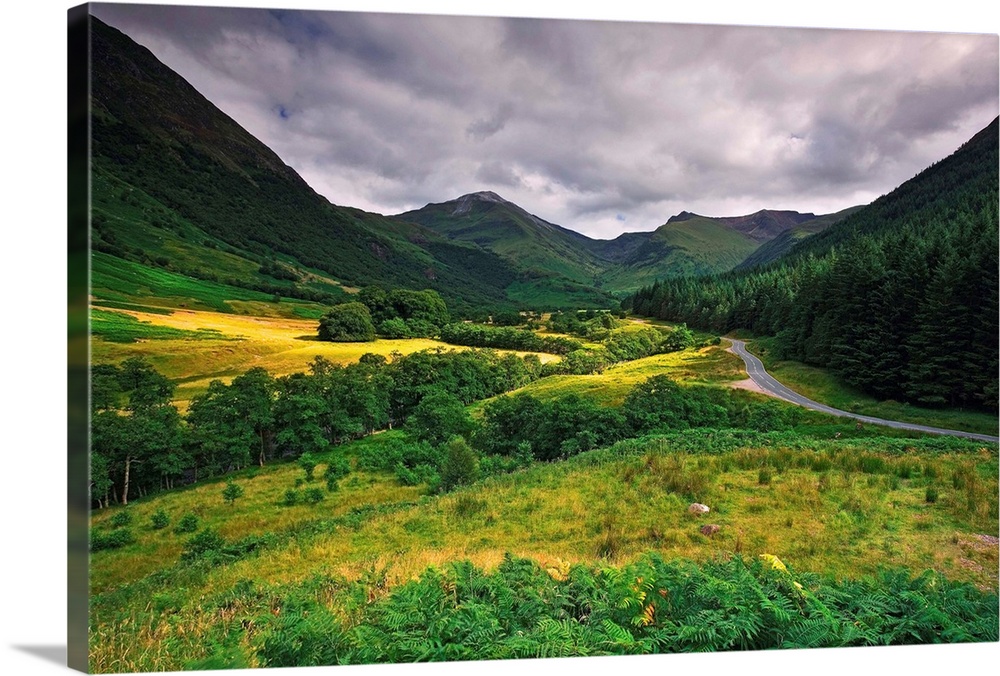
Beyond the well-trodden paths, Glen Nevis has a handful of spots that reward a bit of extra effort or local knowledge. The polished rock slabs and pools near the Lower Falls, close to where the road narrows, are a favourite with locals for a quick paddle or a picnic with mountain views, and they’re far less crowded than the main Ben Nevis car park.
Further into the glen, near the end of the single-track road, there’s a natural water slide in the river that’s popular with families and younger visitors on warm days, alongside informal spots that work well for a riverside barbecue. It’s not signposted as a major attraction, which is exactly why it stays relatively peaceful even in high season.
For film fans, the unnamed patches of grassland used in Braveheart’s funeral scene and various Harry Potter and Highlander sequences are scattered through the estate around the caravan park, and a quiet walk here in early morning light, with mist still sitting on the hills, gives a strong sense of why location scouts kept coming back to this glen.
Photographers should also look out for the roches moutonnées, the smoothed and grooved rock outcrops left by Ice Age glaciers, dotted along the roadside near Polldubh. They’re easy to miss if you’re driving, but worth a short stop; they’re a rare chance to put your hand directly on evidence of the glaciers that carved this whole landscape.
Tip Box: Visit the Lower Falls area first thing in the morning, before the main Ben Nevis car park fills up. You’ll get quieter photos and cooler walking conditions.
Best Beaches and Coastal Walks Near Glen Nevis
Glen Nevis itself is inland, so don’t expect sand here, but the West Highland coast is close enough to build into the same trip. The silver sands around Morar and Arisaig, roughly 45 minutes to an hour from Fort William by car, are genuinely spectacular: pale, fine sand backed by machair grassland, with views out to the islands of Eigg, Rum, and Skye on a clear day. They’re a popular add-on for paddleboarding, sea kayaking, or simply a walk with a very different kind of scenery from the mountains.
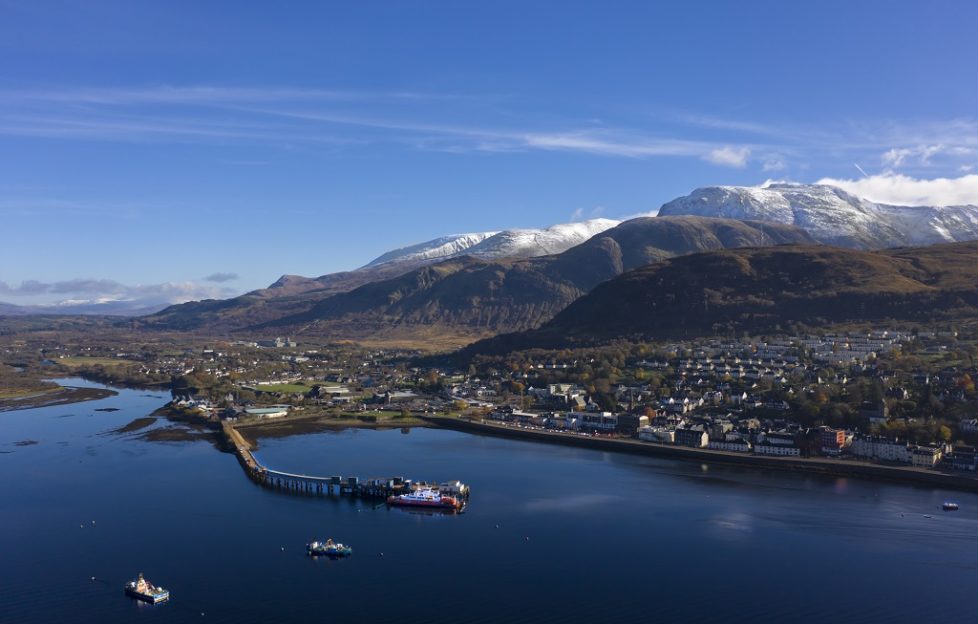
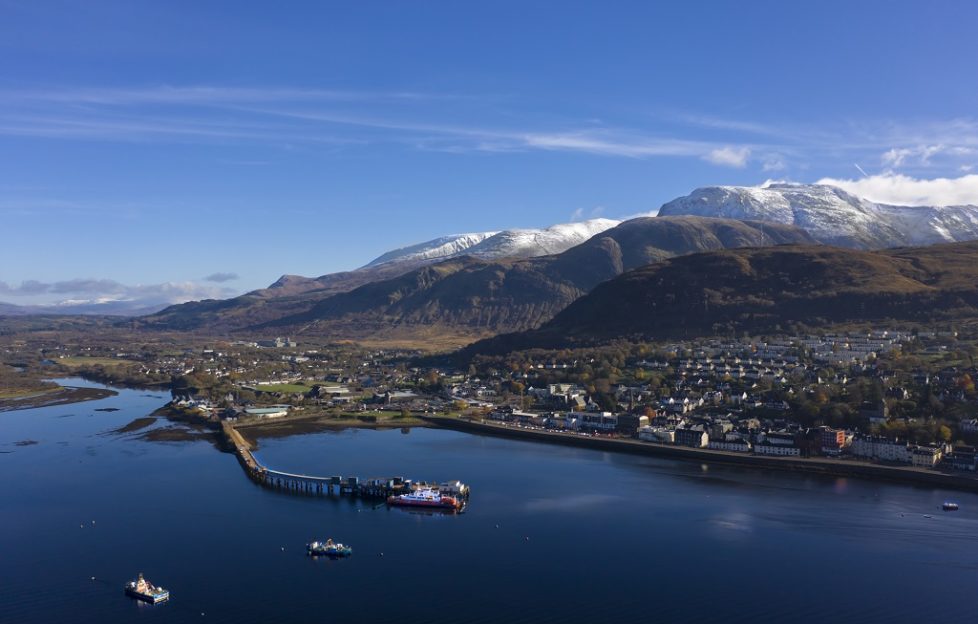
Closer to home, Loch Linnhe runs along the edge of Fort William itself, and short waterside walks and viewpoints here give good views back toward the hills, along with occasional sightings of seals. Boat trips out onto Loch Linnhe are a relaxed way to see the coastline without a long drive, and they pair well with a half-day in Glen Nevis on the same trip.
If you have a full day to spare, the drive out to Glenfinnan and beyond takes you along one of Scotland’s most scenic stretches of coast road, past the Glenfinnan Monument and its famous viaduct, before the road eventually reaches Mallaig, the ferry port for Skye. It’s a long day if combined with a Glen Nevis walk, but doable if you start early.
Local Food and Famous Specialties
Fort William, sitting right at the entrance to Glen Nevis, is the obvious base for food and drink, and it doesn’t disappoint. Scottish Highland cuisine leans heavily on what the land and coast provide: venison, langoustines, mussels, smoked salmon, and hearty, warming dishes built for cold, wet days on the hill.
After a big walking day, a bowl of Scotch broth or cullen skink (a smoked haddock and potato soup) is the classic reward, and most pubs and cafés around Fort William serve some version of it. Venison, whether in a pie, a stew, or simply pan-seared, turns up on menus throughout the area and reflects the deer that genuinely do roam the hills above the glen. For something lighter, freshly caught seafood from the west coast, particularly langoustines and mussels, is a highlight worth seeking out.
Whisky is, inevitably, part of the local culture too. Ben Nevis Distillery, one of Scotland’s older distilleries, sits close to the town and offers tours and tastings that explain the whisky-making process from grain to glass, which makes a good rainy-afternoon plan if the mountain weather isn’t cooperating.
For something more casual, Fort William’s high street has a decent spread of cafés serving cake and coffee for walkers refuelling after a morning in the glen, along with fish and chip shops that hit the spot after a long day outdoors. If you’re self-catering at a campsite or lodge in the glen, Fort William’s supermarkets (including a large one near the railway station) make stocking up for a barbecue or packed lunch straightforward.
Tip Box: Book a table for dinner in Fort William during July and August. The town is small, and popular restaurants fill up quickly with walkers coming off the hill in the evening.
Best Time to Visit Glen Nevis
Glen Nevis is a year-round destination, but each season offers a genuinely different experience, and the right time for you depends on what you want to do.
Summer (June to August) brings the longest days, the warmest temperatures, and the busiest car parks. This is when the Jacobite Steam Train runs between Fort William and Mallaig, when Ben Nevis sees its heaviest foot traffic, and when the glen’s rivers and pools are most inviting for a paddle. It’s also midge season, so pack repellent, especially for calm, overcast evenings.
Spring (April to May) is a strong choice for fewer crowds and still-decent daylight hours, though snow can linger on Ben Nevis’s upper slopes well into May, which matters if you’re planning a summit attempt. Wildflowers and fresh green growth make the lower glen particularly pretty at this time of year.
Autumn (September to October) brings golden bracken, quieter trails, and often some of the most dramatic light for photography, particularly in the gorge and around Steall Falls. Weather becomes noticeably less predictable, so flexibility in your plans helps.
Winter (November to March) transforms Glen Nevis into a genuinely alpine-feeling landscape, with snow on the peaks and short daylight hours. Ben Nevis in winter is a serious mountaineering objective requiring ice axe, crampons, and real winter skills; it is not a casual walk at this time of year. However, the lower glen walks remain accessible and often stunning, with far fewer visitors than in summer.
Quick Facts: Seasonal Snapshot
| Season | Best For | Watch Out For |
|---|---|---|
| Summer | Long days, Jacobite train, river paddling | Crowds, midges |
| Spring | Fewer crowds, wildflowers | Lingering snow on high ground |
| Autumn | Photography, quieter trails | Unpredictable weather |
| Winter | Snow scenery, solitude | Serious winter conditions on Ben Nevis |
Where to Stay in Glen Nevis
Accommodation options range from budget camping right in the glen to hotels and self-catering cottages in Fort William, a short drive or even walk away.
For campers and caravanners, Glen Nevis Caravan and Camping Park sits within the glen itself, across the road from the River Nevis, on a Highland estate stretching over 1,000 acres. It offers tent and caravan pitches, camping pods, and self-catering lodges and cottages, along with an on-site restaurant and bar. Its location also happens to overlap with several film sites from Braveheart, Highlander, and the Harry Potter series, which is a nice bonus if you’re travelling with movie fans.
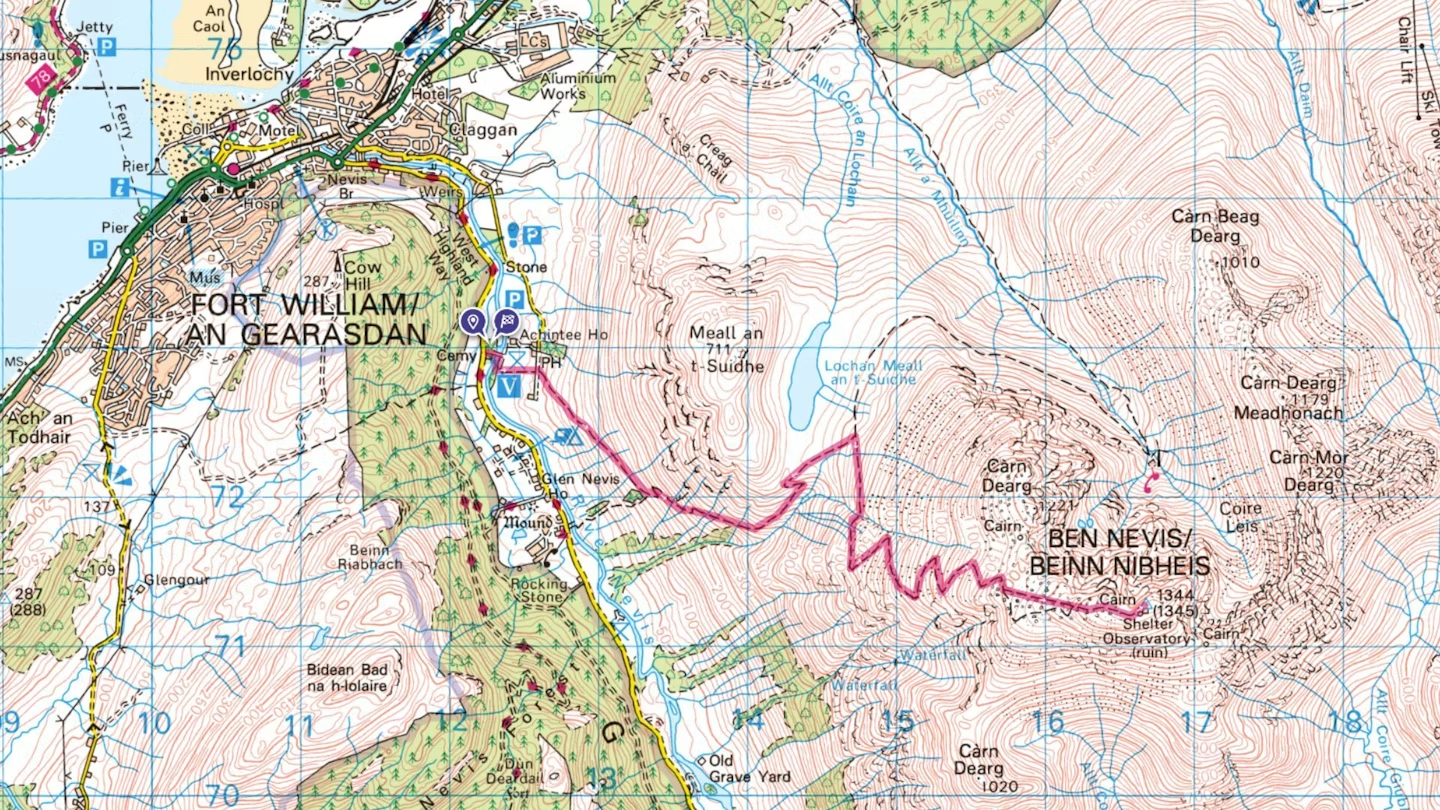
Fort William itself, just a few minutes away, has the widest range of options: budget hostels aimed at hillwalkers and West Highland Way trekkers, mid-range guesthouses and B&Bs, and larger hotels with mountain or loch views. Staying in town gives you easy access to restaurants, shops, and the railway station, while still putting you within a short drive of the glen’s trailheads.
For something quieter, self-catering cottages scattered around Spean Bridge and the wider Lochaber area put you within 15 to 20 minutes of Glen Nevis while offering a more rural, low-key base, which suits travellers who want easy access to multiple glens and lochs rather than basing themselves in one spot.
Tip Box: If you’re planning a Ben Nevis summit attempt, staying as close to the Visitor Centre as possible (within the glen or on the edge of Fort William) lets you start walking at first light without a long drive beforehand.
How to Get to Glen Nevis
Glen Nevis sits in the Western Highlands, and while it’s remote by UK standards, it’s genuinely well connected for a Highland destination.
By car, the main route from the central belt is the A82, which runs from Glasgow through Loch Lomond and Glencoe before reaching Fort William. This drive takes roughly two to three hours from Glasgow, and three to four hours from Edinburgh, and it’s one of the most scenic drives in Scotland in its own right, so budget extra time for photo stops. The nearest major airports are Glasgow International and Edinburgh Airport, both of which have car hire options for the onward drive.
By train, Fort William is served by direct services from Glasgow, and it’s also the starting point for the famous West Highland Line, which many visitors use to reach the town without a car. From the train station, Glen Nevis is a short taxi ride, bus journey, or a walkable but noticeable uphill stretch on foot.
Once you’re in Fort William, local buses run into the glen during the main season, including services to the upper car park near the start of the Nevis Gorge walk, which is a useful option if you’d rather not drive the narrowing single-track road yourself, or if you want to walk one way and catch a bus back.
Quick Facts: Getting There
| From | Approximate Time | Route |
|---|---|---|
| Glasgow | 2–3 hours by car | A82 via Loch Lomond and Glencoe |
| Edinburgh | 3–4 hours by car | M9/A9 or A82 |
| Fort William centre | 5–10 minutes by car | Glen Nevis Road |
| Fort William train station | Short taxi/bus or uphill walk | Local bus or on foot |
Sample 2-Day Itinerary for Glen Nevis
Day 1: Gentle Exploration
Start the morning at the Glen Nevis Visitor Centre to pick up a map and check current trail and weather conditions. From there, drive to the Lower Falls car park and take an easy riverside walk, stopping to paddle or photograph the twin waterfall where the road narrows. In the afternoon, continue to the Braveheart car park and take the walk up to Dun Deardail, allowing three to four hours round trip with time to enjoy the views. Finish the day back in Fort William with dinner and, if the weather isn’t cooperating, a visit to Ben Nevis Distillery for a tour and tasting.
Day 2: Nevis Gorge or the Summit
For most visitors, day two is the choice between the moderate Nevis Gorge walk to Steall Falls (around two to three hours round trip) or a full Ben Nevis summit attempt via the Pony Track (seven to nine hours or more). Choose based on fitness, weather, and daylight hours, and always check the mountain forecast before committing to the summit route. If you opt for Steall Falls, you’ll have time in the afternoon for a relaxed drive to Glenfinnan to see the viaduct, or a boat trip on Loch Linnhe. If you attempt Ben Nevis, plan for an early start, pack accordingly, and treat the rest of the day as recovery.
Travel Tips for Visiting Glen Nevis
Weather in the Highlands changes quickly, and conditions at the top of Ben Nevis are routinely far worse than at the base, so always check a dedicated mountain forecast rather than a general town forecast before any serious walk. Layers matter more than any single piece of gear; even in summer, a warm layer and waterproof shell should be in your bag.
Parking at the main Ben Nevis car park fills early in peak season, often before 9am in July and August, so arriving early is as much about finding a space as beating the crowds. Midges, tiny biting insects common in the Highlands from late spring through early autumn, are most active on calm, overcast evenings, so repellent and covering up around dawn and dusk make a real difference to comfort.
The single-track road further into the glen has passing places rather than a continuous two-lane surface, so drive with patience, pull into passing places to let oncoming traffic through, and never park in one. For accessibility, the lower riverside paths near the Visitor Centre are relatively flat and manageable for pushchairs or those with limited mobility, while the Nevis Gorge path and anything above it involves uneven, sometimes steep terrain unsuitable for wheelchairs or standard pushchairs.
For families: the Lower Falls area and the riverside paths near the start of the glen are the easiest wins, with paddling spots and short, flat walking. For couples: the walk to Steall Falls offers a good mix of dramatic scenery and manageable effort, with fewer crowds than the main Ben Nevis path. For solo travellers: the glen is generally safe and well-used by other walkers, but anyone heading up Ben Nevis alone should tell someone their planned route and expected return time, and carry a fully charged phone along with proper navigation.
Photography tips: early morning light in Nevis Gorge, with mist still sitting low in the valley, is consistently one of the best conditions for photos in the whole glen. The Lower Falls area works well for both wide landscape shots and closer detail shots of the water against the rock.
Nearby Places to Visit
Glencoe, one of Scotland’s most photographed glens, sits around 30 minutes from Fort William and makes an easy add-on for a full day of dramatic Highland scenery, including the Glencoe hidden valley walk. Glenfinnan, home to the Glenfinnan Monument and the viaduct made famous by the Harry Potter films, is roughly 25 to 30 minutes away and particularly popular when the Jacobite Steam Train crosses the viaduct during the summer season.
The Nevis Range gondola, a short drive from Glen Nevis, gives access to mountain views without the effort of a full hike, along with mountain biking trails for those who want a more active day. Neptune’s Staircase, a striking series of eight canal locks on the Caledonian Canal near Fort William, is an easy, low-effort stop that appeals to engineering enthusiasts and casual visitors alike. For those continuing further afield, Eilean Donan Castle and the road to the Isle of Skye extend naturally from a Fort William base, though they require a longer day trip.
Frequently Asked Questions
How long does it take to walk up Ben Nevis? Most walkers take seven to nine hours round trip via the Pony Track, though this varies with fitness, weather, and trail conditions. Start early to allow enough daylight, especially outside of summer months.
Is Glen Nevis suitable for families with young children? Yes, particularly the lower riverside paths near the Visitor Centre and the Lower Falls area, which are relatively flat and offer paddling spots. Steeper routes like Ben Nevis or Dun Deardail suit older, more active children.
Where was Braveheart filmed in Glen Nevis? The funeral scene was filmed in the glen, and the main car park near the estate is now known as the Braveheart car park in reference to this. Most of the film was actually shot elsewhere, including Ireland.
Can you swim in the River Nevis? Wild swimming and paddling happen informally at spots like the Lower Falls, but the water is cold year-round and can rise quickly after rain, so caution and local knowledge matter more than confidence.
Is there parking at the start of the Ben Nevis walk? Yes, at the main car park near the Glen Nevis Visitor Centre, though it fills early during peak summer months. Arriving before 9am improves your chances of a space.
How difficult is the walk to Steall Falls? It’s a moderate walk of around 30 to 45 minutes each way through Nevis Gorge, with rocky, occasionally slippery terrain, but no significant elevation gain, making it accessible to most reasonably fit walkers.
What’s the best time of year to visit Glen Nevis? Late spring through early autumn offers the most reliable weather and longest daylight, though summer brings crowds and midges. Autumn often provides the best light for photography with fewer visitors.
Do I need a car to visit Glen Nevis? A car makes exploring the whole glen easier, particularly the upper car park near Nevis Gorge, but local buses run seasonally into the glen from Fort William for those without one.
Is Ben Nevis dangerous for inexperienced walkers? It can be, mainly due to fast-changing weather and reduced visibility near the summit, even in summer. Proper gear, navigation skills, and realistic planning are essential, not optional.
How far is Glen Nevis from Fort William town centre? It’s around 2 to 3 kilometres from the town centre to the Visitor Centre, making it an easy short drive, taxi ride, or a walkable but uphill journey on foot.
Conclusion
Glen Nevis manages something a lot of famous natural landmarks don’t: it works just as well for a two-hour visit as it does for a full weekend. You can drive in, walk the easy riverside path, take a few photos, and drive out feeling like you’ve seen something genuinely special. Or you can spend two full days here, tackling Ben Nevis one day and the Nevis Gorge the next, and still leave feeling like there’s more to explore.
What makes Glen Nevis worth the detour, ultimately, is how much variety sits within such a small area: a serious mountain, a spectacular gorge, gentle family-friendly paths, real history at Dun Deardail, and a genuine connection to some well-loved films. Whatever kind of trip you’re planning, whether that’s a demanding hillwalking holiday or a relaxed few days based in Fort William, Glen Nevis deserves a firm spot on the itinerary. Check the weather, pack accordingly, and give yourself more time here than you think you’ll need.