
Table of Contents
Kynance Cove
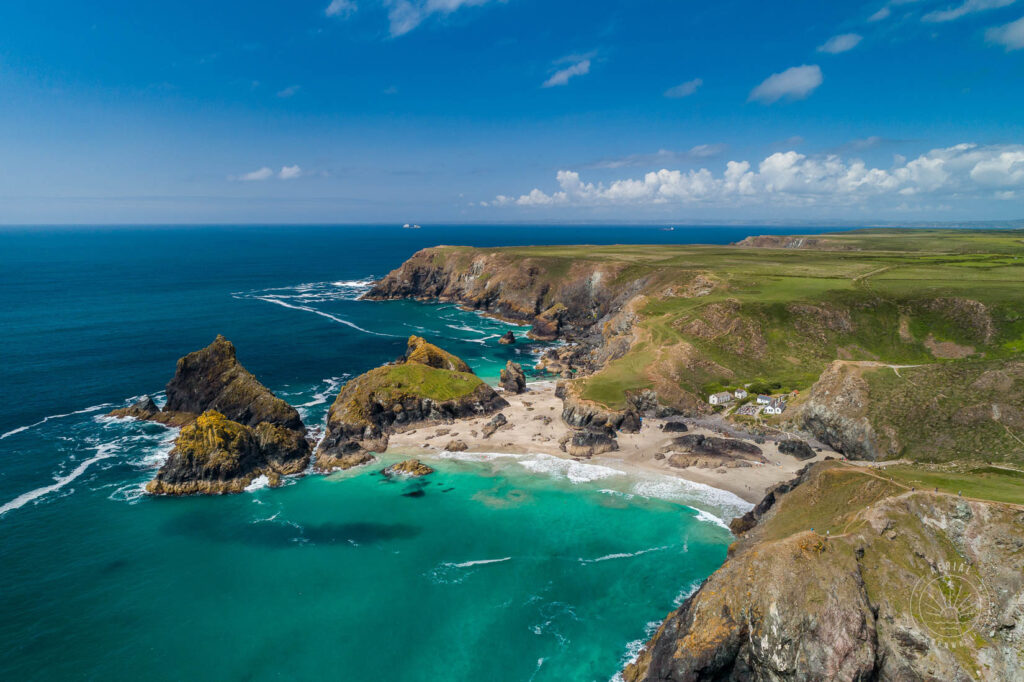
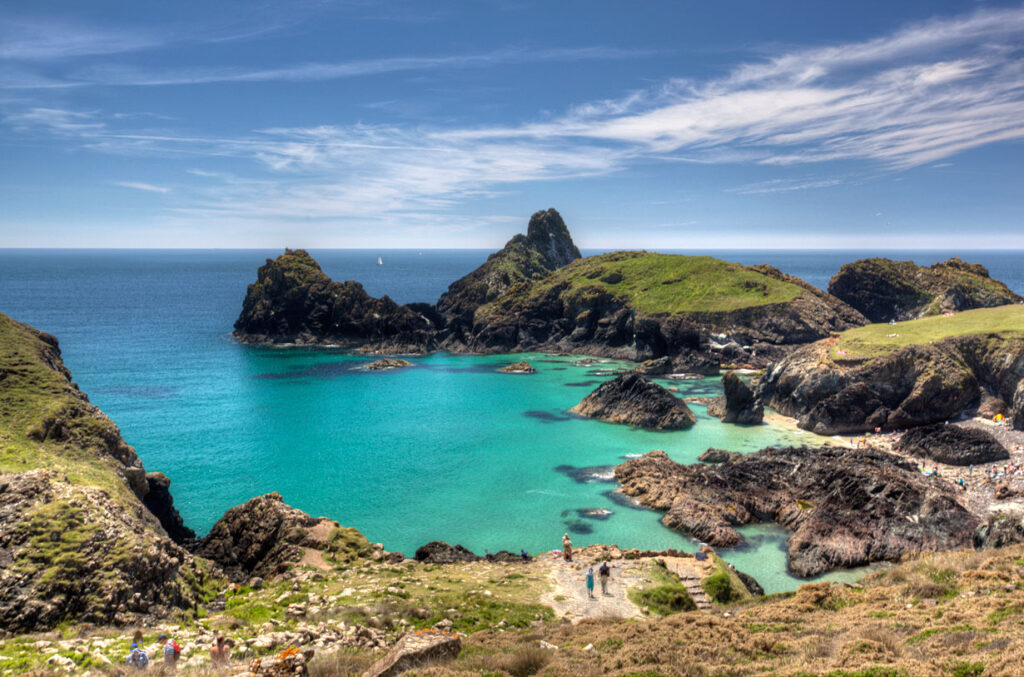
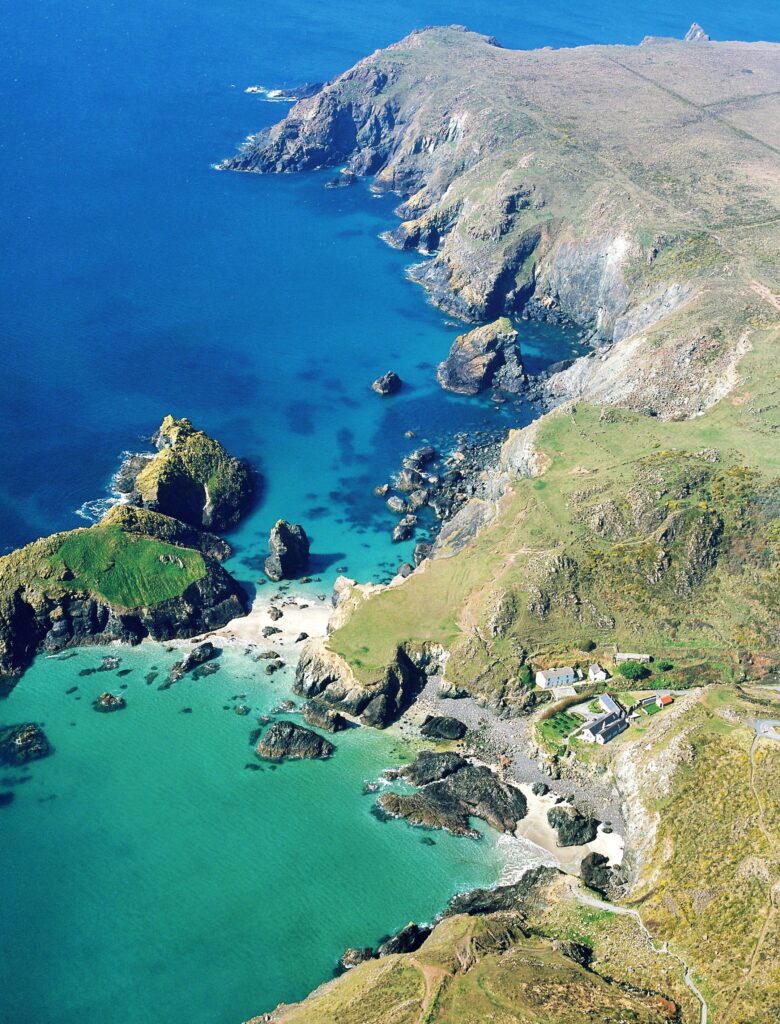
Kynance Cove looks almost unreal in photographs, and the real place is just as striking. It sits on the Lizard Peninsula in south-west Cornwall and is cared for by the National Trust. The beach combines white sand, clear turquoise water and dark serpentine rock stacks streaked with red and green. At low tide, caves and small islands open up to explore. At high tide, most of the sand disappears and the cove becomes a show of waves and cliffs.
That tidal change is the most important thing to understand before you go. It decides how much beach you get, which path you can use and how safe it is to wander around the rocks. Add limited parking, a steep walk down and seasonal dog rules, and a little planning goes a long way.
This guide answers the questions most travellers ask. When should you go? Where do you park? How long is the walk from the car park? What can you do once you arrive, and what should you know if you are bringing children or a dog? It also looks at coastal walking routes from the cove towards Lizard Point.
The details here draw on published information from the National Trust and other travel sources. Prices, café opening and tide times can change, so check them shortly before your trip. Conditions on the Cornish coast shift quickly, and a few minutes of checking can save you a wasted journey.
If you want a beach day that feels properly wild, Kynance Cove is well worth the effort. Here is how to make the most of it.
Why Visit Kynance Cove?
Kynance Cove stands out because it does not look like most British beaches. The National Trust describes turquoise seas meeting a white sandy beach dotted with colourful serpentine rock stacks. Serpentine is a rock found on the Lizard, and its green, red and white patterns give the cove its unusual colours.
The cove is also an important natural area. The National Trust says the surrounding heath supports wildlife including lizards, reptiles, ground-nesting birds and seabirds. That is a good reason to stay on marked paths, take your litter home and keep dogs under close control.
Even if you cannot manage the walk down, the views from the car park and the nearby cliff tops are impressive. That makes Kynance a rewarding stop for people who cannot use the steps.
The cove also sits on the South West Coast Path. You can pair a beach visit with a proper clifftop walk, which turns a short stop into a full day out.
Expect company in summer. This is one of Cornwall’s best-known beaches, and it feels more relaxed outside school holidays.
Best Time to Visit Kynance Cove
The tide matters more than the month. Aim for low to mid tide, when the sandy beach is at its largest and the caves and rock formations are easier to reach. At high tide the beach almost completely disappears, and you can end up cut off if you explore too far.
Season is the second consideration. Summer brings the warmest, calmest days and the clearest water, but also the biggest crowds. The National Trust says the car park is often full in the summer months and throughout September. If you can, choose a weekday or a shoulder-season visit, and arrive early in the morning.
The café is open all year, weather permitting, so a quieter off-season trip is still possible. Just pack for changeable weather, because the coast is exposed.
How to Read Tide Times
Look up a local tide table for the day of your visit and note the time of low water. Many visitors find that arriving on a falling tide gives them longer on the sand. Once the tide turns, keep an eye on the water around the rocks and caves. Never go so far that your route back could be cut off. If you are unsure, turn back early.
How to Get to Kynance Cove
Kynance Cove is on the Lizard Peninsula, and there is no public vehicle access to the cove itself. Most visitors drive to the National Trust car park above it. The postcode is TR12 7PJ, and the car park is open all year.
National Trust members park free. Non-members pay by coins at the pay-and-display machine or through the JustPark app. The National Trust lists £2 for one hour, £5 for four hours and £10 for over four hours, but check the current prices before you travel. Mobile signal is limited on site, so download the app in advance. The car park has limited space and is not suitable for coaches.
If it is full, the National Trust suggests visiting another time. Private car parks open seasonally around the Lizard, but they are roughly a 40-minute walk from the cove. Another option is to park in Lizard village or at Lizard Point and walk about 2.5 miles along the coast.
I could not confirm current bus services, so check timetables before relying on public transport.
| Information | Details |
|---|---|
| Best time to visit | Low to mid tide, outside school holidays |
| Parking | National Trust car park, TR12 7PJ; free for members |
| Walk to beach | About 10 minutes (steep, with steps) or 15–20 minutes (flatter route) |
| Facilities | Toilets at the car park and cove; café near the beach |
| Dogs | Not allowed on the beach 1 July–31 August, 10am–6pm |
| Lifeguards | None |
The Walk Down to the Beach
There are two routes from the car park. The main path takes about 10 minutes. It is steep in places and finishes with steps down onto the sand. It is the quicker option, but it is not suitable for pushchairs or anyone who struggles with uneven ground.
The second route is flatter and longer, taking around 15 to 20 minutes. It starts beside the car park toilets, loops around the back of the cove and comes out near the café. It is the better choice with a pushchair, and it is the route you need at high tide. Some visitors report having to climb over stones to reach the sand from this side, so it is not a perfectly smooth access route.
Wear sturdy shoes with good grip. The walk back up is the harder part, especially after a swim or with tired children, so allow yourself time and water for the climb.
Accessibility
The car park has an accessible toilet, and the National Trust points visitors to the AccessAble guide for full access details. One travel writer reports a disabled parking area near the café, with a steep approach road. Check this with the National Trust before you travel.
Best Things to Do at Kynance Cove
The main attraction is the beach itself. At low tide you can walk between the serpentine stacks, look into sea caves and see rock pools. The National Trust notes that caves and islands are open to explore at low tide, with a clear warning about the risk of being cut off.
Other things worth doing:
- Photograph the rocks and turquoise water from the cliff path as well as from the sand.
- Have a picnic on the beach if the tide allows.
- Paddle or swim in calm conditions. Swimming is possible, but the sea can be rough and there are no lifeguards.
- Stop at Kynance Cove Café, a National Trust concession. One travel guide mentions crab sandwiches, pasties and cream teas. Some visitors find prices high.
- Look out for wildlife on the surrounding heath and cliffs, without disturbing it.
Give yourself a couple of hours at least. The walk down, the tide and a café stop can fill more time than you expect. If you are coming from a distance, pair the cove with a coast path walk rather than treating it as a quick photo stop.
Coastal Walks Around Kynance Cove
The South West Coast Path runs past the cove, with clifftop walks in both directions. Walking towards Lizard Point is a popular choice. Lizard Point is the most southerly point of mainland Britain, and the route gives wide sea views and rugged scenery.
One guide gives the distance between Lizard village or Lizard Point and Kynance as about 2.5 miles along the coast. That makes a walk from either place realistic if you want to avoid the car park. Remember that you will need to return the same way or arrange transport.
Some sections of the path are steep, so wear proper footwear. Weather on this exposed coast can change quickly, so carry a waterproof layer and water. Mobile signal is limited, so do not rely on your phone for navigation or parking payments.
Livestock sometimes graze on the surrounding fields and downs. If you meet cattle or sheep, keep dogs on a lead and give the animals space. If cattle approach, the National Trust advises letting your dog off the lead so you can both move away safely.
Dogs, Facilities and Safety Tips at Kynance Cove
Kynance has toilets at the car park and at the back of the beach near the café. The café is open all year, weather permitting. There are no lifeguards, so treat the sea and the tide with respect.
Kynance Cove with Dogs
Dogs can use the sandy beach for ten months of the year and the footpaths all year. A Cornwall Council restriction bans dogs from the beach between 1 July and 31 August, from 10am to 6pm. Outside those hours dogs are welcome, and they should be under close control. The National Trust says there are water bowls outside the café and dog waste bins in the car park.
Quick Safety Checklist
- Check tide times before you leave.
- Do not explore caves or rock channels if the tide is coming in.
- Wear sturdy footwear for the path and steps.
- Keep children close near rocks and water.
- Download the parking app before arriving.
- Take all litter home.
FAQ
Is Kynance Cove worth visiting?
Yes, if you enjoy dramatic coastal scenery. The white sand, turquoise water and serpentine rocks are the main draw. Visit at low to mid tide for the best beach, and arrive early in summer because parking and the beach can both get very busy.
How much does it cost to park at Kynance Cove?
National Trust members park free. Non-members pay through the pay-and-display machine or the JustPark app. The National Trust lists £2 for one hour, £5 for four hours and £10 for over four hours. Prices may change, so check before you travel, and download the app first because signal is limited.
Are dogs allowed at Kynance Cove?
Yes, with a seasonal restriction. Dogs are not allowed on the beach from 1 July to 31 August between 10am and 6pm. At other times they are welcome on the beach and on the footpaths all year. Keep them under close control, especially near wildlife and livestock.
What is the best time to visit Kynance Cove for the beach?
Low to mid tide is best, because at high tide the beach almost completely disappears. Check tide times for your date. For fewer crowds, choose an early start or a visit outside school holidays, as the car park is often full in summer and September.
How long is the walk from the car park to Kynance Cove?
The main path takes about 10 minutes but is steep, with steps at the bottom. The flatter route to the café takes around 15 to 20 minutes and is better for pushchairs. It is also the route to use at high tide.
Conclusion
Kynance Cove rewards visitors who plan ahead. The tide decides how much beach you get, so check it first and aim for low to mid tide. Arrive early, especially in summer, because the National Trust car park is limited and can fill up. Wear sturdy shoes, choose the path that suits your group, and remember that there are no lifeguards. If you have a dog, plan around the 1 July to 31 August daytime beach restriction.
Once you are there, take your time. Explore the rocks and caves while the tide allows, stop at the café, and consider a stretch of the coast path towards Lizard Point. Whether you come for a short visit or a full day, Kynance Cove is one of the most memorable stops on the Lizard Peninsula. Check the tide, pack your walking shoes and start planning your trip.