
Table of Contents
Cheddar Gorge
Introduction
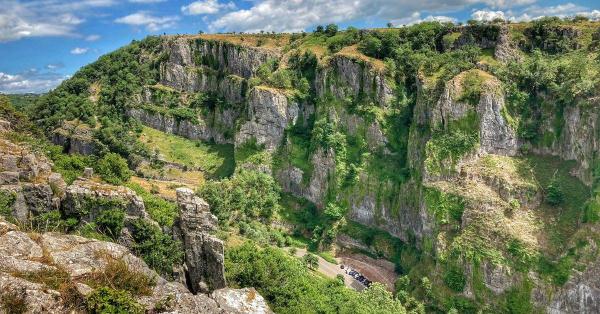
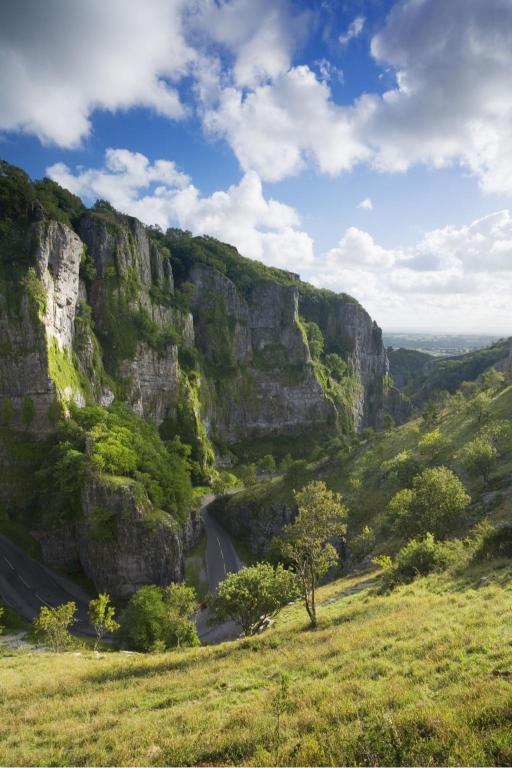
Cheddar Gorge cuts through the Mendip Hills like something out of a different continent, not a quiet corner of Somerset. Limestone cliffs rise nearly 450 feet on either side of the road, feral goats pick their way along impossible ledges, and beneath it all lies one of the most important prehistoric sites in Britain. This Cheddar Gorge travel guide is built from actual visits, current ticket information, and the kind of detail that only comes from walking the paths yourself: which car park fills up first, which cave smells like damp stone and history, and why you should never start the clifftop walk from the wrong end.
Whether you’re coming for a single afternoon on a Somerset road trip or building a full weekend around the Mendip Hills, this guide covers the best things to see and do in Cheddar Gorge, along with food, accommodation, transport, and a sample two-day itinerary you can follow step by step.
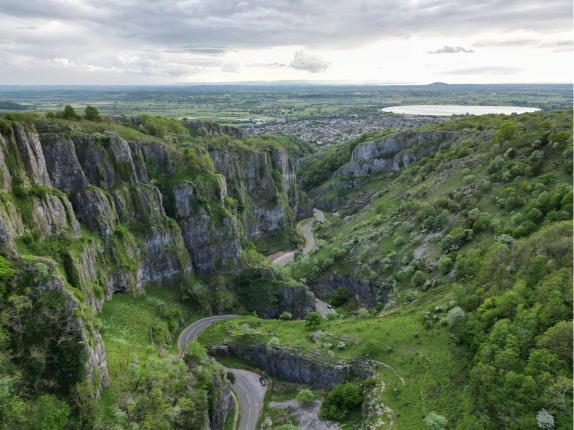
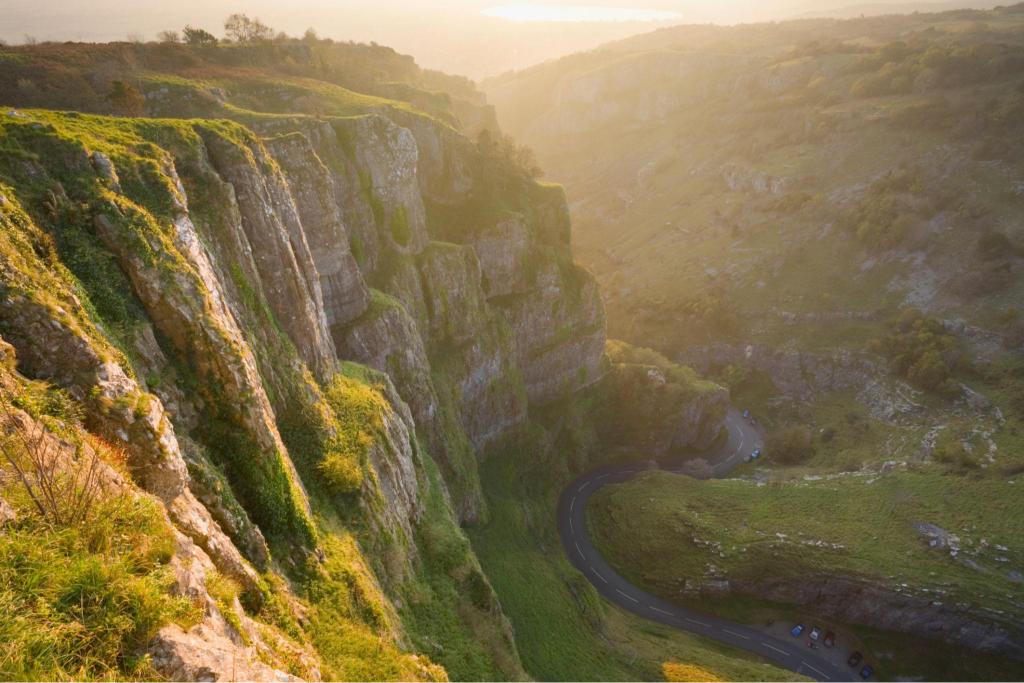
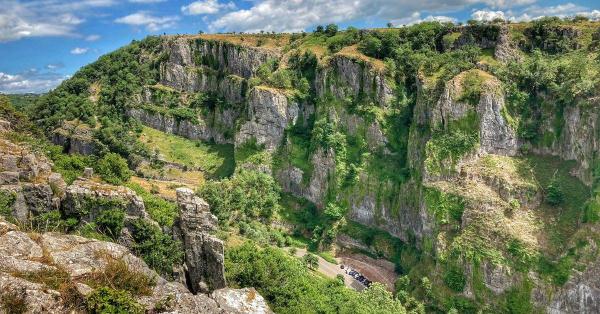
Image: Cheddar Gorge cliffs from the B3135 road ALT text: Towering limestone cliffs of Cheddar Gorge rising above the winding B3135 road in Somerset.
Why Visit Cheddar Gorge
Cheddar Gorge is England’s largest gorge, and depending on which measurement you use, it’s also the deepest inland limestone gorge in the country. It formed roughly a million years ago, when meltwater from the last Ice Age carved through soft limestone rock, eventually driving the Cheddar Yeo river underground and hollowing out the cave network that made this place famous.
There’s a reason this landscape carries so much protection. It sits within the Mendip Hills National Landscape (formerly an Area of Outstanding Natural Beauty), and much of the gorge is a Site of Special Scientific Interest thanks to its rare plants, including the Cheddar pink, a flower found nowhere else in the wild in Britain. Peregrine falcons nest in the cliffs, and if you look up while you’re driving through, you’ll likely spot climbers on the rock faces too, since the gorge is one of the UK’s best-known centres for climbing and caving.
Then there’s the human history. In 1903, workmen digging in Gough’s Cave found a nearly complete skeleton later named Cheddar Man, dated to around 10,000 years ago. DNA analysis in 2018 suggested he likely had dark skin and blue eyes, a finding that reshaped a lot of popular assumptions about early Britons. You can see a replica of the skeleton and learn about the discovery inside the caves themselves.
Add in Britain’s oldest recorded cheese-making tradition, a working village built into the cliffs, and a clifftop walk with views stretching to Glastonbury Tor, and it’s easy to see why Cheddar Gorge draws visitors back year after year.
Internal link suggestion: Somerset Travel Guide Internal link suggestion: Wells and Glastonbury Day Trip Guide Internal link suggestion: Mendip Hills Walking Routes
Best Things to See and Do in Cheddar Gorge
There’s more packed into this stretch of Somerset than most first-time visitors expect. Broadly, things to do in Cheddar Gorge fall into four categories: the show caves and museum attractions, the clifftop and gorge walks, adventure activities like caving and rock climbing, and the village itself with its cheese shops and tearooms.
Most people budget half a day for the caves and village, but if you want to add the full clifftop walk, plan for a full day. Families with young children often stick to the lower gorge and caves, while keener walkers head straight for Black Rock and the West Mendip Way.
Quick Facts
| What | Details |
|---|---|
| Location | Cheddar, Somerset, BS27 3QF |
| Gorge length | Around 3 miles |
| Maximum cliff height | Approximately 450 ft (137m) |
| Managed by | Longleat Enterprises (caves and attractions) and the National Trust (much of the clifftop land) |
| Typical visit length | Half a day (caves only) to a full day (with the clifftop walk) |
Top Attractions
Gough’s Cave
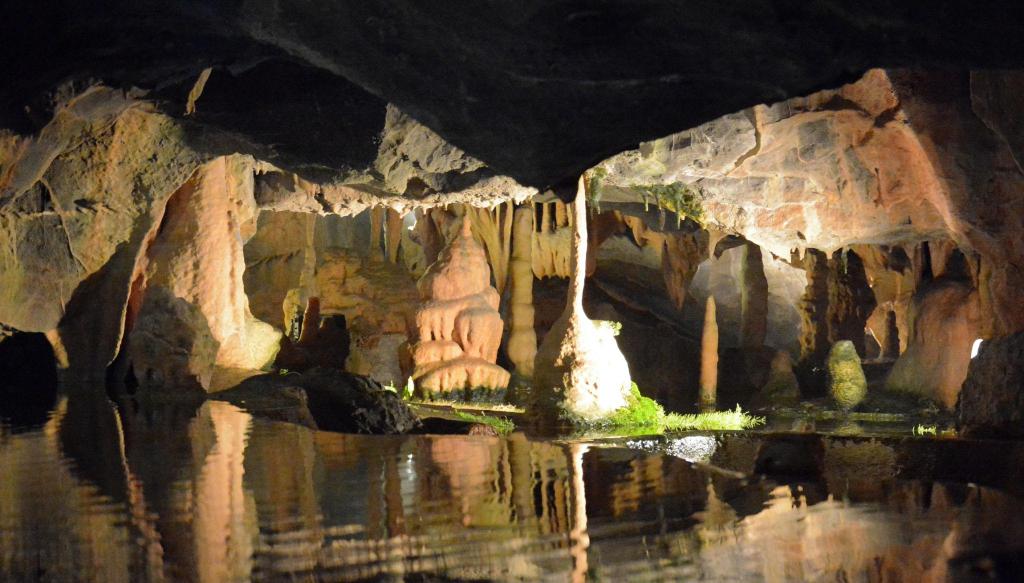
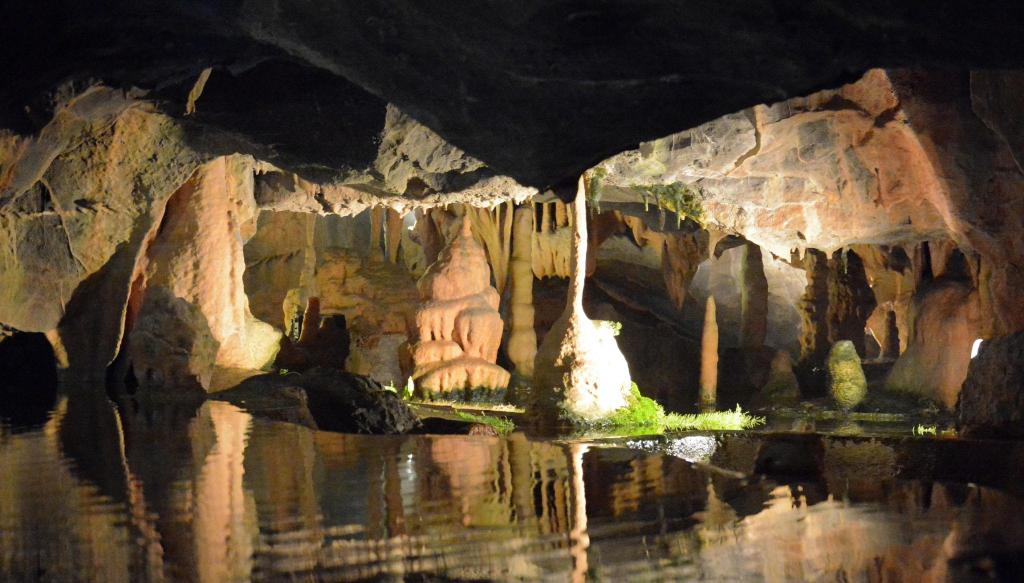
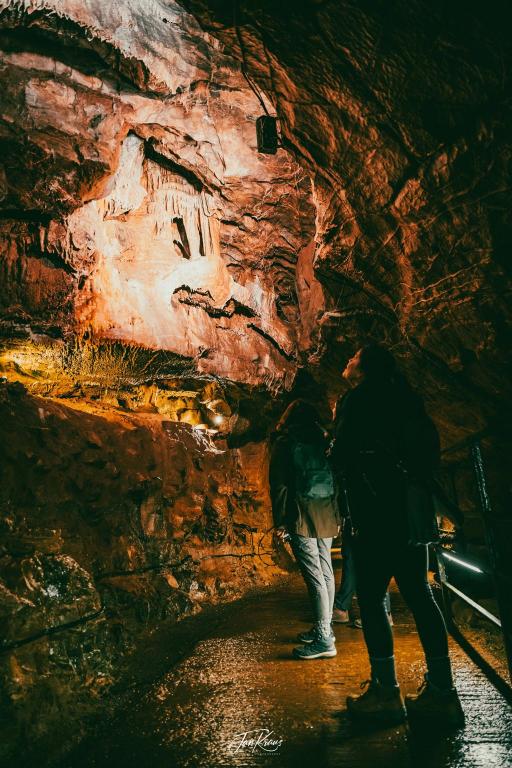
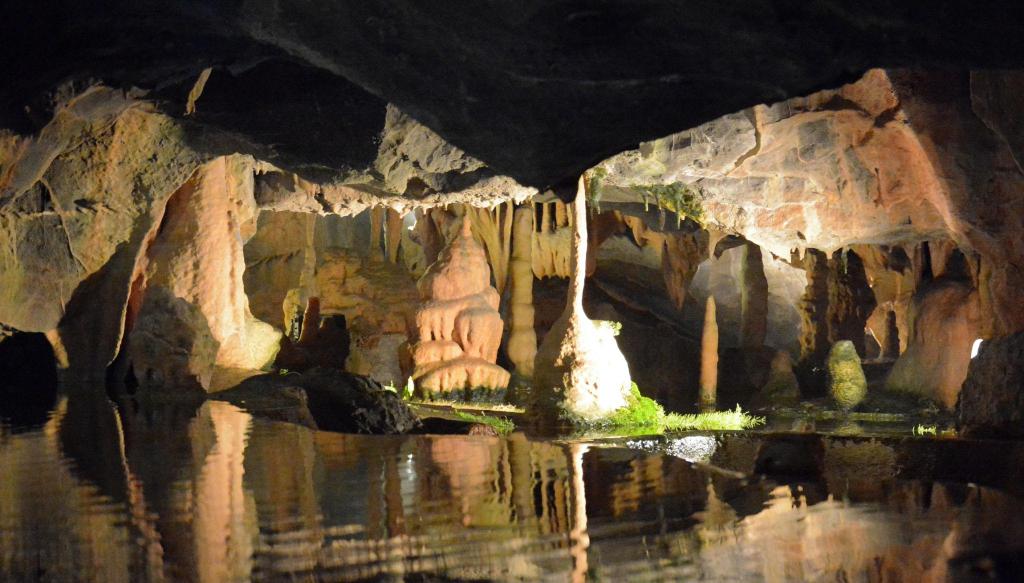
Gough’s Cave is the headline attraction, and rightly so. This show cave is where Cheddar Man was discovered, and it’s still an active archaeological site in places. Walking through, you’ll see dramatic stalactite and stalagmite formations that have been forming for roughly 500,000 years, alongside wheels of Cheddar cheese quietly maturing in the cool, constant temperature of the cave. A free audio guide is available in several languages, with a separate version aimed at children, so it works well for mixed-age family groups.
Budget around 30 to 45 minutes to walk through at a comfortable pace and actually read the information boards.
Cox’s Cave and the “Power of Water” Experience
Smaller than Gough’s Cave but atmospheric in its own right, Cox’s Cave now houses an immersive multimedia experience that tells the story of how the caves were carved out over hundreds of thousands of years by moving water. It’s a good stop for younger children who might find a straightforward cave walk less engaging, since the lighting, sound, and animation add a sense of theatre.
The Museum of Prehistory
This small but well-curated museum puts the Cheddar Man discovery into context, alongside other prehistoric finds from the caves. It’s compact, so most visitors move through it in 20 to 30 minutes, but it’s worth the time if you want to understand what you’ve just walked through underground.
Jacob’s Ladder and the Lookout Tower
Jacob’s Ladder is a steep staircase of 274 steps built in 1899, climbing up the south side of the gorge to Pavey’s Lookout Tower, a small 1908 structure with a further 48 steps to a circular viewing platform. From the top, the views stretch out over the village, the reservoir, and on a clear day, across the Somerset Levels toward Glastonbury Tor. Access to Jacob’s Ladder and the tower is included with a Day Ticket.
Image: View from the Lookout Tower ALT text: Panoramic view over Cheddar village and the Somerset Levels from the top of Pavey’s Lookout Tower.
Rock Climbing, Caving, and the Escape Rooms
For a more active day out, Cheddar Gorge & Caves runs Rocksport sessions covering climbing and caving for groups, typically suitable for ages eight and up, plus a Black Cat Freefall activity inside Gough’s Cave for the more adventurous. There are also two on-site escape rooms with a Cheddar-themed storyline, a good wet-weather backup if the clifftop walk isn’t appealing that day.
Tip box: Book Rocksport and escape room sessions in advance during school holidays. These activities run on fixed time slots and do sell out, especially at weekends.
Hidden Gems
Not everything worth seeing in Cheddar Gorge is on the main ticket. A few spots reward visitors who wander slightly off the well-trodden path.
- Black Rock Nature Reserve. At the top of the gorge on the B3135, this National Trust reserve offers free parking and access to quieter woodland trails, away from the crowds around the show caves.
- Velvet Bottom. A peaceful former lead-mining valley just beyond Black Rock, good for a short detour if you want to extend the walk and spot wildlife away from the main gorge road.
- Pulpit Rock. A distinctive rock formation on the clifftop path, easy to miss if you’re not looking for it, but a good photo stop with the gorge falling away below.
- Gough’s Old Cave. Less visited than the main show cave, this smaller cave near the entrance has its own history as one of the earliest tourist caves opened in the gorge during the Victorian era.
- The water gardens in Cheddar village. Tucked behind the main street, these small ornamental gardens are an easy, free stop for anyone who wants a quiet five minutes away from the shops.
Best Walks and Clifftop Views
There’s no beach at Cheddar Gorge, but the clifftop and valley walking more than makes up for it, and the views rival anything on the coast.
The Cheddar Gorge Clifftop Circular Walk
The signature walk here is a roughly 3 to 3.5 mile circular route along both sides of the gorge, usually taking two to three hours depending on fitness and how many photo stops you make. It’s rated moderate, with a genuinely steep climb on one side, loose rock in places, and no fencing at several clifftop viewpoints.
Most experienced local walkers recommend doing the loop clockwise, since that way you descend the 274 steps of Jacob’s Ladder rather than climbing them, and you can walk the route entirely for free by starting from Black Rock, Culfic Lane, or Lynch Lane instead of the paid entrance at Jacob’s Ladder itself.
Comparison table: Free vs Paid Starting Points
| Starting Point | Cost | Notes |
|---|---|---|
| Black Rock Nature Reserve | Free | Limited lay-by parking, quieter start |
| Culfic Lane (near Lion Rock) | Free | Steep climb, starts in the village |
| Lynch Lane / The Lippiatt | Free | Bypasses Jacob’s Ladder entirely |
| Jacob’s Ladder | Paid (Day Ticket) | Only way to legally ascend the steps and tower |
Cheddar Reservoir Walk
For something flatter and fully accessible, the path around Cheddar Reservoir is a level, roughly 3-mile circular route on tarmac, suitable for wheelchairs, prams, and anyone who wants gorge-adjacent views without the climb.
Strawberry Line
Part of the National Cycle Network, this old railway path runs from Yatton through to Cheddar and beyond, popular with cyclists and walkers looking for an easy, traffic-free route through the surrounding countryside.
Photography tip: Early morning light hits the north side of the gorge first, so if you want the cliffs without a flat, midday glare, aim to be on the clifftop path by 9am. Sunset from the Lookout Tower over the Somerset Levels is also worth timing your visit around in summer.
Accessibility note: The caves, Jacob’s Ladder, and the full clifftop walk are not accessible for wheelchair users or anyone with significant mobility restrictions, due to steps, uneven rock, and steep gradients. The Museum of Prehistory has lift access, and the Cheddar Reservoir walk is the most accessible option in the area.
Local Food and Famous Specialties
You cannot visit Cheddar Gorge without trying the cheese it gave its name to, and doing it properly means going beyond the supermarket block.
Cheddar cheese, matured in the caves. The constant cool temperature and humidity inside Gough’s Cave create ideal maturing conditions, and a small amount of cheese is still aged there today by a local producer. Look out for cave-aged Cheddar at the on-site shop or at the Cheddar Gorge Cheese Company in the village, where you can usually watch cheese being made by hand and try samples ranging from mild to seriously mature.
Local cider. Somerset is cider country, and several small producers around the Mendips sell traditional, still cider with far more character than the mass-market versions. Worth picking up a bottle to take home if you’re driving.
Cream teas. Scones, clotted cream, and jam are a Somerset staple, and several tearooms in the village serve a proper cream tea, a good reward after the clifftop walk.
Family-friendly note: Gough’s Café has a small play area for under-twos, plus highchairs and water refill points, useful if you’re travelling with a toddler and need a low-effort stop.
Couples’ tip: For something quieter than the main café strip, look for the smaller independent tearooms tucked just off the High Street, several of which have outdoor seating with gorge views.
Best Time to Visit Cheddar Gorge
Spring (March to May). A good balance of fewer crowds and mild walking weather. Wildflowers, including early signs of the Cheddar pink, start to appear on the cliffs.
Summer (June to August). The busiest season, especially during school holidays and at weekends. Arrive before 11am if possible to get parking, and expect the caves and village to be at their busiest between midday and 3pm.
Autumn (September to October). A quieter, arguably more atmospheric time to walk the gorge, with good light for photography and cooler temperatures for the steeper sections of the clifftop path.
Winter (November to February). The caves stay open year-round (excluding Christmas Day and Boxing Day, with some seasonal closures), and a winter visit means far fewer people. The clifftop walk can be muddy and genuinely slippery in places, so this season is better suited to the caves and village than the full circular walk unless you’re an experienced, well-equipped walker.
Solo traveler tip: Weekday mornings, outside of school holidays, are the quietest time to have the clifftop path largely to yourself.
Where to Stay Near Cheddar Gorge
Cheddar village itself has a handful of pubs with rooms and small guesthouses, which suit visitors who want to walk straight out to the gorge without driving. For more choice, nearby towns extend your options considerably.
- In Cheddar village: Good for early starts on the clifftop walk and easy access to the caves and cheese shops on foot. Options are limited, so book ahead in summer.
- Wells (around 9 miles): England’s smallest city, with a wider range of hotels and B&Bs, plus its own cathedral and moated Bishop’s Palace worth visiting.
- Axbridge (around 2 miles): A small, characterful market town with historic buildings, a shorter drive to the gorge than Wells.
- Camping and glamping: Several campsites operate in the wider Mendip Hills area, popular with walkers and climbers who want to be close to the trailheads.
Approximate cost guide: Budget guesthouses in the area typically start from around £70 to £90 per night for a double room in low season, rising during summer weekends and school holidays. Self-catering cottages and glamping pods vary more widely depending on size and season.
How to Get to Cheddar Gorge
By car. Cheddar Gorge sits just off the A371 between Wells and Axbridge, and is easily reached from the M5 (leave at Junction 22, following signs via Weston-super-Mare, or Junction 21 for a route via Weston and the coast road). The drive through the gorge itself, along the B3135, is one of the most scenic short drives in the country, though the road narrows in places and isn’t always suitable for larger vehicles.
Parking. There’s a paid car park at Cliff Street in the village, plus roadside parking along the gorge itself using pay-and-display meters, with funds going toward conservation of the site. Free, limited parking is available at Black Rock Nature Reserve at the top of the gorge, though spaces fill quickly at weekends.
By public transport. Bus services connect Cheddar to Weston-super-Mare, Wells, and surrounding towns, though frequency is limited, particularly on Sundays and in winter. Check current timetables before relying on buses for a day trip, since rural services can change.
By bike. The Strawberry Line cycle route offers a traffic-free approach from Yatton and the surrounding villages for anyone wanting to arrive under their own power.
External source suggestion: Official Cheddar Gorge & Caves website (for live opening times and ticket prices) External source suggestion: National Trust Cheddar Gorge trail page (for walking routes and access details) External source suggestion: Visit Somerset official tourism website (for wider area planning)
Sample 2-Day Cheddar Gorge Itinerary
Day 1: Caves, Village, and Cheese
Morning: Arrive early, aim for before 10:30am in peak season. Start with Gough’s Cave, allowing 45 minutes, followed by Cox’s Cave and the Museum of Prehistory.
Midday: Lunch in the village. Try a local pub for a proper Somerset ploughman’s or a café for something lighter.
Afternoon: Visit the Cheddar Gorge Cheese Company to watch cheesemaking and taste different maturities. Browse the village shops, then walk to the water gardens for a quieter half hour.
Evening: Settle into your accommodation, whether that’s in the village or a short drive away in Axbridge or Wells.
Day 2: The Clifftop Walk
Morning: Start early at Black Rock Nature Reserve to avoid both crowds and the midday heat in summer. Walk the clifftop circular route clockwise, allowing two to three hours.
Midday: Stop at the grassy area roughly 40 minutes into the walk for a packed lunch with gorge views, or push on and eat back in the village.
Afternoon: Descend via Jacob’s Ladder into the village. If you have energy left, add the Cheddar Reservoir walk for an easier, flatter finish to the day.
Evening: Head onward to Wells or Glastonbury if continuing your Somerset trip, both under half an hour away.
Travel Tips for Visiting Cheddar Gorge
- Wear proper footwear. Walking boots or sturdy trainers with grip are essential for the clifftop walk, which turns slippery quickly after rain.
- Bring water and snacks. There’s little shade or refreshment once you’re on the clifftop path itself.
- Watch the weather. High wind makes the unfenced cliff edges genuinely dangerous. Postpone the clifftop walk if conditions are poor.
- Book tickets online in advance for the caves and attractions where possible, since prices are often lower than paying on the day and it avoids queuing at busy times.
- Dogs are welcome on leads in most parts of the gorge and attractions, with water bowls provided at cave entrances.
- Keep children close to cliff edges at all times; several sections of the clifftop path have sheer, unfenced drops.
- Arrive early in summer. Parking fills up fast during school holidays, and arriving before 11am makes a noticeable difference.
Nearby Places to Visit
Wookey Hole Caves (around 8 miles): Another dramatic Mendip Hills cave system, with a different character and set of attractions to Cheddar, making it an easy pairing for a longer Somerset trip.
Wells (around 9 miles): England’s smallest city, home to Wells Cathedral and the moated Bishop’s Palace, both worth at least half a day.
Glastonbury (around 12 miles): Known for Glastonbury Tor and its abbey ruins, with striking views back toward the Mendip Hills on a clear day.
Bristol (around 20 miles): A larger city option for those wanting more nightlife, museums, and the Clifton Suspension Bridge, easily reached via the M5.
Frequently Asked Questions
How long does it take to visit Cheddar Gorge? Most visitors need two to four hours to see the caves and village comfortably. Add the full clifftop circular walk, and a proper visit takes a full day, particularly if you also want time for cheese tasting or the escape rooms.
Is Cheddar Gorge worth visiting? Yes. It combines a dramatic natural landscape, significant prehistoric archaeology, and one of Britain’s best-known food traditions in one compact area, making it a strong day trip from Bristol, Bath, or anywhere in Somerset.
Can you walk through Cheddar Gorge for free? Yes, the clifftop circular walk itself is free if you start from Black Rock, Culfic Lane, or Lynch Lane rather than paying to ascend Jacob’s Ladder. The show caves and museum, however, require a paid ticket.
How difficult is the Cheddar Gorge walk? The full clifftop circular route is rated moderate, with one genuinely steep climb, loose rock in sections, and unfenced cliff edges. It’s manageable for reasonably fit walkers and older children but not suitable for pushchairs or limited mobility.
Are dogs allowed in Cheddar Gorge? Yes, well-behaved dogs on leads are welcome throughout the gorge, caves, and most attractions, with water bowls provided near the cave entrances and café.
Is Cheddar Gorge good for families? Yes. The caves and museum work well for most ages, Cox’s Cave’s multimedia experience suits younger children, and Gough’s Café has a small play area for under-twos. The clifftop walk suits older, more active children.
What is Cheddar Man? Cheddar Man is the name given to a roughly 10,000-year-old skeleton discovered in Gough’s Cave in 1903, one of the oldest complete human skeletons found in Britain. DNA analysis has provided insight into the appearance and origins of early post-Ice Age Britons.
Where can you park at Cheddar Gorge? Paid parking is available at Cliff Street car park and via roadside meters through the gorge, with free but limited parking at Black Rock Nature Reserve at the top of the gorge.
Is Cheddar Gorge accessible for wheelchairs? The caves, Jacob’s Ladder, and clifftop walk are not wheelchair accessible due to steps and uneven terrain. The Museum of Prehistory has lift access, and the flat Cheddar Reservoir walk is a fully accessible alternative nearby.
What’s the best time of year to visit Cheddar Gorge? Spring and autumn offer a good balance of pleasant walking weather and smaller crowds. Summer is busiest, particularly at weekends and during school holidays, while winter is quieter but the clifftop path can be slippery.
Conclusion
Cheddar Gorge rewards visitors who give it more than a drive-through glance. Spend real time here, in the cool dark of Gough’s Cave, on the exposed clifftop path with the whole of the Somerset Levels laid out below, or simply tasting cheese that’s been aged in the same rock the gorge is carved from, and it becomes clear why this small corner of the Mendip Hills has held people’s attention for thousands of years. This Cheddar Gorge travel guide should give you everything you need to plan a visit that goes well beyond the car park and gift shop, whether you’ve got two hours to spare or a full weekend to fill.