
Table of Contents
Isle of Harris
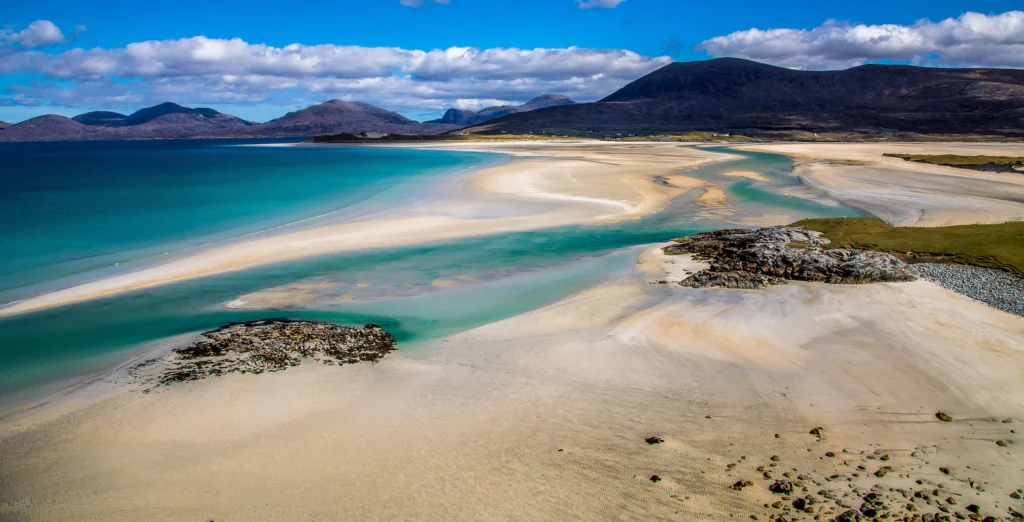
The Isle of Harris is the rugged, mountainous southern half of the island it shares with Lewis. It looks like someone dropped a Caribbean beach into the Scottish Highlands and forgot to turn the temperature up. It has white sand, turquoise water, bare rocky hills and roads that seem to have been planned by a very determined snake. If you want a place that is beautiful, quiet and slightly stubborn about being remote, this Isle of Harris travel guide will get you started.
Below are 12 things visitors can do, grouped by area so the plan makes sense on a map. You are allowed to do fewer than 12. Harris will not take it personally.
Why the Isle of Harris Scotland Deserves Your Time
Harris sits in the Outer Hebrides, off the north-west coast of Scotland, and reaching it takes some effort. Most visitors come by ferry, for example from Uig on Skye to Tarbert, the main village. That effort is part of the appeal, because the crowds stay thin.
Ask a local and they will tell you the Isle of Harris feels like a separate place from Lewis, even though the two share one landmass. Lewis is flat and boggy, while Harris is all hills, rock and bays. Gaelic is still part of daily life, and signs are often bilingual. Shops close, the wind blows and nobody seems bothered. Try to copy them.
Beaches That Look Edited
Any list of things to do on Isle of Harris has to begin with the sand, because that is what most people come for.
1. Luskentyre Beach
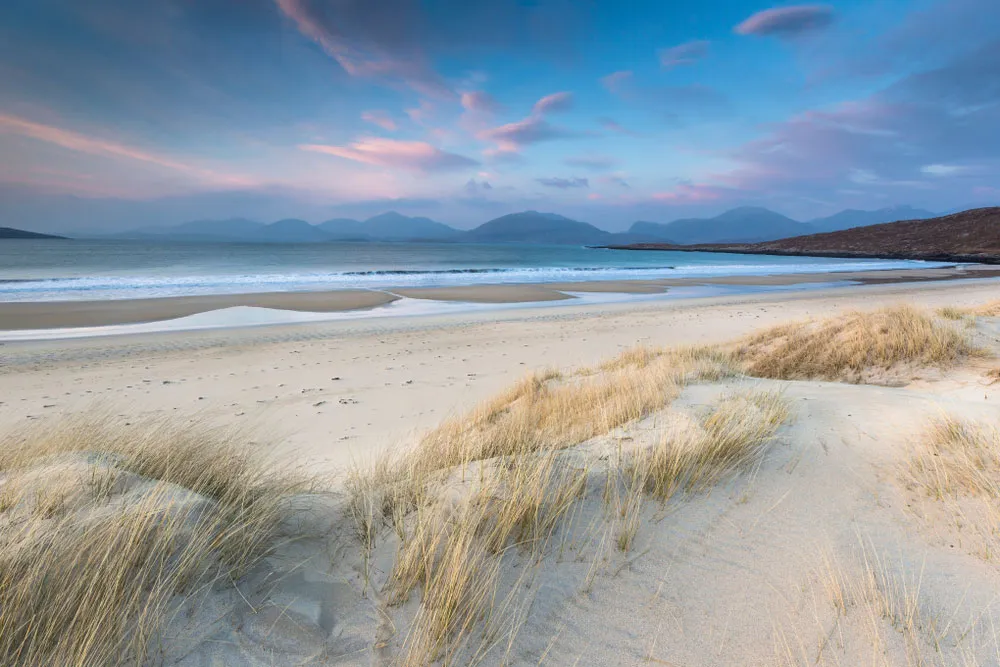
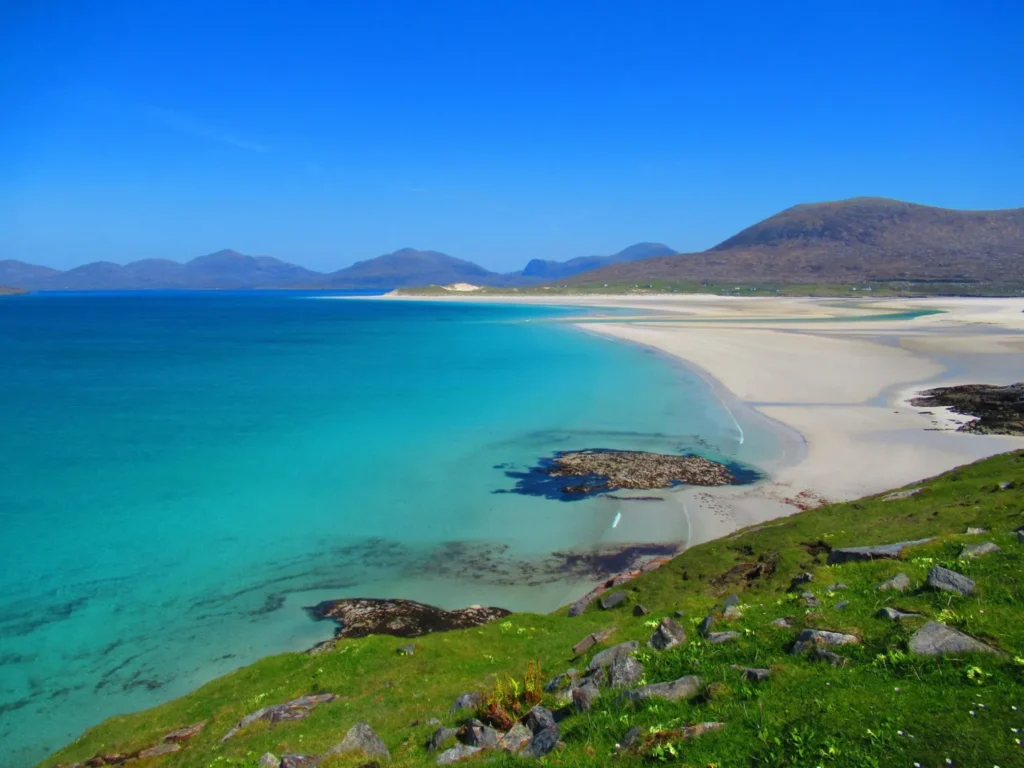
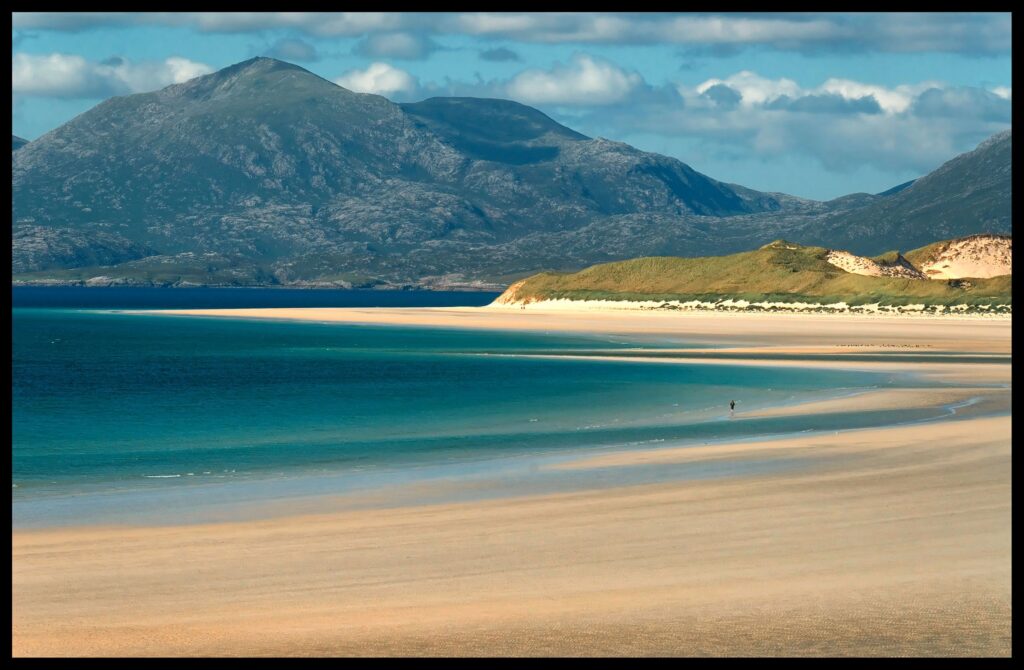
Luskentyre, or Losgaintir in Gaelic, is the beach that put the Isle of Harris on postcards. It is a wide stretch of pale sand backed by dunes, with turquoise shallows and hills behind. It often appears on lists of the best beaches in the UK. Visitors should bring a windproof layer, because the wind tends to arrive before the sunshine does. The water looks tropical. The water temperature does not agree. Seilebost, on the same bay, is a good spot to compare views.
2. Scarista Beach
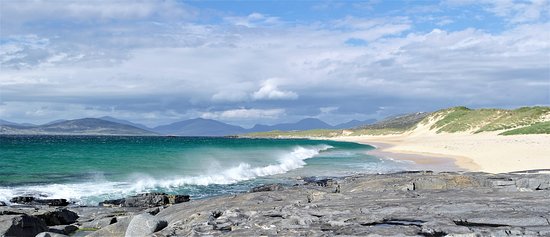
Scarista is a long, open beach on the west coast with a small golf course beside it. Visitors can walk the sand, watch the light change over Taransay and, if they play golf, take a swing while the scenery does most of the work. It stays quiet even on days when Luskentyre feels busy.
3. Huisinis (Hushinish)
Huisinis sits at the end of a long single-track road through the north of Harris, and the drive is part of the adventure. The beach is a pale, sheltered curve of sand with steep hills behind it. On the way, visitors pass Amhuinnsuidhe Castle, a Victorian building often photographed from the road. Fill the fuel tank first and expect to reverse into a passing place at least once. That is basically the local sport.
Roads, Gin and Cloth
4. The Golden Road
The Golden Road runs along the rocky east coast of Harris, past small settlements in an area known as the Bays. It twists, dips and climbs, with lochans, bare rock and sea views around every bend. The name is said to come from how expensive the road was to build. Drive slowly and use the passing places properly. The sheep ignore road rules entirely, and it is best not to argue with them.
5. The Isle of Harris Distillery in Tarbert
The Isle of Harris Distillery is in Tarbert and is best known for Isle of Harris Gin, made with sugar kelp gathered from local waters. Visitors can take a tour and try samples, though booking ahead in busy months is a good idea. The distillery also makes whisky. Designated drivers can enjoy the shop and the view. Somebody has to survive the single-track roads afterwards.
6. Meet the Harris Tweed Weavers
Harris Tweed is handwoven by islanders in their own homes and workshops in the Outer Hebrides, and the Orb mark shows it is the genuine article. Visitors can find weavers and small shops around Tarbert and other villages, and some welcome visitors by arrangement. Check opening times first, and be prepared to fall in love with a jacket you did not plan to buy. Your wallet will feel it.
History and Heritage
7. St Clement’s Church, Rodel
St Clement’s Church stands at Rodel, near the southern tip of Harris. It dates from the 16th century and is best known for the carved tomb of Alasdair Crotach MacLeod, a clan chief. The church sits on a small rise with views over the water, and it is one of the most important historic buildings in the Outer Hebrides. Visitors should check opening arrangements before going.
8. Day Trip to Callanish Standing Stones
Callanish sits on the Lewis side of the island, a fair drive north, so it works as a day trip from the Isle of Harris. The standing stones are around 5,000 years old, arranged in a cross-like pattern on a ridge above the loch. There is a visitor centre nearby. Go early to avoid the busiest hours. The stones have waited 5,000 years, so they can handle a short queue.
Hills, Wildlife and Night Skies
9. Climb Clisham
Clisham, or An Cliseam, is the highest hill in the Outer Hebrides at just under 800 metres. It is a proper hillwalk, so it suits people with hill experience, good boots and a weather forecast they have actually read. On a clear day the views over the islands and the Atlantic are spectacular. On a cloudy day the view is mostly a wet cloud. Choose your day with care.
10. Look Out to Taransay
Taransay is an island off the west coast of Harris, where the BBC filmed the reality series Castaway in 2000. It is easy to see from beaches such as Scarista and Luskentyre. Some local operators run trips in season, so visitors can check what is available. A year on a remote island with strangers sounds like a nightmare. A quiet afternoon looking at it from the beach is much more relaxing.
11. Spot Wildlife
Wildlife on the Isle of Harris includes golden eagles and white-tailed sea eagles, along with seals, otters and plenty of seabirds. Visitors have the best chance by scanning the coast and hills with binoculars and being patient. Otters are shy, and sea eagles are enormous. If you see something with very large wings and a serious attitude, it is probably not a seagull.
12. Stargaze After Dark
The Outer Hebrides have very little light pollution, so clear nights can be full of stars. Visitors can step outside after dinner, let their eyes adjust and look up. Occasionally the northern lights show up, though that depends on solar activity and luck. Bring a jacket. Nothing ruins a magical sky like cold ears.
Planning Your Trip
Getting to the Isle of Harris takes some planning, especially in summer. Ferries run from Uig on Skye to Tarbert, and from Leverburgh across the Sound of Harris to Berneray. Book vehicle spaces early, since popular sailings fill up. Stornoway airport on Lewis is another option, followed by a drive south. A car is the most practical way to get around, though there are some buses, and the Hebridean Way is popular with cyclists and walkers.
Late spring and early autumn are calmer than peak summer. Midges tend to show up from about June to September, so bring repellent. The weather can change in minutes, so pack a waterproof jacket and layers even in July. Many shops and services close on Sundays, so fill the tank and buy food on Saturday.
Roads are often single-track, so learn how passing places work: pull in on the left, or wait opposite the passing place if it is on the right. A small wave to a driver who lets you through is normal manners. Visitors staying near Tarbert have easy access to shops and the ferry, while those who want quiet can look at the west coast near Luskentyre and Scarista. Accommodation fills early in summer, so book ahead.
Whether you have a weekend or a full week, an Isle of Harris Scotland trip rewards a slow pace. Pick a handful of the things to do on Isle of Harris from this list, leave time for a long lunch and let the scenery do the rest. Hopefully this Isle of Harris travel guide has made the planning a little easier.
Frequently Asked Questions
1. Where is the Isle of Harris?
It is in the Outer Hebrides, off the north-west coast of Scotland. Harris is the southern, hillier part of the island it shares with Lewis.
2. Is Harris a separate island from Lewis?
No. Lewis and Harris are one landmass, but they feel very different and are often treated as separate places. Lewis is flatter and boggier, while Harris is rocky and mountainous.
3. How do you get to Harris?
Most visitors take a ferry, such as Uig on Skye to Tarbert. Another option is to reach Stornoway on Lewis by ferry or flight and drive south. Booking ahead is wise in summer.
4. How many days do you need?
Three or four days cover the main highlights. A week lets visitors slow down, add hill walks and take a day trip to Callanish.
5. Do you need a car?
A car is the easiest way to see the island, since attractions are spread out along narrow roads. Some buses run, but services are limited and worth checking in advance.
6. What is the best time to visit the Isle of Harris?
Late spring and early autumn are a good balance of decent weather and fewer visitors. Summer has long daylight hours but more midges and busier ferries.
7. Can you swim at the beaches?
Yes, but the water is cold, even when it looks tropical. Visitors should check conditions and be careful of currents, especially on open beaches.
8. What is Harris Tweed?
It is cloth handwoven by islanders in their own homes and workshops in the Outer Hebrides. Genuine Harris Tweed carries the Orb mark.
9. Is everything closed on Sundays?
Many shops and services close or run reduced hours on Sundays, so it helps to plan fuel and food ahead. Some cafés, hotels and attractions may still open, so it is worth checking locally.
10. Is the Isle of Harris worth visiting?
Yes, especially for beaches, quiet scenery, Gaelic culture and slow travel. It is less suited to anyone wanting nightlife or guaranteed sunshine.