
Table of Contents
Robin Hood’s Bay
Introduction
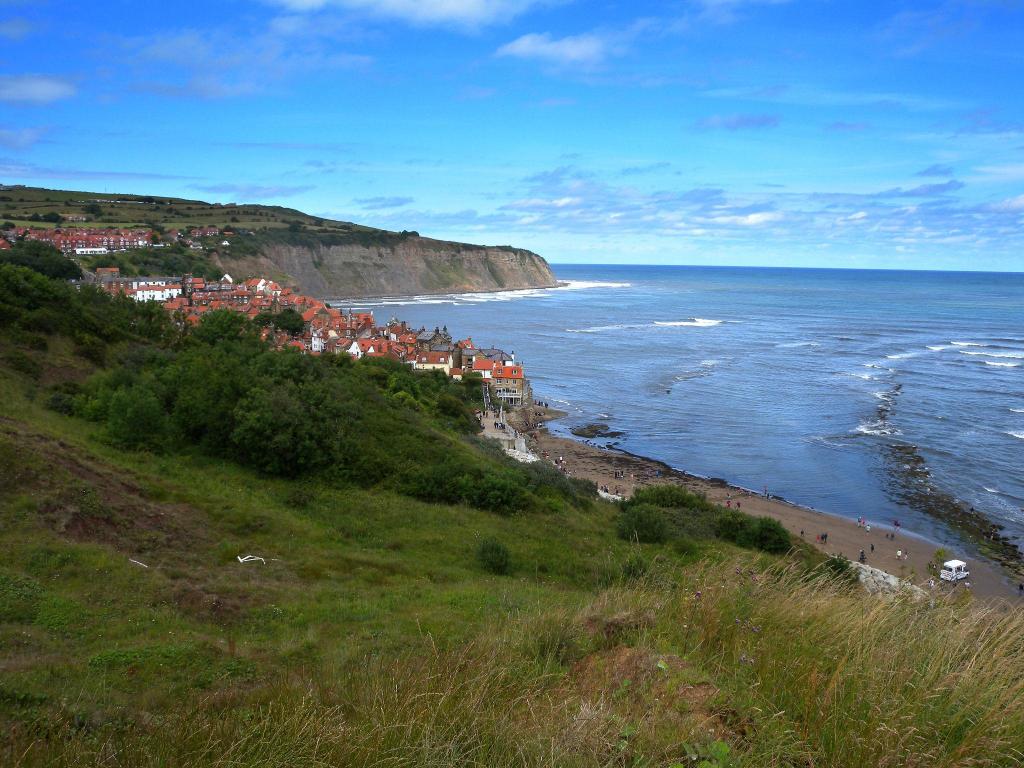
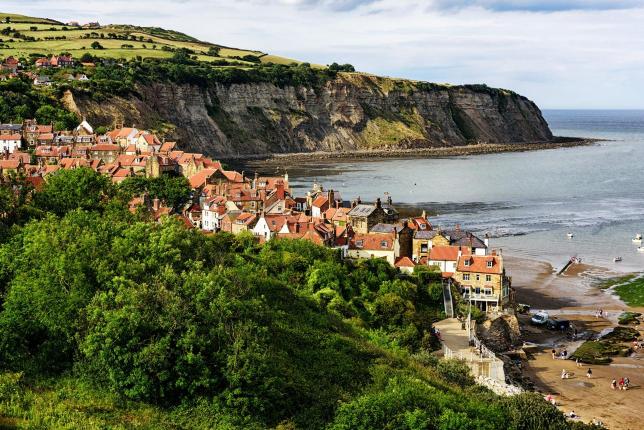
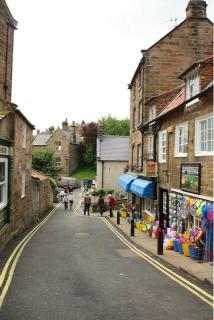
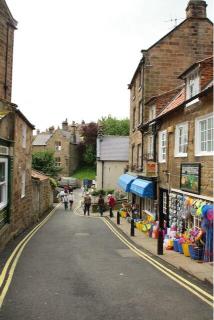
Robin Hood’s Bay does not reveal itself all at once. You park at the top of a hill, and only once you start walking down the steep main street does the village unfold — red pantile roofs stacked over one another, a maze of alleyways barely wide enough for two people, and a wide bay of sand and rock opening up at the bottom. It is one of the most photographed corners of the North Yorkshire coast, and it earns that reputation honestly.
This guide covers everything you need for a visit to Robin Hood’s Bay: the best things to see and do, where to eat and stay, how to get there without a car if needed, and a sample two-day itinerary that also takes in nearby Whitby and Ravenscar. Whether you’re coming for a single afternoon or basing a coastal holiday here, this is the practical, up-to-date guide to planning your trip.
Quick Facts: Robin Hood’s Bay
| Location | North Yorkshire coast, within the North York Moors National Park |
| Nearest town | Whitby, roughly 6 miles (about 12 minutes by car) north |
| Known for | Smuggling history, fossil hunting, cobbled alleyways, Coast to Coast Walk finish point |
| Parking | Two pay-and-display car parks at the top of the village (no vehicle access to the lower village) |
| Nearest train station | Whitby, connected by the X93 bus |
| Good for | Couples, families, solo walkers, dog owners, photographers |
Why Visit Robin Hood’s Bay
Robin Hood’s Bay is often mentioned in the same breath as Staithes and Whitby, but it has its own character. The village grew up around fishing and, later, smuggling. In the 1700s, its warren of interconnected alleyways, cellars, and passages made it one of the busiest smuggling spots on the northeast coast — legend holds that a barrel of contraband brandy could pass from the harbour to the top of the village without ever touching open street. That history is still visible in the layout of the place today, and it’s a big part of what makes wandering around so enjoyable.
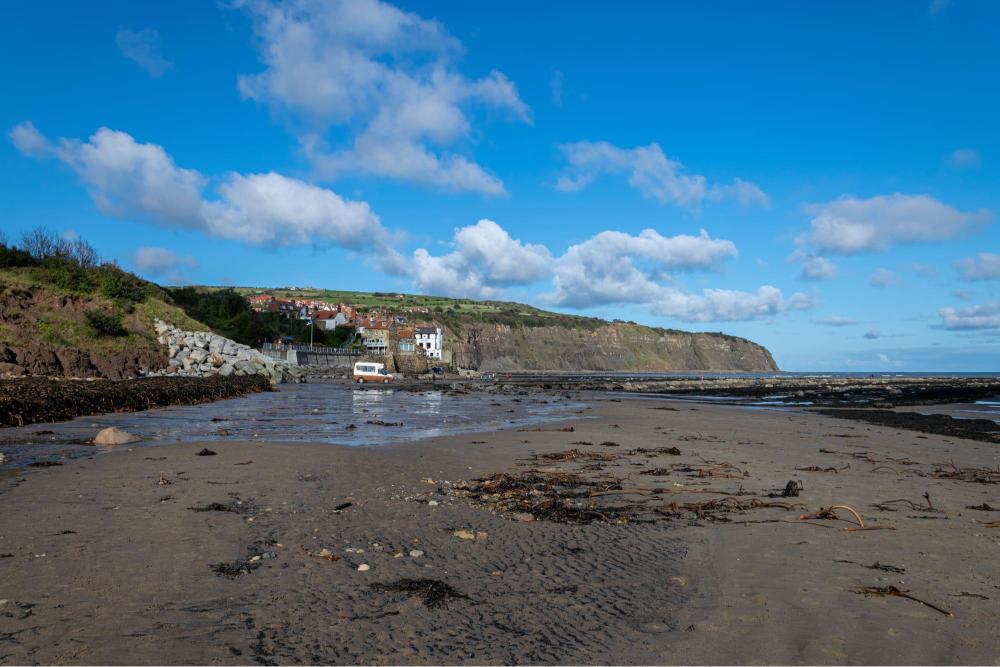
Beyond the history, Robin Hood’s Bay is simply a beautiful stretch of coastline. The bay itself is flanked by cliffs running south toward Ravenscar, and at low tide the beach reveals a huge expanse of rock platform, layered in curved ridges known locally as scaurs. It is genuinely excellent for rock pooling, fossil hunting, and long coastal walks, and it has recently been ranked among the cleanest beaches in the UK based on visitor litter reports. For walkers, it also holds a special status: it’s the official finishing point of Alfred Wainwright’s famous Coast to Coast Walk, marked by a small plaque near the slipway.
Add in a genuinely photogenic village, a handful of excellent cafés and pubs, and easy access to Whitby and the wider North York Moors, and it’s clear why Robin Hood’s Bay draws repeat visitors rather than one-off tourists.
Best Things to See and Do
Robin Hood’s Bay rewards slow travel. You don’t need a packed itinerary here — some of the best experiences are simply wandering the alleyways, sitting outside a café with a coffee, or watching the tide come in from the slipway. That said, here are the highlights worth building your day around.
Explore the Alleyways and Ginnels
The lower village is a genuine maze. Locals call the narrow passageways “ginnels,” and almost every one leads somewhere interesting — a cluster of fishing cottages, a hidden courtyard, or a sudden sea view. Budget at least an hour just for wandering, camera in hand, with no fixed destination. Wear flat, sturdy shoes; the cobbles and steps are uneven and can be slippery when wet.
Walk the Beach at Low Tide
When the tide is out, Robin Hood’s Bay reveals a vast rocky shoreline perfect for rock pooling, beachcombing, and fossil hunting. Always check tide times before heading onto the beach, since some sections can be cut off as the water returns. A short walk south along the shore takes you toward the secluded cove of Boggle Hole, said in local folklore to be home to hobgoblins with healing powers.
Visit the Robin Hood’s Bay Museum
This small, volunteer-run museum sits in a building that once served as the village’s coroner’s room and mortuary. Entry is free, and the exhibits cover everyday village life, maritime heritage, smuggling history, and local geology. Allow 30–45 minutes.
Stop at the Old Coastguard Station
Run in partnership between the National Trust and the North York Moors National Park, the Old Coastguard Station down by the slipway has displays on the coastline’s wildlife and history, plus a small shop and refreshments. It’s a good first stop for orientation before exploring further.
Join a Smuggling History Tour
Several local guides run walking tours focused on the village’s 18th-century smuggling era, typically lasting 75–80 minutes. These are worth it if you want the full story behind the alleyways rather than just admiring them.
Try Coastal Foraging
For a more hands-on activity, one-day coastal foraging courses run along the rocky shoreline, teaching visitors to identify edible seaweed and coastal plants safely. Good for adults and older children with an interest in nature.
[Image suggestion: Narrow cobbled alleyway (“ginnel”) between stone cottages with colourful doors. ALT text: “Narrow cobbled ginnel alleyway in the lower village of Robin Hood’s Bay”]
Top Attractions
Beyond the free-roaming exploration, a few fixed attractions are worth planning around.
- The Dock and slipway – the heart of the lower village, where the Bay Hotel and Old Coastguard Station overlook the sea. This is also the official end point of the Coast to Coast Walk.
- Robin Hood’s Bay Museum – free, small, and packed with local history.
- Fylingdales Old St Stephen’s Church – a Georgian church a short distance inland with its own local history, worth a stop if you enjoy quiet historic buildings.
- Local galleries and craft shops – the village has a strong creative streak, with independent artists selling work inspired by the coastline.
A Brief History
Robin Hood’s Bay predates its tourist appeal by centuries. It began as a working fishing settlement, with mariners heading out into the North Sea for the daily catch long before the village became known for anything else. By the 18th century, its isolated position and tangled layout made it ideal for smuggling tea, spirits, and tobacco past the excise men. Fishing remained the main trade well into the 20th century, and although tourism has since taken over as the primary industry, the village’s character — narrow streets built for foot traffic, not cars, and cottages stacked tightly against the cliff — is a direct legacy of that working past.
Hidden Gems
Most visitors stick to the main street and the beach directly below it, which leaves a few worthwhile spots quieter than they deserve to be.
- Boggle Hole – a small, sheltered cove about a mile south of the main village, reachable via a coastal path or along the beach at low tide. Far fewer visitors make it this far, making it a good choice for a peaceful picnic.
- The Cinder Track – a former railway line between Scarborough and Whitby, decommissioned in 1965 and now a flat, easy walking and cycling route. It’s a good alternative to the clifftop paths if you’re travelling with young children or prefer gentler terrain.
- Live folk music nights – the Wainwright’s Bar at the Bay Hotel hosts a regular folk club on Friday evenings, and other pubs occasionally host impromptu music sessions. The village also holds a free Folk Weekend festival in early June, with music, singing, and traditional dance across multiple venues.
- Upper village viewpoints – most photographs of Robin Hood’s Bay are taken from the lower village looking down, but a short walk up toward the top of the bank gives a different, quieter perspective over the rooftops toward the sea.
[Image suggestion: View of Boggle Hole cove with rock pools at low tide. ALT text: “Boggle Hole cove near Robin Hood’s Bay at low tide with exposed rock pools”]
Best Beaches and Coastal Walks
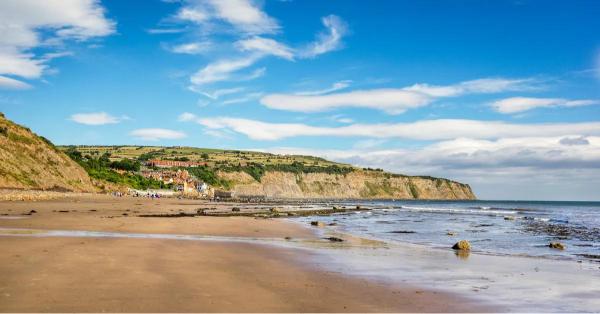
The beach at Robin Hood’s Bay is a broad, semi-circular sweep of sand and rock stretching south toward Ravenscar. It’s not a conventional soft-sand beach for most of its length — at low tide, a rocky platform dominates, layered with alternating bands of hard and soft rock that erosion has carved into ridged formations. This makes it fantastic for rock pooling and fossil hunting but less ideal for sunbathing. Families should bring sturdy shoes rather than flip-flops.
Coastal walks from Robin Hood’s Bay:
- Robin Hood’s Bay to Whitby (Cleveland Way) – roughly 7 miles one-way along dramatic clifftop paths, with the ruins of Whitby Abbey visible on the approach. Allow 3–4 hours at a comfortable pace.
- Robin Hood’s Bay to Ravenscar – around 5–6 miles south along the Cleveland Way, passing dramatic cliff scenery and old alum quarry workings near Ravenscar.
- Maw Wyke circular walk – a roughly 6-mile circular route heading north along the cliffs, passing Ness Point, one of the more treacherous headlands on this stretch of coast. A good option for experienced walkers wanting a there-and-back route that doesn’t require transport logistics.
- The Cinder Track to Whitby – a flatter, easier 6.3-mile alternative to the clifftop path, following the old railway line and better suited to families or those with mobility considerations.
Important note: Cliff-edge paths along this coast are exposed, and some sections narrow considerably. Check weather conditions before setting out, and always check tide tables before walking on the beach itself — sections can be cut off quickly as the tide comes in.
Local Food and Famous Specialties
Food in Robin Hood’s Bay leans toward classic Yorkshire coastal fare: fresh fish and chips, hearty pub meals, and good coffee in independent cafés. A few things to look out for:
- Fish and chips – unsurprisingly the local staple, best eaten outdoors overlooking the bay.
- Baytown Beer and Baytown Coffee – locally produced brands sold in village shops and cafés, worth picking up as a souvenir or simply to try while you’re there.
- Cliff-top cafés – several cafés and restaurants sit above the village with panoramic sea views, a nice option if you want a sit-down meal rather than takeaway.
- Cosy village pubs – traditional pubs near the dock serve as good rainy-day retreats, often with open fires and views over the harbour.
For solo travellers or couples, a café with a sea view is an easy, unhurried way to spend an hour. For families, takeaway fish and chips eaten on the harbour wall tends to be the most popular option, weather permitting.
Best Time to Visit
Robin Hood’s Bay is a year-round destination, but each season offers something different.
- Spring (March–May): Quieter than summer, with mild weather and good conditions for walking. Wildflowers along the cliff paths are a bonus.
- Summer (June–August): The busiest period, especially weekends, but also the best chance of warm, dry weather for the beach and coastal walks. The village’s Folk Weekend festival typically falls in early June.
- Autumn (September–November): A good balance of fewer crowds and generally still-pleasant walking weather, plus dramatic light for photography.
- Winter (December–February): The quietest and most atmospheric time to visit, with cosy pubs and open fires making up for shorter days and colder, wetter conditions. Some smaller cafés may have reduced opening hours.
For fossil hunting specifically, low tide during daylight hours matters more than season — check local tide tables in advance regardless of when you visit.
Estimated costs to budget for:
| Expense | Approximate cost |
|---|---|
| Car park (per day) | A few pounds, pay and display |
| Fish and chips | Mid-range takeaway price |
| Museum entry | Free (donations welcome) |
| Guided smuggling tour | Small fixed fee per person |
| B&B or guesthouse (per night) | Mid-range, varies by season |
| Self-catering cottage (per week) | Higher in peak summer months |
Prices fluctuate by season and provider, so treat this as a rough planning guide rather than fixed figures — always check current rates directly with venues before booking.
Where to Stay
Accommodation in and around Robin Hood’s Bay ranges from self-catering fishermen’s cottages in the lower village to guesthouses and hotels at the top of the hill.
| Type | Best for | Notes |
|---|---|---|
| Self-catering cottages (lower village) | Couples, longer stays | Charming but expect steep steps and no vehicle access — you’ll carry luggage down |
| Guesthouses / B&Bs (upper village) | Families, easier access | Closer to parking, often with sea views |
| Hotels (e.g. clifftop hotels) | Comfort-focused stays | Typically include on-site dining and parking |
| Camping/glamping (nearby farms) | Budget travellers, solo trips | A short walk or drive from the village centre |
If you’re staying in the lower village, check whether your accommodation includes a permit for the small private car park partway down the hill — otherwise you’ll be parking at the top and walking your bags down (and later, back up).How to Get There
By car: Robin Hood’s Bay sits just off the A171 coastal road between Whitby and Scarborough. From Whitby, head south on the A171, turn onto the B1447 at Hawsker, and follow it down into the village — the drive takes around 12 minutes. From the south, the A64 from York leads to Scarborough, where you can pick up the A171 north. There are two pay-and-display car parks at the top of the village (Station Road and Bank Top); you cannot drive down into the lower village itself.
By train: There is no railway station in Robin Hood’s Bay. The nearest station is Whitby, roughly 6 miles away, from which you connect by bus.
By bus: The X93 service, operated by Arriva, runs between Scarborough, Robin Hood’s Bay, Whitby, and Middlesbrough, with more frequent departures during peak season. It’s a reliable, scenic way to reach the village without a car.
On foot or by bike: Walkers can arrive via the Cleveland Way from either Whitby or Ravenscar, while cyclists (and walkers preferring flatter terrain) can use the Cinder Track from Whitby or Scarborough.
Tip box: If you’re staying in Whitby and visiting for the day, leave your car behind and take the X93 bus. Parking in Robin Hood’s Bay fills up quickly in summer, and you’ll avoid the steep walk back up to the car park at the end of a long day.
Sample 2-Day Itinerary
Day 1: Robin Hood’s Bay
- Morning: Arrive and park at the top of the village. Walk down through the alleyways to the dock, stopping at the Old Coastguard Station for orientation.
- Midday: Lunch at a café overlooking the bay, then explore the beach at low tide for rock pooling and fossil hunting (check tide times in advance).
- Afternoon: Visit the Robin Hood’s Bay Museum, then walk south along the coast toward Boggle Hole for a quieter stretch of shoreline.
- Evening: Dinner at a village pub near the dock, followed by a slow walk back up as the light fades.
Day 2: Whitby and Ravenscar day trip
- Morning: Walk or take the X93 bus north to Whitby. Explore Whitby Abbey and the town’s harbour and old town streets.
- Afternoon: Return toward Robin Hood’s Bay via the Cleveland Way coastal path for dramatic clifftop views, or drive south to Ravenscar for a shorter, quieter walk with panoramic views back over the bay.
- Evening: Return to Robin Hood’s Bay for a final evening meal before departing.
Travel Tips
- Wear proper footwear. The main street is steep and cobbled, and coastal paths can be muddy or uneven.
- Check tide times before any beach walk. Sections of the shoreline can be cut off as the tide comes in.
- Book accommodation early for summer weekends. The village is compact, and rooms fill up fast in peak season.
- Bring cash for smaller cafés and shops, as not everywhere accepts card payments, though this is changing.
- Pack a small bag for fossils and shells if you plan to go rock pooling or fossil hunting with kids.
- Accessibility note: The steep hill and steps in the lower village make it challenging for wheelchair users or those with limited mobility. The upper village and Cinder Track are more accessible alternatives.
- Dogs are welcome on the beach and in many pubs and cafés, making this a solid choice for a dog-friendly coastal break.
Nearby Places to Visit
- Whitby – roughly 6 miles north, known for its abbey ruins, harbour, and links to Bram Stoker’s Dracula. Easily combined with Robin Hood’s Bay in a single day.
- Ravenscar – a clifftop village a few miles south with sweeping views back over the bay and the site of a former Victorian resort that was never completed.
- Staithes – another historic fishing village further north, similar in character to Robin Hood’s Bay but smaller and quieter.
- North York Moors National Park – inland from the coast, offering heather moorland, the North Yorkshire Moors Railway steam trains, and market towns like Pickering.
- Scarborough – a larger seaside town to the south with amusements, a castle, and two beaches, good for a livelier day out.
[Image suggestion: Clifftop view of Whitby Abbey ruins silhouetted against the sky. ALT text: “Whitby Abbey ruins near Robin Hood’s Bay on the North Yorkshire coast”]
Photography Tips
Robin Hood’s Bay is one of the most photographed villages on the Yorkshire coast, and a little planning goes a long way.
- Shoot the classic view from the top of the bank, where the road curves down toward the sea — this is the angle used in most postcards, and it works especially well in early morning light before crowds gather.
- Time your visit around low tide if you want the rock platform and scaurs in shot; at high tide, the beach largely disappears.
- Golden hour (shortly after sunrise or before sunset) brings out the warm tones in the pantile roofs and stone cottages, and the narrow alleyways create natural framing for portraits or street-style shots.
- A wide-angle lens helps in the tighter ginnels, where space to step back is limited.
- Overcast days aren’t a loss — flat light suits close-up shots of doorways, fishing gear, and textures in the cobbles.
Frequently Asked Questions
Is Robin Hood’s Bay worth visiting? Yes. It combines a genuinely picturesque village, a good beach for rock pooling and fossil hunting, and easy access to walking trails and nearby Whitby, making it one of the most rewarding stops on the North Yorkshire coast.
How do you get to Robin Hood’s Bay without a car? Take a train to Whitby, then connect via the X93 bus, which also serves Scarborough and Middlesbrough. Walkers can also reach the village on foot via the Cleveland Way or the Cinder Track.
Can you drive down into Robin Hood’s Bay village? No. Visitor parking is at the top of the hill in two pay-and-display car parks; the steep lower village is pedestrian-only.
Is Robin Hood’s Bay good for fossil hunting? Yes, the rocky beach exposed at low tide is well known for ammonites, belemnites, and other fossils dating back millions of years. Always check tide times before heading out.
How far is Robin Hood’s Bay from Whitby? About 6 miles by road, roughly a 12-minute drive, or around 7 minutes by train connection plus a short bus ride. It’s also a scenic 7-mile walk along the Cleveland Way.
Is Robin Hood’s Bay dog-friendly? Yes, dogs are welcome on the beach and in many of the village’s pubs and cafés, making it a popular choice for dog owners.
How long do you need to visit Robin Hood’s Bay? A half-day is enough to see the village and beach, but a full day allows time for a coastal walk, the museum, and a relaxed meal. An overnight stay lets you experience the village once the day-trippers leave.
What is Robin Hood’s Bay famous for? Its history as an 18th-century smuggling village, its maze-like cobbled alleyways, its role as the finishing point of Wainwright’s Coast to Coast Walk, and its beach for rock pooling and fossil hunting.
Is Robin Hood’s Bay accessible for wheelchairs or pushchairs? The lower village’s steep hill and steps make it difficult, though the upper village and the flatter Cinder Track offer more accessible alternatives.
What is the best time of year to visit Robin Hood’s Bay? Summer offers the best weather and longest days, but spring and autumn bring fewer crowds with generally pleasant conditions, and winter offers a quieter, atmospheric visit centred around the village’s pubs.
Conclusion
Robin Hood’s Bay rewards visitors who are willing to slow down. It isn’t a place designed for a rushed itinerary — the real pleasure comes from wandering its tangled alleyways, timing a walk along the beach around the tide, and sitting somewhere quiet with a view of the sea. Whether you come for the smuggling history, the fossil-strewn shoreline, or simply as a stop along the Cleveland Way, Robin Hood’s Bay is one of those rare places that looks exactly as good in person as it does in photographs. Pair it with a day in Whitby or a clifftop walk to Ravenscar, and you have one of the most complete short breaks the North Yorkshire coast has to offer.