
Table of Contents
Valley of Rocks
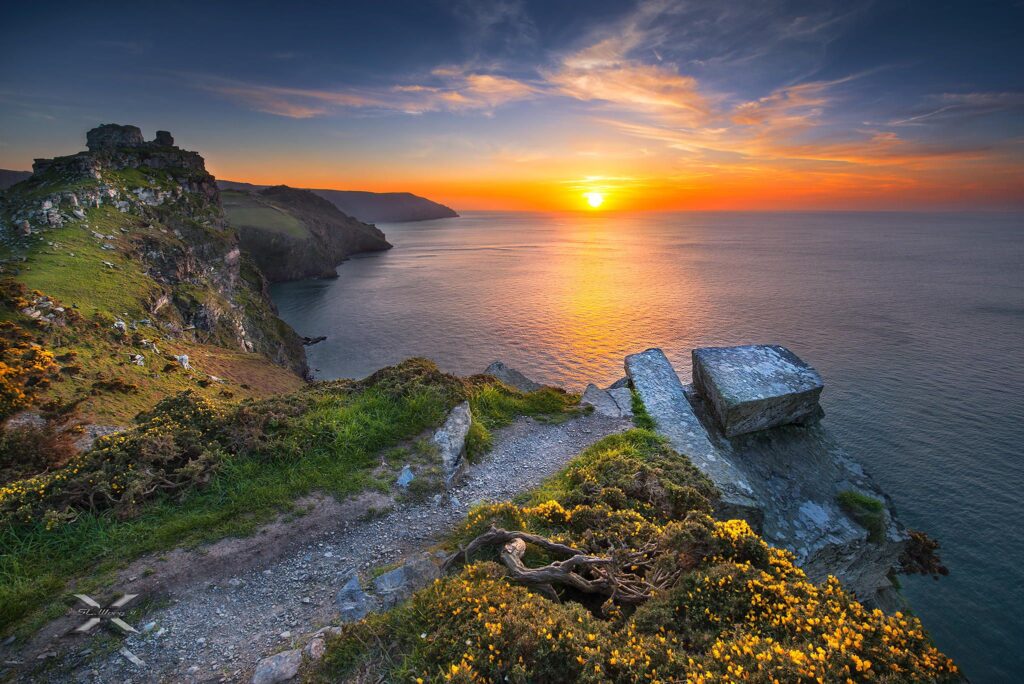
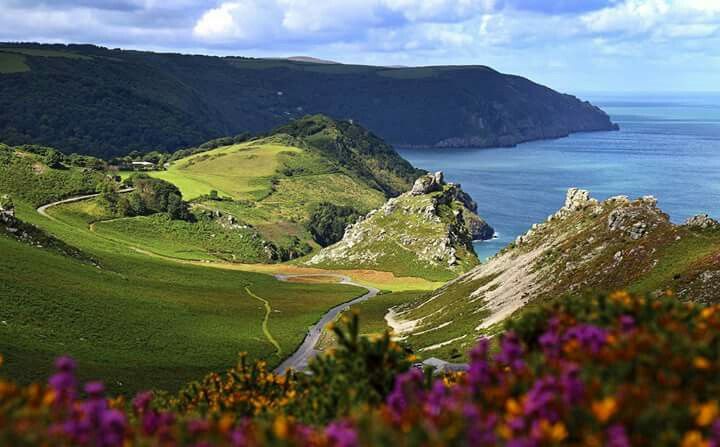
The Valley of Rocks sits on the North Devon coast, just west of Lynton, where Exmoor’s moorland meets the sea in a landscape unlike anywhere else in England. Jagged rock formations rise from open grassland, feral goats wander freely between the outcrops, and the coastline drops away to the Bristol Channel below. It’s one of Exmoor’s most photographed spots, and for good reason: few places in the national park combine such striking geology with such easy access.
This guide covers everything travellers need to know before visiting, from the best walking routes and parking options to when to go and what wildlife to expect. Whether you’re planning a short stop on a wider Exmoor road trip or a dedicated day of coastal walking, the Valley of Rocks rewards visitors who take the time to explore its paths properly rather than just admiring it from the car park. The following sections work through the practical details, the best viewpoints, and the things that make this stretch of coast worth building a trip around.
Why Visit the Valley of Rocks?
The Valley of Rocks is often described as a dry valley, formed thousands of years ago when a river changed course and left this rugged landscape behind. The result is a valley that feels sculpted rather than natural, with rock formations that have earned nicknames like Castle Rock and the Devil’s Cheesewring over the centuries. Unlike much of Exmoor’s interior, this is coastal walking with sea views for almost the entire route.
What sets it apart is the combination of scenery and accessibility. Visitors don’t need to commit to a long hike to appreciate it; the main valley floor is reachable on a short, mostly flat walk from Lynton, making it suitable for a wide range of fitness levels. The wild goats add another layer of interest, since they’re rarely found roaming freely in this part of England.
Best Things to Do in the Valley of Rocks
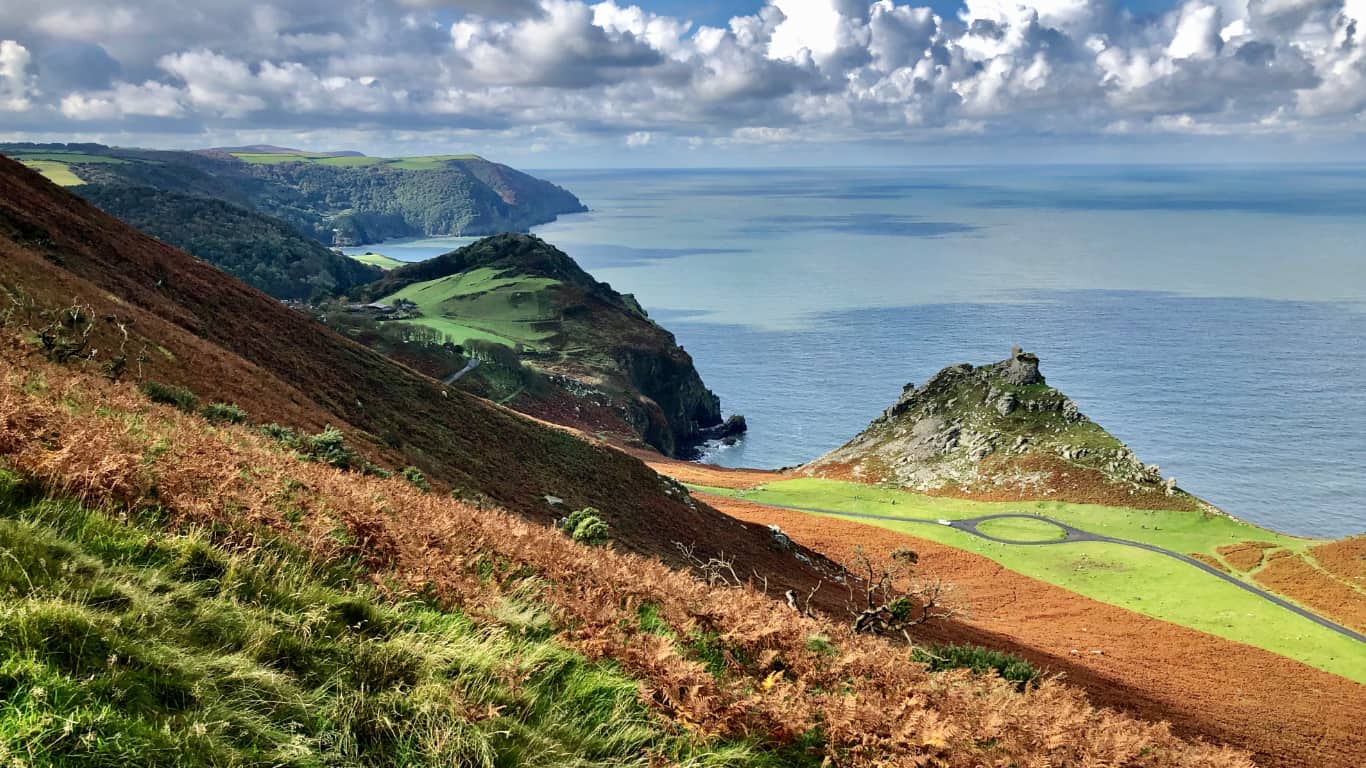
Walking is the main activity, but there’s more to occupy a visit than simply passing through. Many travellers spend time scrambling on the lower rock formations, photographing the coastline from Castle Rock, or simply sitting and watching the goats graze among the outcrops.
Rock climbing is popular on some of the formations, though this should only be attempted by those with appropriate experience and equipment, as the rock can be loose in places. Birdwatchers often visit for the chance to see peregrine falcons and other coastal species nesting on the cliffs. For a quieter experience, early morning or early evening visits tend to be less crowded and offer better light for photography.
Best Walks and Hikes Near the Valley of Rocks
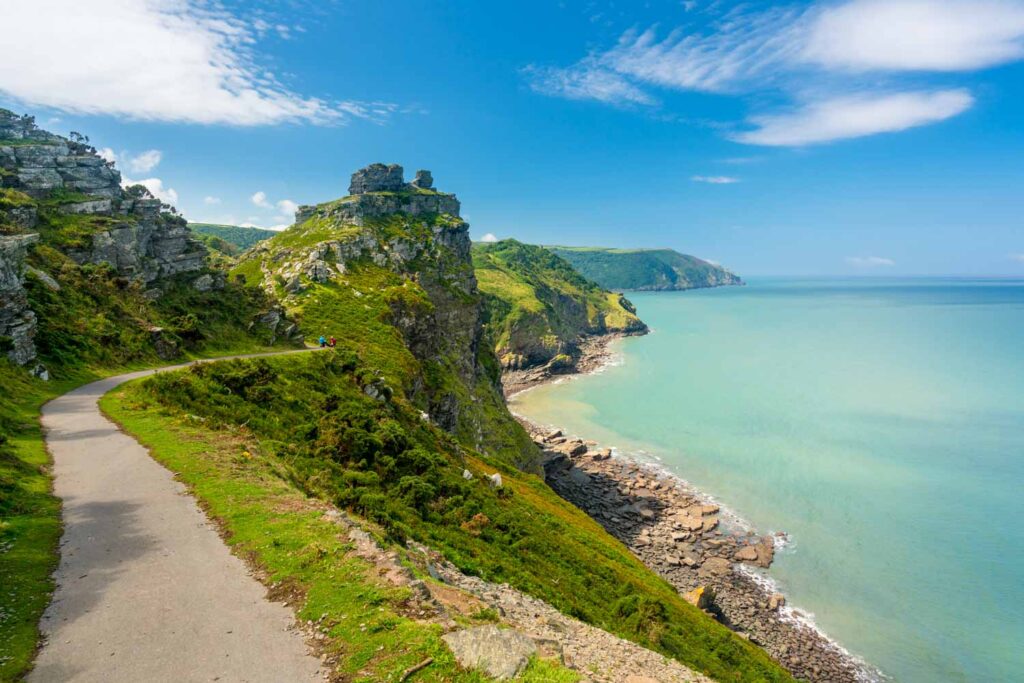
The most popular route links Lynton to the Valley of Rocks along the South West Coast Path, a walk of roughly two miles round trip that takes in dramatic sea views throughout. This section is well maintained and clearly signposted, making it a good option for visitors without much time.
For those wanting more distance, the coast path continues west towards Lee Abbey and Woody Bay, adding several more miles of quieter, more rugged walking with fewer people. Combining the Valley of Rocks with a walk up to Hollerday Hill offers elevated views back over Lynton and the coastline. Sturdy footwear is recommended throughout, as paths can be uneven and exposed to wind, particularly near the cliff edges.
Best Time to Visit the Valley of Rocks
The Valley of Rocks can be visited year-round, but conditions vary considerably by season. Spring and early summer bring wildflowers to the valley floor and generally calmer weather, making this a popular window for walkers. Summer offers the longest daylight hours but also the busiest car parks and paths, especially during school holidays.
Autumn brings fewer crowds and often clearer visibility across the Bristol Channel, while winter can be atmospheric but exposed, with strong coastal winds common. Whatever the season, weather on this stretch of coast can change quickly, so checking a local forecast before setting out is worthwhile.
How to Get to the Valley of Rocks
The Valley of Rocks is reached via a short drive or walk from Lynton, a small town accessible by road from the A39. There is no train station nearby, so most visitors arrive by car, though the Exmoor-based bus network connects Lynton with surrounding towns.
Within Lynton, the valley is an easy walk from the town centre along Lee Road, taking around 20 to 30 minutes on foot. For those driving directly to the valley, a small car park is available closer to the rock formations themselves, though space is limited during peak periods.
Parking and Facilities
| Information | Details |
|---|---|
| Best time to visit | Spring and autumn for fewer crowds |
| Visit length | 1–3 hours depending on route |
| Best for | Walkers, photographers, wildlife spotters |
| Parking | Available in Lynton and near the valley |
| Difficulty | Easy on the main valley path |
Parking is available both in Lynton town centre and in a smaller car park closer to the Valley of Rocks itself, though the latter fills quickly on busy days. Facilities including toilets and refreshments are found in Lynton rather than at the valley, so it’s worth planning stops before heading out. Mobile signal can be patchy along parts of the coast path, so downloading maps in advance is a sensible precaution.
Wildlife and Nature in the Valley of Rocks
The feral goats are the valley’s best-known residents, having roamed this stretch of coast for generations and become closely associated with the landscape. Visitors are asked to keep a respectful distance and avoid feeding them, as they are wild animals accustomed to foraging naturally.
Beyond the goats, the cliffs support a range of seabirds, and the surrounding grassland attracts various butterfly species during the warmer months. The valley’s mix of habitats, from rocky outcrops to coastal scrub, makes it a worthwhile stop for anyone interested in Exmoor’s wider ecology, not just its geology.
FAQ
Is the Valley of Rocks free to visit?
Yes, the Valley of Rocks itself is free to enter and explore. Parking charges may apply depending on where visitors choose to park in or near Lynton.
Are dogs allowed in the Valley of Rocks?
Dogs are generally welcome but should be kept under close control, particularly around the goats and near cliff edges where paths can be exposed.
How long does it take to walk around the Valley of Rocks?
The main loop from Lynton takes around one to two hours at a relaxed pace, though longer coastal walks can extend this considerably.
Is the Valley of Rocks suitable for families?
The main valley floor is manageable for families, though children should be supervised near rocky areas and cliff edges throughout the visit.
Can you see the Valley of Rocks without a long walk?
Yes, the nearby car park allows visitors to reach the main rock formations with only a short walk from the parking area.
Conclusion
The Valley of Rocks offers one of Exmoor’s most distinctive landscapes, pairing dramatic rock formations with genuine coastal wildlife in a setting that’s accessible to most visitors. Whether the goal is a short scenic stop or a longer coastal walk toward Woody Bay, the valley delivers views and character that stand out even against the rest of Exmoor’s coastline. Planning around quieter times of day, bringing sturdy footwear, and allowing time to actually walk the paths rather than just viewing from the car park will make the most of a visit here.