
Table of Contents
Wasdale Head
Wasdale Head sits at the far end of a nine-mile dead-end road, ringed by the highest ground in England and facing the deepest lake in the country along its length. There’s no through traffic here, no by-pass, no other reason to be on that road except to reach the valley itself — and that single fact shapes everything about a visit to Wasdale Head. It is remote in a way that few places in the Lake District still manage, and that isolation is precisely why walkers, climbers and quieter travellers keep returning.
This guide covers what makes Wasdale Head worth the drive, its role in the birth of British rock climbing, the walks and viewpoints that draw people here, and the practical details — transport, accommodation, food, costs and accessibility — needed to plan a visit properly. Whether the goal is a serious assault on Scafell Pike or simply a quiet afternoon at the head of Wastwater, this guide sets out what to expect.
Featured Image
Recommended scene: Wastwater and the Wasdale Screes viewed from the northern shore, with Great Gable and Scafell Pike in the background Suggested search phrase: “Wastwater Wasdale Head Lake District: Wastwater lake at Wasdale Head with Great Gable and the Screes in the Lake District Suggested file name: wasdale-head-wastwater-screes.jpg Recommended placement: Before the introduction
Quick Facts
| Quick Fact | Information |
|---|---|
| Destination | Wasdale Head |
| Location | Western Lake District, Cumbria, England (postcode CA20 1EX) |
| Best time to visit | Late spring to early autumn for walking; year-round for the valley and lake views |
| Recommended visit time | Half a day for the valley itself; a full day for Scafell Pike or Great Gable |
| Main attractions | Wastwater, Scafell Pike, Great Gable, St Olaf’s Church, the Wasdale Screes |
| Getting there | Car via single-track road from Gosforth (A595), or the seasonal Wasdale Explorer shuttle bus |
| Typical budget | Free to view the valley and lake; National Trust parking charges apply; food and accommodation prices vary by season |
| Family friendly | Yes for the valley floor and shoreline; the high fells are for experienced walkers only |
| Accessibility | Limited — narrow roads, unsurfaced paths, and no formal accessible routes to the fell tops |
| Best for | Serious hillwalkers, climbers, and travellers seeking genuine remoteness |
What Makes Wasdale Head Worth Visiting?
Wasdale Head is often described as the wildest and most dramatic valley in the Lake District, and it earns that reputation through geography rather than marketing. A single-track road follows the shore of Wastwater and simply stops at a dead end, ringed by the highest mountains in the Lake District, and from there the only way onward is on foot. There is no village in the usual sense — just a scattering of buildings gathered around the road’s end.
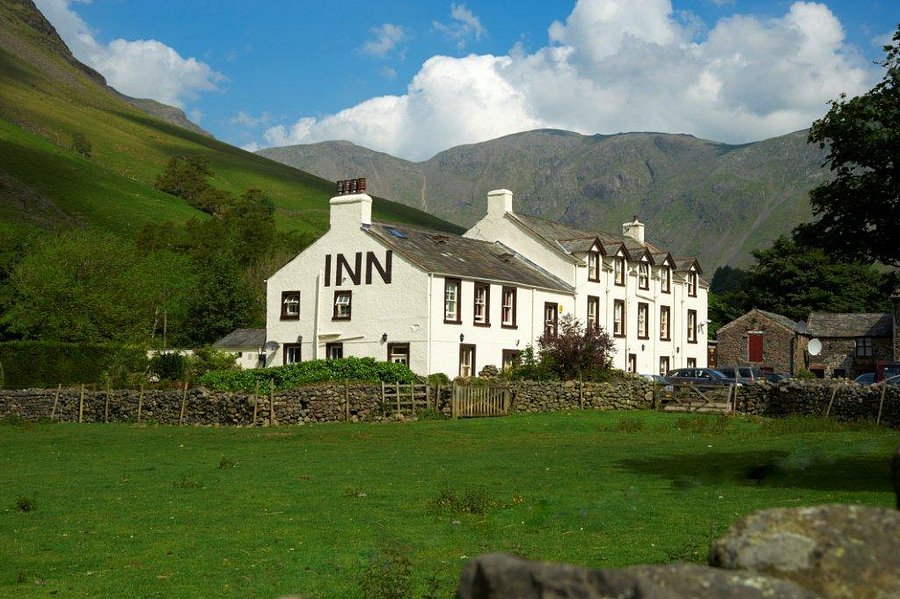
What’s actually there is minimal: one country inn, a small B&B, a couple of campsites, a little shop, and England’s smallest parish church. That sparseness is the point. Wasdale Head hasn’t been built up to accommodate mass tourism, and the valley’s appeal rests on landscape rather than amenities.
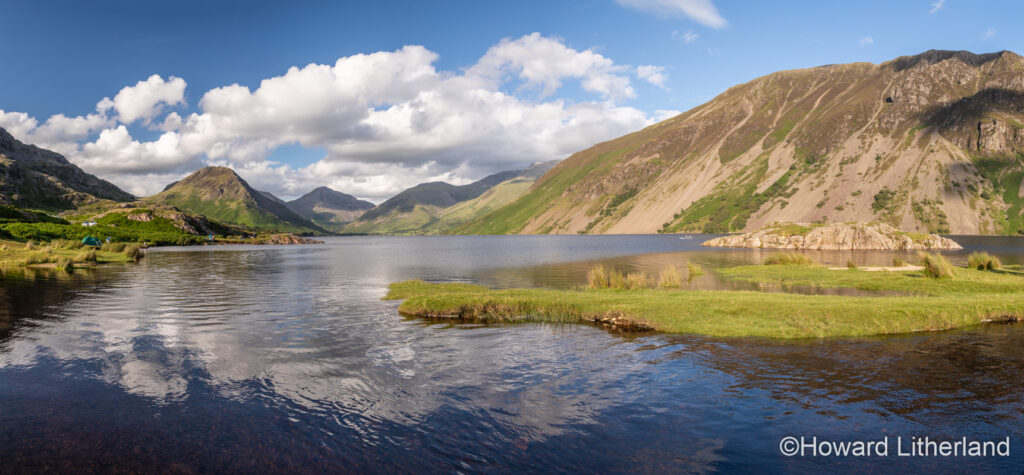
Wastwater itself is England’s deepest lake, and the surrounding fells include England’s two highest mountains, Scafell Pike and Scafell, alongside the strikingly shaped Great Gable. The combination of deep water, screes plunging almost vertically into the lake, and a horseshoe of high fells produces a view that has repeatedly been named among Britain’s best. The view from the south-western end of the lake near the youth hostel was voted Britain’s Favourite View in 2007 by television viewers, taking in the lake with the mountains of Yewbarrow, Great Gable and Lingmell behind, and it forms the basis for the National Park’s own logo.
Wasdale Head also carries genuine historical weight for walkers and climbers, not just scenery. The sport of rock climbing in England effectively began here: in the 1880s a group of men staying at the inn started climbing the surrounding crags for sport rather than necessity, and Walter Parry Haskett Smith’s first recorded rock climb in England, on Napes Needle in 1886, is generally accepted as the birth of British mountaineering. That history is still visible today in the climbing photographs lining the inn’s walls and in the crags themselves, which remain active climbing ground.
Who should visit? Wasdale Head suits people who want to walk, who enjoy quiet or dramatic landscapes over polished visitor infrastructure, and who don’t mind a demanding drive to get there. It’s less suited to travellers wanting cafés, shops, or easy strolling — those experiences are better found elsewhere in the Lake District. Locally, the hamlet half-jokingly claims to be home of the highest mountain, the deepest lake, the smallest church, and the biggest liar in England, and that mix of superlatives is a fair summary of what draws people here.
Visitors with more time can extend a Lake District trip westward from here or loop back through neighbouring valleys — the Ennerdale Valley, reached over Black Sail Pass, makes a natural next stop for anyone exploring the western fells on foot.
History and Heritage of Wasdale Head
Human presence in Wasdale stretches back much further than its climbing history. The earliest surviving traces of human activity in the valley date back to Mesolithic times, with Neolithic stone axe workings found high on Scafell Pike and evidence of Bronze Age settlement on the valley bottom. Norse settlers arrived later and left a lasting mark on the landscape’s language. The valley was first settled by Norse explorers coming from the Isle of Man and Ireland around 950 AD, and the name Wasdale itself derives from the Old Norse “Vatnsdalr,” meaning “valley of the water.”
The valley’s built heritage centres on two structures: the inn and the church. The Wasdale Head Inn began as a farmhouse before being enlarged by local farmer and champion liar Will Ritson in 1856 to take in overnight guests, and despite later alterations it still retains many original features, including a collection of climbing memorabilia. That inn became a thriving centre for walkers and climbers following Haskett Smith’s ascent of Napes Needle on Great Gable in 1886, a landmark moment in the popularity of rock climbing in the Lake District, and it remains a hub for both today.
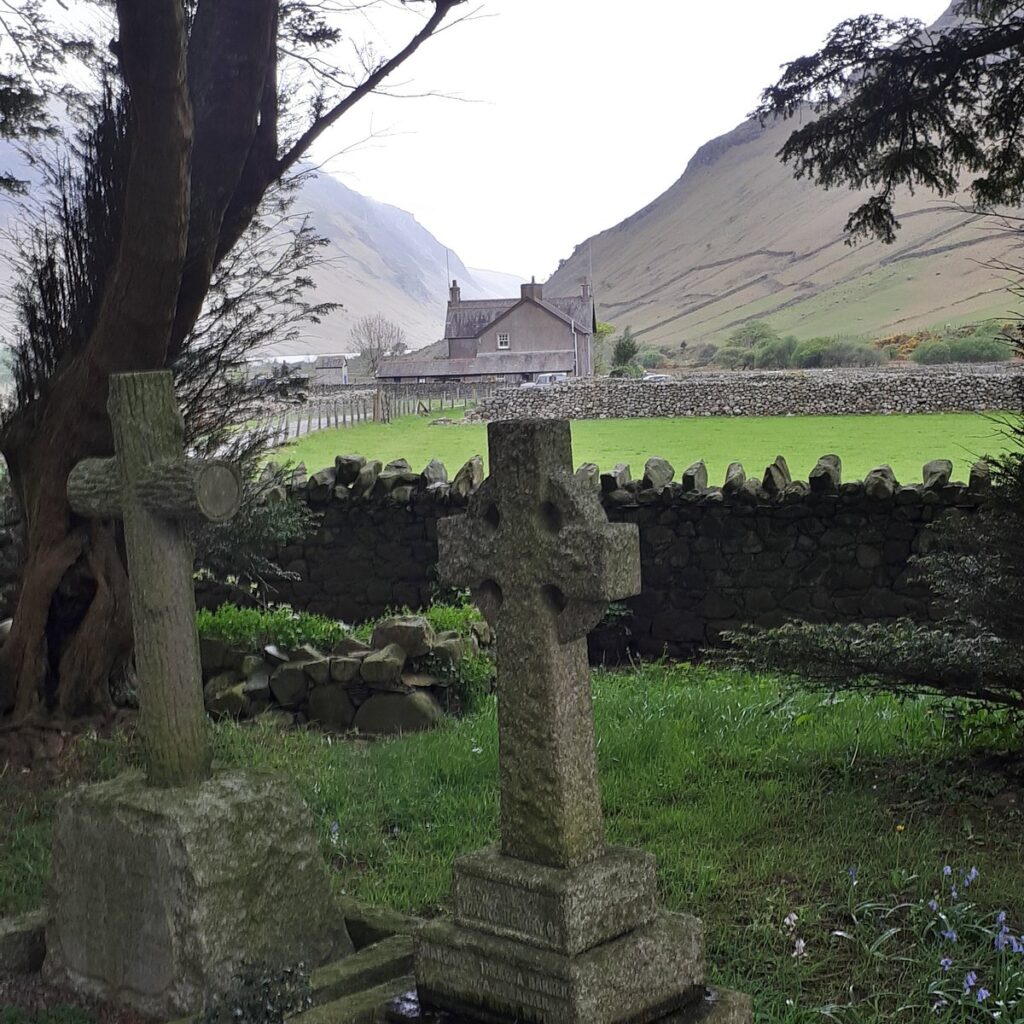
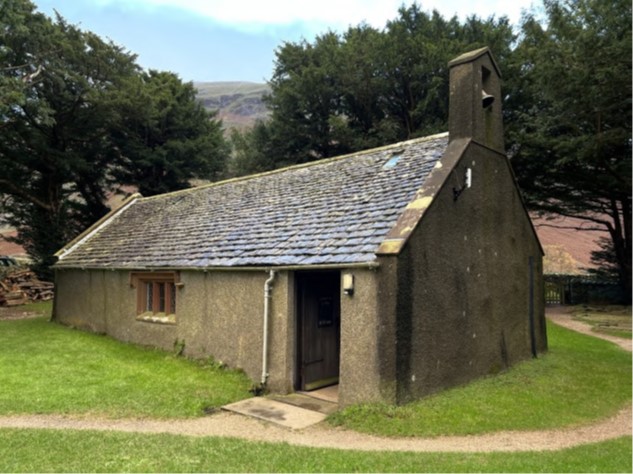
St Olaf’s Church, standing on the path up toward Sty Head, is the valley’s other defining landmark. It is widely regarded as England’s smallest parish church, with the earliest record of a church on the site dating to 1550, though an earlier building likely stood there before that. The church’s name is more recent than its stonework. It had no name at all until 1977, when the Reverend Raymond Bowers — who had friends in Norway — suggested dedicating it to St Olaf. Local tradition holds that some of the church’s ancient roof beams came from Viking ships, though this remains folklore rather than verified fact.
The churchyard doubles as a memorial site for the valley’s mountaineering history. Early graves belong to climbers who lost their lives on the surrounding peaks, including a memorial to three young men who died on Scafell in 1906, and another to members of the Fell & Rock Climbing Club killed in the First World War. That memorial theme extends to the fells themselves. The Fell and Rock Climbing Club donated 3,000 acres of land to the National Trust, including the iconic fell of Great Gable, specifically as a memorial to the fallen of the First World War. Every Remembrance Sunday, a service is still held on the summit of Great Gable in their memory.
Travel Tip: St Olaf’s Church is usually open to visitors daily. A visitors’ book at the back and a prayer book near the front give a genuine sense of how many walkers pass through — entries come from dozens of countries every year.
Wasdale’s more recent history includes a successful conservation campaign. In the late 1970s, the National Trust, the Friends of the Lake District, the Youth Hostel Association and other local groups came together and overturned a proposal by British Nuclear Fuels to increase water abstraction from Wastwater, preserving the lake in something close to its natural state. Today, the National Trust owns and protects a number of farms and roughly 6,677 hectares of land across the valley, making Wasdale one of the most significant landholdings in its entire Lake District portfolio.
Best Things to Do in Wasdale Head
Climb Scafell Pike
For many visitors, Wasdale Head exists as the starting point for England’s highest mountain. The route from the National Trust’s Lake Head car park, next to the Wasdale campsite, is considered the most straightforward and direct way up Scafell Pike. It’s still a serious mountain day — steep, rocky, and exposed to fast-changing weather — rather than a casual walk, and should be treated accordingly.
Take on Great Gable and the war memorial route
Great Gable’s distinctive pyramid shape dominates views up the valley, and reaching its summit brings walkers to the Fell and Rock Climbing Club’s war memorial plaque. The mountain also offers routes onto Kirk Fell and Pillar for those wanting a longer ridge day.
Walk to Greendale Tarn and Middle Fell
For a quieter option away from the Scafell Pike crowds, a circular route explores the western fells above Wastwater to Greendale Tarn and the summit of Middle Fell. This is a good choice for capable walkers who want fell views without committing to a full mountain day.
Follow the Pillar Trail
The Pillar Trail from Wasdale Head is a challenging route, typically taking around four and a half hours, that leads up onto one of the valley’s most dramatic fells. Few Lake District views compete with those from the Pillar summit, though the ascent involves over 800 metres of climbing and demands a high level of fitness.
Visit St Olaf’s Church
Even non-walkers can experience a genuine piece of Wasdale’s character by stopping at St Olaf’s. It takes only a few minutes to look around, and the churchyard views up toward Great Gable are worth the short detour alone.
Walk the Wastwater shoreline
The lakeside path along Wastwater, particularly toward the northern end near the Screes, offers level walking with some of the best lake and mountain views in the valley — no serious fitness required.
Try rock climbing where the sport began
Experienced climbers can follow in the footsteps of the Victorian pioneers on the crags around Great Gable, including Napes Needle. This is not a beginner activity and should only be attempted with proper equipment and experience, or via a qualified guide.
Cycle the valley’s bridleways
A National Trust bike route through Wasdale mixes valley-bottom and lakeside terrain, offering a good introduction to the area on two wheels.
Travel Tip: Wasdale Head has almost no mobile signal once you’re past Nether Wasdale, so download maps and check the Mountain Weather Information Service forecast before setting off, not after arriving.
Best Places to Visit Near Wasdale Head
Wasdale Head’s remoteness means “nearby” places still involve some travel, but several destinations pair naturally with a visit.
Wastwater’s southern end and the Screes sit within the valley itself and shouldn’t be treated as a separate trip — the screes plunging into the lake are one of the defining images of the whole area.
Nether Wasdale, roughly four miles down the valley, is a small village with pubs and the parish’s other church, St Michael and All Angels. It makes a sensible base for travellers who want slightly easier access than Wasdale Head itself while staying close to the valley.
Ravenglass, on the Cumbrian coast, is about a 20-minute drive from the western end of the valley and offers a complete change of scenery, along with the Ravenglass and Eskdale narrow-gauge railway and Muncaster Castle.
Ennerdale, reached on foot over Black Sail Pass or by a longer drive around via Egremont, is the next valley north and shares Wasdale’s sense of remoteness. Anyone building a multi-day western fells itinerary should read our guide to the Ennerdale Valley, which covers its walking routes and wilder character in detail.
Buttermere, further north again, offers gentler lakeside walking and a well-known viewpoint of its own. It’s a popular link in longer Lake District walking routes that also pass through Wasdale, and our Buttermere Valley guide covers its best spots for those extending their trip.
Great Langdale, on the opposite side of the National Park, is a longer drive but connects to Wasdale via classic multi-day walking routes over Scafell Pike and Esk Hause. Our Langdale Pikes guide is a useful companion for travellers planning to see both areas.
For those without a car, none of these connections are quick, and any day combining Wasdale Head with a second valley should be planned around driving time rather than distance on the map.
Best Time to Visit Wasdale Head
Spring brings quieter paths, waking fells, and generally more reliable ground conditions than winter, though snow can linger on the higher summits into April or later in a cold year.
Summer is the busiest season, particularly for Scafell Pike, where day-trip numbers rise sharply. Long daylight hours make it the easiest time for a full mountain day, but parking at the Lake Head car park can fill early on fine weekends.
Autumn is widely regarded as one of the best times to see the valley, with clearer light, fewer crowds than summer, and dramatic colour on the lower slopes. Photography conditions are often at their best in this window.
Winter transforms Wasdale Head into a genuinely serious mountain environment. The high fells require winter hillwalking skills, ice axe and crampon experience, and close attention to avalanche and weather conditions. The valley floor and lake views remain accessible and beautiful, but anyone heading onto Scafell Pike, Great Gable or Pillar in winter should have the relevant experience.
Regardless of season, weather at altitude here can differ enormously from conditions in the valley. Summit weather on Scafell Pike is often around 10°C colder and considerably windier than the valley floor, and cloud can close in quickly. Checking the Mountain Weather Information Service before setting out is standard practice for anyone heading onto the fells, since summit conditions can be dramatically different from what’s visible from the road.
| Season | Weather | Crowds | Best For |
|---|---|---|---|
| Spring | Changeable, improving | Low–moderate | Quieter walking, waterfalls in spate |
| Summer | Warmest, longest days | High, especially Scafell Pike | Full mountain days, valley walking |
| Autumn | Cooler, often clear | Moderate | Photography, colour, quieter fells |
| Winter | Cold, snow on summits | Low on the fells | Experienced winter walkers only |
For photography and quieter paths specifically, early mornings and evenings tend to be far calmer than the middle of the day, even in the busiest months, since most day trippers arrive to climb Scafell Pike within a fairly narrow window.
How to Get to Wasdale Head
Wasdale Head’s access road is one of the defining features of a visit, and it deserves attention before setting off.
By car: The approach from the M6 runs via Junction 36 at Kendal, then the A590 and A595 north to Gosforth; from Keswick, take the A66 west and the A595 south to Gosforth, then follow signs to Wasdale Head. From Gosforth, it’s a single-track road of around nine miles with passing places, and mobile signal typically drops out around Nether Wasdale. Reviewers consistently describe the final stretch as narrow and twisting, involving lots of tight corners as the road follows the shore of Wastwater for a long stretch, so drivers unfamiliar with single-track Lakeland roads should allow extra time and drive cautiously.
By bus: For visitors without a car, the seasonal Wasdale Explorer shuttle offers a practical alternative. The service departs from the Lake District National Park Authority car park just west of Ravenglass Station, calling at Muncaster Castle, Holmrook, Gosforth, and Nether Wasdale before reaching Wasdale Head via a series of stops including Overbeck car park and the National Trust Wasdale Campsite. The bus costs £3 for all-day travel, with children travelling free, and is operated by Reays Coaches Ltd. To connect with the Explorer, take the train to Ravenglass station or the X7 bus to Ravenglass or Gosforth. Because this service runs seasonally, check current timetables before relying on it.
By train: The nearest useful stations are on the Cumbrian Coast Line, with Ravenglass being the most relevant connection point for the Wasdale Explorer. Travellers arriving by train should check timetables on the National Rail website before travelling.
Parking: Parking in the valley itself is very limited, and the National Trust operates several car parks along the road, including the Lake Head car park near the campsite. Arriving early is strongly advised in peak season, particularly for anyone planning to walk Scafell Pike.
On foot: Long-distance walkers frequently arrive in Wasdale via mountain passes from neighbouring valleys — Black Sail Pass from Ennerdale, or routes from Eskdale and Langdale over the high fells — rather than by road at all.
Travel Tip: If the main car parks are full, resist the temptation to park on verges along the single-track road. Space is tight, passing places need to stay clear for other vehicles, and the National Trust actively manages parking here for exactly this reason.
Where to Stay Near Wasdale Head
Accommodation in and around Wasdale Head is limited by design, reflecting the valley’s remoteness rather than a lack of demand.
The Wasdale Head Inn is the valley’s best-known accommodation option and its social hub. This secluded 200-year-old inn sits with its annexes about 1.1 miles from Wastwater and 9.3 miles from the A595, the nearest main road. Rooms in the main house have en suite bathrooms, TVs, and tea and coffee-making facilities, while a former barn houses upgraded rooms with sitting areas and several self-contained apartments with open-plan kitchens. The on-site restaurant and pub serve classic fare and real ales, with a wood-burning stove and beer garden, plus a traditional guests-only bar and lounge. Bedrooms are simple rather than luxurious — pine furniture and plain walls with the odd feature wallpaper — in keeping with the inn’s role as a walkers’ and climbers’ base rather than a boutique retreat.
Wasdale National Trust Campsite, at the head of the lake near the Scafell Pike path, is popular with serious hillwalkers. The campsite offers facilities for tents, campers and motorhomes, though not caravans, and its position at the start of the Scafell Pike route makes it a favourite base for hikers, with visitors regularly praising the clean, modern showers and toilets and the friendly on-site staff.
Wasdale Hall Lodge, a National Trust holiday cottage, sits just yards from the lake’s south-western end. It has a kitchen, a sitting/dining room with a wood-burning stove, a bathroom with a shower over the bath, and two bedrooms — one double and one twin — making it a good option for a small group or family wanting more privacy than a pub room.
Nearby villages offer alternatives for those who prefer a base slightly further from the road’s dead end. Nether Wasdale is home to Low Wood Hall, a small seven-room guest house individually decorated in a classic English style with strong valley views, and the wider area has several traditional inns dating back hundreds of years.
Budget options are essentially limited to camping and the youth hostel network in the wider Wasdale area; there is no large hotel or chain accommodation anywhere near the valley head.
Travel Tip: Because Wasdale Head has so few beds, book well ahead for summer weekends — particularly around the inn and the National Trust campsite, both of which fill quickly once good weather is forecast.
Food, Cafés and Local Experiences
Eating options at Wasdale Head are concentrated almost entirely around one building: the Wasdale Head Inn.
Ritson’s Bar, named after the inn’s 19th-century landlord Will Ritson, is the valley’s main social space. The dining room serves hearty meals, while the atmospheric Ritsons Bar is particularly popular among walkers coming off the fells, offering a genuinely traditional pub atmosphere alongside the inn’s collection of vintage climbing photographs. Many of those photographs, hung throughout the dining room, staircase and landing, were taken by the celebrated mountaineering Abraham brothers of Keswick.
Reviews of the food are consistently positive for a remote pub kitchen. Visitors regularly describe the food as good, with a strong cooked breakfast setting up a big day on the hills, and the staff and service are frequently praised even during busy periods. One useful note for travellers: vegetarian options can be limited, so those with dietary requirements may want to check ahead.
The Barn Door Shop, attached to the inn, functions as the valley’s only real shop. It stocBarnks essentials for walkers, climbers and campers, filling the gap left by the absence of any village shop or supermarket in the valley itself.
Beyond the inn, options are sparse by design. Nether Wasdale, a short drive down the valley, has traditional pubs serving food, and Gosforth — the last proper village before the single-track road begins — has a shop and places to eat, making it a sensible stop to stock up before heading in.
Travel Tip: There’s no petrol station, ATM or supermarket beyond Gosforth, so fuel up, get cash, and buy any food or drink you need before starting the single-track road into Wasdale Head.
Walking, Photography and Outdoor Experiences
Wasdale Head rewards photographers and walkers with some of the most dramatic compositions in the Lake District, largely because the valley’s geometry — steep screes, a long deep lake, and a horseshoe of high fells — does most of the work.
Best viewpoints: The view from the south-western end of Wastwater, near the youth hostel, is widely regarded as the finest in the valley and takes in the lake alongside Yewbarrow, Great Gable and Lingmell. The road itself, particularly around Greendale, offers another classic vantage point. Stopping at Greendale to look back at the Screes is considered one of the great Lake District views, and is easily missed by drivers focused on the road ahead.
The Wasdale Screes are the valley’s most photographed geological feature — a near-continuous slope of loose rock falling from Illgill Head almost straight into Wastwater. They’re best photographed from across the lake, where the scale and steepness read most clearly.
Sunrise and sunset: Because Wasdale Head faces roughly east–west along its length, both sunrise and sunset can light up the fells dramatically, though exact timing and direction shift with the seasons. Early risers are also rewarded with empty paths — a rare thing here in peak season.
Wildlife: The valley supports Herdwick sheep — the hardy native breed associated with the whole Lake District — along with birds of prey over the higher fells and a general sense of wildness that’s harder to find in busier valleys.
Weather preparation: Given how quickly conditions change at altitude, anyone heading beyond the valley floor should carry proper waterproofs, a map and compass (or reliable offline GPS), and enough layers for a temperature drop of several degrees on the tops.
Responsible photography and walking: Stick to established paths where they exist, particularly on the Scafell Pike route, where erosion from heavy foot traffic is a real and visible issue. Avoid disturbing livestock, and take litter home — there are no bins once past Wasdale Head itself.
Travel Tip: A tripod and a wide-angle lens make the most of the Screes and lake reflections, but arrive with plenty of daylight to spare — the drive in alone can take longer than expected on the single-track sections.
Visiting Wasdale Head With Family, Solo or as a Couple
Families
The valley floor and lakeside paths around Wastwater are manageable for families with older children, offering big views without technical walking. That said, Wasdale Head is not set up for very young children or buggies — paths are unsurfaced in most places, and there are no dedicated family facilities beyond what the inn provides. Families planning to climb Scafell Pike with children should be realistic about distance, ascent, and weather exposure; it’s a serious undertaking rather than a casual family walk. The inn’s restaurant is generally family-friendly for meals, though it’s worth checking current policy directly given the venue’s small size.
Solo Travellers
Wasdale Head is a popular base for solo hillwalkers, partly because of its climbing heritage and partly because the inn’s bar culture makes it easy to meet other walkers. Solo travellers heading onto the fells should still follow standard mountain safety practice: tell someone your planned route, check the weather forecast, and carry the means to call for help, bearing in mind that mobile signal drops out around Nether Wasdale and doesn’t reliably return until much further down the valley. The National Trust campsite and the inn both attract a steady stream of solo walkers, so opportunities for casual company are reasonably good, particularly in the evenings.
Couples
For couples, Wasdale Head offers a genuinely romantic sense of remoteness rather than curated luxury — an evening at Ritson’s Bar after a day on the fells, or a quiet walk along the lakeshore at dusk, both lean into that atmosphere. Wasdale Hall Lodge, with its wood-burning stove and lakeside position, suits couples wanting more privacy than a pub room offers. The valley’s dramatic scenery also makes it a strong choice for photography-focused trips, with the Screes and lake providing a backdrop that changes constantly with the light.
Costs, Accessibility and Practical Travel Tips
Entrance and parking: There’s no charge to view Wastwater or walk the valley floor, but National Trust car parks in the area do charge for parking, with rates subject to change — check current pricing before travelling. There are three National Trust car parks in Wasdale, so it’s worth knowing your options before arriving.
Transport costs: The Wasdale Explorer shuttle bus costs £3 for all-day travel, with children travelling free — a genuinely affordable option for those without a car, seasonal availability permitting.
Food and accommodation: Prices at the Wasdale Head Inn and nearby accommodation vary by season and demand; summer weekends and school holidays command the highest rates. As a remote, low-supply area, prices here tend to sit above average for similarly rated Lake District accommodation.
Accessibility: This is genuinely limited terrain. The access road itself is narrow with passing places rather than a standard two-lane carriageway, which can be intimidating for some drivers. Paths beyond the immediate valley floor are unsurfaced, often rocky, and involve significant gradient — there are no formally accessible routes onto the high fells. Wheelchair users and those with limited mobility will find the lakeside road and immediate area around the inn and church manageable in good weather, but should not expect step-free or surfaced paths beyond that. Anyone with specific accessibility needs should contact the National Trust or the inn directly before travelling.
Facilities: Toilets are available at the National Trust campsite and the inn; there are no public toilets scattered through the wider valley. Mobile signal drops out around Nether Wasdale and doesn’t reliably return until well down the valley, so treat this as a low-connectivity area throughout.
Cash and cards: Given the valley’s remoteness, it’s sensible to carry some cash as a backup, though the inn and shop generally accept cards.
Weather and packing: Waterproofs, sturdy footwear, and warm layers are essential for anything beyond a short valley walk, since summit conditions on the surrounding fells can be dramatically colder and windier than the valley floor.
Safety: The Wasdale Head Inn is a proud supporter of the Wasdale Mountain Rescue Team, a volunteer service that responds to incidents across these fells. Respecting the mountains here — checking forecasts, carrying proper kit, and turning back when conditions deteriorate — isn’t optional advice; the terrain and weather genuinely demand it.
Responsible tourism: Stick to paths, take litter away with you, respect the working farms and grazing Herdwick sheep, and park only in designated areas to keep the single-track road passable for residents, farmers and mountain rescue vehicles alike.
Suggested Itinerary for Wasdale Head
Half-Day Visit
Arrive by mid-morning, park at one of the National Trust car parks, and walk a short stretch of the Wastwater shoreline toward the Screes. Visit St Olaf’s Church, then have lunch at Ritson’s Bar before heading back out. This works well for travellers combining Wasdale Head with another Lake District destination the same day.
One-Day Visit
Start early to secure parking at the Lake Head car park, then take on Scafell Pike via the direct route from the campsite — a full mountain day requiring good fitness and proper kit. Alternatively, walk to Greendale Tarn and Middle Fell for a shorter but still rewarding fell day, finishing with a meal at the inn before the drive out.
Weekend Visit
Base yourself at the Wasdale Head Inn or the National Trust campsite for two nights. Day one: climb Scafell Pike or Great Gable, taking in the war memorial on the summit of the latter. Day two: a gentler day exploring the Wastwater shoreline, St Olaf’s Church, and a drive out via Nether Wasdale, stopping at Greendale for photographs of the Screes on the way.
Two-Day Itinerary
Day One: Arrive via Gosforth, checking out the Screes view from Greendale en route. Settle into accommodation, then walk the lakeside path toward the southern end of Wastwater for the valley’s best-known view. Evening meal and drinks at Ritson’s Bar.
Day Two: An early start for Scafell Pike or the Pillar Trail, depending on fitness and weather. The Pillar route takes around four and a half hours and offers some of the best fell views in the valley. Finish with a visit to St Olaf’s Church before departing, or extend the trip by walking over Black Sail Pass into the neighbouring Ennerdale Valley for those continuing their Lake District trip on foot.
Avoid trying to combine a serious Scafell Pike or Pillar day with driving elsewhere afterward — fatigue and the single-track road are not a good combination, and it’s safer to plan a rest evening at the valley head instead.
Frequently Asked Questions
Is Wasdale Head worth visiting?
Yes. It offers some of the Lake District’s most dramatic scenery, including England’s deepest lake, its highest mountains, and a genuinely remote atmosphere that’s increasingly rare in the National Park. It particularly suits walkers and photographers, though it’s less geared toward casual sightseeing.
How long do you need in Wasdale Head?
A half-day covers the valley floor, church, and lakeside views. A full day is needed for Scafell Pike or the Pillar Trail. A weekend allows time for one major fell walk plus a more relaxed second day exploring the valley.
What is the best time to visit Wasdale Head?
Late spring through early autumn offers the most reliable walking conditions, with autumn often praised for clearer light and fewer crowds. Winter visits require proper hillwalking experience for anyone heading onto the fells.
How do you get to Wasdale Head?
By car via a single-track road from Gosforth on the A595, or via the seasonal Wasdale Explorer shuttle bus connecting from Ravenglass. There is no direct rail access; the nearest useful station is on the Cumbrian Coast Line.
Is Wasdale Head good for families?
The valley floor and lakeshore suit families with older children, but paths are unsurfaced and there are no dedicated family facilities. The high fells, including Scafell Pike, are serious undertakings not suited to young children.
Is Wasdale Head expensive to visit?
Viewing the valley and lake is free, though National Trust parking charges apply. Accommodation and food prices, concentrated around the Wasdale Head Inn, tend to run higher than average given the area’s limited supply, especially in peak season.
What are the best things to do in Wasdale Head?
Climbing Scafell Pike or Great Gable, walking the Wastwater shoreline, visiting St Olaf’s Church, and exploring routes like the Pillar Trail or the walk to Greendale Tarn are the main draws.
Can you visit Wasdale Head without a car?
Yes, using the seasonal Wasdale Explorer shuttle bus from Ravenglass, though services are limited compared with car access and should be checked in advance.
Is there mobile signal at Wasdale Head?
No, reliably. Signal typically drops out around Nether Wasdale and doesn’t return consistently until well down the valley, so download maps and let someone know your plans before setting off.
Where should I stay near Wasdale Head?
The Wasdale Head Inn is the main option directly in the valley, alongside the National Trust campsite and Wasdale Hall Lodge. Nether Wasdale, a few miles down the valley, offers a small guest house and traditional pubs as an alternative base.
Conclusion
Wasdale Head isn’t a place that reveals itself easily — it takes a deliberate drive down nine miles of single-track road to get there, and the reward is a valley almost entirely shaped by mountains, water and weather rather than tourist infrastructure. Between Wastwater’s plunging screes, the summit of Scafell Pike, and the quiet history held inside St Olaf’s Church, it offers a version of the Lake District that has changed remarkably little since climbers first arrived at the inn in the 1880s. Visit for a serious mountain day, or simply for the drive in and the view from the lakeshore — either way, come prepared for genuine remoteness, changeable weather, and very little in the way of mobile signal or amenities. Respect the fells, stick to the paths, and Wasdale Head will reward the effort of reaching it.