

Table of Contents
Teesdale
Introduction
Teesdale doesn’t shout for attention the way some of Britain’s national parks do, and that’s exactly its charm. Tucked into the North Pennines of County Durham, this valley carved by the River Tees moves from gentle farmland around Barnard Castle to some of the wildest, most exposed moorland in England. Along the way it delivers England’s biggest waterfall, a French château stuffed with fine art in the middle of a market town, stone-built villages that barely register on most tourist maps, and walking trails that range from a flat riverside stroll to a proper day on the fells.
I’ve spent time walking these dales in every season, from frost-bitten February mornings at High Force to warm July evenings watching curlews over Bowlees, and Teesdale rewards patience more than almost anywhere else in northern England. It isn’t polished. There’s no visitor centre selling branded merchandise every few miles, and mobile signal drops out the moment you head above Middleton-in-Teesdale. What you get instead is genuine solitude, dramatic geology, and a slower pace that’s increasingly hard to find.
This guide covers everything you need for a trip to Teesdale: the best things to do, when to visit, how to get around, where to eat and sleep, and a full two-day itinerary you can adapt to your own pace. Whether you’re planning a weekend break, a family day trip, or a longer walking holiday exploring the Pennine Way, you’ll find practical, up-to-date advice here rather than recycled generalities.
Where Is Teesdale? Getting Your Bearings in County Durham
Teesdale takes its name from the River Tees, which rises high on Cross Fell in the Pennines and flows east through the dale before eventually reaching the North Sea at Middlesbrough. The dale itself sits within County Durham, specifically the Durham Dales, and forms part of the North Pennines National Landscape (formerly known as an Area of Outstanding Natural Beauty), which was also designated a UNESCO Global Geopark in recognition of its rare geology.
Locals and guidebooks tend to split the region into Lower Teesdale and Upper Teesdale. Lower Teesdale centres on Barnard Castle, the dale’s main market town, along with smaller villages such as Cotherstone, Romaldkirk, and Startforth. Upper Teesdale begins around Middleton-in-Teesdale and stretches west into genuinely remote territory, taking in Holwick, Forest-in-Teesdale, and the high moorland around Cow Green Reservoir, close to the Cumbrian border.
For context, Teesdale sits roughly 25 miles southwest of Durham city, 20 miles from Darlington, and within easy reach of the A66, which links the M6 in the west to the A1(M) in the east. This makes it a realistic day trip from Newcastle, Durham, Darlington, or even York, though staying overnight lets you see far more of the upper dale without rushing.
Neighbouring Weardale lies just to the north, and together Teesdale and Weardale make up the bulk of what’s known as the Durham Dales. To the south, the dale blurs into the northern edge of the Yorkshire Dales National Park, which is why some maps and guides group Teesdale loosely with Yorkshire Dales content, even though it officially sits in County Durham. If you’re planning a longer road trip, this overlap means you can combine a Teesdale visit with Swaledale or Wensleydale without much of a detour.
Quick Facts About Teesdale
| Detail | Information |
|---|---|
| Location | County Durham, North East England |
| Main town | Barnard Castle |
| Landscape designation | North Pennines National Landscape & UNESCO Global Geopark |
| Key waterfall | High Force (21 metres) |
| Nearest city | Durham (approx. 25 miles) |
| Nearest motorway | A1(M) and A66 |
| Nearest railway station | Darlington (approx. 16 miles from Barnard Castle) |
| Best months to visit | May to September for weather; November to February for waterfall power and dark skies |
| Ideal trip length | 2–4 days |
| Signature activity | Walking the Pennine Way and Teesdale Way |
| Dog-friendly | Yes, most of the dale, with livestock restrictions on open moorland |
Best Time to Visit Teesdale
Teesdale is a genuine year-round destination, and each season shows off a different side of the dale.
Spring (March to May) brings the upland hay meadows back to life and is a good time to see lambs in the fields around Middleton-in-Teesdale and Romaldkirk. Rainfall is common, so waterproofs are non-negotiable, but the waterfalls run high after winter snowmelt, making April a particularly good month for photographing High Force.
Summer (June to August) is peak season, and for good reason. The traditional hay meadows of Upper Teesdale, among the least agriculturally improved in England, burst into wildflower colour in June and July, drawing botanists and photographers to spots like Bowlees and Cronkley. Long daylight hours make it possible to combine a full day of walking with an evening at the pub. Expect busier car parks at High Force and around Barnard Castle on weekends, though nothing close to the crowds you’d find in the Lake District.
Autumn (September to October) brings golden bracken across the moors and a noticeably quieter dale, making it a favourite for many regular visitors. Photography light is excellent in the low autumn sun, and the rivers often carry more water after seasonal rain, giving the waterfalls extra drama without the crowds of summer.
Winter (November to February) is when Teesdale shows its wilder character. High Force and Cauldron Snout are at their most powerful after heavy rain, occasionally freezing into extraordinary ice formations during cold snaps. This is also stargazing season: Grassholme Reservoir hosts a dedicated observatory, and the North Pennines’ low light pollution makes Upper Teesdale one of the best places in England for seeing the night sky, including the Milky Way on clear nights. Roads over the highest moorland can close in snow, so check conditions before heading to the remoter western reaches.
For most first-time visitors, late May through September offers the best balance of accessible roads, open attractions, and reliable walking conditions, while November to February suits those chasing dramatic waterfall photography and dark skies.
How to Get to Teesdale
By car is by far the easiest way to explore Teesdale, and honestly close to essential if you want to reach the upper dale. The A66 connects the M6 in Cumbria with the A1(M) near Scotch Corner, passing close to Barnard Castle, which makes the dale straightforward to reach from most of northern England. From Barnard Castle, the B6277 threads up through Middleton-in-Teesdale toward Alston, giving access to High Force, Bowlees, and the high moorland beyond. Roads narrow considerably past Middleton, with some single-track sections and passing places, so allow extra time and drive with care around blind bends.
By train, the nearest mainline station is Darlington, which sits on the East Coast Main Line with direct services from London, York, Newcastle, and Edinburgh. From Darlington, you’ll need a local bus or taxi to reach Barnard Castle, roughly a 30 to 40 minute journey.
By bus, there’s no direct long-distance coach into Teesdale itself. Regional bus services connect Barnard Castle with Darlington and Bishop Auckland, and from there local routes serve villages further up the dale, though services thin out considerably once you’re past Middleton-in-Teesdale. If you’re relying on public transport, it’s worth checking current timetables carefully and planning your day around bus times, as some upper-dale services run only a handful of times daily.
Parking in Barnard Castle is generally easy, with short-stay free parking around the Market Place and additional car parks near the castle and Bowes Museum. At High Force and other rural beauty spots, car parks fill up on sunny weekends in July and August, so arriving before mid-morning is a sensible move.
Top Things to Do in Teesdale
Teesdale’s appeal lies in the combination of dramatic natural scenery and understated historic towns, so a good visit usually mixes both.
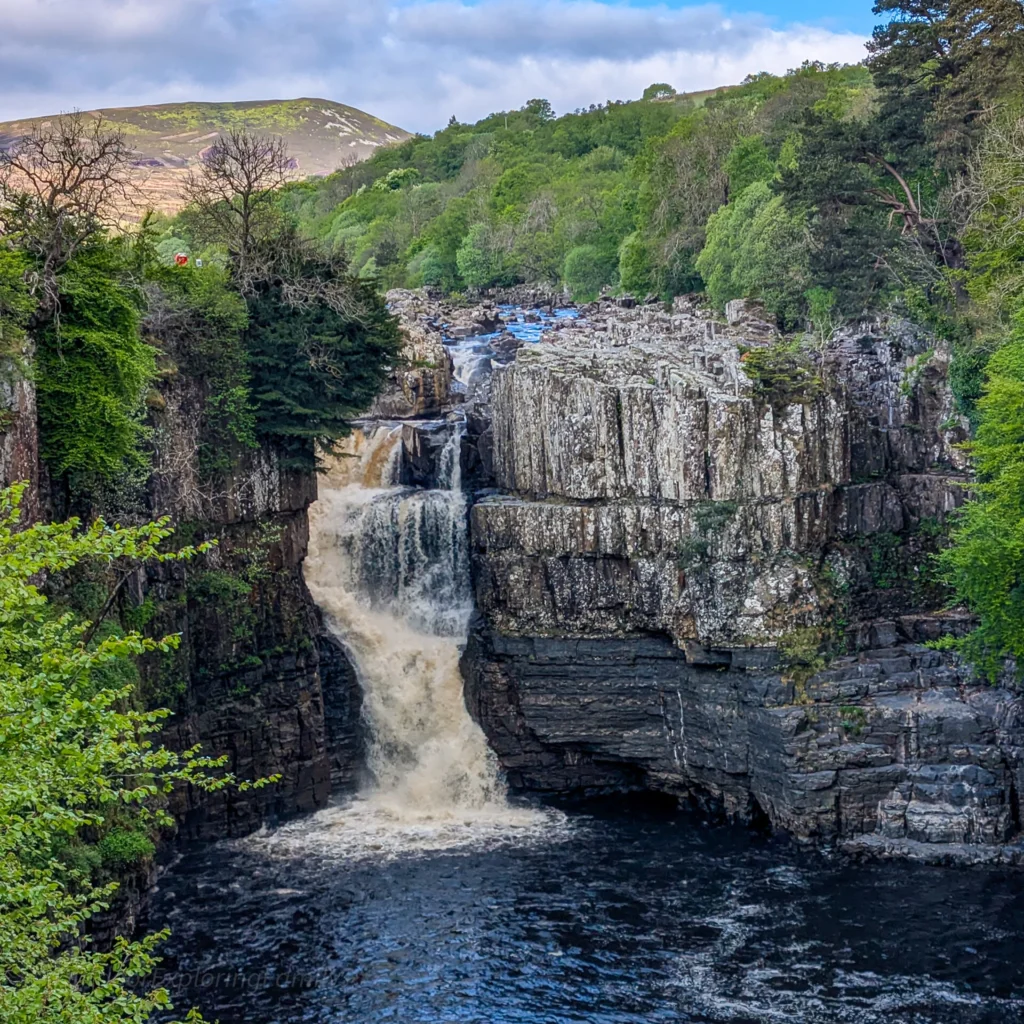
Start with the obvious highlight: High Force, England’s largest waterfall by volume, where the Tees drops 21 metres over a hard shelf of volcanic rock called the Whin Sill. A short, well-maintained woodland path leads from the car park to a viewing point, taking most visitors 15 to 20 minutes round trip, though you’ll want longer if you’re stopping to photograph it properly.
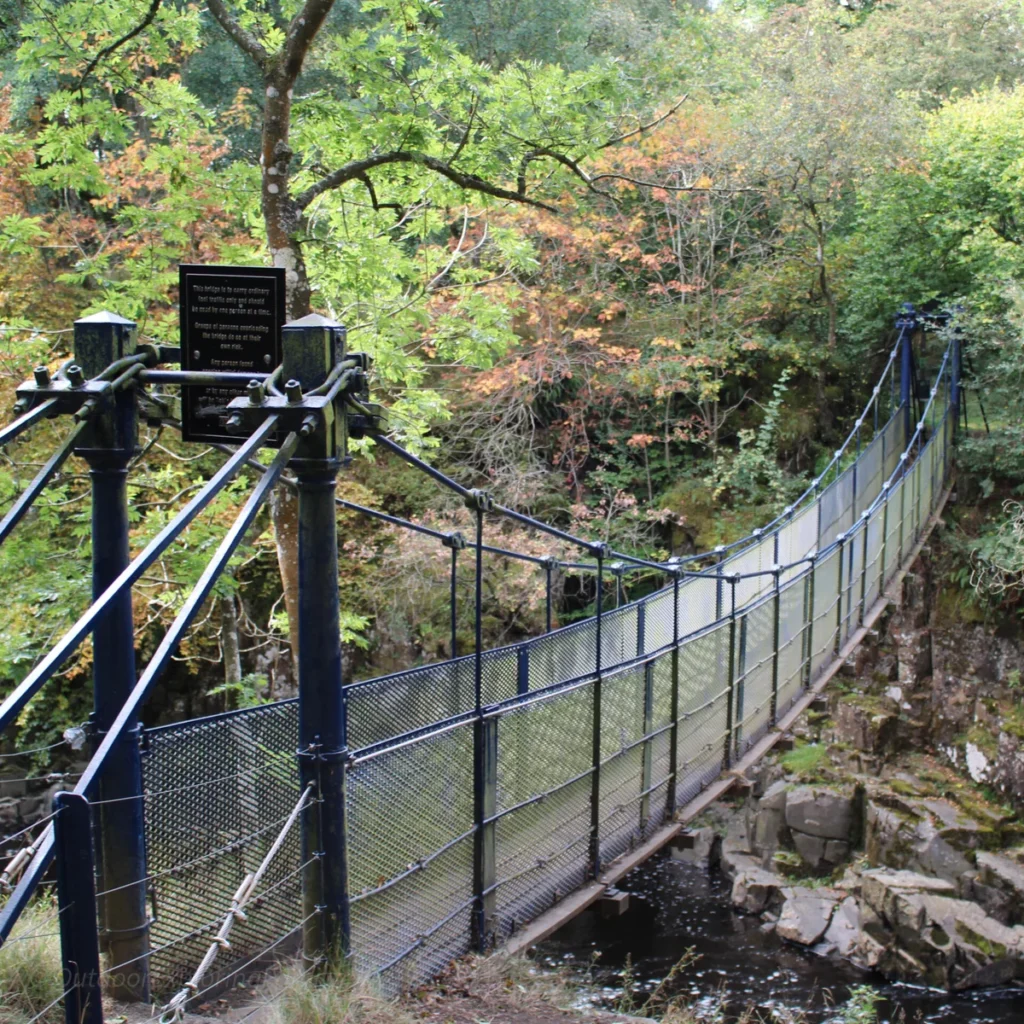
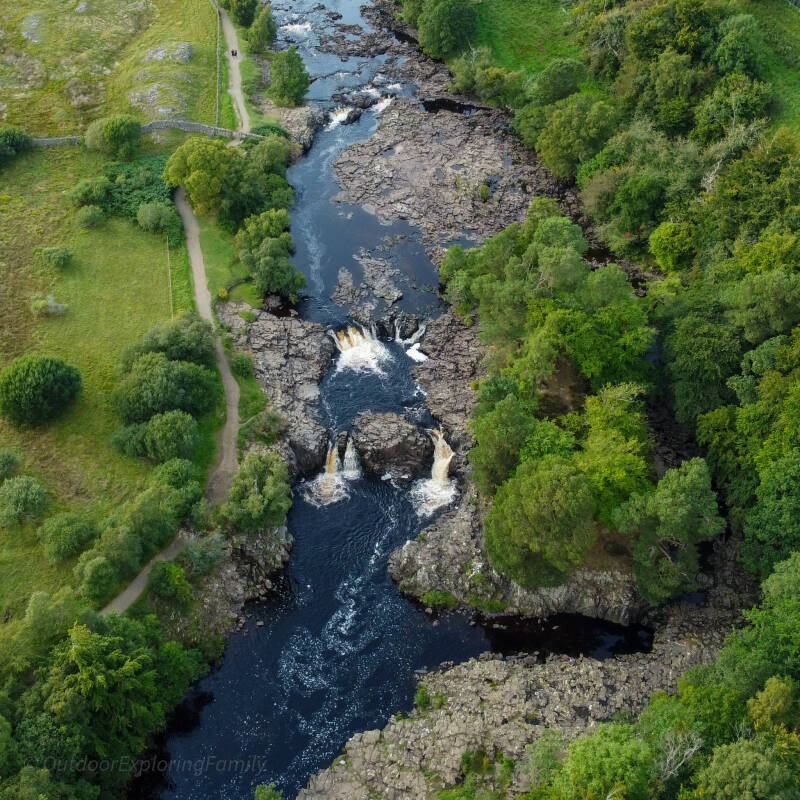
Just downstream, Low Force offers a gentler, wider cascade over several rock steps, and is easily combined with High Force on the same walk from Bowlees Visitor Centre. The suspension bridge here, known locally as the Wynch Bridge, is one of the oldest of its kind in Britain and makes for an atmospheric crossing point over the Tees.
In Barnard Castle, set aside at least half a day for the Bowes Museum, a purpose-built 19th-century château that looks entirely out of place, and entirely wonderful, in a Durham market town. It houses an internationally significant collection of European fine and decorative art, and its most famous exhibit, the mechanical Silver Swan automaton, performs daily and draws visitors on its own merits.
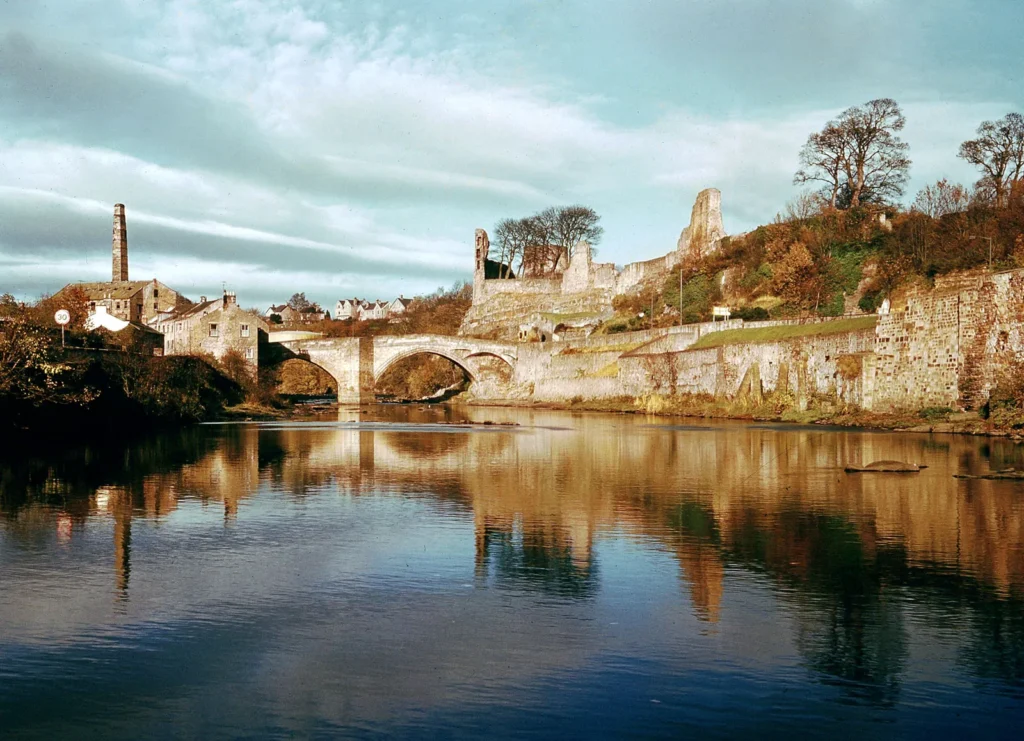
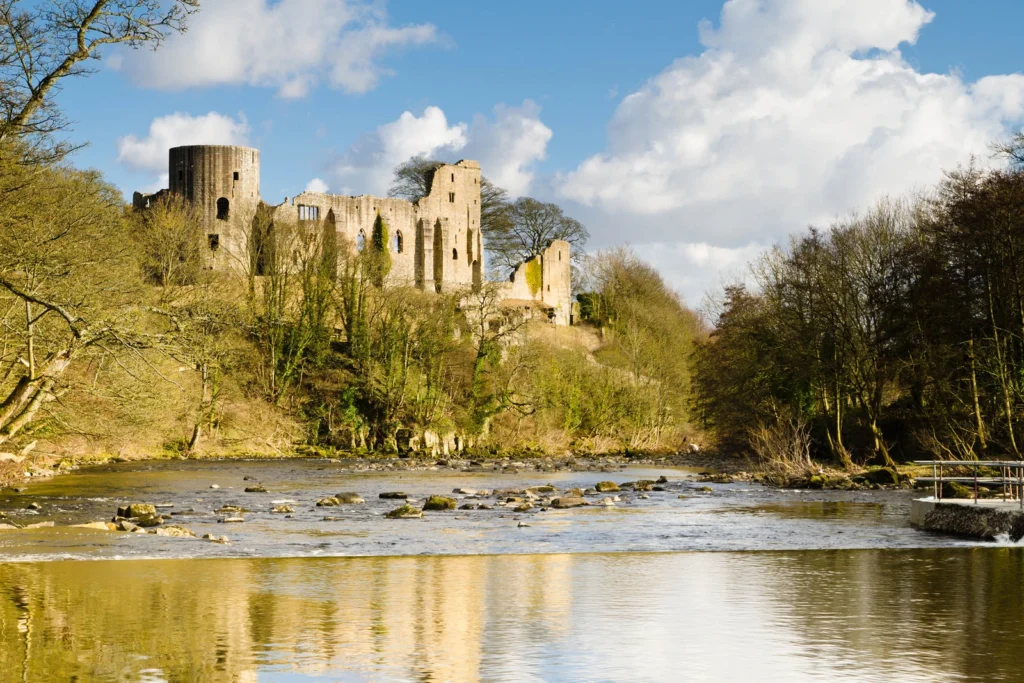
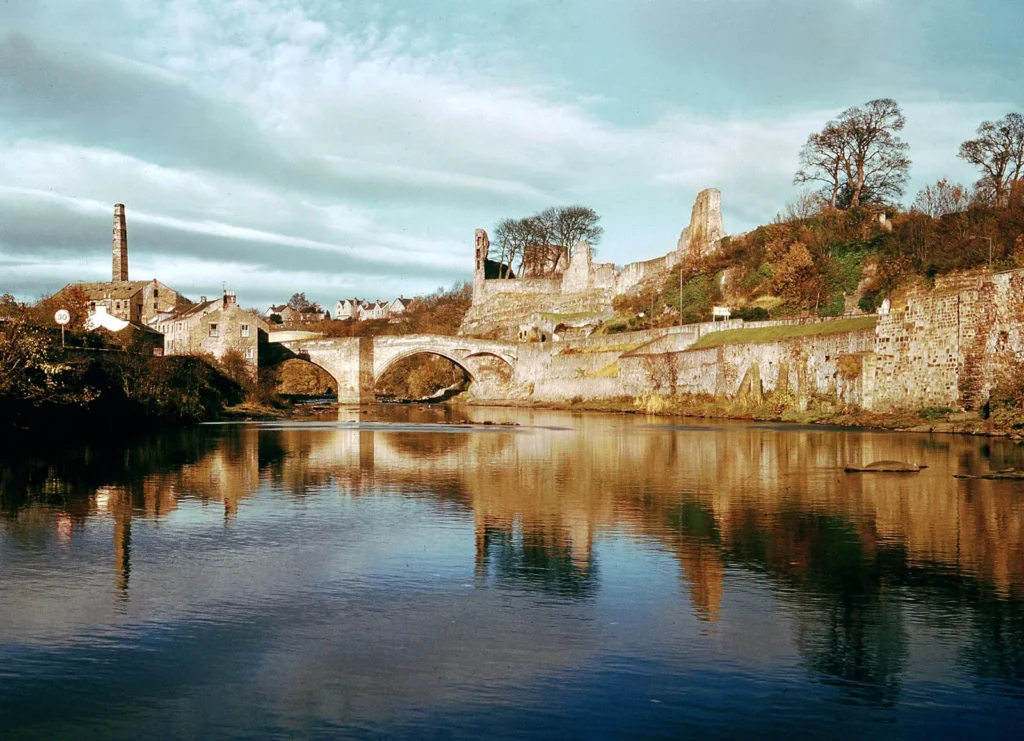
The ruins of Barnard Castle itself, the Norman fortress that gave the town its name, sit above the River Tees and are managed by English Heritage. Wander the Market Place afterwards, browse independent shops and cafés, then pick up a riverside path toward Egglestone Abbey for one of the dale’s most rewarding short walks.
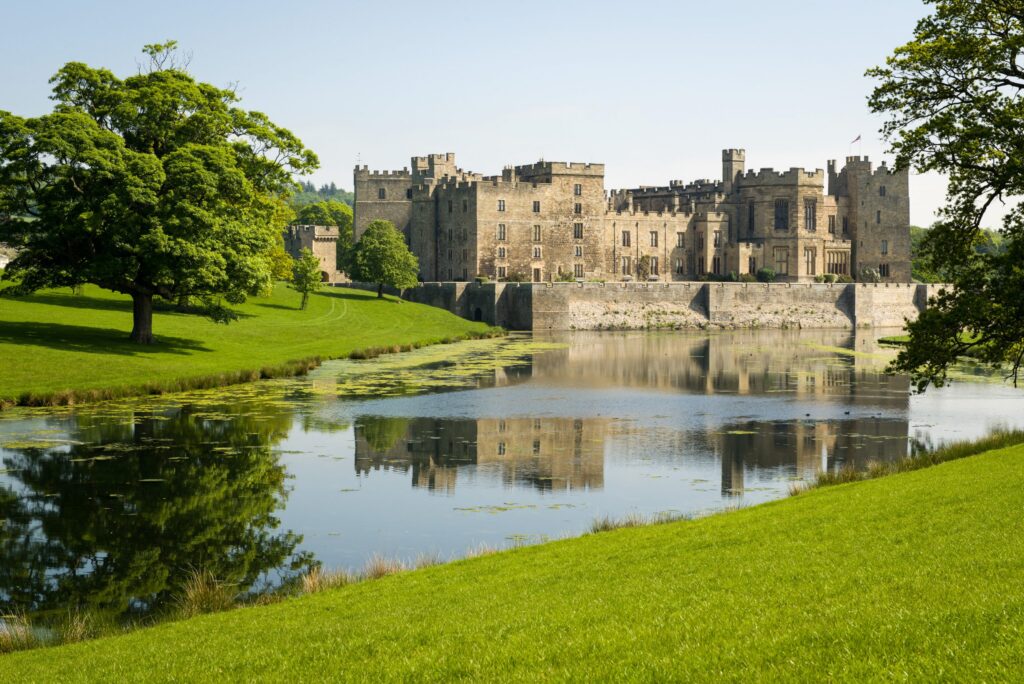
For something different, Raby Castle, just outside the dale near Staindrop, offers a medieval fortress with a working deer park, walled gardens, and interiors dating across several centuries. It’s a natural add-on if you’re basing yourself in or around Barnard Castle for a few days.
Wildlife lovers should head for Hannah’s Meadow Nature Reserve near Baldersdale, a protected slice of unimproved upland hay meadow named after Hannah Hauxwell, the farmer whose frugal, self-sufficient life here was the subject of a famous 1970s documentary. Visit in June or July to see the meadow at its wildflower peak.
High Force, Low Force and the Waterfalls of the Upper Dale
No visit to Teesdale is complete without seeing the waterfalls that give the upper dale its reputation, and it’s worth understanding a little of the geology behind them to appreciate why they look the way they do.
High Force formed where the Tees crosses the Whin Sill, a layer of exceptionally hard igneous rock intruded roughly 295 million years ago. Because the Whin Sill resists erosion far better than the surrounding sedimentary rock, the river has carved a dramatic step rather than a gradual slope, and the result is the thunderous 21-metre drop that gives High Force its name. Access is via a short woodland walk from the car park on the B6277, with an entry fee payable to view the falls from the closer bank; there’s also a free viewpoint accessible from public land on the opposite side, though the view is more distant.
Low Force, a mile or so downstream near Bowlees, is technically a series of smaller cascades rather than a single drop, and many visitors find it just as photogenic, particularly with the Wynch Bridge suspension crossing in the frame. This stretch forms part of a longer, largely flat walk from Bowlees Visitor Centre that most people manage comfortably in around two hours there and back, making it one of the more accessible ways to see serious Teesdale scenery without a strenuous hike.
Further upstream, beyond Cow Green Reservoir, Cauldron Snout is Teesdale’s wilder, less visited waterfall, a series of cascades tumbling roughly 200 metres over a rocky staircase of dolerite. Reaching it involves a proper moorland walk with no easy shortcuts, and it rewards only those willing to commit to several miles of open, exposed terrain, so treat it as a serious walk rather than a casual detour.
For photographers, autumn and winter after heavy rain produce the most powerful flows, while a bright but slightly overcast day gives the most even light for capturing detail in the falling water without harsh highlights. A polarising filter and a tripod are genuinely useful here, and slower shutter speeds create the smooth, silky water effect commonly seen in professional shots, while faster speeds freeze individual droplets for a more dramatic, textured look. Whatever the season, keep a microfibre cloth handy, since spray from High Force in particular can coat a lens surprisingly quickly.

Barnard Castle: History, the Bowes Museum and Town Life
Barnard Castle, known locally simply as “Barney,” is the natural base for most visitors to Teesdale, and it earns that role through a genuinely appealing mix of history, culture, and everyday charm. The town takes its name from the Norman fortress built by Bernard de Balliol in the 12th century, and its ruins still overlook the River Tees from a commanding position above the water. A wander through the castle grounds takes most visitors around 45 minutes to an hour, and combines naturally with the riverside paths below.
The town’s standout attraction, though, is the Bowes Museum, built in the style of a French château by John and Joséphine Bowes in the 19th century specifically to bring fine European art to the North of England. Inside, the collections span paintings, ceramics, textiles, and decorative arts, but most visitors come away talking about one thing above all: the Silver Swan, a life-sized mechanical automaton dating from the 1770s that preens, catches a fish, and swallows it in a short performance held daily. Budget at least two to three hours for a proper visit, longer if you want to see the temporary exhibitions or spend time in the landscaped grounds.
Beyond the two headline sights, Barnard Castle rewards slow exploration. The Market Place retains its cobbled character and hosts a weekly market, while independent cafés, bookshops, and pubs line the surrounding streets. The Witham, a Victorian arts centre, puts on exhibitions, film screenings, and live events, giving the town a cultural pulse that punches above its size. Riverside walks lead from the town centre through Flatts Wood and on to Egglestone Abbey, a ruined 12th-century priory around 50 minutes’ walk each way, following the Tees for much of the route.
Parking is straightforward by market-town standards: Galgate Car Park sits closest to the Market Place and castle, while Queen Street Car Park, known locally as the Hole in the Wall, is more convenient for the Bowes Museum and riverside access. Short-stay parking directly on the Market Place cobbles is free for up to two hours, except on Wednesdays when the market takes over the space. As with most historic towns, some streets and viewpoints involve slopes and uneven cobbles, so those with mobility considerations may prefer the flatter riverside paths and the fully accessible ground floor galleries at the Bowes Museum.
Walking and Hiking Trails in Teesdale
Walking is arguably the single best way to understand Teesdale, and the dale offers routes for every level of fitness and ambition.
At the gentlest end, the Bowlees to High Force and Low Force walk follows the River Tees through mixed woodland and open pasture, covering roughly 3 to 4 miles round trip with modest elevation change. Well-surfaced paths and clear waymarking make this suitable for families with older children and reasonably fit dog walkers, and most people complete it comfortably in two to three hours including stops for photographs.
For something with more history attached, the Tees Railway Walk between Barnard Castle and Middleton-in-Teesdale follows the trackbed of a former quarry railway built in 1868, crossing two notable engineering features, the Lunedale and Baldersdale viaducts. It’s a largely flat, well-surfaced route popular with cyclists as well as walkers, and can be tackled in sections if you don’t want to commit to the full distance.
Serious walkers gravitate toward the Pennine Way, England’s oldest long-distance National Trail, which passes directly through Upper Teesdale on its route north. Some of its most spectacular sections run through this stretch, tracing the Tees past High Force and Cauldron Snout before climbing onto genuinely wild, exposed moorland toward Cross Fell. The Teesdale Way offers a gentler alternative, following the river for its full length from source to sea and giving walkers the option of shorter, valley-based day sections rather than committing to the full Pennine Way.
For a proper full-day hike, the route from Bowlees up past High Force, along the river to Cauldron Snout, and back via Cow Green Reservoir covers around 10 to 12 miles of increasingly remote terrain, with limited shelter and no realistic bail-out points once you’re past Cauldron Snout, so it demands proper preparation, decent weather, and ideally some hill-walking experience.
Whatever route you choose, Teesdale’s upper moors are genuinely exposed, with fast-changing weather even in summer. A map, compass or reliable GPS, waterproofs, and sturdy boots are essential beyond the valley-floor paths, and it’s sensible to let someone know your planned route before heading onto the open fell.
Hidden Gems in Teesdale
Beyond the well-known highlights, Teesdale rewards visitors willing to venture slightly off the obvious route.
Hannah’s Meadow, near Baldersdale, preserves a working farm managed without pesticides or artificial fertiliser, exactly as it was during Hannah Hauxwell’s lifetime, and offers a rare, genuinely moving glimpse of a near-vanished way of upland farming. Visit in June for the wildflowers, and pair it with a stop at nearby Balderhead Reservoir.
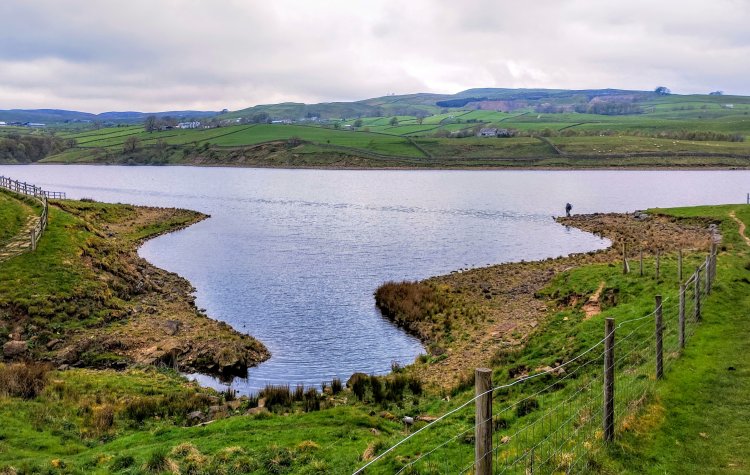
Grassholme Reservoir doubles as both a peaceful walking spot with a visitor centre and, after dark, one of the North Pennines’ best stargazing locations, thanks to the near-total absence of light pollution. The dedicated observatory hosts events for those interested in astrophotography or simply want an easy introduction to a properly dark sky.
Cotherstone and Romaldkirk are two of the dale’s most attractive villages, both built around traditional greens with stone cottages, historic pubs, and a noticeably slower pace than Barnard Castle just a few miles away. Romaldkirk in particular is regularly cited among the region’s prettiest villages, with its 12th-century church and coaching-inn pub anchoring the green.
Teesdale Alpacas, near the upper dale, offers guided alpaca walks and a farm shop, an unusual but genuinely popular family activity that’s worth booking ahead for, especially during school holidays when spaces fill quickly.
Hamsterley Forest, County Durham’s largest forest at around 2,000 hectares, sits at the edge of Teesdale and provides an extensive network of walking, running, and mountain biking trails through mixed woodland, along with a bike hire centre for those without their own equipment.
Where to Eat, Drink and Stay in Teesdale
Teesdale’s food and drink scene leans firmly toward traditional pubs and independent cafés rather than fine dining, and that’s very much part of its appeal. In Barnard Castle, expect proper Sunday roasts, hearty pub lunches, and locally sourced produce reflecting the surrounding farmland, with several cafés around the Market Place serving good coffee and home baking for a mid-walk refuel. Middleton-in-Teesdale has a smaller but reliable selection of tearooms and pubs that serve walkers coming off the High Force and Bowlees routes, and it’s worth booking ahead on summer weekends when tables fill quickly.
Village pubs in Cotherstone and Romaldkirk are genuine destinations in their own right, often combining a proper local bar with a more considered dining menu, and several also offer rooms if you’d rather not drive after dinner.
For accommodation, options across Teesdale range from boutique inns and traditional coaching houses in Barnard Castle to farm stays, self-catering cottages, and small B&Bs scattered through the upper dale. Barnard Castle makes the most practical base for a first visit, given its concentration of restaurants, shops, and easy access to both the town’s own attractions and the road up toward High Force. Those prioritising walking and dark-sky viewing may prefer basing themselves further up the dale around Middleton-in-Teesdale or Holwick, accepting a longer drive into Barnard Castle in exchange for direct access to the best moorland trails.
Camping and caravan sites are available at several points through the dale, popular with walkers tackling multi-day sections of the Pennine Way, though facilities in the upper dale are generally more basic than those closer to Barnard Castle. Booking ahead is strongly advised for July and August, and again around the Bowes Museum’s major seasonal exhibitions, when accommodation across the whole dale can fill up faster than expected for a relatively undiscovered destination.
Wildlife, Geology and Photography in Teesdale
Teesdale’s status as a UNESCO Global Geopark isn’t just a marketing label. The dale sits on genuinely significant geology, most visibly the Whin Sill, the hard igneous intrusion responsible for High Force and much of the dramatic scarp scenery visible from the upper dale roads. Alongside this, Upper Teesdale hosts some of England’s rarest upland plant communities, including species more commonly associated with alpine or arctic environments, a legacy of the last Ice Age that survives here thanks to the area’s unusual soil chemistry and relative isolation.
The unimproved hay meadows around Baldersdale and Holwick are internationally significant for their wildflower diversity, at their absolute best through June and into early July, when species largely lost from intensively farmed land elsewhere in Britain still flourish. Birdwatchers should keep an eye out for curlew, lapwing, and golden plover on the higher moors, alongside dipper and grey wagtail along the riverside stretches near High Force and Low Force.
For photography, the combination of dramatic waterfalls, exposed moorland, and traditional stone farmhouses gives Teesdale real range. Early morning light on the moors above Middleton-in-Teesdale, particularly in autumn when the bracken turns gold, is a genuine highlight for landscape photographers, while the waterfalls themselves photograph best in the soft, even light of an overcast day rather than harsh midday sun. As mentioned above, Grassholme Reservoir’s dark skies make it one of the better spots in northern England for night photography, with the Milky Way visible on clear, moonless nights away from the reservoir’s own modest lighting.
A Two-Day Teesdale Itinerary
Day One: Barnard Castle and the Lower Dale Start the morning exploring Barnard Castle itself, the Norman ruins overlooking the Tees, before heading to the Bowes Museum for a couple of hours, timing your visit to catch the Silver Swan’s daily performance. Grab lunch in the Market Place, then spend the afternoon on the riverside walk out to Egglestone Abbey, or drive the short distance to Raby Castle if you’d rather see a working medieval estate. Finish with dinner at one of the town’s pubs, or head out to Romaldkirk for a quieter evening meal at the village green.
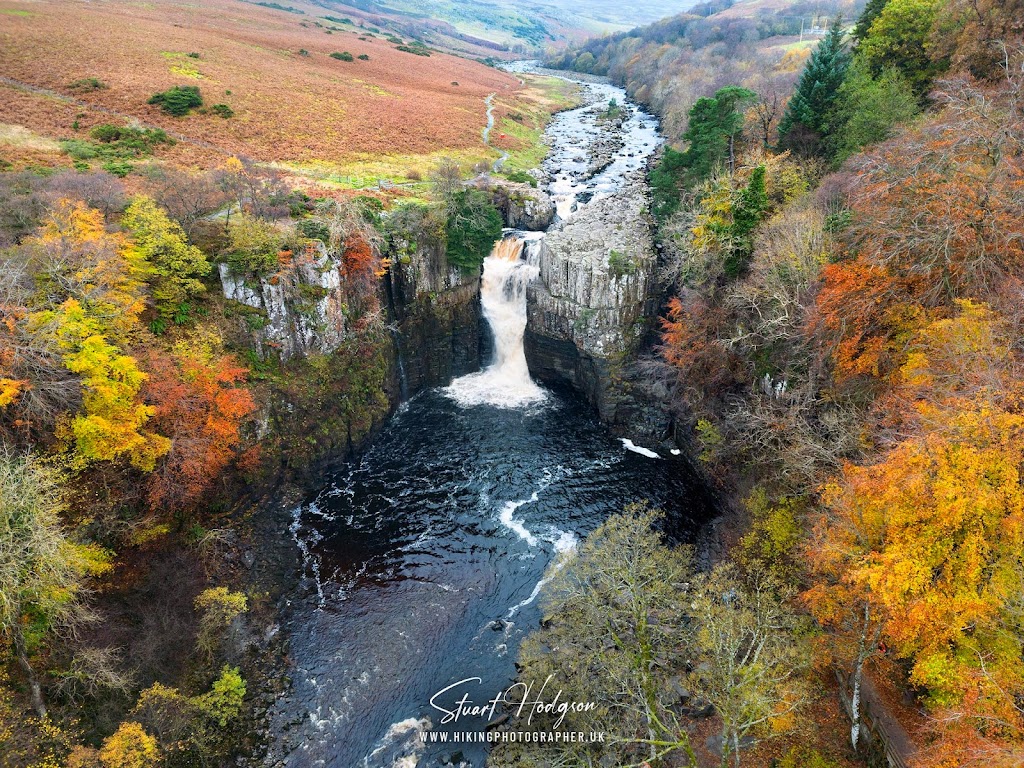
Day Two: Upper Teesdale and the Waterfalls Head up the B6277 to Bowlees Visitor Centre and set off on the walk to Low Force and High Force, allowing a leisurely three to four hours with time for photographs. If you’re up for more, continue toward Cauldron Snout for a longer, more remote afternoon on the moors, packing lunch and proper waterproofs. Alternatively, spend the afternoon at Hannah’s Meadow or Grassholme Reservoir, both easy add-ons from the same road. If your visit falls on a clear night, stick around after dark for one of the best stargazing spots in England before heading back to your accommodation.
This itinerary works comfortably as a self-drive weekend, and can easily be extended to three or four days by adding Hamsterley Forest, a visit to Teesdale Alpacas, or a longer Pennine Way section for more experienced walkers.
Essential Travel Tips for Visiting Teesdale
Bring cash alongside cards, since some smaller cafés, farm shops, and rural attractions in the upper dale still don’t accept card payments, or have unreliable connectivity for doing so. Mobile signal is patchy to non-existent above Middleton-in-Teesdale, so download offline maps before setting off and let someone know your walking plans if you’re heading onto open moorland.
Weather changes fast in the upper dale, even in summer, and temperatures on the exposed fells can be noticeably colder and windier than in Barnard Castle. Pack layers and a waterproof regardless of the season, and sturdy waterproof boots for anything beyond the flat riverside paths.
For High Force, there’s a small admission charge to access the closest viewing path and car park, while Low Force and the Bowlees walk are free. Dogs are welcome across most of the dale on leads, though open moorland sections during lambing season and ground-nesting bird season, roughly March to July, require particular care to keep dogs close and under control.
If you’re visiting the Bowes Museum, check the daily performance time for the Silver Swan before you arrive, since it’s usually shown only once or twice a day and is genuinely worth planning around. Finally, book accommodation and popular restaurants well ahead for July, August, and any weekend coinciding with a major exhibition or local festival, since Teesdale’s relatively small number of beds and tables fill up faster than its quiet reputation might suggest.
Nearby Destinations to Combine with Teesdale
Teesdale sits close enough to several other North East highlights that a longer trip can easily combine them. Weardale, immediately to the north, offers a similar mix of moorland scenery and heritage railway rides aboard the Weardale Railway. Durham City, roughly 25 miles away, adds a UNESCO World Heritage cathedral and castle, plus a lively student-town atmosphere, for those wanting a change of pace from rural walking. Beamish Museum, the open-air living history museum recreating the region across several historic periods, makes an excellent family day out and sits within easy driving distance. For those extending south, the northern reaches of the Yorkshire Dales, including Swaledale, blend naturally with Teesdale’s landscape and are only a short drive from Barnard Castle.
Frequently Asked Questions
Where is Teesdale located? Teesdale is in County Durham, North East England, following the course of the River Tees from its source in the Pennines down through Barnard Castle. It forms part of the North Pennines National Landscape and UNESCO Global Geopark.
What is Teesdale famous for? Teesdale is best known for High Force, England’s largest waterfall by volume, along with the historic market town of Barnard Castle, the Bowes Museum, wild upland scenery, and some of the country’s rarest wildflower meadows.
How long does it take to walk to High Force? The walk from the High Force car park to the viewing point takes around 15 to 20 minutes each way on a well-maintained woodland path, making it accessible for most fitness levels.
Is Teesdale good for a day trip? Yes, Teesdale works well as a day trip from Durham, Darlington, or Newcastle, though an overnight stay lets you properly explore both Barnard Castle and the more remote upper dale without rushing.
Do I need to pay to see High Force waterfall? There’s a small admission charge to use the closer viewing path and car park at High Force. Low Force, a short walk downstream, can be viewed for free.
Is Teesdale dog-friendly? Most of Teesdale welcomes dogs on leads, including village pubs, cafés, and walking trails. Extra care is needed on open moorland during lambing and ground-nesting bird season, roughly March to July.
What’s the best time of year to visit Teesdale? Late May to September offers reliable walking weather and open attractions, while June and July bring the wildflower meadows into bloom. Winter suits visitors chasing powerful waterfalls and dark-sky stargazing.
How do I get to Teesdale without a car? The nearest railway station is Darlington, from where local buses connect to Barnard Castle. Public transport becomes limited beyond Middleton-in-Teesdale, so a car is strongly recommended for exploring the upper dale fully.
Can beginners walk in Teesdale? Yes, the Bowlees to High Force and Low Force route is well-surfaced and manageable for most fitness levels, while longer routes toward Cauldron Snout and the Pennine Way suit more experienced walkers.
What towns and villages should I visit in Teesdale? Barnard Castle is the main town, with Middleton-in-Teesdale as the upper dale’s hub. Cotherstone and Romaldkirk are two of the prettiest smaller villages, both built around traditional greens.
Conclusion
Teesdale isn’t trying to be the Lake District or the Yorkshire Dales, and that’s precisely why it’s worth the detour. Here you get a genuinely wild river valley, a waterfall that outmuscles any other in England, wildflower meadows that have survived largely unchanged for centuries, and a market town with a French château at its edge, all without the crowds that now define Britain’s better-known national parks. Whether you’re chasing a weekend of easy walks and good food around Barnard Castle, or a longer trip onto the exposed moorland of the upper dale, Teesdale delivers real, unpolished scenery and a pace of travel that’s becoming harder to find elsewhere in England. Plan around the seasons, pack for changeable weather, and give yourself more than a single afternoon; Teesdale rewards exactly the kind of unhurried visit its landscape has always demanded.