
Table of Contents
Stiperstones
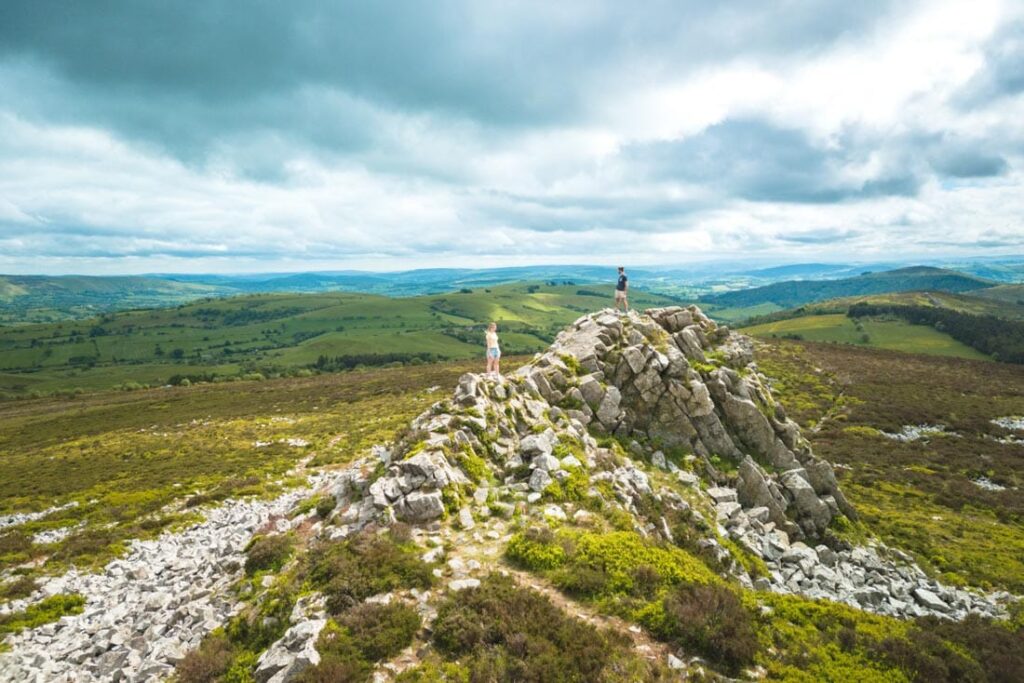
Stiperstones is one of the most striking landscapes in the Shropshire Hills, a jagged ridge of shattered quartzite rock rising above heather-covered moorland close to the Welsh border. Unlike the smoother, greener hills that surround it, Stiperstones has a raw, almost otherworldly character, shaped by ice and frost over millions of years and topped by a series of dramatic rock tors, the most famous of which is the Devil’s Chair.
For walkers, this is one of the best places in Shropshire to get out onto open, wild terrain without travelling into Wales or the Peak District. The ridge sits within a designated National Nature Reserve, protected for both its geology and its rare wildlife, including heathland birds, moths, and butterflies that are hard to find elsewhere in the county.
This guide covers what makes Stiperstones worth visiting, the main rock formations along the ridge, the best walking routes, how to get there, when to go, and what to expect from the wildlife and surrounding villages. Whether you’re planning a short circular walk or a longer day out taking in Snailbeach and the wider reserve, this article gives you the practical detail you need to plan your trip properly.
Why Visit Stiperstones?
Stiperstones stands out because of its geology. The ridge is made of quartzite formed around 480 million years ago during the Ordovician period, later shattered into angular blocks by repeated freezing and thawing during the last Ice Age. The result is a landscape of exposed rocky tors that feels far more dramatic than typical English moorland.
Beyond the rock formations, the reserve is a Site of Special Scientific Interest and a Special Area of Conservation, home to heathland, oak woodland, and acid grassland that support species rarely found in this part of the country. The views are another reason to visit — on a clear day you can see across Shropshire and into the Welsh hills. It’s a quieter alternative to more crowded national parks, with a genuine sense of wildness.
The Devil’s Chair and Other Rock Formations
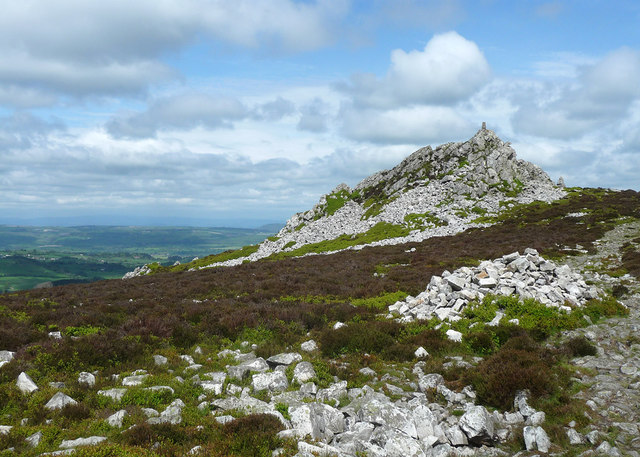
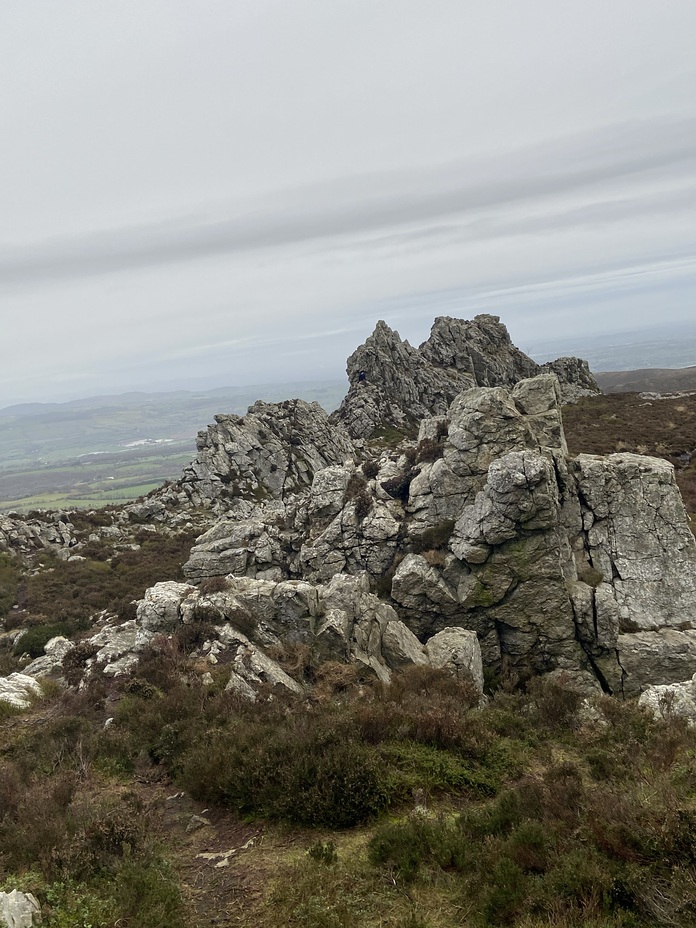
The Devil’s Chair is the best-known feature on Stiperstones, a large quartzite tor steeped in local folklore. Legend holds that it is a resting place for the devil, and on misty days it’s easy to see why the story has persisted.
The Devil’s Chair isn’t the only notable formation. Manstone Rock, the highest point on the ridge at 536 metres, offers some of the best panoramic views in the reserve. Cranberry Rock and Nipstone Rock are also worth seeking out, particularly if you’re walking the full length of the ridge rather than a short there-and-back route to the Devil’s Chair alone.
Manstone Rock Viewpoint
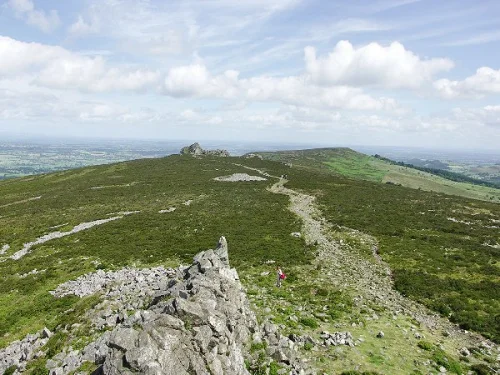
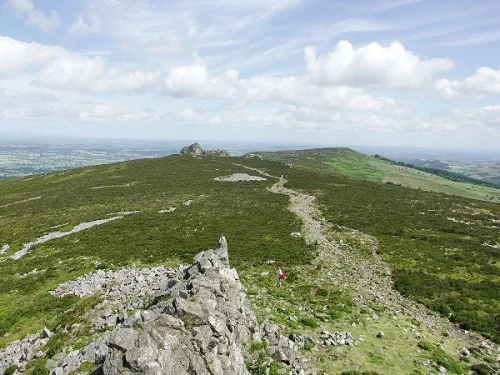
Manstone Rock marks the highest point of the Stiperstones ridge and is a natural stopping point on most circular walks. The climb up is rocky and uneven in places, so sturdy footwear matters, but the reward is a wide view across the Shropshire Hills and towards the Long Mynd. It’s a good spot to pause, especially on a clear day when visibility stretches well beyond the county.
Best Walks and Hikes on Stiperstones
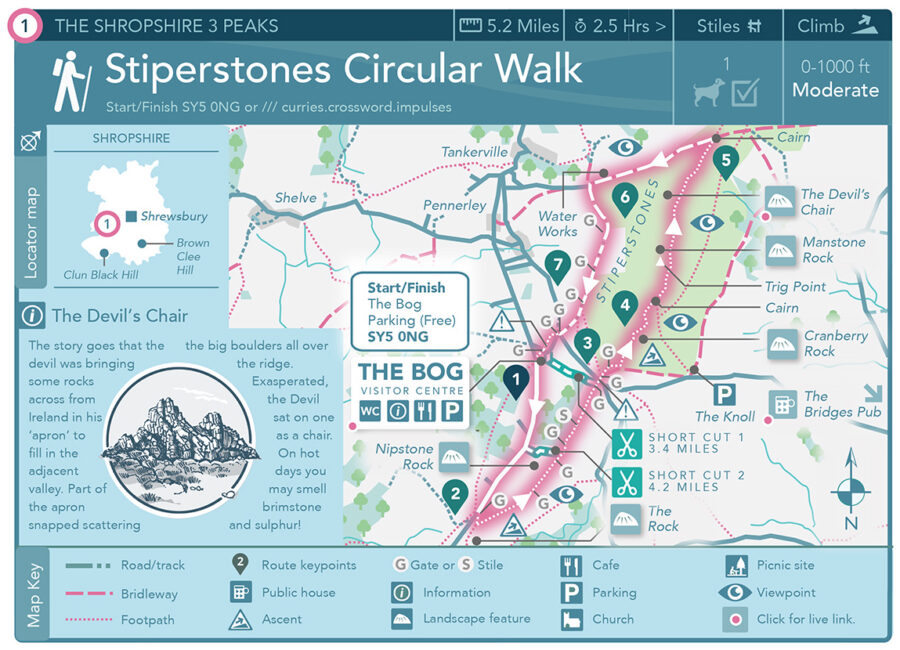
There are several walking options depending on how much time you have. A shorter loop of around 4.6 miles starts near Knolls Car Park and takes in the Devil’s Chair, with an elevation gain of roughly 800 feet and a typical walking time of two to two and a half hours. It’s rated as moderately challenging, with some rocky scrambling sections.
Longer routes exist for those wanting a fuller day out. A loop of around 9.6 miles links Snailbeach, Stiperstones village, and Nipstone Rock before returning over the ridge, taking in a wider stretch of the reserve. Whichever route you choose, expect exposed, rocky terrain that can be slippery after rain, so proper walking boots and weatherproof clothing are worth packing even in summer.
Shorter Route from Knolls Car Park
For visitors short on time or new to hiking, a shorter out-and-back walk from Knolls Car Park to the Devil’s Chair is the most accessible option. It follows a well-marked path across open access land and can usually be completed in under an hour at a relaxed pace, making it a practical choice for families or anyone wanting a taste of the ridge without committing to a full circuit.
How to Get There and Parking
Stiperstones sits in south Shropshire, within reach of Shrewsbury by car. The main parking point for the reserve is Knolls Car Park, with alternative parking available at The Bog Visitor Centre and near Snailbeach village. These are the recommended starting points for most of the reserve’s marked trails.
Public transport options are limited in this rural part of Shropshire, so driving is the most practical way to reach the ridge for most visitors. If you don’t have a car, travelling to Shrewsbury first and arranging onward transport to Minsterley or the surrounding villages is generally the most workable approach, though services can be infrequent, so it’s worth checking timings in advance rather than relying on a fixed schedule.
Best Time to Visit
Stiperstones can be visited throughout the year, though conditions vary considerably by season. Spring and summer bring blooming heather and gorse across the heathland, along with better underfoot conditions for walking. Many visitors consider these months, roughly from spring through early autumn, the most reliable window for good weather and firm paths.
Winter walks are possible but require more caution, as the exposed ridge is subject to strong winds, and rocky sections can become icy or waterlogged. Whatever the season, this is an exposed upland landscape with little natural shelter, so checking the forecast before setting out and packing layers, water, and sun or wind protection is essential regardless of the time of year.
Wildlife and Nature on the Reserve
Stiperstones is valued as much for its wildlife as its geology. The heathland supports red grouse, skylarks, ravens, stonechats, and red kites overhead, making it a rewarding spot for birdwatchers. Common lizards and frogs are also found across the reserve.
The site is particularly known for its insect life. Bilberry bumblebees, emperor moths, and green hairstreak butterflies are among the rarer species recorded here, drawn to the bilberry-rich heathland and acid grassland. Because of this ecological value, visitors are asked to stick to marked footpaths, keep dogs on a lead, and avoid disturbing wildlife, particularly during nesting season in spring.
Nearby Places to Explore
Stiperstones sits within easy reach of several other spots worth combining into a longer day out. Stiperstones village itself has a pub, useful for a break during longer walks, while the Shropshire Hills more broadly offer further walking country, including the Long Mynd visible from the ridge on clear days.
Snailbeach Lead Mines
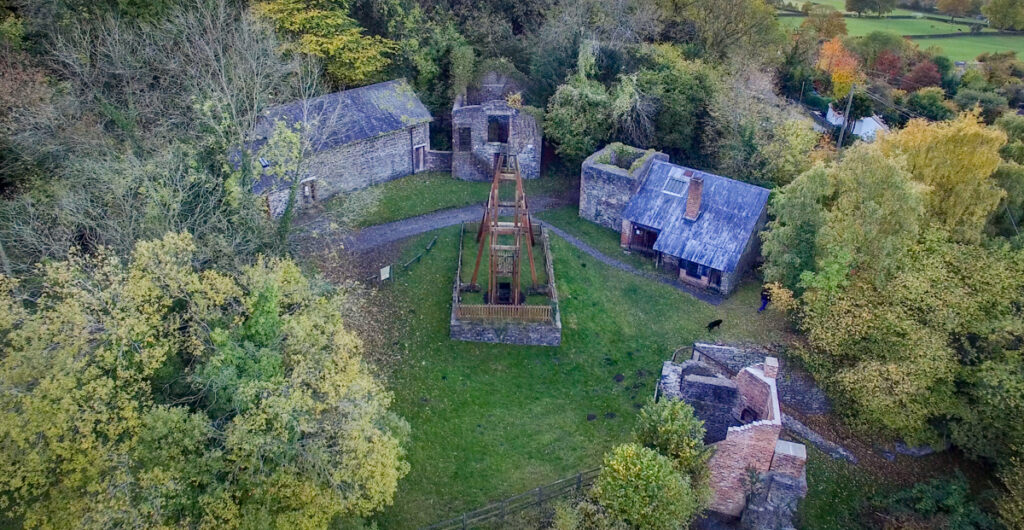
Just below the ridge, Snailbeach was once home to one of the richest lead mining operations in the country. The remains of the mining buildings and infrastructure still stand today, offering a glimpse into the area’s industrial history alongside its natural landscape. It makes a worthwhile stop either before or after tackling the ridge itself, adding some historical context to the walk.
FAQ
Is Stiperstones hard to walk?
It depends on the route. Shorter walks to the Devil’s Chair are moderate, with some rocky sections. Longer loops covering the full ridge are more demanding, with uneven terrain and steeper climbs, so reasonable fitness and proper footwear are recommended.
Are dogs allowed on Stiperstones?
Yes, dogs are welcome on the reserve but must be kept on a lead at all times, both to protect ground-nesting birds and livestock and because it’s a legal requirement except on some rights of way.
Where should I park for Stiperstones?
The main parking point is Knolls Car Park, with alternative options at The Bog Visitor Centre and near Snailbeach village, both of which give access to marked trails across the reserve.
What is the Devil’s Chair?
The Devil’s Chair is a large quartzite rock formation on the Stiperstones ridge, wrapped in local folklore about being a resting place for the devil, especially when shrouded in mist.
What is the best time of year to visit Stiperstones?
Spring through early autumn generally offers the best walking conditions, with blooming heather in summer. Winter visits are possible but require extra caution due to exposed, potentially icy terrain.
Conclusion
Stiperstones offers something genuinely different from most Shropshire walking spots: a wild, rocky ridge shaped by ancient geology, topped by formations like the Devil’s Chair and Manstone Rock, and surrounded by heathland rich in wildlife. Whether you choose a short walk from Knolls Car Park or a longer circuit taking in Snailbeach and the wider reserve, sturdy footwear and weather-appropriate clothing will make the experience far more enjoyable. With sweeping views into Wales, a strong sense of history at nearby Snailbeach, and one of the most distinctive landscapes in the Shropshire Hills, Stiperstones is well worth building into any walking trip through the region.